
ISSN 1004-5759 CN 62-1105/S
Acta Prataculturae Sinica ›› 2026, Vol. 35 ›› Issue (2): 83-94.DOI: 10.11686/cyxb2025091
Previous Articles Next Articles
Hao-qi REN1( ), Tong LI1(), Rong YANG2(), Hong WANG4, Ming-xin ZHAO4, Xue-zhou LIU5, Shu-jun SONG2,3, Kai SUN2,3, Jun-wu XUE6
Received:2025-03-20
Revised:2025-05-21
Online:2026-02-20
Published:2025-12-24
Contact:
Tong LI,Rong YANG
Hao-qi REN, Tong LI, Rong YANG, Hong WANG, Ming-xin ZHAO, Xue-zhou LIU, Shu-jun SONG, Kai SUN, Jun-wu XUE. Effects of herbage ground cover on orchard soil fertility enhancement in the Longdong Region of Gansu Province[J]. Acta Prataculturae Sinica, 2026, 35(2): 83-94.

Fig.1 Study area and sampling sites
| 指标Indicators | 分组Categories |
|---|---|
| 果园类型 Orchard types | 苹果M. pumila (88.9%)、樱桃Cerasus pseudocerasus (6.7%)、花椒Zanthoxylum bungeanum (4.4%) |
| 果树生长年限 Fruit tree growth ages | 5~10 (42.2%)、10~15 (37.8%)、15~20 (20.0%) |
| 生草类型 Grassing types | 豆科Fabaceae (15.6%)、禾本科Graminae (8.9%)、十字花科Brassicales (6.7%)、自然生草Self-sown grass (68.9%) |
| 生草年限 Grassing ages | 2 (6.7%)、3 (15.6%)、4 (6.7%)、5 (8.9%)、6 (15.6%)、7 (13.3%)、8 (13.3%)、9 (8.9%) |
Table 1 Distribution of orchard types, grassing management, and grassing ages in the study
| 指标Indicators | 分组Categories |
|---|---|
| 果园类型 Orchard types | 苹果M. pumila (88.9%)、樱桃Cerasus pseudocerasus (6.7%)、花椒Zanthoxylum bungeanum (4.4%) |
| 果树生长年限 Fruit tree growth ages | 5~10 (42.2%)、10~15 (37.8%)、15~20 (20.0%) |
| 生草类型 Grassing types | 豆科Fabaceae (15.6%)、禾本科Graminae (8.9%)、十字花科Brassicales (6.7%)、自然生草Self-sown grass (68.9%) |
| 生草年限 Grassing ages | 2 (6.7%)、3 (15.6%)、4 (6.7%)、5 (8.9%)、6 (15.6%)、7 (13.3%)、8 (13.3%)、9 (8.9%) |
| 指标Indicators | 最小值Minimum | 最大值Maximum | 均值Average | 标准差Standard deviation | t值t value | |
|---|---|---|---|---|---|---|
有机质 Organic matter (g·kg-1) | a | 4.0 | 19.4 | 12.0 | 3.3 | -2.7** |
| b | 5.8 | 49.1 | 15.2 | 8.0 | ||
全氮 Total nitrogen (g·kg-1) | a | 0.6 | 3.3 | 1.4 | 0.5 | -0.5 |
| b | 0.8 | 3.9 | 1.5 | 0.6 | ||
全碳 Total carbon (g·kg-1) | a | 15.9 | 34.0 | 22.2 | 3.8 | -3.0** |
| b | 17.8 | 49.5 | 24.5 | 5.7 | ||
全磷 Total phosphorus (g·kg-1) | a | 1.4 | 5.4 | 2.4 | 0.8 | 1.5 |
| b | 1.5 | 4.6 | 2.2 | 0.7 | ||
碱解氮 Alkali-hydrolyzable nitrogen (mg·kg-1) | a | 37.3 | 217.5 | 89.1 | 33.4 | -1.1 |
| b | 27.3 | 429.8 | 105.3 | 69.8 | ||
| pH | a | 7.6 | 8.7 | 8.1 | 0.3 | -3.8*** |
| b | 7.8 | 8.7 | 8.3 | 0.2 | ||
Table 2 Descriptive statistics of the indexes of soil nutrient contents and t-test result
| 指标Indicators | 最小值Minimum | 最大值Maximum | 均值Average | 标准差Standard deviation | t值t value | |
|---|---|---|---|---|---|---|
有机质 Organic matter (g·kg-1) | a | 4.0 | 19.4 | 12.0 | 3.3 | -2.7** |
| b | 5.8 | 49.1 | 15.2 | 8.0 | ||
全氮 Total nitrogen (g·kg-1) | a | 0.6 | 3.3 | 1.4 | 0.5 | -0.5 |
| b | 0.8 | 3.9 | 1.5 | 0.6 | ||
全碳 Total carbon (g·kg-1) | a | 15.9 | 34.0 | 22.2 | 3.8 | -3.0** |
| b | 17.8 | 49.5 | 24.5 | 5.7 | ||
全磷 Total phosphorus (g·kg-1) | a | 1.4 | 5.4 | 2.4 | 0.8 | 1.5 |
| b | 1.5 | 4.6 | 2.2 | 0.7 | ||
碱解氮 Alkali-hydrolyzable nitrogen (mg·kg-1) | a | 37.3 | 217.5 | 89.1 | 33.4 | -1.1 |
| b | 27.3 | 429.8 | 105.3 | 69.8 | ||
| pH | a | 7.6 | 8.7 | 8.1 | 0.3 | -3.8*** |
| b | 7.8 | 8.7 | 8.3 | 0.2 | ||
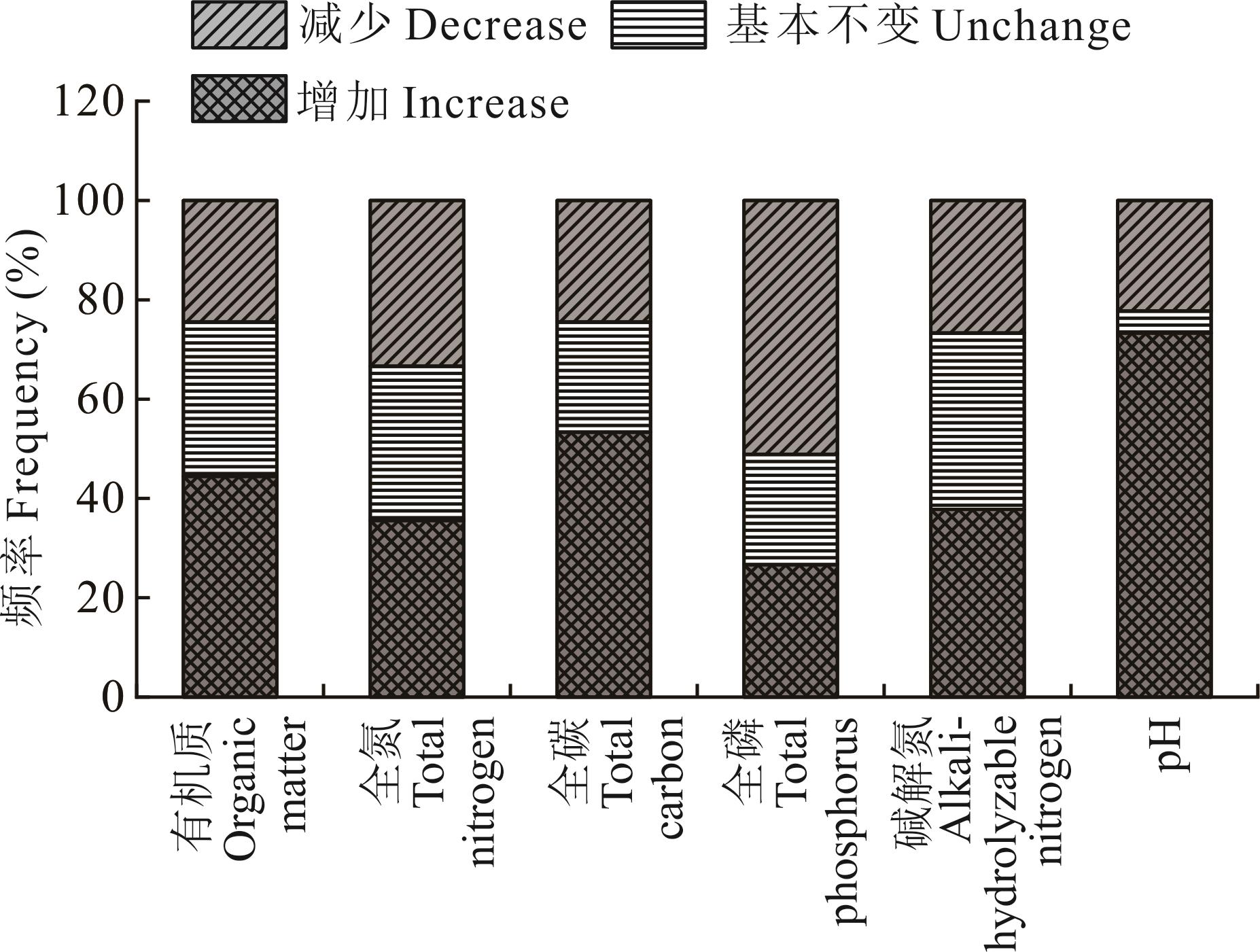
Fig.2 Frequency statistics of rate of change of soil nutrient contents
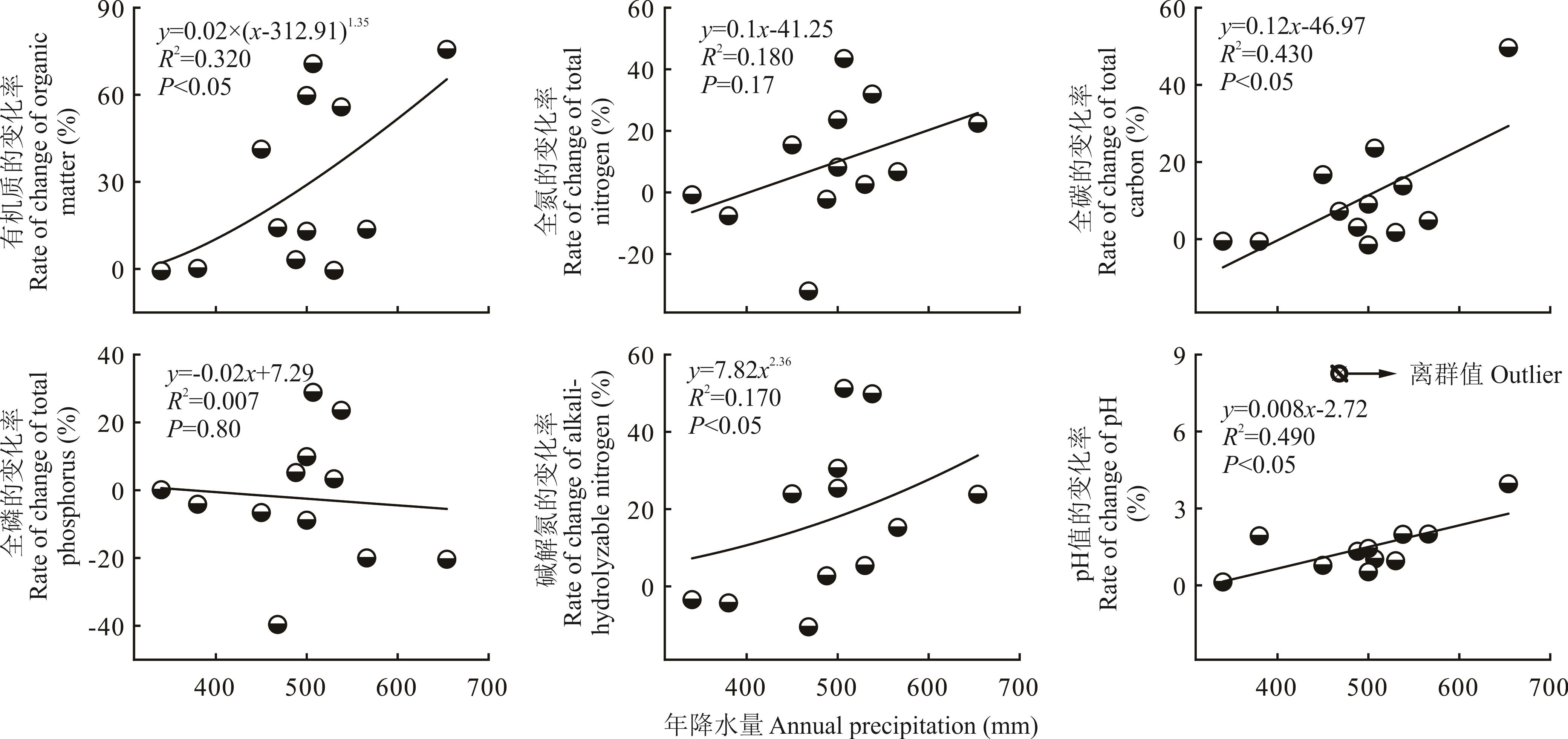
Fig.3 Regression relationships between annual precipitation and rates of change in soil nutrients
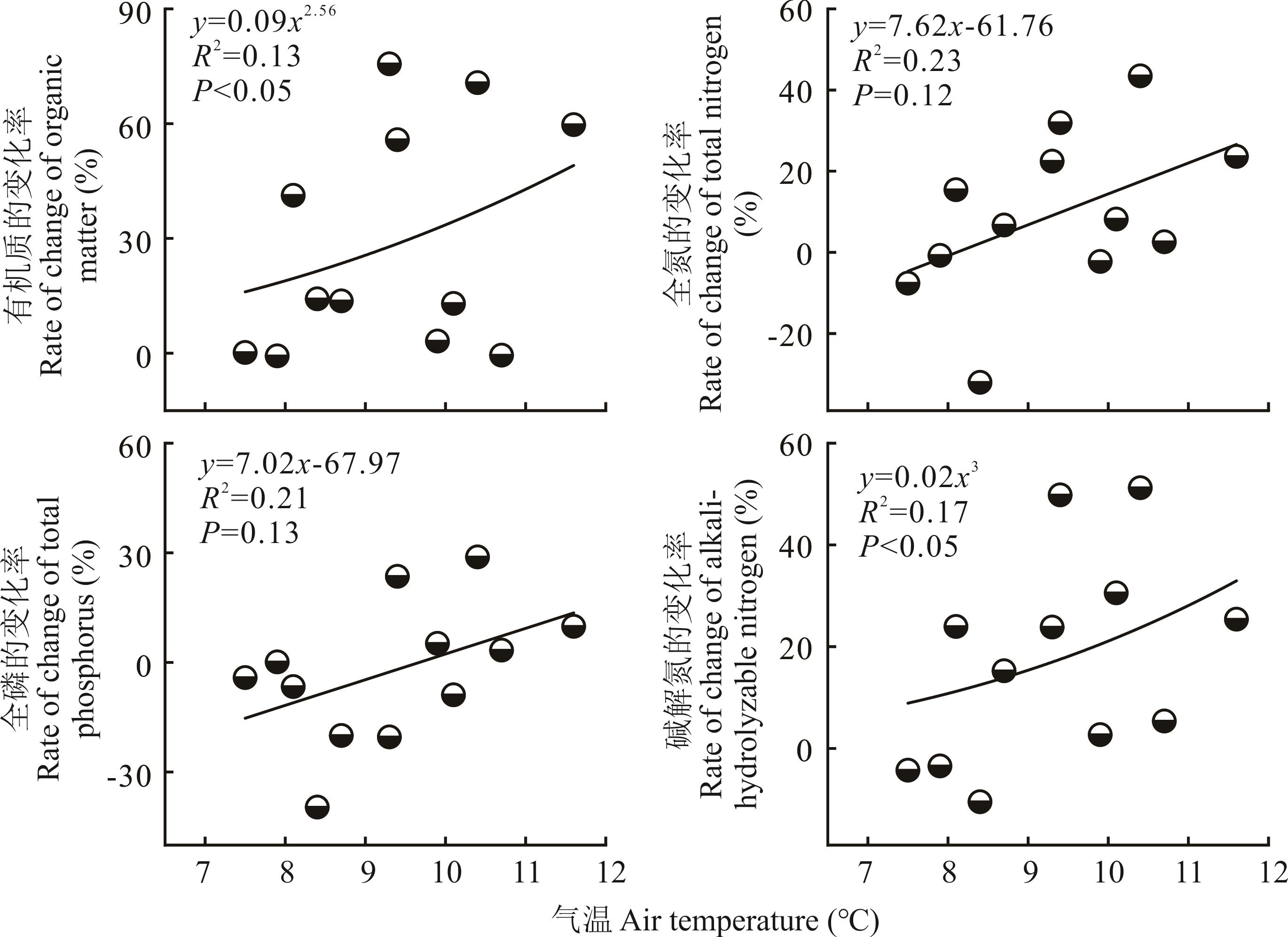
Fig.4 Regression relationships between average annual air temperature and rates of change in soil nutrients
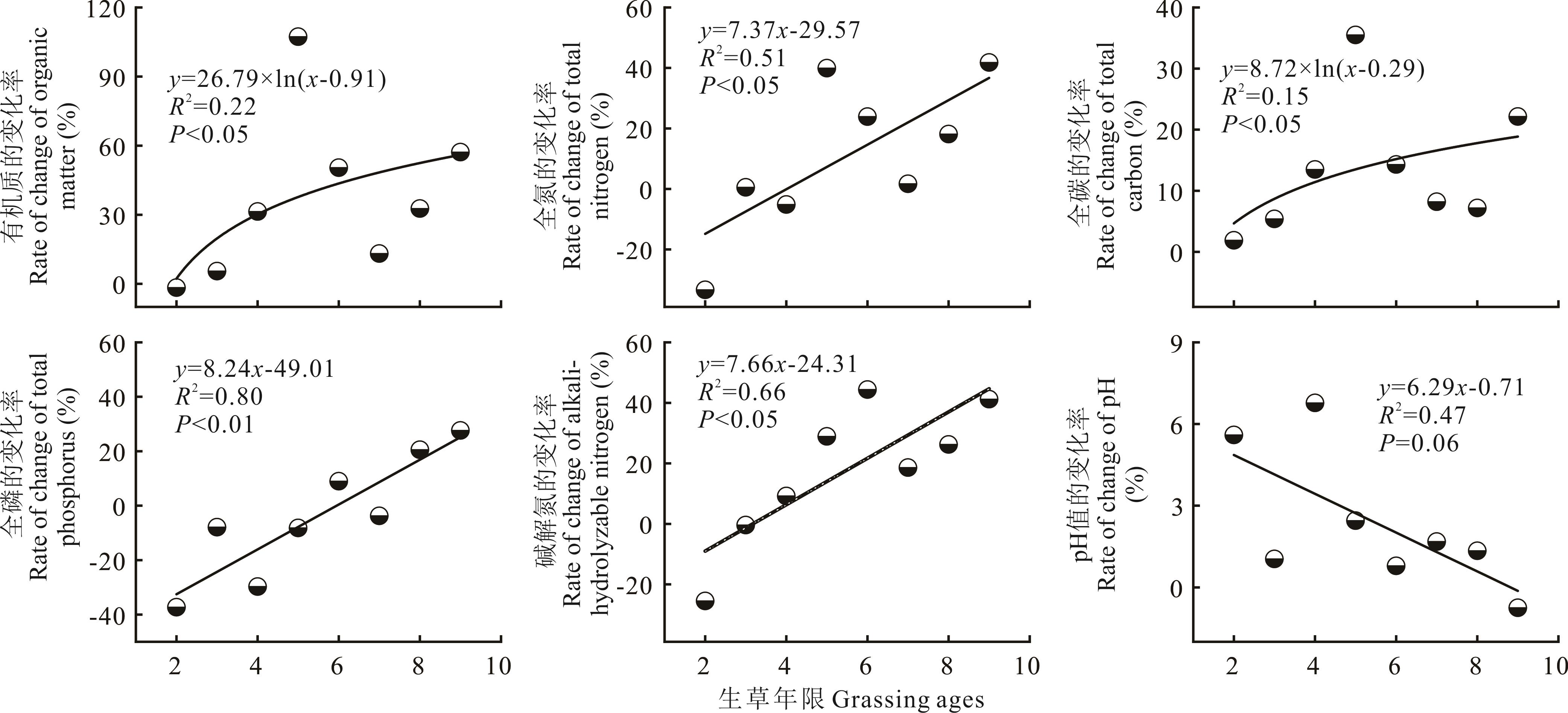
Fig.5 Regression relationships between grassing ages and rates of change in soil nutrients
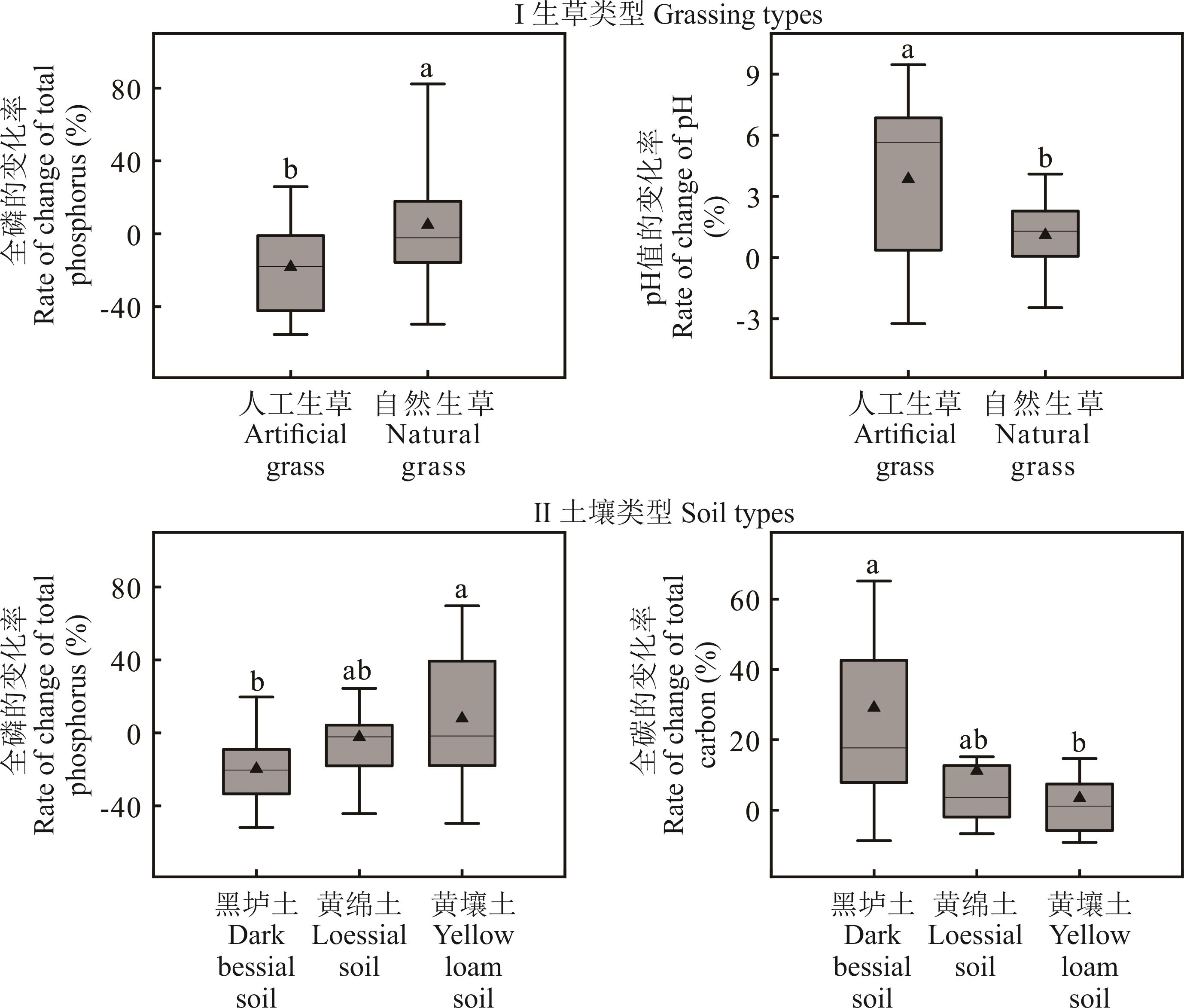
Fig.6 Characterization of nutrient rates of change in different grassing types and soil types
| [1] | Kong X B, Chen W G, Dang Y X. Current situation, challenges and transformation of cultivated land protection in China. Journal of Social Science of Hunan Normal University, 2023, 52(5): 31-41. |
| 孔祥斌, 陈文广, 党昱譞. 中国耕地保护现状、挑战与转型. 湖南师范大学社会科学学报, 2023, 52(5): 31-41. | |
| [2] | Hao Z W, Ji L. Present situation and prospect of the study on interplanting grass in orchard in China. Journal of Shanxi Agricultural Sciences, 2017, 45(3): 486-490. |
| 郝紫微, 季兰. 我国果园生草研究现状与展望. 山西农业科学, 2017, 45(3): 486-490. | |
| [3] | Hu P, Gao X D, Zhao X N, et al. Effects of grassing on orchard ecosystem services: a global meta-analysis. Chinese Journal of Eco-Agriculture, 2022, 30(8): 1238-1248. |
| 呼盼, 高晓东, 赵西宁, 等. 生草对果园生态系统服务功能的影响: 全球数据整合分析研究. 中国生态农业学报, 2022, 30(8): 1238-1248. | |
| [4] | Cao W D. Green fertilizer germplasm resource description specifications and data standards. Beijing: China Agriculture Press, 2007: 1-3. |
| 曹卫东. 绿肥种质资源描述规范和数据标准. 北京: 中国农业出版社, 2007: 1-3. | |
| [5] | Ma S K, Wang C M, Zhao C L, et al. Screening of water-saving and sink-enhancing plant species in arid and semi-arid regions of Northwest China. Journal of Beijing Forestry University, 2024, 46(8): 122-131. |
| 马沈轲, 王春梅, 赵春林, 等. 西北干旱半干旱地区节水增汇植物种类筛选. 北京林业大学学报, 2024, 46(8): 122-131. | |
| [6] | Couëdel A, Alletto L, Tribouillois H, et al. Cover crop crucifer-legume mixtures provide effective nitrate catch crop and nitrogen green manure ecosystem services. Agriculture, Ecosystems & Environment, 2018, 254(2): 50-59. |
| [7] | Li H K. Eco-environmental effect and integrated technical system of green cover in apple orchard in Weibei dryland farming areas. Yangling: Northwest A&F University, 2008. |
| 李会科. 渭北旱地苹果园生草的生态环境效应及综合技术体系构建. 杨凌: 西北农林科技大学, 2008. | |
| [8] | Chen J, Zhang Q, Yang M Y, et al. Effects of growing grass on microclimate environment and apple leaves in apple orchard. Journal of Agricultural Science and Technology, 2023, 25(12): 158-167. |
| 陈俊, 张琦, 杨梦宇, 等. 生草对苹果园小气候环境及苹果叶片的影响. 中国农业科技导报, 2023, 25(12): 158-167. | |
| [9] | Bhaskar V, Westbrook A S, Bellinder R R, et al. Integrated management of living mulches for weed control: A review. Weed Technology, 2021, 35(5): 856-868. |
| [10] | Cheng B, Zhao R F, Hua X Z, et al. Effects of interrow grass on soil nutrients, organic carbon components and enzyme activities in walnut orchard. Soil and Fertilizer Sciences in China, 2021(6): 57-64. |
| 程滨, 赵瑞芬, 滑小赞, 等. 行间生草对核桃园土壤养分、有机碳组分及酶活性影响. 中国土壤与肥料, 2021(6): 57-64. | |
| [11] | Li H K, Zhang G J, Zhao Z Y, et al. Effects of interplanting of herbage on soil nutrient of non-irrigated apple orchard in the Loess Plateau. Acta Horticulturae Sinica, 2007, 34(2): 477-480. |
| 李会科, 张广军, 赵政阳, 等. 黄土高原旱地苹果园生草对土壤养分的影响. 园艺学报, 2007, 34(2): 477-480. | |
| [12] | Zhang F, Ma Z H, Li W F, et al. Effects of grass types on soil nutrition and fruit quality of apple orchards in dryland area. Journal of Gansu Agricultural University, 2024, 59(1): 135-143. |
| 张帆, 马宗桓, 李文芳, 等. 生草类型对旱作区苹果园土壤营养及果实品质的影响. 甘肃农业大学学报, 2024, 59(1): 135-143. | |
| [13] | National Bureau of Statistics of China. Statistical yearbook of China. Beijing: China Statistics Press, 2024. |
| 国家统计局. 中国统计年鉴. 北京: 中国统计出版社, 2024. | |
| [14] | Zhu X Z, Zhang J T. Improving the method of plotless sampling for forest community. Journal of Beijing Forestry University, 2008, 30(1): 137-140. |
| 朱珣之, 张金屯. 森林群落无样地取样方法的改进. 北京林业大学学报, 2008, 30(1): 137-140. | |
| [15] | Lu R K. Analytical methods for soil and agro-chemistry. Beijing: China Agricultural Science and Technology Press, 2000. |
| 鲁如坤. 土壤农业化学分析方法. 北京: 中国农业科技出版社, 2000. | |
| [16] | Yan T Y. Variation characteristics of soil aggregates and aggregate carbon in orchards covered with living mulching. Yangling: Northwest A & F University, 2019. |
| 闫涛宇. 果园生草覆盖土壤团聚体和团聚体碳的变化特征. 杨凌: 西北农林科技大学, 2019. | |
| [17] | Liu Y P, Mao Y F, Hu Y L, et al. Effects of grass planting in apple orchard on soil microbial diversity, enzyme activities and carbon components. Journal of Plant Nutrition and Fertilizers, 2021, 27(10): 1792-1805. |
| 刘业萍, 毛云飞, 胡艳丽, 等. 苹果园生草对土壤微生物多样性、酶活性及碳组分的影响. 植物营养与肥料学报, 2021, 27(10): 1792-1805. | |
| [18] | Cheng Z Z, Fan X P, Xia Y, et al. Combined effects of living mulch and fertilizer reduction on nitrogen and phosphorus runoff loss in a citrus orchard. Journal of Agricultural Resources and Environment, 2023, 40(6): 1358-1367. |
| 程子珍, 范先鹏, 夏颖, 等. 生草覆盖及配合化肥减量对柑橘园地表径流氮磷流失的影响. 农业资源与环境学报, 2023, 40(6): 1358-1367. | |
| [19] | Qian J F, Wu J S, Huang J Q. Effects of sod-cultural practices on soil nutrients and microbial diversity in the Carya cathayensis forest. Acta Ecologica Sinica, 2014, 34(15): 4324-4332. |
| 钱进芳, 吴家森, 黄坚钦. 生草栽培对山核桃林地土壤养分及微生物多样性的影响. 生态学报, 2014, 34(15): 4324-4332. | |
| [20] | Huang Q Q. The study on the variation characteristics and bioavailability of soil phosphorus forms in apple orchard. Yangling: Northwest A & F University, 2021. |
| 黄倩倩. 果园生草土壤磷形态变化特征及其生物有效性的研究. 杨凌: 西北农林科技大学, 2021. | |
| [21] | Ye G K, E S Z, Chen Z Y, et al. The forms and classification methods of phosphorus in soil: research progress. Chinese Agricultural Science Bulletin, 2023, 39(1): 96-102. |
| 冶赓康, 俄胜哲, 陈政宇, 等. 土壤中磷的存在形态及分级方法研究进展. 中国农学通报, 2023, 39(1): 96-102. | |
| [22] | Yang L, Mao Y F, Hu Y L, et al. Effects of orchard grass on soil fertility and apple tree nutrition. Journal of Plant Nutrition and Fertilizers, 2020, 26(2): 325-337. |
| 杨露, 毛云飞, 胡艳丽, 等. 生草改善果园土壤肥力和苹果树体营养的效果. 植物营养与肥料学报, 2020, 26(2): 325-337. | |
| [23] | Wang Y, Chen C, Ma L N, et al. Inter-row grass: effects on soil nutrients and pH value of kiwifruit orchards in Northern Qinling Mountains. Chinese Agricultural Science Bulletin, 2019, 35(15): 59-65. |
| 王依, 陈成, 马拦妮, 等. 行间生草对秦岭北麓猕猴桃园土壤养分、pH值的影响. 中国农学通报, 2019, 35(15): 59-65. | |
| [24] | Wang Q H, Wang J D, Li S, et al. Experiments to simulate the salinisation process of loess under a dynamic water cycle. Environmental Research, 2025, 268: 120739. |
| [25] | Yue X F, Zhang T H, Li Y Q. Effects of rainfall regime during the growing season on the annual plant communities in semiarid sandy land, northeast China. Global Ecology and Conservation, 2023, 43: e02456. |
| [26] | Ju X, Yue Z R, Zhao S Y, et al. Response of soil pH to precipitation alterations across Chinese grassland: A Meta-analysis. Acta Agrestia Sinica, 2025, 33(1): 262-272. |
| 居新, 岳卓然, 赵守逸, 等. 中国草地土壤pH值对降雨变化的响应——Meta分析. 草地学报, 2025, 33(1): 262-272. | |
| [27] | Zheng C H, Wang R S, Zhou X, et al. Effects of mulch and irrigation regimes on water distribution and root competition in an apple-soybean intercropping system in Loess Plateau, China. Agricultural Water Management, 2021, 246: 106656. |
| [28] | Gu S, Dupas R, Casquin A, et al. Hydrological conditions influence the prediction of soil phosphorus indices on phosphorus leaching in hydromorphic soils. Science of the Total Environment, 2025, 967: 178856. |
| [29] | Xu C, Dao C J, Zhao P C, et al. Effects of rainfall intensity on soil nitrogen and phosphorus leaching characteristics in different planting patterns. Journal of Agro-Environment Science, 2024, 43(7): 1568-1579. |
| 徐翠, 刀承娇, 赵鹏程, 等. 不同生草模式下降雨强度对土壤氮磷淋溶特性的影响. 农业环境科学学报, 2024, 43(7): 1568-1579. | |
| [30] | Song B, Li Y S, Yu Z H, et al. Changes in enzyme activity, structure and growth strategies of the rhizosphere microbiome influenced by elevated temperature and CO2. Science of the Total Environment, 2024, 954: 176522. |
| [31] | Li P, Xiao X X, Yao Y, et al. Site-specific apparent optimum air temperature for vegetation photosynthesis across the globe. Scientific Data, 2024, 11(1): 758. |
| [32] | Fu X Q, Liu J E, Huang W X. Effects of natural grass on soil microbiology, nutrient and fruit quality of Nanfeng tangerine yard. Acta Horticulturae Sinica, 2015, 42(8): 1551-1558. |
| 付学琴, 刘琚珥, 黄文新. 南丰蜜橘园自然生草对土壤微生物和养分及果实品质的影响. 园艺学报, 2015, 42(8): 1551-1558. | |
| [33] | Tian J, Liang C Y, Lu X, et al. Mechanism of root exudates regulating plant responses to phosphorus deficiency. Journal of South China Agricultural University, 2019, 40(5): 175-185. |
| 田江, 梁翠月, 陆星, 等. 根系分泌物调控植物适应低磷胁迫的机制. 华南农业大学学报, 2019, 40(5): 175-185. | |
| [34] | Ma Y, Zhang D G. Regulation mechanisms of rhizosphere nutrient cycling processes in grassland: A review. Acta Prataculturae Sinica, 2020, 29(11): 172-182. |
| 马源, 张德罡. 草地根际过程对养分循环调控机制研究进展. 草业学报, 2020, 29(11): 172-182. | |
| [35] | Institute of Soil Science, Chinese Academy of Sciences. China soil database. Nanjing: Institute of Soil Science, Chinese Academy of Sciences, 2024. |
| 中国科学院南京土壤研究所. 中国土壤数据库. 南京: 中国科学院南京土壤研究所, 2024. | |
| [36] | Guo Z, Lu Y J. Influencing factors of content of organic carbon in cultivated soils of yellow soil and suggested countermeasures. Hans Journal of Agricultural Sciences, 2019, 9(6): 432-437. |
| 郭振, 卢垟杰. 黄壤有机碳含量的影响因素研究进展及提升对策. 农业科学, 2019, 9(6): 432-437. | |
| [37] | Xia L. Study on yellow soil adsorption and desorption characters of fluorine and phosphate in mountain regions of western Sichuan. Chengdu: Sichuan Agricultural University, 2010. |
| 夏丽. 氟、磷在川西山地黄壤中的吸附-解吸特征研究. 成都: 四川农业大学, 2010. | |
| [38] | Wang Q, Chen Y H, Zhang N Y, et al. Phosphorus adsorption and desorption characteristics as affected by long-term phosphorus application in black soil. Journal of Plant Nutrition and Fertilizers, 2022, 28(9): 1569-1581. |
| 王琼, 陈延华, 张乃于, 等. 长期施磷黑土中磷的吸附-解吸特征及其影响因素. 植物营养与肥料学报, 2022, 28(9): 1569-1581. |
| [1] | Jing WANG, Xu-dong LI, Tian-hu HAN, De-cao NIU, Chun-li BAI, Ding GUO. Distribution of soil aggregates in different vegetation micro-patches in alpine meadows and the relationship with organic carbon mineralization [J]. Acta Prataculturae Sinica, 2026, 35(2): 15-27. |
| [2] | Yi-xin SONG, Ming-yuan LI, Ya-sheng MAIRIYANGU, Ji-lian WANG. The community structure and functional diversity of rhizosphere soil fungi of three plant species in the alpine grassland of Xinjiang [J]. Acta Prataculturae Sinica, 2026, 35(2): 167-178. |
| [3] | Dong-ya LIU, Yan YANG, Jing LIU, Bo WANG, Zhi-gang LI. Effects of short-term sheep manure return on soil quality of desert steppe [J]. Acta Prataculturae Sinica, 2026, 35(2): 28-39. |
| [4] | Kong-tao WEI, Chun-ping ZHANG, Yang YU, Zheng-she ZHANG, Ze ZHOU, Xue ZHANG, Xin-xin WANG, Si-yu YUE, Quan CAO, Quan-min DONG. Yield performance, nutritional quality, and soil physicochemical responses of oat (Avena sativa) cultivars in the Qinghai Lake-Gonghe Basin region [J]. Acta Prataculturae Sinica, 2026, 35(1): 107-118. |
| [5] | Jia-hui KANG, Min-na ZHENG, Rui-jie GONG, Zhi-shun HAN, Yan-ni CHEN, Xiu-zhi LIANG. Effects of nitrogen and phosphorus supplementation on ecological stoichiometric characteristics of soil microbial-extracellular enzymes in annual artificial grassland [J]. Acta Prataculturae Sinica, 2026, 35(1): 13-24. |
| [6] | Ying ZHANG, Shan-mu HE, Ao-lei HE, Chang-ning LI, Tuo YAO. Effects of microbial inoculants combined with organic calcium protein on alfalfa growth and soil enzyme activity [J]. Acta Prataculturae Sinica, 2026, 35(1): 25-39. |
| [7] | Xu LUO, Hui MA, Cui HAN, Ya-xin ZHAO, Ying ZHAO, Ying-zhong XIE, Jian-ping LI. Response of aboveground net primary productivity to plant species richness and identification of the factors of influence [J]. Acta Prataculturae Sinica, 2025, 34(9): 26-37. |
| [8] | Jian-min RAN, Xiao-yan SONG, Dan WANG, Chang-ting WANG. Changes in soil organic carbon fractions and carbon sequestration potential of degraded alpine meadows [J]. Acta Prataculturae Sinica, 2025, 34(9): 38-52. |
| [9] | Jun-ling CHEN, Sha-sha WANG, Jing YE, Yi LIN, Yi-xiang WANG. Soil carbon mineralization in an orchard with and without interplanted ground cover species and its temperature sensitivity under long-term conditions [J]. Acta Prataculturae Sinica, 2025, 34(9): 53-64. |
| [10] | Hong-yu MA, Xiao-guo ZHOU, Bao WANG, Yu-chuan SONG, Aikeremu·Abulatijiang, Shao-li JIANG, Jiu-zhou MIN, Hong-mei ZHAO, Jun-hui CHENG. Differences in soil microbial functional gene abundance between rhizosphere soils of Haloxylon ammodendron and Tamarix chinensis in the Junggar Desert [J]. Acta Prataculturae Sinica, 2025, 34(8): 109-122. |
| [11] | Hao PENG, Bao-zhu DONG, Li-juan MA, Xiao-dong YU, Yi-fan ZHANG, Xiao-fang LI. Composition and carbon-fixation pathways of carbon-fixing microorganisms in soils of a typical steppe and desert steppe in Inner Mongolia [J]. Acta Prataculturae Sinica, 2025, 34(8): 123-131. |
| [12] | Kun ZHANG, Jian-xia QIAO, Jin-sheng LI, Yu-peng WANG, Ke-si LIU. Effects of different restoration materials on soil physicochemical properties and microbial communities in degraded alpine grassland [J]. Acta Prataculturae Sinica, 2025, 34(8): 132-148. |
| [13] | Bang-yan ZHANG, Xiao-wei XIE, Zhao-hui ZHANG, Jin-min WU, Bin WANG, Xing XU. Effect of organic-inorganic amendments on the quality of saline-alkaline soil and yield of Echinochloa frumentacea [J]. Acta Prataculturae Sinica, 2025, 34(8): 15-29. |
| [14] | Tian-yi LU, Yan-mei AI, Yang WANG, Meng NA, Shang-qi XU, Ji-hai ZHOU. Cadmium enrichment characteristics and growth response of rice under excess cadmium stress in soil [J]. Acta Prataculturae Sinica, 2025, 34(8): 66-78. |
| [15] | Shan-shan TANG, Min HU. Differences in enzyme activity and bacterial community structure in rhizosphere soil of four grass species [J]. Acta Prataculturae Sinica, 2025, 34(8): 99-108. |
| Viewed | ||||||
|
Full text |
|
|||||
|
Abstract |
|
|||||
