
ISSN 1004-5759 CN 62-1105/S
Acta Prataculturae Sinica ›› 2026, Vol. 35 ›› Issue (12): 41-53.DOI: 10.11686/cyxb2025512
Previous Articles Next Articles
Xu-heng ZHAO1( ), Yi-xiang WANG1, Guo-qing HOU2, Hui ZHANG2, Ying-chao SUN1, Xiao-kai ZHENG1, Hong-su HE1(), Fan-fan ZHANG1()
Received:2025-12-18
Revised:2026-03-24
Online:2026-12-20
Published:2026-11-02
Contact:
Hong-su HE,Fan-fan ZHANG
Xu-heng ZHAO, Yi-xiang WANG, Guo-qing HOU, Hui ZHANG, Ying-chao SUN, Xiao-kai ZHENG, Hong-su HE, Fan-fan ZHANG. Photosynthetic characteristics, yield performance, and soil physical and chemical properties under a Broussonetia papyrifera/Dactylis glomerata intercropping system in the oasis area of Xinjiang[J]. Acta Prataculturae Sinica, 2026, 35(12): 41-53.
土层 Soil layer (cm) | 土壤pH Soil pH | 全磷 Total phosphorus (g·kg-1) | 全氮 Total nitrogen (g·kg-1) | 全钾 Total potassium (g·kg-1) | 有机碳 Organic carbon (g·kg-1) |
|---|---|---|---|---|---|
| 0~20 | 8.07±0.01 | 1.28±0.10 | 3.08±0.07 | 16.60±1.54 | 30.29±3.45 |
| 20~40 | 8.07±0.01 | 1.37±0.06 | 3.16±0.11 | 16.19±1.32 | 33.33±2.87 |
Table 1 Basic physical and chemical properties of the tested soil
土层 Soil layer (cm) | 土壤pH Soil pH | 全磷 Total phosphorus (g·kg-1) | 全氮 Total nitrogen (g·kg-1) | 全钾 Total potassium (g·kg-1) | 有机碳 Organic carbon (g·kg-1) |
|---|---|---|---|---|---|
| 0~20 | 8.07±0.01 | 1.28±0.10 | 3.08±0.07 | 16.60±1.54 | 30.29±3.45 |
| 20~40 | 8.07±0.01 | 1.37±0.06 | 3.16±0.11 | 16.19±1.32 | 33.33±2.87 |
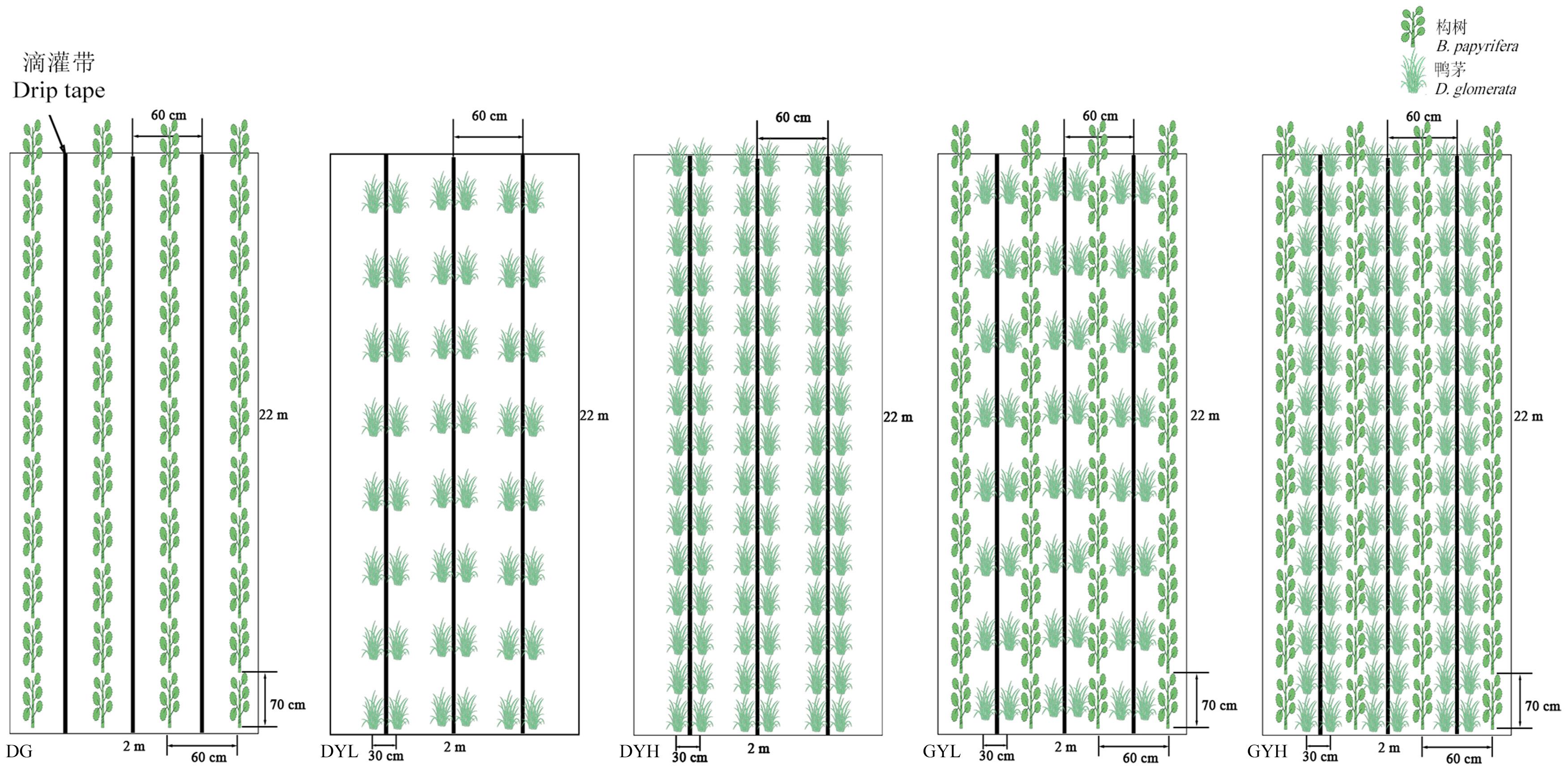
Fig.1 Schematic diagram of intercropping model of B. papyrifera-D. glomerata
茬次 Cut | 鸭茅D. glomerata | 杂交构树B. papyrifera | ||||
|---|---|---|---|---|---|---|
| 出苗期Seeding period | 分蘖期Tillering stage | 抽穗期Heading stage | 初花期Early flowering stage | 幼苗期Seedling stage | 生长期Growing period | |
| 1 | 05-10 | 05-22 | 06-18 | 06-25 | 05-10 | 06-25 |
| 2 | - | 07-05 | 07-25 | 08-17 | - | 08-17 |
| 3 | - | 08-15 | 09-13 | 10-07 | - | 10-07 |
Table 2 Phenological periods of B. papyrifera and D. glomerata in the experimental year (2024)
茬次 Cut | 鸭茅D. glomerata | 杂交构树B. papyrifera | ||||
|---|---|---|---|---|---|---|
| 出苗期Seeding period | 分蘖期Tillering stage | 抽穗期Heading stage | 初花期Early flowering stage | 幼苗期Seedling stage | 生长期Growing period | |
| 1 | 05-10 | 05-22 | 06-18 | 06-25 | 05-10 | 06-25 |
| 2 | - | 07-05 | 07-25 | 08-17 | - | 08-17 |
| 3 | - | 08-15 | 09-13 | 10-07 | - | 10-07 |
作物 Plant | 处理 Treatment | 净光合速率 Net photosynthetic rate | 胞间二氧化碳浓度 Intercellular CO? concentration | 气孔导度 Stomatal conductance | 蒸腾速率 Transpiration rate |
|---|---|---|---|---|---|
杂交构树 B. papyrifera | DG | 27.73±0.34b | 36.57±0.10c | 81.56±0.72c | 3.42±0.05c |
| GYL | 36.32±0.19a | 41.50±0.47b | 112.61±2.71a | 4.38±0.02a | |
| GYH | 36.39±0.39a | 48.85±0.25a | 89.10±0.60b | 3.89±0.04b | |
鸭茅 D. glomerata | DYL | 28.15±0.48c | 29.16±0.20c | 47.69±2.34d | 2.65±0.65d |
| DYH | 27.44±0.51c | 27.43±0.06c | 53.38±4.66c | 3.05±0.56c | |
| GYL | 44.77±2.84b | 54.02±3.07b | 111.21±0.62a | 3.92±0.31a | |
| GYH | 47.82±2.11a | 56.31±3.11a | 109.00±0.45b | 3.75±0.22b |
Table 3 Effect of intercropping patterns on photosynthetic characteristics of B. papyrifera and D. glomerata (μmol·m-2·s-1)
作物 Plant | 处理 Treatment | 净光合速率 Net photosynthetic rate | 胞间二氧化碳浓度 Intercellular CO? concentration | 气孔导度 Stomatal conductance | 蒸腾速率 Transpiration rate |
|---|---|---|---|---|---|
杂交构树 B. papyrifera | DG | 27.73±0.34b | 36.57±0.10c | 81.56±0.72c | 3.42±0.05c |
| GYL | 36.32±0.19a | 41.50±0.47b | 112.61±2.71a | 4.38±0.02a | |
| GYH | 36.39±0.39a | 48.85±0.25a | 89.10±0.60b | 3.89±0.04b | |
鸭茅 D. glomerata | DYL | 28.15±0.48c | 29.16±0.20c | 47.69±2.34d | 2.65±0.65d |
| DYH | 27.44±0.51c | 27.43±0.06c | 53.38±4.66c | 3.05±0.56c | |
| GYL | 44.77±2.84b | 54.02±3.07b | 111.21±0.62a | 3.92±0.31a | |
| GYH | 47.82±2.11a | 56.31±3.11a | 109.00±0.45b | 3.75±0.22b |
茬次 Cut | 处理 Treatment | 鲜草产量 Fresh yield (t·hm-2) | 干草产量 Hay yield (t·hm-2) | 株高Plant height (cm) | |
|---|---|---|---|---|---|
| 杂交构树B. papyrifera | 鸭茅D. glomerata | ||||
| 1 | DG | 20.15±0.23Cd | 5.55±0.53Bb | 98.40±4.17Aa | - |
| DYL | 19.90±0.48Bd | 5.06±0.16Bb | - | 78.03±1.52Ba | |
| DYH | 22.15±0.83Bc | 6.12±0.97Ab | - | 72.09±1.07Bb | |
| GYL | 46.05±0.65Ca | 13.34±2.14Aa | 92.18±4.20Ba | 54.48±1.15Cc | |
| GYH | 41.15±1.62Bb | 11.15±1.24Aa | 76.82±1.50Bb | 54.05±1.24Bc | |
| 2 | DG | 22.75±0.24Ad | 6.63±0.15Ac | 99.93±3.27Ab | - |
| DYL | 20.49±0.49ABd | 6.00±0.19Ac | - | 88.73±4.45Aa | |
| DYH | 22.82±0.84ABc | 7.24±1.18Ac | - | 76.75±1.44Ab | |
| GYL | 47.43±0.66Ba | 15.53±2.48Aa | 109.84±3.18Aa | 65.70±1.66Ac | |
| GYH | 42.45±1.66Ab | 12.96±1.44Ab | 96.24±1.05Ab | 61.18±1.40Ac | |
| 3 | DG | 21.27±0.31Bd | 5.98±0.52ABb | 97.33±4.50Aa | - |
| DYL | 21.09±0.51Ad | 5.82±0.18Ac | - | 70.17±2.00Ca | |
| DYH | 23.47±0.86Ac | 7.04±1.11Ac | - | 67.34±1.06Ca | |
| GYL | 48.80±0.69Aa | 15.19±1.14Aa | 104.05±3.36Aa | 58.56±1.75Bb | |
| GYH | 43.43±2.02Ab | 12.65±1.59Ab | 99.14±4.69Aa | 56.78±1.75Bb | |
Table 4 Effect of intercropping patterns on agronomic traits of crops
茬次 Cut | 处理 Treatment | 鲜草产量 Fresh yield (t·hm-2) | 干草产量 Hay yield (t·hm-2) | 株高Plant height (cm) | |
|---|---|---|---|---|---|
| 杂交构树B. papyrifera | 鸭茅D. glomerata | ||||
| 1 | DG | 20.15±0.23Cd | 5.55±0.53Bb | 98.40±4.17Aa | - |
| DYL | 19.90±0.48Bd | 5.06±0.16Bb | - | 78.03±1.52Ba | |
| DYH | 22.15±0.83Bc | 6.12±0.97Ab | - | 72.09±1.07Bb | |
| GYL | 46.05±0.65Ca | 13.34±2.14Aa | 92.18±4.20Ba | 54.48±1.15Cc | |
| GYH | 41.15±1.62Bb | 11.15±1.24Aa | 76.82±1.50Bb | 54.05±1.24Bc | |
| 2 | DG | 22.75±0.24Ad | 6.63±0.15Ac | 99.93±3.27Ab | - |
| DYL | 20.49±0.49ABd | 6.00±0.19Ac | - | 88.73±4.45Aa | |
| DYH | 22.82±0.84ABc | 7.24±1.18Ac | - | 76.75±1.44Ab | |
| GYL | 47.43±0.66Ba | 15.53±2.48Aa | 109.84±3.18Aa | 65.70±1.66Ac | |
| GYH | 42.45±1.66Ab | 12.96±1.44Ab | 96.24±1.05Ab | 61.18±1.40Ac | |
| 3 | DG | 21.27±0.31Bd | 5.98±0.52ABb | 97.33±4.50Aa | - |
| DYL | 21.09±0.51Ad | 5.82±0.18Ac | - | 70.17±2.00Ca | |
| DYH | 23.47±0.86Ac | 7.04±1.11Ac | - | 67.34±1.06Ca | |
| GYL | 48.80±0.69Aa | 15.19±1.14Aa | 104.05±3.36Aa | 58.56±1.75Bb | |
| GYH | 43.43±2.02Ab | 12.65±1.59Ab | 99.14±4.69Aa | 56.78±1.75Bb | |
| 茬次Cut | 处理Treatment | LER1 | LER2 | LER |
|---|---|---|---|---|
| 1 | GYL | 1.28 | 0.83 | 2.11 |
| GYH | 0.96 | 0.81 | 1.77 | |
| 2 | GYL | 1.04 | 0.65 | 1.70 |
| GYH | 0.80 | 0.62 | 1.42 | |
| 3 | GYL | 1.22 | 1.03 | 2.25 |
| GYH | 1.03 | 0.84 | 1.87 |
Table 5 Land equivalent ratios of different intercropping patterns
| 茬次Cut | 处理Treatment | LER1 | LER2 | LER |
|---|---|---|---|---|
| 1 | GYL | 1.28 | 0.83 | 2.11 |
| GYH | 0.96 | 0.81 | 1.77 | |
| 2 | GYL | 1.04 | 0.65 | 1.70 |
| GYH | 0.80 | 0.62 | 1.42 | |
| 3 | GYL | 1.22 | 1.03 | 2.25 |
| GYH | 1.03 | 0.84 | 1.87 |
茬次 Cut | 处理 Treatment | 干物质 Dry matter | 粗蛋白 Crude protein | 中性洗涤纤维 Neutral detergent fiber | 酸性洗涤纤维 Acid detergent fiber | 可溶性碳水化合物 Water soluble carbohydrates | 粗脂肪 Ether extract |
|---|---|---|---|---|---|---|---|
| 1 | DG | 27.54±2.25Ba | 21.52±0.19Aa | 41.75±2.73Aa | 19.89±0.98Aa | 7.43±0.20Ca | 8.90±1.06Aa |
| GYL | 28.02±1.20Ba | 20.37±0.35Ab | 30.07±1.21Ab | 13.49±0.38Ab | 6.26±0.17Cb | 7.07±0.23Ab | |
| GYH | 28.97±4.61Aa | 19.41±0.42Ac | 32.42±0.65Ab | 13.63±0.46Ab | 6.42±0.31Bb | 7.84±0.24Aab | |
| 2 | DG | 28.12±2.29ABa | 20.29±0.20Ba | 39.37±2.62Aa | 18.38±0.76Aa | 8.34±0.23Ba | 8.13±0.86Aa |
| GYL | 29.40±1.24ABa | 18.52±0.19Bb | 28.37±2.62Ab | 12.68±0.76ABb | 6.78±0.29Bb | 7.53±0.82Aa | |
| GYH | 28.11±4.95Aa | 18.31±0.18Bb | 30.09±1.28Bb | 13.91±0.45Ab | 7.29±0.35Ab | 8.64±1.25Aa | |
| 3 | DG | 31.94±0.96Aa | 18.55±0.21Ca | 40.65±2.73Aa | 19.59±1.03Aa | 10.07±0.26Aa | 6.91±1.52Aa |
| GYL | 32.51±2.27Aa | 17.54±0.25Cb | 28.17±1.72Ab | 11.95±0.03Bc | 7.36±0.26Ab | 5.98±1.04Aa | |
| GYH | 32.67±5.20Aa | 16.82±0.14Cc | 31.44±0.97ABb | 13.79±0.67Ab | 7.47±0.39Ab | 7.68±0.73Aa |
Table 6 Effect of intercropping patterns on nutritional quality of B. papyrifera (%)
茬次 Cut | 处理 Treatment | 干物质 Dry matter | 粗蛋白 Crude protein | 中性洗涤纤维 Neutral detergent fiber | 酸性洗涤纤维 Acid detergent fiber | 可溶性碳水化合物 Water soluble carbohydrates | 粗脂肪 Ether extract |
|---|---|---|---|---|---|---|---|
| 1 | DG | 27.54±2.25Ba | 21.52±0.19Aa | 41.75±2.73Aa | 19.89±0.98Aa | 7.43±0.20Ca | 8.90±1.06Aa |
| GYL | 28.02±1.20Ba | 20.37±0.35Ab | 30.07±1.21Ab | 13.49±0.38Ab | 6.26±0.17Cb | 7.07±0.23Ab | |
| GYH | 28.97±4.61Aa | 19.41±0.42Ac | 32.42±0.65Ab | 13.63±0.46Ab | 6.42±0.31Bb | 7.84±0.24Aab | |
| 2 | DG | 28.12±2.29ABa | 20.29±0.20Ba | 39.37±2.62Aa | 18.38±0.76Aa | 8.34±0.23Ba | 8.13±0.86Aa |
| GYL | 29.40±1.24ABa | 18.52±0.19Bb | 28.37±2.62Ab | 12.68±0.76ABb | 6.78±0.29Bb | 7.53±0.82Aa | |
| GYH | 28.11±4.95Aa | 18.31±0.18Bb | 30.09±1.28Bb | 13.91±0.45Ab | 7.29±0.35Ab | 8.64±1.25Aa | |
| 3 | DG | 31.94±0.96Aa | 18.55±0.21Ca | 40.65±2.73Aa | 19.59±1.03Aa | 10.07±0.26Aa | 6.91±1.52Aa |
| GYL | 32.51±2.27Aa | 17.54±0.25Cb | 28.17±1.72Ab | 11.95±0.03Bc | 7.36±0.26Ab | 5.98±1.04Aa | |
| GYH | 32.67±5.20Aa | 16.82±0.14Cc | 31.44±0.97ABb | 13.79±0.67Ab | 7.47±0.39Ab | 7.68±0.73Aa |
茬次 Cut | 处理 Treatment | 干物质 Dry matter | 粗蛋白 Crude protein | 中性洗涤纤维 Neutral detergent fiber | 酸性洗涤纤维 Acid detergent fiber | 可溶性碳水化合物 Water soluble carbohydrates | 粗脂肪 Ether extract |
|---|---|---|---|---|---|---|---|
| 1 | DYL | 25.44±0.94Ba | 20.57±0.11Aa | 59.21±0.54Aa | 33.55±0.82Aa | 8.87±0.45Aa | 8.35±0.35Aa |
| DYH | 27.61±3.96Aa | 17.29±0.03Ab | 50.65±3.07Bb | 30.48±0.94Ab | 7.38±0.29Ab | 8.14±0.12Aa | |
| GYL | 25.71±2.51Aa | 16.35±0.16Ac | 38.90±2.45Ac | 18.85±1.24Ac | 7.31±0.21Abc | 5.72±0.30Bb | |
| GYH | 26.56±3.85Aa | 15.12±0.13Bd | 40.68±5.68Ac | 19.39±2.34Ac | 6.67±0.42Ac | 4.04±0.43Bc | |
| 2 | DYL | 29.28±1.10ABa | 18.22±0.08Ca | 56.35±0.74Ba | 31.57±0.77Ba | 6.61±0.32Ca | 6.99±0.59Bb |
| DYH | 27.97±2.65Aa | 15.32±0.03Cb | 53.07±0.63ABb | 28.69±0.88Ab | 5.59±0.37Cb | 8.74±0.50Aa | |
| GYL | 28.87±3.56Aa | 14.94±0.15Bc | 36.91±2.54Ac | 17.03±2.52Ac | 4.82±0.24Cc | 6.94±0.79Ab | |
| GYH | 26.62±2.70Aa | 13.85±0.19Cd | 39.85±1.68Ac | 19.10±1.11Ac | 4.14±0.16Cd | 5.92±0.57Ab | |
| 3 | DYL | 31.68±4.75Aa | 19.59±0.09Ba | 58.10±0.78Aa | 32.93±0.80ABa | 7.82±0.40Ba | 9.11±0.55Aa |
| DYH | 29.27±1.08Aa | 16.47±0.03Bb | 54.73±0.65Aa | 29.90±0.92Aa | 6.50±0.25Bb | 7.85±0.58Ab | |
| GYL | 29.95±4.34Aa | 16.12±0.14Ac | 38.29±2.62Ab | 17.71±2.18Ab | 6.43±0.19Bbc | 6.57±0.53ABc | |
| GYH | 27.03±2.84Aa | 15.69±0.11Ad | 40.01±2.78Ab | 19.03±2.29Ab | 5.87±0.36Bc | 5.69±0.09Ac |
Table 7 Effects of intercropping patterns on nutritional quality of D. glomerata (%)
茬次 Cut | 处理 Treatment | 干物质 Dry matter | 粗蛋白 Crude protein | 中性洗涤纤维 Neutral detergent fiber | 酸性洗涤纤维 Acid detergent fiber | 可溶性碳水化合物 Water soluble carbohydrates | 粗脂肪 Ether extract |
|---|---|---|---|---|---|---|---|
| 1 | DYL | 25.44±0.94Ba | 20.57±0.11Aa | 59.21±0.54Aa | 33.55±0.82Aa | 8.87±0.45Aa | 8.35±0.35Aa |
| DYH | 27.61±3.96Aa | 17.29±0.03Ab | 50.65±3.07Bb | 30.48±0.94Ab | 7.38±0.29Ab | 8.14±0.12Aa | |
| GYL | 25.71±2.51Aa | 16.35±0.16Ac | 38.90±2.45Ac | 18.85±1.24Ac | 7.31±0.21Abc | 5.72±0.30Bb | |
| GYH | 26.56±3.85Aa | 15.12±0.13Bd | 40.68±5.68Ac | 19.39±2.34Ac | 6.67±0.42Ac | 4.04±0.43Bc | |
| 2 | DYL | 29.28±1.10ABa | 18.22±0.08Ca | 56.35±0.74Ba | 31.57±0.77Ba | 6.61±0.32Ca | 6.99±0.59Bb |
| DYH | 27.97±2.65Aa | 15.32±0.03Cb | 53.07±0.63ABb | 28.69±0.88Ab | 5.59±0.37Cb | 8.74±0.50Aa | |
| GYL | 28.87±3.56Aa | 14.94±0.15Bc | 36.91±2.54Ac | 17.03±2.52Ac | 4.82±0.24Cc | 6.94±0.79Ab | |
| GYH | 26.62±2.70Aa | 13.85±0.19Cd | 39.85±1.68Ac | 19.10±1.11Ac | 4.14±0.16Cd | 5.92±0.57Ab | |
| 3 | DYL | 31.68±4.75Aa | 19.59±0.09Ba | 58.10±0.78Aa | 32.93±0.80ABa | 7.82±0.40Ba | 9.11±0.55Aa |
| DYH | 29.27±1.08Aa | 16.47±0.03Bb | 54.73±0.65Aa | 29.90±0.92Aa | 6.50±0.25Bb | 7.85±0.58Ab | |
| GYL | 29.95±4.34Aa | 16.12±0.14Ac | 38.29±2.62Ab | 17.71±2.18Ab | 6.43±0.19Bbc | 6.57±0.53ABc | |
| GYH | 27.03±2.84Aa | 15.69±0.11Ad | 40.01±2.78Ab | 19.03±2.29Ab | 5.87±0.36Bc | 5.69±0.09Ac |

Fig.2 Effects of intercropping patterns on soil (0-40 cm) of B. papyrifera and D. glomerata
茬次 Cut | 处理 Treatment | pH | 脲酶Urease (mg·g-1·d-1) | 碱性磷酸酶Alkaline phosphatase (mg·g-1·d-1) | 过氧化氢酶Catalase (mg·g-1·d-1) | 蔗糖酶Sucrase (mg·g-1·d-1) |
|---|---|---|---|---|---|---|
| 1 | DG | 7.98±0.09Ab | 3.89±0.03Ba | 0.54±0.02Ba | 1.14±0.05Ca | 10.19±0.28Bd |
| DYL | 7.98±0.06Ab | 3.81±0.13Ca | 0.46±0.01Bb | 0.98±0.05Cc | 10.21±0.42Cd | |
| DYH | 7.99±0.03Ab | 3.78±0.06Ca | 0.53±0.02Ba | 1.05±0.03Cbc | 12.95±2.24Bc | |
| GYL | 8.25±0.12Aa | 3.98±0.25Ca | 0.35±0.02Cc | 1.18±0.06Ca | 18.97±1.31Ba | |
| GYH | 8.21±0.06Aa | 3.89±0.06Ba | 0.33±0.01Cc | 1.13±0.04Cab | 16.53±0.54Bb | |
| 2 | DG | 8.00±0.03Ac | 5.29±0.04Aa | 0.57±0.02Ab | 1.28±0.05Ab | 15.16±1.81Ab |
| DYL | 7.98±0.01Acd | 5.41±0.18Aa | 0.52±0.01Ac | 1.33±0.06Ab | 22.80±0.93Aa | |
| DYH | 7.98±0.01Acd | 5.41±0.09Aa | 0.62±0.02Aa | 1.26±0.04Ab | 20.63±3.56Aa | |
| GYL | 8.26±0.01Aa | 5.81±0.36Aa | 0.40±0.05Bd | 1.48±0.07Aa | 22.10±0.73Aa | |
| GYH | 8.22±0.01Ab | 5.28±0.08Aa | 0.41±0.01Bd | 1.32±0.04Ab | 21.02±1.44Aa | |
| 3 | DG | 8.04±0.08Ab | 3.67±0.02Cc | 0.47±0.02Ca | 1.26±0.01Bbc | 13.28±0.91Ac |
| DYL | 8.01±0.05Ab | 4.03±0.14Ba | 0.38±0.01Cc | 1.21±0.02Bc | 12.66±0.52Bc | |
| DYH | 7.99±0.02Ab | 4.01±0.05Ba | 0.46±0.02Cab | 1.14±0.01Bd | 15.29±0.64Bb | |
| GYL | 8.37±0.05Aa | 4.05±0.25Ba | 0.41±0.06Abc | 1.39±0.04Ba | 16.98±0.13Ca | |
| GYH | 8.30±0.05Aa | 3.85±0.06Cb | 0.43±0.01Aabc | 1.29±0.04Bb | 14.70±0.54Bb |
Table 8 Effect of intercropping patterns on soil enzyme activities in the 0-20 cm layer
茬次 Cut | 处理 Treatment | pH | 脲酶Urease (mg·g-1·d-1) | 碱性磷酸酶Alkaline phosphatase (mg·g-1·d-1) | 过氧化氢酶Catalase (mg·g-1·d-1) | 蔗糖酶Sucrase (mg·g-1·d-1) |
|---|---|---|---|---|---|---|
| 1 | DG | 7.98±0.09Ab | 3.89±0.03Ba | 0.54±0.02Ba | 1.14±0.05Ca | 10.19±0.28Bd |
| DYL | 7.98±0.06Ab | 3.81±0.13Ca | 0.46±0.01Bb | 0.98±0.05Cc | 10.21±0.42Cd | |
| DYH | 7.99±0.03Ab | 3.78±0.06Ca | 0.53±0.02Ba | 1.05±0.03Cbc | 12.95±2.24Bc | |
| GYL | 8.25±0.12Aa | 3.98±0.25Ca | 0.35±0.02Cc | 1.18±0.06Ca | 18.97±1.31Ba | |
| GYH | 8.21±0.06Aa | 3.89±0.06Ba | 0.33±0.01Cc | 1.13±0.04Cab | 16.53±0.54Bb | |
| 2 | DG | 8.00±0.03Ac | 5.29±0.04Aa | 0.57±0.02Ab | 1.28±0.05Ab | 15.16±1.81Ab |
| DYL | 7.98±0.01Acd | 5.41±0.18Aa | 0.52±0.01Ac | 1.33±0.06Ab | 22.80±0.93Aa | |
| DYH | 7.98±0.01Acd | 5.41±0.09Aa | 0.62±0.02Aa | 1.26±0.04Ab | 20.63±3.56Aa | |
| GYL | 8.26±0.01Aa | 5.81±0.36Aa | 0.40±0.05Bd | 1.48±0.07Aa | 22.10±0.73Aa | |
| GYH | 8.22±0.01Ab | 5.28±0.08Aa | 0.41±0.01Bd | 1.32±0.04Ab | 21.02±1.44Aa | |
| 3 | DG | 8.04±0.08Ab | 3.67±0.02Cc | 0.47±0.02Ca | 1.26±0.01Bbc | 13.28±0.91Ac |
| DYL | 8.01±0.05Ab | 4.03±0.14Ba | 0.38±0.01Cc | 1.21±0.02Bc | 12.66±0.52Bc | |
| DYH | 7.99±0.02Ab | 4.01±0.05Ba | 0.46±0.02Cab | 1.14±0.01Bd | 15.29±0.64Bb | |
| GYL | 8.37±0.05Aa | 4.05±0.25Ba | 0.41±0.06Abc | 1.39±0.04Ba | 16.98±0.13Ca | |
| GYH | 8.30±0.05Aa | 3.85±0.06Cb | 0.43±0.01Aabc | 1.29±0.04Bb | 14.70±0.54Bb |
茬次 Cut | 处理 Treatment | pH | 脲酶Urease (mg·g-1·d-1) | 碱性磷酸酶Alkaline Phosphatase (mg·g-1·d-1) | 过氧化氢酶Catalase (mg·g-1·d-1) | 蔗糖酶Sucrase (mg·g-1·d-1) |
|---|---|---|---|---|---|---|
| 1 | DG | 8.05±0.08Ab | 3.42±0.04Bc | 0.51±0.01Ba | 0.97±0.02Cb | 7.13±0.14Ad |
| DYL | 8.23±0.03Aa | 3.57±0.03Cb | 0.49±0.02Aab | 0.88±0.01Cc | 7.67±1.17Bcd | |
| DYH | 8.20±0.04Aa | 3.45±0.11Cbc | 0.46±0.02Bb | 0.91±0.02Cc | 8.82±0.29Cbc | |
| GYL | 8.21±0.07Aa | 3.94±0.09Ca | 0.31±0.01Bc | 1.07±0.03Ca | 14.18±1.42Ba | |
| GYH | 8.20±0.04Ba | 3.86±0.03Ba | 0.31±0.02Cc | 1.09±0.03Ca | 10.32±0.62Bb | |
| 2 | DG | 8.05±0.08Ab | 4.80±0.30Ab | 0.53±0.01Aa | 1.09±0.02Ac | 8.91±0.17Ac |
| DYL | 7.98±0.01Bc | 4.71±0.04Ab | 0.50±0.02Aa | 0.99±0.01Be | 15.62±2.37Aab | |
| DYH | 7.98±0.01Bc | 4.75±0.14Ab | 0.50±0.02Aa | 1.05±0.02Ad | 13.06±0.43Ab | |
| GYL | 8.22±0.02Aa | 5.12±0.12Aa | 0.37±0.04Ab | 1.15±0.01Bb | 17.31±1.73Aa | |
| GYH | 8.21±0.01Ba | 4.67±0.04Ab | 0.34±0.01Bc | 1.21±0.01Aa | 14.80±0.89Aab | |
| 3 | DG | 8.07±0.07Ab | 3.22±0.04Cc | 0.45±0.01Ca | 1.05±0.01Bc | 8.76±1.94Ab |
| DYL | 8.01±0.02Bbc | 3.78±0.04Bb | 0.38±0.02Bb | 1.01±0.01Ad | 8.97±1.37Bab | |
| DYH | 8.02±0.03Bbc | 3.68±0.12Bb | 0.39±0.01Cb | 1.02±0.01Bcd | 9.97±0.32Bab | |
| GYL | 8.28±0.06Aa | 4.02±0.09Ba | 0.38±0.03Ab | 1.27±0.01Aa | 11.18±0.90Ca | |
| GYH | 8.30±0.03Aa | 3.78±0.03Cb | 0.37±0.01Ab | 1.18±0.01Bb | 9.19±0.75Bab |
Table 9 Effect of intercropping patterns on soil enzyme activities in the 20-40 cm layer
茬次 Cut | 处理 Treatment | pH | 脲酶Urease (mg·g-1·d-1) | 碱性磷酸酶Alkaline Phosphatase (mg·g-1·d-1) | 过氧化氢酶Catalase (mg·g-1·d-1) | 蔗糖酶Sucrase (mg·g-1·d-1) |
|---|---|---|---|---|---|---|
| 1 | DG | 8.05±0.08Ab | 3.42±0.04Bc | 0.51±0.01Ba | 0.97±0.02Cb | 7.13±0.14Ad |
| DYL | 8.23±0.03Aa | 3.57±0.03Cb | 0.49±0.02Aab | 0.88±0.01Cc | 7.67±1.17Bcd | |
| DYH | 8.20±0.04Aa | 3.45±0.11Cbc | 0.46±0.02Bb | 0.91±0.02Cc | 8.82±0.29Cbc | |
| GYL | 8.21±0.07Aa | 3.94±0.09Ca | 0.31±0.01Bc | 1.07±0.03Ca | 14.18±1.42Ba | |
| GYH | 8.20±0.04Ba | 3.86±0.03Ba | 0.31±0.02Cc | 1.09±0.03Ca | 10.32±0.62Bb | |
| 2 | DG | 8.05±0.08Ab | 4.80±0.30Ab | 0.53±0.01Aa | 1.09±0.02Ac | 8.91±0.17Ac |
| DYL | 7.98±0.01Bc | 4.71±0.04Ab | 0.50±0.02Aa | 0.99±0.01Be | 15.62±2.37Aab | |
| DYH | 7.98±0.01Bc | 4.75±0.14Ab | 0.50±0.02Aa | 1.05±0.02Ad | 13.06±0.43Ab | |
| GYL | 8.22±0.02Aa | 5.12±0.12Aa | 0.37±0.04Ab | 1.15±0.01Bb | 17.31±1.73Aa | |
| GYH | 8.21±0.01Ba | 4.67±0.04Ab | 0.34±0.01Bc | 1.21±0.01Aa | 14.80±0.89Aab | |
| 3 | DG | 8.07±0.07Ab | 3.22±0.04Cc | 0.45±0.01Ca | 1.05±0.01Bc | 8.76±1.94Ab |
| DYL | 8.01±0.02Bbc | 3.78±0.04Bb | 0.38±0.02Bb | 1.01±0.01Ad | 8.97±1.37Bab | |
| DYH | 8.02±0.03Bbc | 3.68±0.12Bb | 0.39±0.01Cb | 1.02±0.01Bcd | 9.97±0.32Bab | |
| GYL | 8.28±0.06Aa | 4.02±0.09Ba | 0.38±0.03Ab | 1.27±0.01Aa | 11.18±0.90Ca | |
| GYH | 8.30±0.03Aa | 3.78±0.03Cb | 0.37±0.01Ab | 1.18±0.01Bb | 9.19±0.75Bab |
| [1] | Yuan M L, Wang Y X, Zhang B, et al. Grassland ecological conservation and high-quality development of prataculture in Xinjiang. Pratacultural Science, 2023, 40(5): 1135-1139. |
| 袁明龙, 王玉祥, 张博, 等. 新疆草原生态保护与草业高质量发展. 草业科学, 2023, 40(5): 1135-1139. | |
| [2] | Chen W, Wang C, Pan C N, et al. Study on wild forage plant resources in the southern agricultural area of the Junggar Basin. Agricultural Research in the Arid Areas, 2023, 41(6): 1-7. |
| 陈威, 王超, 潘成南, 等. 准噶尔盆地南部农区野生饲用植物资源研究. 干旱地区农业研究, 2023, 41(6): 1-7. | |
| [3] | Mei P P, Gui L G, Wang P, et al. Maize/faba bean intercropping with rhizobia inoculation enhances productivity and recovery of fertilizer P in a reclaimed desert soil. Field Crops Research, 2012, 130: 19-27. |
| [4] | Xiang R, Yi W B, Zhao W, et al. Effects of intercropping on soil aggregate-associated organic carbon storage and nitrogen regulation. Journal of Soil and Water Conservation, 2019, 33(5): 303-308. |
| 向蕊, 伊文博, 赵薇, 等. 间作对土壤团聚体有机碳储量的影响及其氮调控效应. 水土保持学报, 2019, 33(5): 303-308. | |
| [5] | Zhao Q Y, Wang X G, Shan X H, et al. Screening of mixed sowing combinations and interspecific relationship between oat and annual leguminous forages in Horqin Region. Chinese Journal of Grassland, 2025, 47(10): 54-63. |
| 赵晴云, 王显国, 单新河, 等. 科尔沁地区燕麦与豆科饲草混播组合筛选和种间关系研究. 中国草地学报, 2025, 47(10): 54-63. | |
| [6] | Bao W Y, Wei J Y, Guo R, et al. Optimizing root interactions to regulate interspecific relationships and productivity in legume-grass mixtures during the establishment phase. Pratacultural Science, 2025, 42(9): 2322-2331. |
| 包乌云, 魏嘉遥, 郭蓉, 等. 优化根系互作调控豆-禾混播系统建植期种间关系与生产力. 草业科学, 2025, 42(9): 2322-2331. | |
| [7] | Lin F, Liu X J, Tong C C, et al. Effects of intercropping on light energy utilization characteristics and productivity of different feed crops. Chinese Journal of Applied Ecology, 2019, 30(10): 3452-3462. |
| 蔺芳, 刘晓静, 童长春, 等. 间作对不同类型饲料作物光能利用特征及生产能力的影响. 应用生态学报, 2019, 30(10): 3452-3462. | |
| [8] | Lü Q Q, He N, Zhang Y J, et al. Eco-physiological mechanism of crop yield formation regulated by intercropping and rotation through root-shoot interaction. Plant Physiology Journal, 2023, 59(7): 1277-1290. |
| 吕晴晴, 何宁, 张永江, 等. 间作和轮作通过根冠互作调控作物产量形成的生理生态机制. 植物生理学报, 2023, 59(7): 1277-1290. | |
| [9] | Eskandari H, Ghanbari-Bonjar A, Galavi M, et al. Forage quality of cow pea (Vigna sinensis) intercropped with corn (Zea mays) as affected by nutrient uptake and light interception. Notulae Botanicae Horti Agrobotanici Cluj-Napoca, 2009, 37(1): 171-174. |
| [10] | Liu C. The study on herbages yield effect and ecophysiological mechanism in Eucalyptus grandis+herbage inter-cropping system. Ya’an: Sichuan Agricultural University, 2008: 14-15. |
| 刘闯. 巨桉林+草间作模式中牧草产量效应及其生理生态学特征研究. 雅安: 四川农业大学, 2008: 14-15. | |
| [11] | Bai C J, Yu D G, Chen Z Q, et al. Study on soil microorganism and its activity of the soil of silvopastoral systems. Chinese Journal of Tropical Crops, 2015, 36(5): 841-846. |
| 白昌军, 虞道耿, 陈志权, 等. 林草间作系统土壤微生物及其活性研究. 热带作物学报, 2015, 36(5): 841-846. | |
| [12] | Liu J H, Niu Y N, Luo Z Z, et al. Soil water utilization characteristics of slope land in hedgerow and grain crop intercropping systems on the Loess Plateau. Acta Prataculturae Sinica, 2018, 27(6): 111-119. |
| 刘家鹤, 牛伊宁, 罗珠珠, 等. 黄土高原坡耕地植物篱-作物间作系统水分利用特征研究. 草业学报, 2018, 27(6): 111-119. | |
| [13] | Huang P, Zhang L Y, Ji S G, et al. Effects of forest-grass intercropping on soil nutrient and microbial populations in Karst rocky desertification areas. Pratacultural Science, 2024, 41(7): 1549-1557. |
| 黄沛, 张雷一, 纪署光, 等. 喀斯特石漠化区林草间作对土壤养分及微生物数量的影响. 草业科学, 2024, 41(7): 1549-1557. | |
| [14] | Li L. Intercropping enhances agroecosystem services and functioning: Current knowledge and perspectives. Chinese Journal of Eco-Agriculture, 2016, 24(4): 403-415. |
| 李隆. 间套作强化农田生态系统服务功能的研究进展与应用展望. 中国生态农业学报, 2016, 24(4): 403-415. | |
| [15] | Deng Q Y, Fu D Q, Huang R Z, et al. Effects of pine needle essential oil on the quality and aerobic stability of Broussonetia papyrifera silage. Acta Prataculturae Sinica, 2025, 34(10): 85-94. |
| 邓清源, 付东青, 黄嵘峥, 等. 松针精油对构树青贮品质及有氧稳定性的影响. 草业学报, 2025, 34(10): 85-94. | |
| [16] | Wu C R, Dai S, Liang L F, et al. Effects of different additives on fermentation quality and protein degradation of Broussonetia papyrifera silage. Acta Prataculturae Sinica, 2021, 30(10): 169-179. |
| 吴长荣, 代胜, 梁龙飞, 等. 不同添加剂对构树青贮饲料发酵品质和蛋白质降解的影响. 草业学报, 2021, 30(10): 169-179. | |
| [17] | Xie K Y, Cao K, Wan J C, et al. Change in productivity of swards of different forage legume and grass species monocultures and combinations in the semi-arid region of Xinjiang Province. Acta Prataculturae Sinica, 2020, 29(4): 29-40. |
| 谢开云, 曹凯, 万江春, 等. 新疆半干旱区不同豆科/禾本科牧草混播草地生产力的变化研究. 草业学报, 2020, 29(4): 29-40. | |
| [18] | Zhang X, Nie G, Huang L K, et al. Effect of plant growth regulator on seed yield of Dactylis glomerata. Acta Prataculturae Sinica, 2019, 28(6): 93-100. |
| 张旭, 聂刚, 黄琳凯, 等. 植物生长调节剂对鸭茅种子产量的影响. 草业学报, 2019, 28(6): 93-100. | |
| [19] | Xie K Y, Meng X, Xu Z Z, et al. Study on forage yield and nutritional value of mixed-culture grassland of different legume and grass forage in semi-arid area of Xinjiang. Acta Agrestia Sinica, 2021, 29(8): 1835-1842. |
| 谢开云, 孟翔, 徐珍珍, 等. 新疆半干旱地区不同种类混播草地的牧草产量和营养价值研究. 草地学报, 2021, 29(8): 1835-1842. | |
| [20] | Wu T, Song F C, Cao W X, et al. Effects of different interplanting row ratio on silage quality ofalfalfa/cornmixed silage. Acta Agrestia Sinica, 2025, 33(6): 1961-1971. |
| 武涛, 宋福超, 曹文侠, 等. 不同套种行数比对紫花苜蓿/玉米混合青贮品质的影响. 草地学报, 2025, 33(6): 1961-1971. | |
| [21] | Guo B, Luo W C, Shan L S, et al. Effects of simulated warming on photosynthesis of typical desert shrubs in the Hexi Corridor. Acta Prataculturae Sinica, 2025, 34(7): 145-157. |
| 郭彬, 罗维成, 单立山, 等. 模拟增温对河西走廊典型荒漠灌木光合作用的影响. 草业学报, 2025, 34(7): 145-157. | |
| [22] | Wang P L, Yan Z Z, Gao L J, et al. Analysis of genetic variation in agronomic traits of half-sib families of Melilotus albus in the second generation of recurrent selection. Acta Prataculturae Sinica, 2022, 31(1): 238-245. |
| 王朋磊, 剡转转, 高莉娟, 等. 白花草木樨第二次轮回选择半同胞家系农艺性状的遗传变异分析. 草业学报, 2022, 31(1): 238-245. | |
| [23] | Kang Y X, Jiang Y B, Qi G P, et al. Effects of Onobrychis viciifolia and Bromus inermis grass mixture sowing and deficit irrigation on grassland water use and production performance. Acta Prataculturae Sinica, 2023, 32(8): 115-128. |
| 康燕霞, 姜渊博, 齐广平, 等. 红豆草与无芒雀麦混播草地生产力提升的水分调控模式研究. 草业学报, 2023, 32(8): 115-128. | |
| [24] | Yang S. Feed analysis and feed quality inspection technology. Beijing: Beijing Agricultural University Press, 1993: 59-79. |
| 杨胜. 饲料分析及饲料质量检测技术. 北京: 北京农业大学出版社, 1993: 59-79. | |
| [25] | Ou X, Lian H, Chen R Q, et al. Effects of different fertilization treatments on soil physical and chemical properties and enzyme activity of rare earth mine tailings after planting king grass. Acta Prataculturae Sinica, 2025, 34(2): 94-108. |
| 欧翔, 连海, 陈荣强, 等. 不同施肥处理种植王草后对稀土尾矿土壤理化性质和酶活性的影响. 草业学报, 2025, 34(2): 94-108. | |
| [26] | Hou W L, Kang W J, Lu B F, et al. Effects of rhizobial strains with different symbiotic effects on the photosynthetic characteristics and respiratory metabolism of alfalfa. Acta Prataculturae Sinica, 2025, 34(11): 66-80. |
| 侯文璐, 康文娟, 陆保福, 等. 不同共生效应根瘤菌株对紫花苜蓿光合特性和呼吸代谢的影响. 草业学报, 2025, 34(11): 66-80. | |
| [27] | Cao M J, Wang J Y, Cui Y, et al. Effects of different maize and soybean intercropping ratios on photosynthetic characteristics and yield of soybean. Soybean Science, 2023, 42(1): 48-54. |
| 曹曼君, 王婧瑜, 崔悦, 等. 不同玉米大豆间作行比对大豆光合特性及产量的影响. 大豆科学, 2023, 42(1): 48-54. | |
| [28] | Gong X, Dang K, Liu L, et al. Intercropping combined with nitrogen input promotes proso millet (Panicum miliaceum) growth and resource use efficiency to increase grain yield on the Loess Plateau of China. Agricultural Water Management, 2021, 243: 106434. |
| [29] | Fu H C, Li C, Li H N, et al. Effects of different cereal-legume intercropping systems on crop yield, water usage, and nitrogen utilization. Agricultural Research in the Arid Areas, 2025, 43(3): 200-209. |
| 付浩川, 李成, 李贺男, 等. 不同禾豆间作模式对作物产量及水氮利用的影响. 干旱地区农业研究, 2025, 43(3): 200-209. | |
| [30] | Guan H, Xu D, Li H P, et al. A study of nutritional quality and rumen degradation characteristics of 17 oat varieties in high cold regions. Acta Prataculturae Sinica, 2024, 33(9): 185-198. |
| 关皓, 许多, 李海萍, 等. 高寒地区17个燕麦品种营养品质及瘤胃降解特性研究. 草业学报, 2024, 33(9): 185-198. | |
| [31] | Li J, Li W Z, Ji B. Effect of mixed-planting mode on silage maize yield and forage quality. Crops, 2010, 3: 100-103. |
| [32] | Muglia G R P, Orrico Junior M A P, Retore M, et al. Productivity and fermentative and nutritional quality of silages from biomass sorghum intercropped with tropical grasses. AgriEngineering, 2025, 7(10): 345. |
| [33] | Shi H C, Wang S Y, Liu M Y, et al. Identification of mulberry root exudates and effects of main active compounds on the growth of Ralstonia pseudosolanacearum. Plant Physiology Journal, 2024, 60(9): 1475-1485. |
| 史惠聪, 王思怡, 刘梦圆, 等. 桑树根系分泌物鉴定及其主要活性物质对桑树青枯菌生长的影响研究. 植物生理学报, 2024, 60(9): 1475-1485. | |
| [34] | Li M E, Lai Z T, Tian J H. Research progress and prospect on the regulation of intercropping on soil aggregate structure and function. Chinese Journal of Applied Ecology, 2025, 36(11): 3512-3522. |
| 李铭恩, 赖泽婷, 田纪辉. 间作调控土壤团聚体结构及功能的研究进展与展望. 应用生态学报, 2025, 36(11): 3512-3522. | |
| [35] | Xiao Y, Li L, Zhang F. Effect of root contact on interspecific competition and N transfer between wheat and fababean using direct and indirect 15N techniques. Plant and Soil, 2004, 262(1): 45-54. |
| [36] | Feng X, Zhong M, Zhao X, et al. Intercropping forage mulberry benefits nodulation and growth of soybeans. Agriculture, 2025, 15(8): 902-920. |
| [37] | Hu J W, Zhu W X, Zhang H H, et al. Effects of mulberry/soybean intercropping on the plant growth and rhizosphere soil microbial number and enzyme activities. Chinese Journal of Applied Ecology, 2013, 24(5): 1423-1427. |
| 胡举伟, 朱文旭, 张会慧, 等. 桑树/大豆间作对植物生长及根际土壤微生物数量和酶活性的影响. 应用生态学报, 2013, 24(5): 1423-1427. | |
| [38] | Tang X, Zhang Y, Jiang J, et al. Sugarcane/peanut intercropping system improves physicochemical properties by changing N and P cycling and organic matter turnover in root zone soil. PeerJ, 2021, 9: e10880. |
| [39] | Tang X M, Huang Z P, Wu H N, et al. Correlation and principal component analysis of the soil environmental factors in corn/peanut intercropping system. Ecology and Environmental Sciences, 2020, 29(2): 223-230. |
| 唐秀梅, 黄志鹏, 吴海宁, 等. 玉米/花生间作条件下土壤环境因子的相关性和主成分分析. 生态环境学报, 2020, 29(2): 223-230. | |
| [40] | Chen X, Jiang N, Condron L M, et al. Impact of long-term phosphorus fertilizer inputs on bacterial phoD gene community in a maize field, Northeast China. Science of the Total Environment, 2019, 669: 1011-1018. |
| [41] | Luo Y, Wang L G, Chen J, et al. Effects of different flex cropping modes on soil enzyme activities and soil nutrients in the cold area of middle part of Gansu. Journal of Nuclear Agricultural Sciences, 2017, 31(6): 1185-1191. |
| 罗影, 王立光, 陈军, 等. 不同种植模式对甘肃中部高寒区胡麻田土壤酶活性及土壤养分的影响. 核农学报, 2017, 31(6): 1185-1191. |
| [1] | Jia-yi YONG, Jia-xi YONG, Ying ZHANG, Hai-ying HU. Regrowth and forage quality responses to stubble height in five oat varieties [J]. Acta Prataculturae Sinica, 2026, 35(8): 97-111. |
| [2] | Jing SUN, Yan-liang SUN, Dong-jie XIA, Kong-qin WEI, Kai-xin YANG, Xiao-qing SUI, Qian-bing ZHANG. Effects of nitrogen-phosphorus and water coupling on soil nutrients and the photosynthetic characteristics and production performance of Bromus inermis [J]. Acta Prataculturae Sinica, 2026, 35(7): 105-116. |
| [3] | Yong-quan ZHAI, Yao MA, Li-hua SONG, Bing CAO. Effects of ryegrass intercropping density on the productivity, net benefits, and sustainability of a jujube-grass intercropping system [J]. Acta Prataculturae Sinica, 2026, 35(7): 68-79. |
| [4] | Jiang-ping MA, Li-juan CAO, Wen-wen ZHANG, Meng-yu ZHAO, Teng-fei WANG, Yi-yin ZHANG, Bin WANG, Jia-wang LI, Xiao-bing WANG, Jian LAN. Effects of reseeding and phosphorus application on productivity and soil in improvement of degraded alfalfa stands [J]. Acta Prataculturae Sinica, 2026, 35(7): 92-104. |
| [5] | Hui ZHANG, Hui-ling LI, Qing-sen WANG, Feng-jing LIU, Jin-yu LI, Liang-de LI, Qiu-sheng ZHONG, Ding-feng WANG. Effects of intercropping the weed Artemisia lavandulaefolia on soil microbial structure and diversity in tea gardens [J]. Acta Prataculturae Sinica, 2026, 35(6): 166-180. |
| [6] | Wen-hui DENG, Xiao-na ZHAO, Jia-yi YONG, Si-yu GUAN, Guo-qiang HU, Teng-fei WANG, Hai-ying HU. Effects of intercropping oat with different densities on alfalfa seed yield and its constituent factors [J]. Acta Prataculturae Sinica, 2026, 35(4): 100-111. |
| [7] | Jia-yi ZANG, Ming-jie XU, Ji-cheng XIE, Yu-ying SHEN, Xing-fa LAI. Effects of replacing chemical fertilizers with organic fertilizer at equivalent nitrogen levels on forage yield and water use efficiency in a silage maize/forage soybean intercropping system in dryland areas [J]. Acta Prataculturae Sinica, 2026, 35(3): 83-95. |
| [8] | Xin-zhe DAI, Wen REN, Wei ZHANG, Wen-qing CHEN, Zhi-xin ZHANG. Regulatory effects of spatial configuration optimization on water- and radiation-utilization of alfalfa/ryegrass intercropping systems in the semi-arid Loess Plateau [J]. Acta Prataculturae Sinica, 2026, 35(12): 1-15. |
| [9] | Ya-fei QU, Teng-fei WANG, Yi-yin ZHANG, Jian-wei SUN, Yue YOU, Bin-hong SHI, Xi-bin LI, Bin WANG, Dan-ni LIANG, Jian LAN. Effects of row ratio configuration on interspecific competition and light use efficiency of silage maize/forage sorghum intercropping systems in the Ningxia Yellow River irrigation area [J]. Acta Prataculturae Sinica, 2026, 35(11): 106-118. |
| [10] | Xiang OU, Qiang ZHANG, Xian-hong CAO, Rong-qiang CHEN, Hai LIAN, Zhi-wen HUANG, Mei-ru KANG, Zheng LIU, Xiao-wen LEI. Effects of different exogenous selenium application on the growth, nutritional quality and enrichment of cadmium and selenium of king grass in cadmium contaminated land [J]. Acta Prataculturae Sinica, 2026, 35(11): 184-200. |
| [11] | Pei WU, Cong-ze JIANG, Kai-quan WEI, Rui-bin TIAN, Hui-ting LI, Xian-long YANG, Yong-li LU. Effects of alfalfa/maize intercropping ratio on crop yield and quality, and water and nitrogen use in the semi-arid area of Longzhong [J]. Acta Prataculturae Sinica, 2026, 35(10): 207-221. |
| [12] | Kong-tao WEI, Chun-ping ZHANG, Yang YU, Zheng-she ZHANG, Ze ZHOU, Xue ZHANG, Xin-xin WANG, Si-yu YUE, Quan CAO, Quan-min DONG. Yield performance, nutritional quality, and soil physicochemical responses of oat (Avena sativa) cultivars in the Qinghai Lake-Gonghe Basin region [J]. Acta Prataculturae Sinica, 2026, 35(1): 107-118. |
| [13] | Jun-shi FU, Li-li NAN, Ze-long ZHANG, Shi-wen WU. Multivariate evaluation of the photosynthetic characteristics of 21 timothy germplasm lines at different growth stages [J]. Acta Prataculturae Sinica, 2026, 35(1): 93-106. |
| [14] | Kun ZHANG, Jian-xia QIAO, Jin-sheng LI, Yu-peng WANG, Ke-si LIU. Effects of different restoration materials on soil physicochemical properties and microbial communities in degraded alpine grassland [J]. Acta Prataculturae Sinica, 2025, 34(8): 132-148. |
| [15] | Yi-yin ZHANG, Bin WANG, Teng-fei WANG, Jian LAN, Hai-ying HU. Effects of intercropping triticale with alfalfa on system yield, resource utilization, and alfalfa seed yield [J]. Acta Prataculturae Sinica, 2025, 34(8): 43-53. |
| Viewed | ||||||
|
Full text |
|
|||||
|
Abstract |
|
|||||
