
ISSN 1004-5759 CN 62-1105/S
Acta Prataculturae Sinica ›› 2026, Vol. 35 ›› Issue (9): 63-74.DOI: 10.11686/cyxb2025365
Previous Articles Next Articles
Dong-wen YU1( ), Xiao-tong WANG1, Yong-long MA1, Xuan WU2, Jin-hui YANG1, Yu-hua TONG1, Shu-xia LI1()
Received:2025-09-09
Revised:2025-11-03
Online:2026-09-20
Published:2026-07-27
Contact:
Shu-xia LI
Dong-wen YU, Xiao-tong WANG, Yong-long MA, Xuan WU, Jin-hui YANG, Yu-hua TONG, Shu-xia LI. Effects of 2,4-epibrassinolide on the physiological characteristics of alfalfa under drought stress[J]. Acta Prataculturae Sinica, 2026, 35(9): 63-74.

Fig.1 The effects of exogenous 2,4-epibrassinolide (EBR) on the phenotype, plant height, stem diameter and leaf area of alfalfa seedlings under drought stress
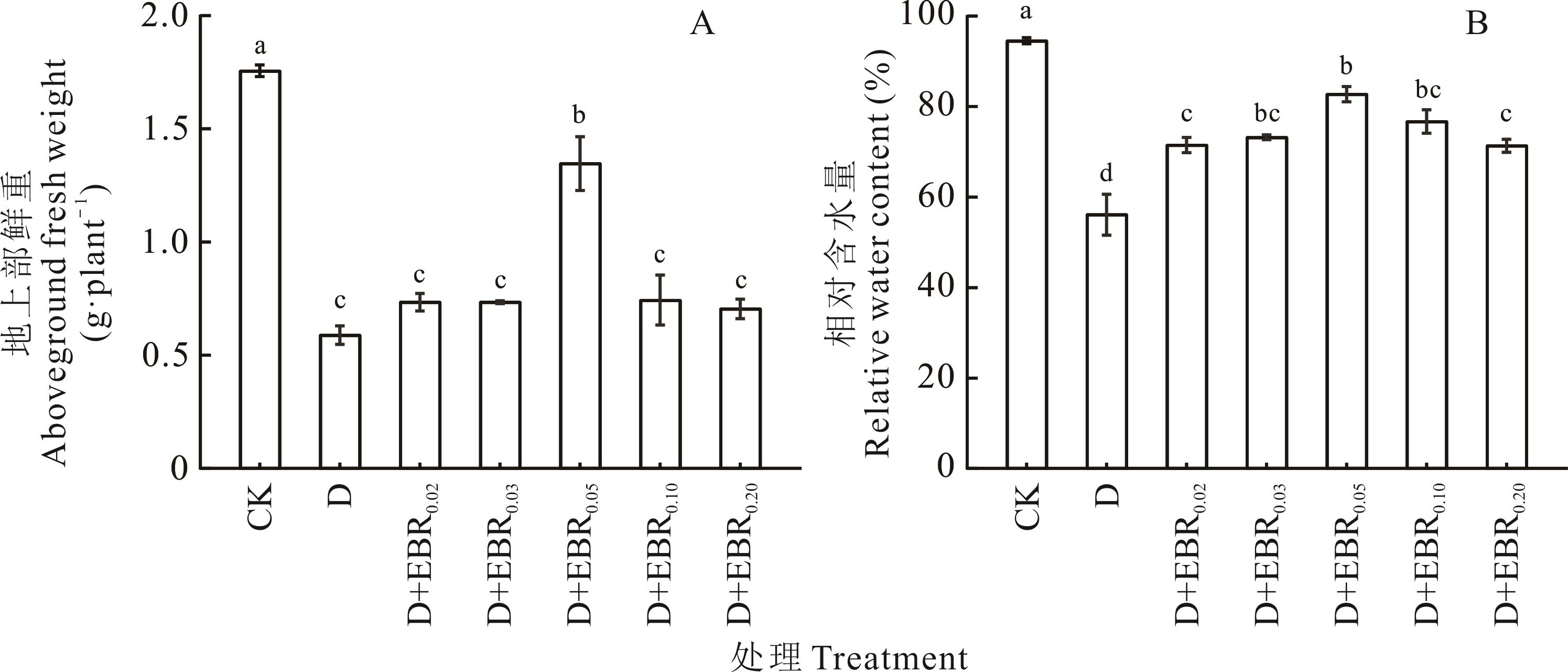
Fig.2 The effects of exogenous EBR on the aboveground fresh weight and relative water content of alfalfa seedlings under drought stress

Fig.3 The effects of exogenous EBR on photosynthetic pigment content in leaves of alfalfa seedlings under drought stress

Fig.4 The effect of exogenous EBR on the malondialdehyde (MDA) content and relative conductivity in leaves of alfalfa seedlings under drought stress
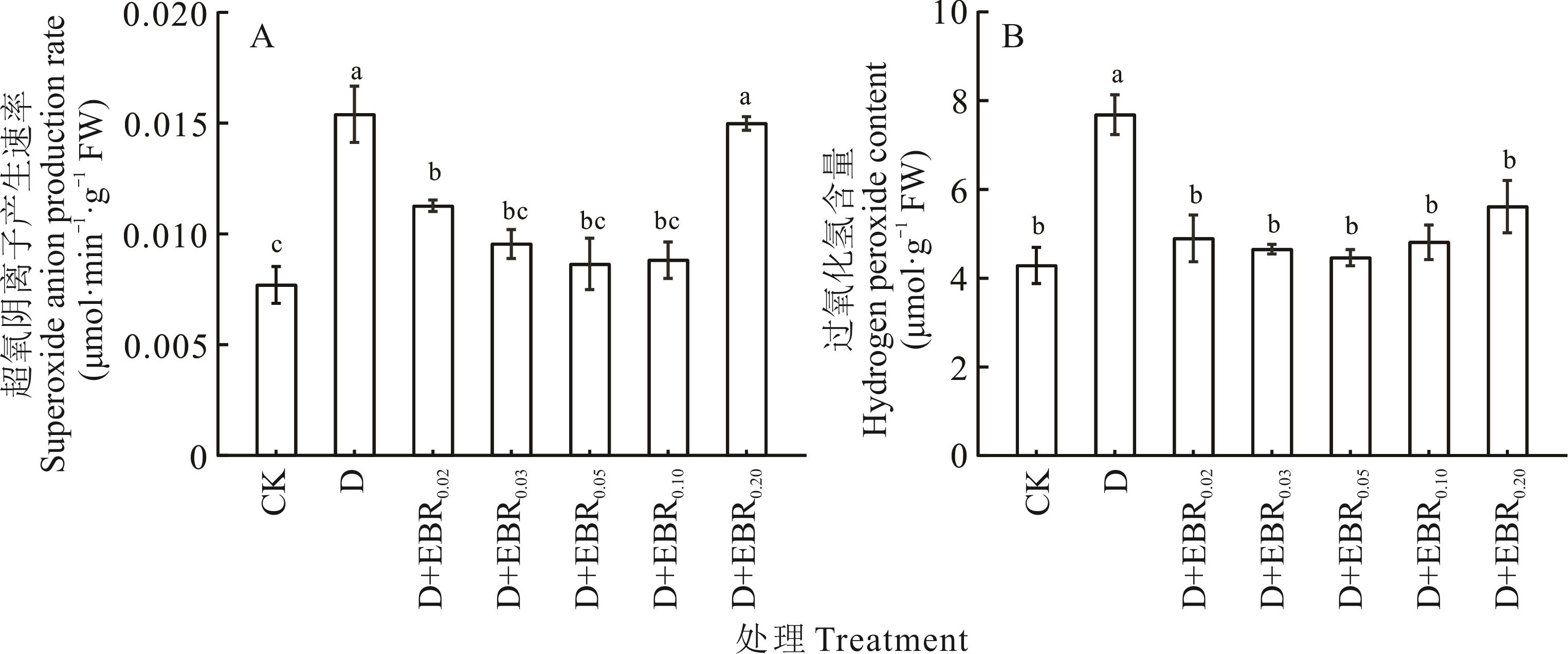
Fig.5 The effects of exogenous EBR on superoxide anion production rate and hydrogen peroxide content in leaves of alfalfa seedlings under drought stress

Fig.6 The effects of exogenous EBR on the antioxidant enzyme activity in leaves of alfalfa seedlings under drought stress
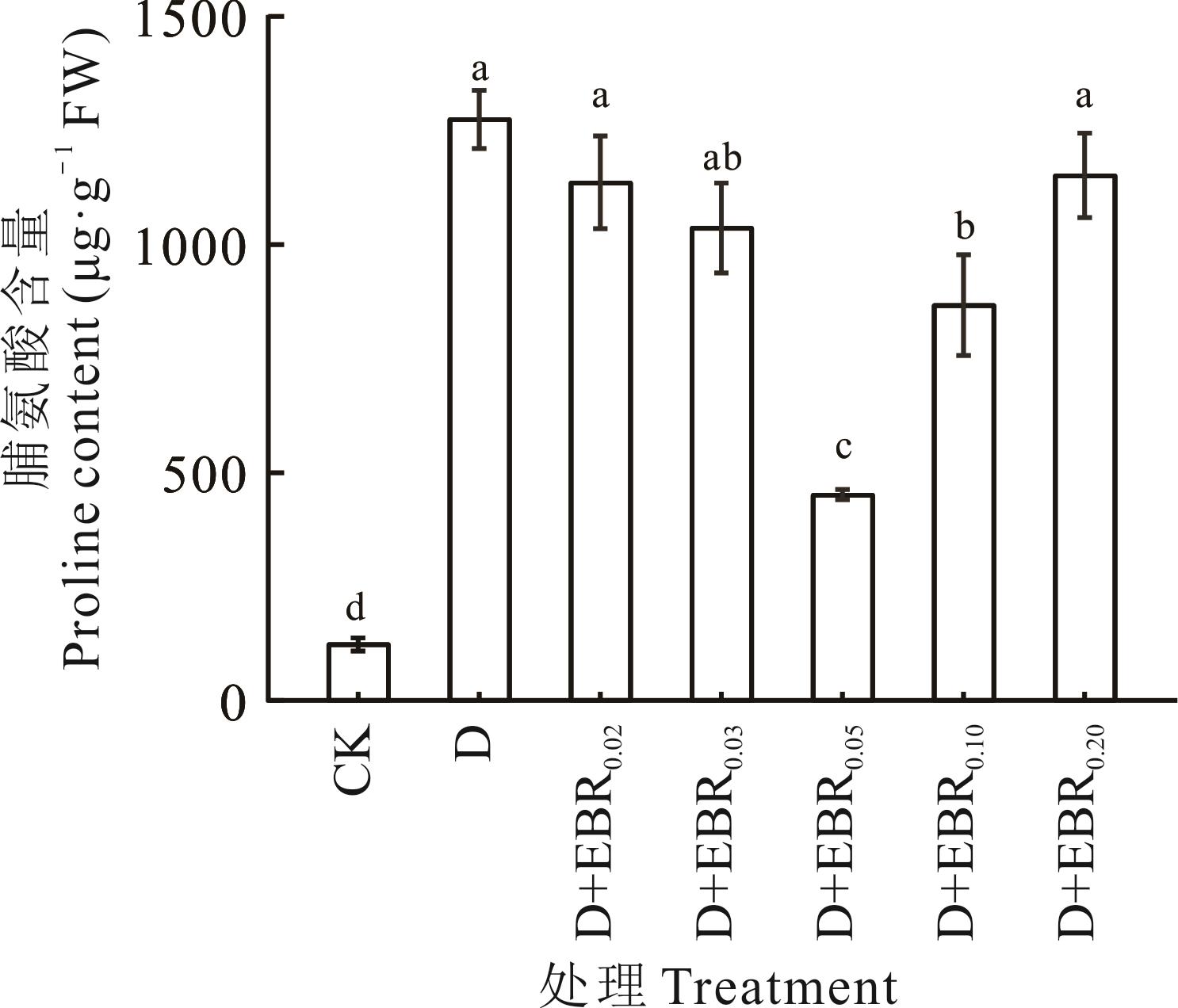
Fig.7 The effects of exogenous EBR on proline content in leaves of alfalfa seedlings under drought stress

Fig.8 Correlation analysis between the main physiological indexes
| [1] | Pishva Z K, Amini-Dehaghi M, Bostani A, et al. Biological and chemical nitrogen fertilizer impact on cumin (Cuminum cyminum L.) under different irrigation regimens. Journal of Herbmed Pharmacology, 2020, 9(3): 209-217. |
| [2] | Yang S J, Vanderbeld B, Wan J X, et al. Narrowing down the targets: Towards successful genetic engineering of drought-tolerant crops. Molecular Plant, 2010, 3(3): 469-490. |
| [3] | Nieves-Cordones M, García-Sánchez F, Pérez-Pérez J G, et al. Coping with water shortage: an update on the role of K+, Cl-, and water membrane transport mechanisms on drought resistance. Frontiers in Plant Science, 2019, 10: 1619. |
| [4] | Xu Z Z, Zhou G S, Shimizu H. Plant responses to drought and rewatering. Plant Signaling & Behavior, 2010, 5(6): 649-654. |
| [5] | Haghpanah M, Hashemipetroudi S, Arzani A, et al. Drought tolerance in plants: physiological and molecular responses. Plants, 2024, 13(21): 2962. |
| [6] | Sharma S K. Brassinosteroids application responses in fruit crops-a review. International Journal of Agriculture Environment and Biotechnology, 2021, 14(2): 123-140. |
| [7] | Li W J, Sun J, Zhang X Q, et al. The mechanisms underlying salt resistance mediated by exogenous application of 24-epibrassinolide in peanut. International Journal of Molecular Sciences, 2022, 23(12): 6376. |
| [8] | Kagale S, Divi U K, Krochko J E, et al. Brassinosteroid confers tolerance in Arabidopsis thaliana and Brassica napus to a range of abiotic stresses. Planta, 2007, 225(2): 353-364. |
| [9] | Silva A L J, Ferreira V M, Dos Santos C M, et al. 24-epibrassinolide promotes activation of physiological compensation mechanisms in response to drought stress and rehydration and improves yield in soybean. Journal of Agronomy and Crop Science, 2023, 209(3): 355-370. |
| [10] | Khan R, Ma X H, Hussain Q, et al. Application of 2,4-epibrassinolide improves drought tolerance in tobacco through physiological and biochemical mechanisms. Biology, 2022, 11(8): 1192. |
| [11] | Zhang Y Y, Wang L. Advances in basic biology of alfalfa (Medicago sativa L.): a comprehensive overview. Horticulture Research, 2025, 12(7): uhaf081. |
| [12] | Han R H, Lu X S, Gao G J, et al. Photosynthetic physiological response of alfalfa (Medicago sativa) to drought stress. Acta Ecologica Sinica, 2007, 27(12): 5229-5237. |
| 韩瑞宏, 卢欣石, 高桂娟, 等. 紫花苜蓿(Medicago sativa)对干旱胁迫的光合生理响应. 生态学报, 2007, 27(12): 5229-5237. | |
| [13] | Wang X M, Mace E, Tao Y F, et al. Large-scale genome-wide association study reveals that drought-induced lodging in grain sorghum is associated with plant height and traits linked to carbon remobilisation. Theoretical and Applied Genetics, 2020, 133: 3201-3215. |
| [14] | Cui Y, Ning S W, Jin J L, et al. Quantitative lasting effects of drought stress at a growth stage on soybean evapotranspiration and aboveground biomass. Water, 2020, 13(1): 18. |
| [15] | Liu J, Huang J, Xiong P D. Rewatering after drought: Unravelling the drought thresholds and function recovery-limiting factors in maize leaves. Plant, Cell & Environment, 2024, 47(12): 5457-5469. |
| [16] | Fei X T, Li J M, Kong L J, et al. miRNAs and their target genes regulate the antioxidant system of Zanthoxylum bungeanum under drought stress. Plant Physiology and Biochemistry, 2020, 150(2): 196-203. |
| [17] | Antoniou C, Fragkoudi I, Martinou A, et al. Spatial response of Medicago truncatula plants to drought and spider mite attack. Plant Physiology and Biochemistry, 2018, 130: 658-662. |
| [18] | Hussan S, Rather M A, Dar Z A, et al. Decoding the enigma of drought stress tolerance mechanisms in plants and its application in crop improvement//Innovative approaches for sustainable development: Theories and practices in agriculture. Cham: Springer International Publishing, 2022: 339-368. |
| [19] | Zhang C M, Shi S L. Physiological and proteomic responses of contrasting alfalfa (Medicago sativa L.) varieties to PEG-induced osmotic stress. Frontiers in Plant Science, 2018, 9(1): 242. |
| [20] | Zhou Y L, You X Y, Wang X Y, et al. Exogenous 24-epibrassinolide enhanced drought tolerance and promoted BRASSINOSTEROID-INSENSITIVE2 expression of quinoa. Plants, 2024, 13(6): 873. |
| [21] | Hu B F, Huang H L, Ji Y Z, et al. Evaluation of the optimum concentration of chlorophyll extract for determination of chlorophyll content by spectrophotometry. Pratacultural Science, 2018, 35(8): 1965-1974. |
| 胡秉芬, 黄华梨, 季元祖, 等. 分光光度法测定叶绿素含量的提取液的适宜浓度. 草业科学, 2018, 35(8): 1965-1974. | |
| [22] | Zhang Q D. Several methods for the determination of chlorophyll. Chinese Bulletin of Botany, 1985, 3(5): 60-64. |
| 张其德. 测定叶绿素的几种方法. 植物学通报, 1985, 3(5): 60-64. | |
| [23] | Zhao D Y, Shen L, Fan B, et al. Physiological and genetic properties of tomato fruits from 2 cultivars differing in chilling tolerance at cold storage. Journal of Food Science, 2009, 74(5): C348-C352. |
| [24] | Lv A M, Su L T, Fan N N, et al. The MsDHN1‐MsPIP2;1‐MsmMYB module orchestrates the trade-off between growth and survival of alfalfa in response to drought stress. Plant Biotechnology Journal, 2024, 22(5): 1132-1145. |
| [25] | Lv M H, Li J. Molecular mechanisms of brassinosteroid-mediated responses to changing environments in Arabidopsis. International Journal of Molecular Sciences, 2020, 21(8): 2737. |
| [26] | Kou J T. Physiological mechanism of 24-epibrassinolide-regulated salt stress tolerance in Medicago sativa. Lanzhou: Gansu Agricultural University, 2016. |
| 寇江涛. 2,4-表油菜素内酯诱导下紫花苜蓿耐盐性生理响应研究. 兰州: 甘肃农业大学, 2016. | |
| [27] | Jomova K, Alomar S Y, Alwasel S H, et al. Several lines of antioxidant defense against oxidative stress: Antioxidant enzymes, nanomaterials with multiple enzyme-mimicking activities, and low-molecular-weight antioxidants. Archives of Toxicology, 2024, 98(5): 1323-1367. |
| [28] | Yu W Z, Luo L, Qi X Y, et al. Insights into the impact of trans-zeatin overproduction-engineered Sinorhizobium meliloti on alfalfa (Medicago sativa L.) tolerance to drought stress. Journal of Agricultural and Food Chemistry, 2024, 72(15): 8650-8663. |
| [29] | Zandi P, Schnug E. Reactive oxygen species, antioxidant responses and implications from a microbial modulation perspective. Biology, 2022, 11(2): 155. |
| [30] | Ma X R, Liang Q W, Han Y S, et al. Integrated transcriptomic, proteomic and metabolomic analyses revealing the roles of amino acid and sucrose metabolism in augmenting drought tolerance in Agropyron mongolicum. Frontiers in Plant Science, 2024, 15: 1515944. |
| [31] | Che Y M, Hou L X, Sun Y J, et al. Hydrogen sulfide functions in regulation of stomatal movement and stress response in plant. Biotechnology Bulletin, 2016, 32(10): 18-26. |
| 车永梅, 侯丽霞, 孙艳君, 等. H2S参与植物气孔运动调节与逆境响应过程研究进展. 生物技术通报, 2016, 32(10): 18-26. | |
| [32] | Zhao B Q, Liu Q Y, Wang B S, et al. Roles of phytohormones and their signaling pathways in leaf development and stress responses. Journal of Agricultural and Food Chemistry, 2021, 69(12): 3566-3584. |
| [33] | Xia X J, Dong H, Yin Y L, et al. Brassinosteroid signaling integrates multiple pathways to release apical dominance in tomato. Proceedings of the National Academy of Sciences of the United States of America, 2021, 118(11): e2004384118. |
| [1] | Ying ZHAO, Cong-cong ZHANG, Yu-ting SONG, Chong-min ZHANG, Yue AN, Bin-bin YANG, Yong MA, Bao-qiang WANG. Promoting effect of 2,4-epibrassinolide on the growth of quinoa seedlings under saline-alkali stress [J]. Acta Prataculturae Sinica, 2026, 35(9): 100-112. |
| [2] | Jin-hui YANG, Xiao-tong WANG, Yong-long MA, Dong-wen YU, Yu-hua TONG, Shu-xia LI. Effect of CeO2 NPs on the salt tolerance of alfalfa seedlings [J]. Acta Prataculturae Sinica, 2026, 35(8): 45-54. |
| [3] | Zhao-peng HUANG, Rong HE, Li-li NAN, Jia-le LIU, Wen-ke YANG. Effects of exogenous melatonin on endogenous hormones and organic acids in alfalfa seedlings under low-phosphorus stress [J]. Acta Prataculturae Sinica, 2026, 35(8): 55-64. |
| [4] | Xia WANG, Meng-yu YAN, Qian-xi WANG, Zhen-wu WEI, Jia WEI, Zheng-feng CAO, Yan-yan LV, Chuan-jie ZHANG, Xue-yang MIN. A comparative study of the yield of alfalfa (Medicago sativa) varieties with different fall dormancy in the Yangtze-Huaihe region [J]. Acta Prataculturae Sinica, 2026, 35(8): 65-83. |
| [5] | Fen-qi CHEN, Jin-qing ZHANG, Yi-jian YU, Zhen-yu LI. Identification, bioinformatics analysis of AP2 subfamily genes and MsBBM gene cloning in alfalfa [J]. Acta Prataculturae Sinica, 2026, 35(7): 117-134. |
| [6] | Hao-zhen LIU, Jia-lu CHAO, Shi-qin ZHAO, Cheng WANG, Jing-hong ZHANG, Shou-jiang SUN. Genome-wide identification of BBR-BPC genes in Medicago sativa and their transcript profiles in response to seed aging [J]. Acta Prataculturae Sinica, 2026, 35(7): 135-150. |
| [7] | Wu LI, Jia-jing LI, Jie-bing LI, Zhen-zhou LI, Ming GUO, Yan NIU, Hao SUN, De-feng LI, Ying-hua SHI, Zhen-tian LI, Bo-shuai LIU, Ya-lei CUI, Zhi-chang WANG, Yong-tao LI, Xiao-yan ZHU. Optimization of fermentation and ultrasound-assisted extraction parameters for alfalfa saponins [J]. Acta Prataculturae Sinica, 2026, 35(7): 201-216. |
| [8] | Jiang-ping MA, Li-juan CAO, Wen-wen ZHANG, Meng-yu ZHAO, Teng-fei WANG, Yi-yin ZHANG, Bin WANG, Jia-wang LI, Xiao-bing WANG, Jian LAN. Effects of reseeding and phosphorus application on productivity and soil in improvement of degraded alfalfa stands [J]. Acta Prataculturae Sinica, 2026, 35(7): 92-104. |
| [9] | Jiang-bo XU, Chang-wei MEI, Dong CHEN, Run-yao JIANG, Song-chang GUO, Xiu-hong WU, Ju-ying LUO, Hai-yuan HUANG, Fang LIU. The effect of alfalfa meal on the average daily gain, slaughter performance, meat quality, and serum biochemical indicators of two different hybrid lines of Liangsan pigs [J]. Acta Prataculturae Sinica, 2026, 35(6): 202-215. |
| [10] | Meng-yu REN, Li-qun WANG, Li-li NAN, Jia-yu GUO. Responses of new alfalfa lines to salt stress [J]. Acta Prataculturae Sinica, 2026, 35(6): 24-34. |
| [11] | Wen-hui DENG, Xiao-na ZHAO, Jia-yi YONG, Si-yu GUAN, Guo-qiang HU, Teng-fei WANG, Hai-ying HU. Effects of intercropping oat with different densities on alfalfa seed yield and its constituent factors [J]. Acta Prataculturae Sinica, 2026, 35(4): 100-111. |
| [12] | Ping MA, Zhi-guo LIU, Yu-shu SHA, Ya-ling LIU, Xiao-mei TUO, Bing-zhe FU, Xue-qing GAO. Nitrogen utilization characteristics of alfalfa at the seedling stage and screening of nitrogen-efficient varieties [J]. Acta Prataculturae Sinica, 2026, 35(4): 112-123. |
| [13] | Tian ZHANG, Hua-juan LENG, Jing CUI, Fei HE, Xue WANG, Ming-na LI, Qing-chuan YANG, Jun-mei KANG. Identification of synaptotagmin gene family members in alfalfa and their transcript profiles under abiotic stresses [J]. Acta Prataculturae Sinica, 2026, 35(4): 158-168. |
| [14] | Xiao-tong ZHOU, Yong-zhong LUO, Jian-wei QI, Ying-de QIU, Chao MA. Genome-wide identification of PYL-PP2C-SnRK2 gene family members in Medicago sativa ‘Xinjiangdaye’ and their transcript profiles under drought stress [J]. Acta Prataculturae Sinica, 2026, 35(4): 169-196. |
| [15] | Yu-hua TONG, Xiao-tong WANG, Yong-long MA, Jin-hui YANG, Dong-wen YU, Shu-xia LI. Effects of a chitosan seed soaking treatment on seed germination and growth of alfalfa under saline alkali stress [J]. Acta Prataculturae Sinica, 2026, 35(3): 245-256. |
| Viewed | ||||||
|
Full text |
|
|||||
|
Abstract |
|
|||||
