
ISSN 1004-5759 CN 62-1105/S
Acta Prataculturae Sinica ›› 2026, Vol. 35 ›› Issue (10): 144-155.DOI: 10.11686/cyxb2025436
Yi-hua WANG1( ), Ci REN1, Pan-yu ZHANG1, Cui-ling LIU1, Liang-liang HE1, Jie-yi LI1, Chao LIU1, Shu CHEN1,2,3()
Received:2025-10-21
Revised:2025-12-05
Online:2026-10-20
Published:2026-09-09
Contact:
Shu CHEN
Yi-hua WANG, Ci REN, Pan-yu ZHANG, Cui-ling LIU, Liang-liang HE, Jie-yi LI, Chao LIU, Shu CHEN. A functional study of the role of SgNAC1 in salt tolerance in Stylosanthes[J]. Acta Prataculturae Sinica, 2026, 35(10): 144-155.
| 引物名称Name of the primer | 正向引物序列Forward primer sequence (5'→3') | 反向引物序列Reverse primer sequence (5'→3') |
|---|---|---|
| SgNAC1 | TCTAGAATGGCAGCTGAACTTCAATTGC | GGATCCTCAGAACGGTTTCTGCAGGTTC |
| SgNAC1-qPCR | TTCCGATCATAGCCGAAATC | TGCCTTCCAGTACCCAGTTC |
| SgActin-qPCR | TCGATTGGATCTTGCAGGGC | TGGACAACGGAATCTCTCAGC |
Table 1 Primers used in this study
| 引物名称Name of the primer | 正向引物序列Forward primer sequence (5'→3') | 反向引物序列Reverse primer sequence (5'→3') |
|---|---|---|
| SgNAC1 | TCTAGAATGGCAGCTGAACTTCAATTGC | GGATCCTCAGAACGGTTTCTGCAGGTTC |
| SgNAC1-qPCR | TTCCGATCATAGCCGAAATC | TGCCTTCCAGTACCCAGTTC |
| SgActin-qPCR | TCGATTGGATCTTGCAGGGC | TGGACAACGGAATCTCTCAGC |
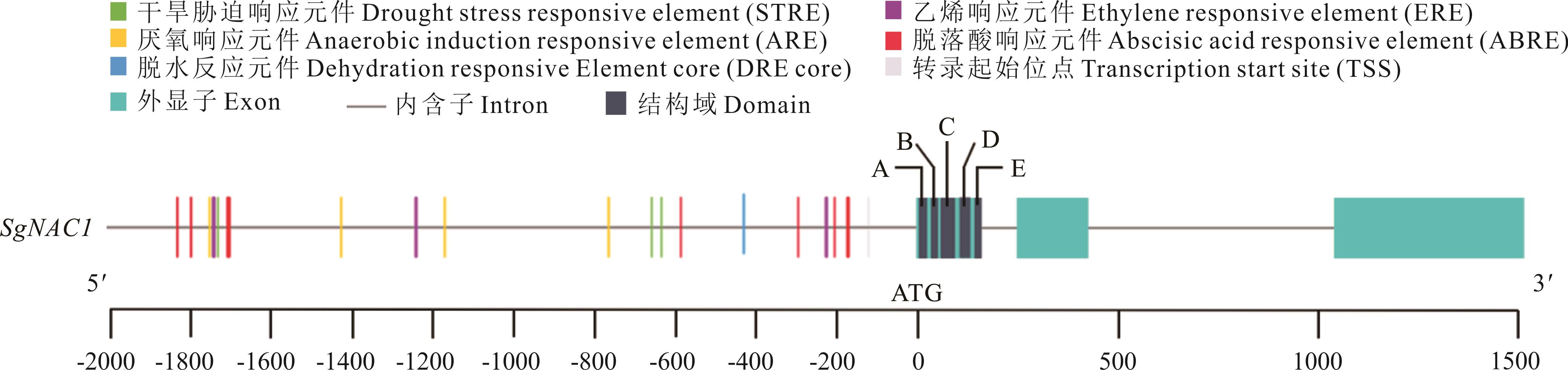
Fig.1 Analysis of cis-acting elements in the promoter of SgNAC1 gene and its gene structure
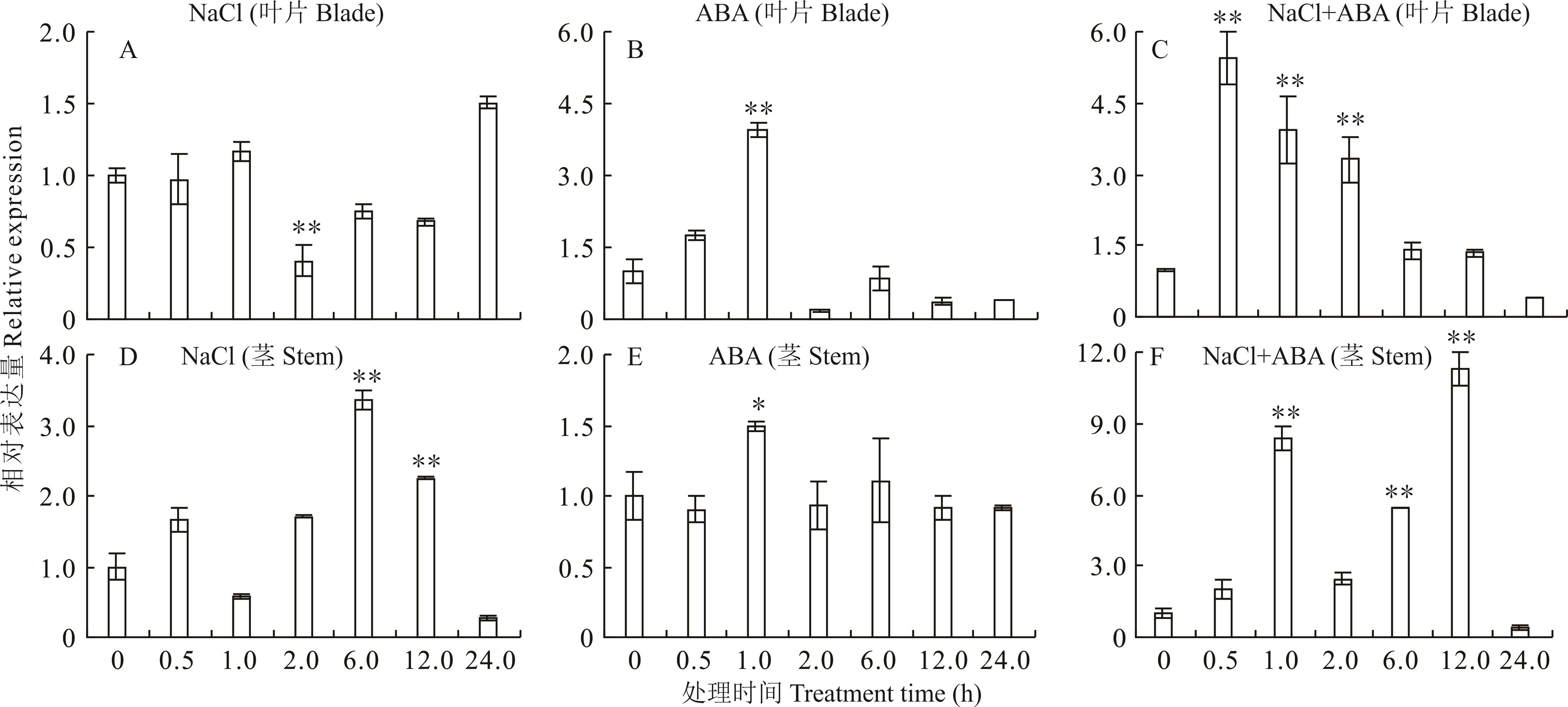
Fig.2 Changes in the relative expression levels of the SgNAC1 gene in leaves and stems of Stylosanthes ‘YN02’ under different treatments
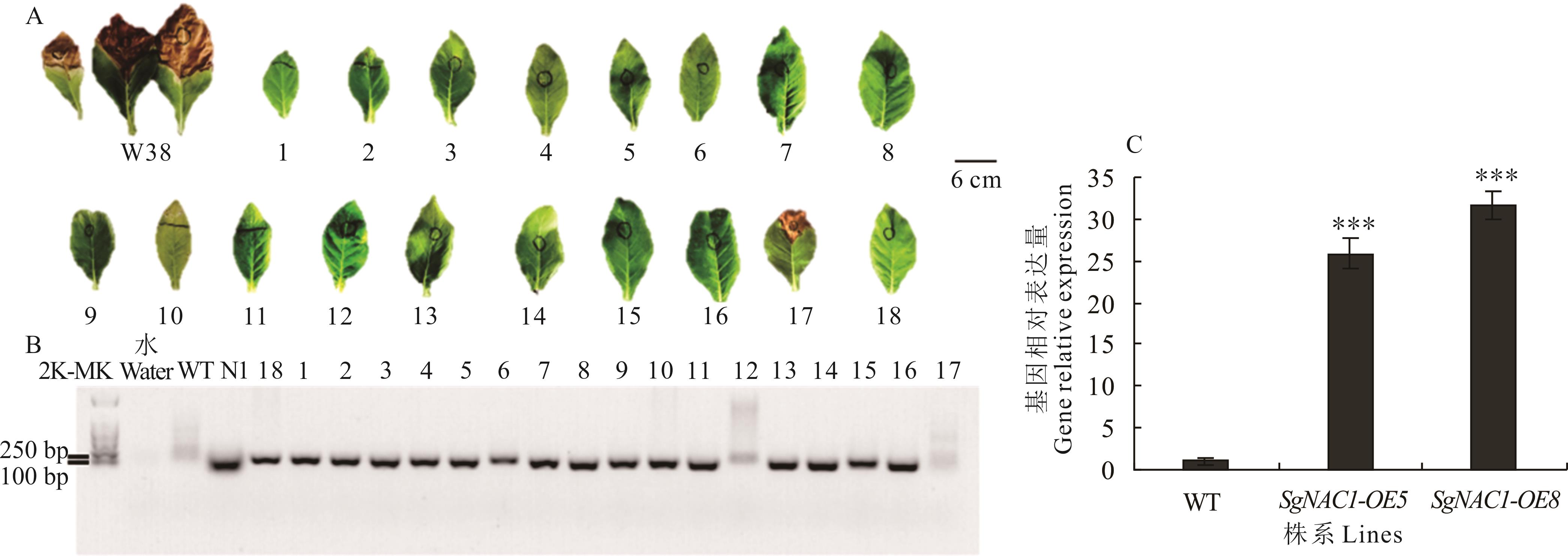
Fig.3 Identification of Basta resistance in SgNAC1-OE transgenic tobacco, PCR identification and qRT-PCR analysis of the SgNAC1 gene
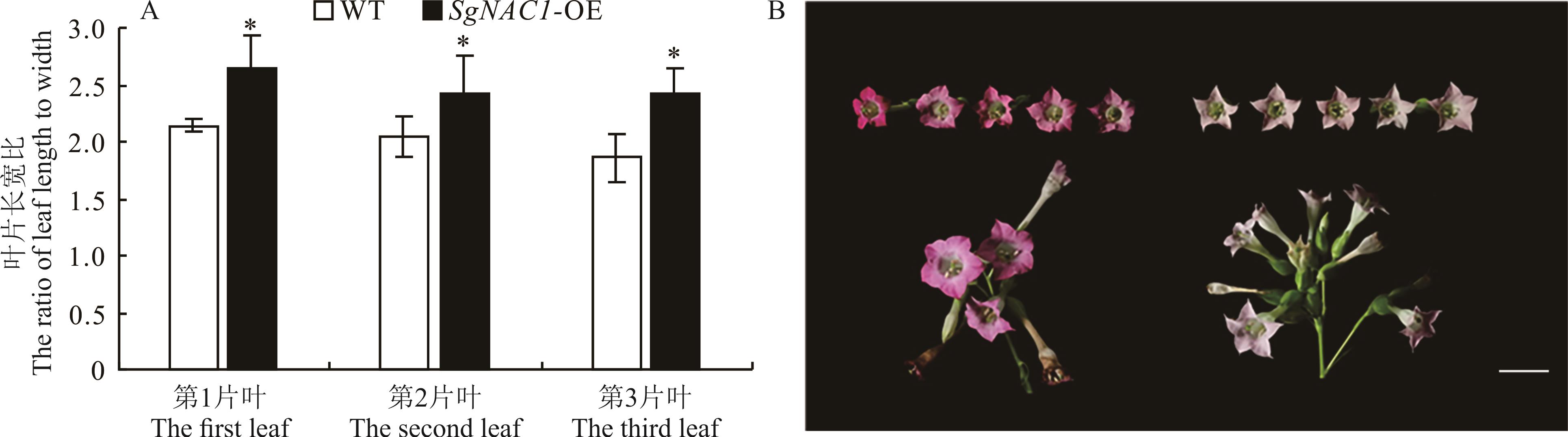
Fig.4 Differences in the length-to-width ratio and flower color between genetically modified and wild N. tabacum leaves
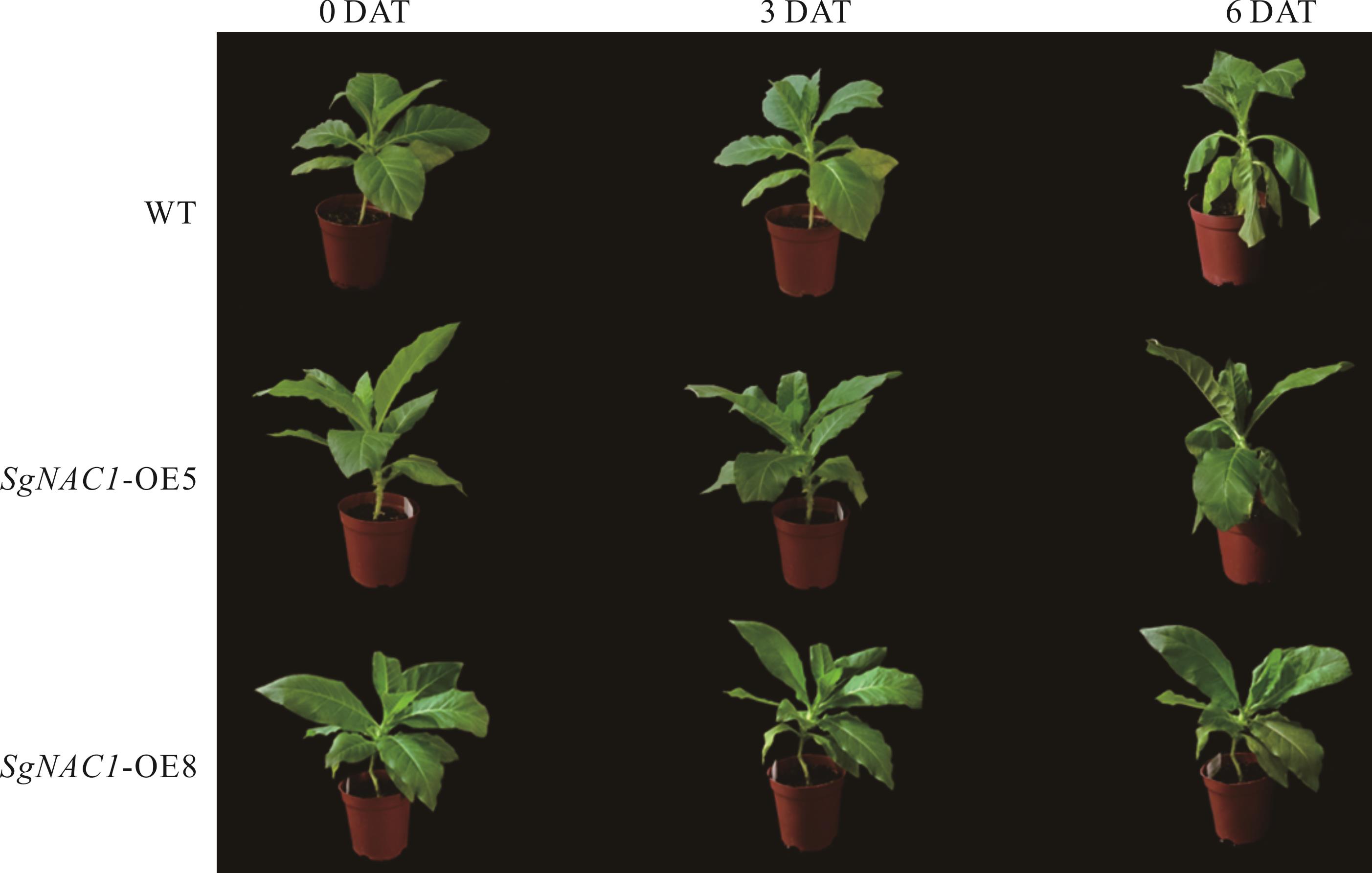
Fig.5 Phenotypic changes in tobacco under salt stress
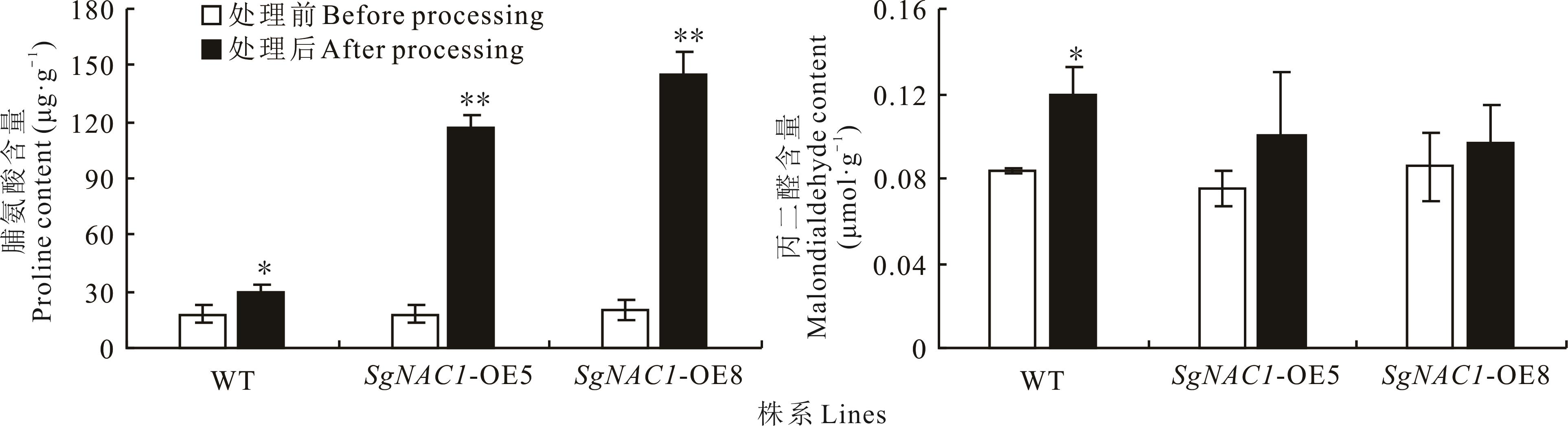
Fig.6 Changes in physiological indicators of wild-type and SgNAC1-overexpressing tobacco under salt stress
| [1] | Wang W D. Transcriptome analysis of Camellia sinensis under heat and drought stress and functional characterization of Histone H1 gene. Nanjing: Nanjing Agricultural University, 2016. |
| 王伟东. 高温和干旱胁迫下茶树转录组分析及Histone H1基因的功能鉴定. 南京: 南京农业大学, 2016. | |
| [2] | Tak H, Negi S, Ganapathi T R. Banana NAC transcription factor MusaNAC042 is positively associated with drought and salinity tolerance. Protoplasma, 2016, 254(2): 803-816. |
| [3] | Thirumalaikumar V P, Devkar V, Mehterov N, et al. NAC transcription factor JUNGBRUNNEN1 enhances drought tolerance in tomato. Plant Biotechnology Journal, 2017, 16(2): 354-366. |
| [4] | Boyer J S. Plant productivity and environment. Science, 1982, 218(4571): 443-448. |
| [5] | Zhang X K, Lu G Y, Long W H, et al. Recent progress in drought and salt tolerance studies in Brassica crops. Breeding Science, 2014, 64(1): 60-73. |
| [6] | Li T, Sun J K, Liu J T. Role of different transcription factor families in the regulatory networks of drought and salinity tolerance in plants. Chinese Bulletin of Life Sciences, 2015, 27(2): 217-227. |
| 李田, 孙景宽, 刘京涛. 植物转录因子家族在耐盐抗旱调控网络中的作用. 生命科学, 2015, 27(2): 217-227. | |
| [7] | Yao W J. Functinal analysis of poplar transcription factor ERF76 gene on salt-stress tolerance. Harbin: Northeast Forestry University, 2016. |
| 姚文静. 杨树转录因子ERF76基因耐盐功能研究. 哈尔滨: 东北林业大学, 2016. | |
| [8] | Ooka H, Satoh K, Doi K, et al. Comprehensive analysis of NAC family genes in Oryza sativa and Arabidopsis thaliana. DNA Research, 2003, 10(6): 239-247. |
| [9] | Kim S G, Kim S Y, Park C M. A membrane-associated NAC transcription factor regulates salt-responsive flowering via FLOWERING LOCUS T in Arabidopsis. Planta, 2007, 226(3): 647-654. |
| [10] | Jae-Heung K, Seung Hwan Y, Park A H, et al. ANAC012, a member of the plant-specific NAC transcription factor family, negatively regulates xylary fiber development in Arabidopsis thaliana. Plant Journal for Cell & Molecular Biology, 2010, 50(6): 1035-1048. |
| [11] | Christianson J A, Dennis E S, Llewellyn D J, et al. ATAF NAC transcription factors: regulators of plant stress signaling. Plant Signaling & Behavior, 2010, 5(4): 428-432. |
| [12] | Zhong R, Lee C, Ye Z H. Global analysis of direct targets of secondary wall NAC master switches in Arabidopsis. Molecular Plant, 2010, 3(6): 1087-1103. |
| [13] | Trine K, Jensen M K, Christiansen M W, et al. Senescence-associated barley NAC (NAM, ATAF1,2, CUC) transcription factor interacts with radical-induced cell death 1 through a disordered regulatory domain. Journal of Biological Chemistry, 2011, 286(41): 35418-35429. |
| [14] | So-Dam Y, Pil Joon S, Hye-Kyung Y, et al. The Arabidopsis NAC transcription factor VNI2 integrates abscisic acid signals into leaf senescence via the COR/RD genes. Plant Signaling & Behavior, 2011, 23(6): 2155-2168. |
| [15] | Nakashima K, Takasaki H, Mizoi J, et al. NAC transcription factors in plant abiotic stress responses. Biochimica et Biophysica Acta (BBA)-Gene Regulatory Mechanisms, 2012, 1819(2): 97-103. |
| [16] | Jiang Y, Deyholos M K. Comprehensive transcriptional profiling of NaCl-stressed Arabidopsis roots reveals novel classes of responsive genes. BMC Plant Biology, 2006, 6(1): 25. |
| [17] | Fang Y J, You J, Xie K B, et al. Systematic sequence analysis and identification of tissue-specific or stress-responsive genes of NAC transcription factor family in rice. Molecular Genetics & Genomics, 2008, 280(6): 547-563. |
| [18] | Le D T, Nishiyama R, Watanabe Y, et al. Genome-wide survey and expression analysis of the plant-specific NAC transcription factor family in soybean during development and dehydration stress. DNA Research, 2011, 18(4): 263-276. |
| [19] | Huang H, Wang Y, Wang S L, et al. Transcriptome-wide survey and expression analysis of stress-responsive NAC genes in Chrysanthemum lavandulifolium. Plant Science, 2012, 193/194(3): 18-27. |
| [20] | Nogueira F T S, Schlögl P S, Camargo S R, et al. SsNAC23, a member of the NAC domain protein family, is associated with cold, herbivory and water stress in sugarcane. Plant Science, 2005, 169(1): 93-106. |
| [21] | Li X L, Yang X, Hu Y X, et al. A novel NAC transcription factor from Suaeda liaotungensis K. enhanced transgenic Arabidopsis drought, salt, and cold stress tolerance. Plant Cell Reports, 2014, 33(5): 767-778. |
| [22] | Shan W, Kuang J F, Lu W J, et al. Banana fruit NAC transcription factor MaNAC1 is a direct target of MaICE1 and involved in cold stress through interacting with MaCBF1. Plant Cell & Environment, 2014, 37(9): 2116-2127. |
| [23] | Shao H B, Wang H Y, Tang X L. NAC transcription factors in plant multiple abiotic stress responses: progress and prospects. Frontiers in Plant Science, 2015, 6: 902. |
| [24] | Yu X W, Liu Y M, Wang S, et al. CarNAC4, a NAC-type chickpea transcription factor conferring enhanced drought and salt stress tolerances in Arabidopsis. Plant Cell Reports, 2015, 35(3): 1-15. |
| [25] | Hong Y B, Zhang H J, Huang L, et al. Overexpression of a stress-responsive NAC transcription factor gene ONAC022 improves drought and salt tolerance in rice. Frontiers in Plant Science, 2016, 7: 4. |
| [26] | Peng H, Yu X W, Cheng H Y, et al. Erratum to: cloning and characterization of a novel NAC family gene CarNAC1 from chickpea (Cicer arietinum.). Molecular Biotechnology, 2016, 58(3): 220-221. |
| [27] | Qu Y T, Duan M, Zhang Z Q, et al. Overexpression of the Medicago falcata NAC transcription factor MfNAC3 enhances cold tolerance in Medicago truncatula. Environmental & Experimental Botany, 2016, 129(9): 67-76. |
| [28] | Tang X B, Zhao H W, Lin Z P. Progress of genetic engineering of drought stress in plants. Journal of Capital Normal University (Natural Sciences Edition), 2002(3): 47-51. |
| 唐先兵, 赵恢武, 林忠平. 植物耐旱基因工程研究进展. 首都师范大学学报(自然科学版), 2002(3): 47-51. | |
| [29] | Riechmann J L, Ratcliffe O J. A genomic perspective on plant transcription factors. Current Opinion in Plant Biology, 2000, 3(5): 423-434. |
| [30] | Que F, Huang Y, Wang F, et al. Cloning and expression analysis of a transcription factor gene DcDofD1 related to abiotic stress reaction in carrot. Journal of Plant Genetic Resources, 2015, 16(5): 1073-1079. |
| 却枫, 黄莹, 王枫, 等. 胡萝卜中DcDofD1转录因子的克隆及其对非生物逆境胁迫的响应分析. 植物遗传资源学报, 2015, 16(5): 1073-1079. | |
| [31] | Sun J W, Peng X J, Fan W H, et al. Functional analysis of BpDREB2 gene involved in salt and drought response from a woody plant Broussonetia papyrifera. Gene, 2014, 535(2): 140-149. |
| [32] | Wang C, Yang Y G, Lv W T, et al. Cloning, expression, and functional analysis of an A subfamily bZIP transcription factor gene ZmbZIP81 in maize. Acta Agronomica Sinica, 2014, 40(9): 1549-1556. |
| 王策, 杨艳歌, 吕维涛, 等. 玉米A亚族bZIP转录因子基因ZmbZIP81的克隆、表达与功能分析. 作物学报, 2014, 40(9): 1549-1556. | |
| [33] | Cai H, Zhu Y M, Bai X, et al. Isolation and tolerance analysis of GsbZIP33 gene linked to response on stress in Glycine soja. Molecular Plant Breeding, 2011, 9(4): 397-401. |
| 才华, 朱延明, 柏锡, 等. 野生大豆GsbZIP33基因的分离及胁迫耐性分析. 分子植物育种, 2011, 9(4): 397-401. | |
| [34] | Xiao D C, Zhang Z J, Xu Y W, et al. Cloning and functional analysis of Phyllostachys edulis MYB transcription factor PeMYB2. Hereditas, 2013, 35(10): 1217-1225. |
| 肖冬长, 张智俊, 徐英武, 等. 毛竹MYB转录因子PeMYB2的克隆与功能分析. 遗传, 2013, 35(10): 1217-1225. | |
| [35] | Hu H H, Dai M Q, Yao J L, et al. Overexpressing a NAM, ATAF, and CUC (NAC) transcription factor enhances drought resistance and salt tolerance in rice. Proceedings of the National Academy of Sciences, 2006, 103(35): 12987-12992. |
| [36] | Xie L N, Chen M, Min D H, et al. The NAC-like transcription factor Si NAC110 in foxtail millet (Setaria italica) confers tolerance to drought and high salt stress through an ABA independent signaling pathway. Journal of Integrative Agriculture, 2017, 16(3): 559-571. |
| [37] | Xu Z Y, Kim S Y, Hyeon D Y, et al. The Arabidopsis NAC transcription factor ANAC096 cooperates with bZIP-type transcription factors in dehydration and osmotic stress responses. Plant Cell, 2013, 25(11): 4708-4724. |
| [38] | Lam-Son Phan T, Kazuo N, Yoh S, et al. Isolation and functional analysis of Arabidopsis stress-inducible NAC transcription factors that bind to a drought-responsive cis-element in the early responsive to dehydration stress 1 promoter. Plant Cell, 2004, 16(9): 2481-2498. |
| [39] | Richard H, Claire H, Penfold C A, et al. A local regulatory network around three NAC transcription factors in stress responses and senescence in Arabidopsis leaves. Plant Journal for Cell & Molecular Biology, 2013, 75(1): 26-39. |
| [40] | Sakuraba Y, Kim Y S, Han S H, et al. The Arabidopsis transcriptionfactor NAC016 promotes drought stress responses by repressing AREB1 transcription through a trifurcate feed-forward regulatory loop involving NAP. Plant Cell, 2015, 27(6): 1771-1787. |
| [41] | Fang Y J, Liao K F, Du H, et al. A stress-responsive NAC transcription factor SNAC3 confers heat and drought tolerance through modulation of reactive oxygen species in rice. Journal of Experimental Botany, 2015, 66(21): 6803-6817. |
| [42] | Niu F F, Wang C, Yan J L, et al. Functional characterization of NAC55 transcription factor from oilseed rape (Brassica napus) as a novel transcriptional activator modulating reactive oxygen species accumulation and cell death. Plant Molecular Biology, 2016, 92(1/2): 89-104. |
| [43] | Chen Q Q, Niu F F, Yan J L, et al. Oilseed rape NAC56 transcription factor modulates reactive oxygen species accumulation and hypersensitive response-like cell death. Physiologia Plantarum, 2017, 160(2): 209-221. |
| [44] | Hao Y J, Wei W, Song Q X, et al. SoybeanNAC transcription factors promote abiotic stress tolerance and lateral root formation in transgenic plants. The Plant Journal, 2011, 68(2): 302-313. |
| [45] | Merum P, Rao G L, Sudhakarbabu O, et al. Overexpression of horsegram (Macrotyloma uniflorum Lam.Verdc.) NAC transcriptional factor (MuNAC4) in groundnut confers enhanced drought tolerance. Molecular Biotechnology, 2014, 56(8): 758-769. |
| [46] | Mao X G, Chen S S, Li A, et al. Novel NAC transcription factor TaNAC67 confers enhanced multi-abiotic stress tolerances in Arabidopsis. PLoS One, 2014, 9(1): e84359. |
| [47] | Kurowska M, Daszkowska-Golec A. Molecular mechanisms of SNAC1 (stress-responsive NAC1) in conferring the abiotic stress tolerance. Plant Science, 2023, 337: 111894. |
| [48] | Livak K, Schmittgen T. Analysis of relative gene expression data using real-time quantitative PCR and the 2-ΔΔCT method. Methods, 2001, 25(4): 402-408. |
| [49] | Yuan S Z, Li S Y, Qiao C. Effect of low temperature stress on content of free proline in spirulina. Modern Agricultural Science and Technology, 2010(18): 35-37. |
| 袁淑珍, 栗淑媛, 乔辰. 低温胁迫对螺旋藻细胞内游离脯氨酸含量的影响. 现代农业科技, 2010(18): 35-37. | |
| [50] | Li Z F, Wu X D. Experimental design scheme for the effect of drought stress on content of malondialdehyde of indoor ornamental plants. Tianjin Agricultural Sciences, 2016, 22(9): 49-51. |
| 李子芳, 吴锡冬. 植物丙二醛含量测定试验设计方案. 天津农业科学, 2016, 22(9): 49-51. | |
| [51] | Zhan P L, Ke S W, Zhang P Y, et al. Overexpression of two cold-responsive ATAF-like NAC transcription factors from fine-stem stylo (Stylosanthes guianensis var. intermedia) enhances cold tolerance in tobacco plants. Plant Cell, Tissue and Organ Culture, 2018, 135(3): 545-558. |
| [52] | Wang L L, Hu Z L, Zhu M K, et al. The abiotic stress-responsive NAC transcription factor SlNAC11 is involved in drought and salt response in tomato (Solanum lycopersicum). Plant Cell, Tissue and Organ Culture, 2017, 129(1): 161-174. |
| [53] | Fuertes-Aguilar J, Matilla A J. Transcriptional control of seed life: New insights into the role of the NAC family. Molecular Sciences, 2024, 25(10): 5369. |
| [54] | Huang W J, Lv H Y, Wang Y. Functional characterization of a novel R2R3-MYB transcription factor modulating the flavonoid biosynthetic pathway from Epimedium sagittatum. Frontiers in Plant Science, 2017, 8: 1274. |
| [55] | Mahmood K, Xu Z H, El-Kereamy A, et al. The Arabidopsis transcription factor ANAC032 represses anthocyanin biosynthesis in response to high sucrose and oxidative and abiotic stresses. Frontiers in Plant Science, 2016, 7: 1548. |
| [1] | Ying ZHAO, Cong-cong ZHANG, Yu-ting SONG, Chong-min ZHANG, Yue AN, Bin-bin YANG, Yong MA, Bao-qiang WANG. Promoting effect of 2,4-epibrassinolide on the growth of quinoa seedlings under saline-alkali stress [J]. Acta Prataculturae Sinica, 2026, 35(9): 100-112. |
| [2] | Jin-di LIU, Shi-yong CHEN, Jin LI, Tao JIANG, Guo-ling LIANG, Qing-ping ZHOU. Identification of the sucrose transporter gene family in oats and its response to drought and saline-alkali conditions [J]. Acta Prataculturae Sinica, 2026, 35(8): 144-156. |
| [3] | Feng LI, Xu-hu GUO, Hui-fen CAO, Xiang-rui KONG, Dong-xue YANG, Dong-xu ZHANG, Yong-fang ZHANG. Functional analysis of quinoa NAC transcription factor CqNAC66 in response to drought and salt stress [J]. Acta Prataculturae Sinica, 2026, 35(8): 170-181. |
| [4] | Meng-yu REN, Li-qun WANG, Li-li NAN, Jia-yu GUO. Responses of new alfalfa lines to salt stress [J]. Acta Prataculturae Sinica, 2026, 35(6): 24-34. |
| [5] | Shao-yan YUAN, Yuan-kun LIU, Shi-jie CAI, Ting-xin LEI, Ping-ping ZHOU, Jun-zhen WANG, Hong-hai YAN. Comprehensive evaluation of the salt tolerance of diverse oat germplasm at the seedling stage [J]. Acta Prataculturae Sinica, 2026, 35(6): 49-59. |
| [6] | Zheng LI, Hai-ying HU, Jian LAN, Li DING, Wen-bo WEI, Yu-lian LI, Qiao-li MA. Evaluation and screening of salt tolerance of triticale germplasm resources at the germination stage [J]. Acta Prataculturae Sinica, 2026, 35(5): 225-238. |
| [7] | Shi-chao ZHANG, Guo-wen CUI, De-peng ZHANG, Fu-ying HAN, Ding DING, Xiang-li LYU, Shuo LIN, Le-ran CHEN, Ji-ru LI, Hua CAI. Establishment of a tissue culture-free genetic transformation system for alfalfa and its applications in salt-tolerance gene functional characterization and gene editing [J]. Acta Prataculturae Sinica, 2026, 35(3): 223-234. |
| [8] | Yi-lin DI, Si-tian LIU, Xin-ying LIU, Yong DU, Zhou LI. Effects of γ-aminobutyric acid on cadmium stress tolerance and cadmium uptake and transport in creeping bentgrass [J]. Acta Prataculturae Sinica, 2026, 35(2): 208-220. |
| [9] | Rui GAN, Guo-bin YANG, Xiao-qing SUI, Jing QI, Gui-li JIN, Yu-xiang WANG, Jian PENG. The effects of biochar on the physiological responses and gene expression of Bromus inermis seedlings under saline-alkaline stress [J]. Acta Prataculturae Sinica, 2026, 35(10): 117-128. |
| [10] | Hao-le QI, Si-ning WANG, Xiao-xia LI, Feng-ling SHI. Multivariate evaluation of the salt tolerance of Buchloe dactyloides germplasm lines and construction of a preliminary evaluation model [J]. Acta Prataculturae Sinica, 2026, 35(1): 119-129. |
| [11] | Shou-yu GAO, Wen-jing LIU, Yu-ying LI, Qing-yuan XIANG, Jia-jun XU, Lei-qi SHU, Zhao-zhong LI. Physiological and biochemical responses of Bothriochloa ischaemum seedlings to salt stress at seedling stage and definition of salt tolerance threshold [J]. Acta Prataculturae Sinica, 2025, 34(3): 164-174. |
| [12] | Yong-long LI, Sheng-hui ZHOU, Meng-yao XUE, Yuan GAO, Le JU, Yi-bing CHEN, Song-lin FU, Jian-hao HAO, Heng LI, Kun ZHANG, Zhi-fang ZUO. Cloning of the gene ZjWRKY63 from Zoysia japonica and its salt resistance analysis in transgenic Arabidopsis [J]. Acta Prataculturae Sinica, 2025, 34(12): 157-169. |
| [13] | Fang WANG, Shi-zi ZHANG, Rong-hui DAI, Li-yun YANG, Li-juan LUO, Ling-yan JIANG. Screening and verification of SgMPK6-interacting proteins of Stylosanthes [J]. Acta Prataculturae Sinica, 2024, 33(7): 84-93. |
| [14] | Shu-zhen SONG, Cai-ye ZHU, Li-shan LIU, Xu-ying GONG, Rui-rui LUO. The effect of tail-docking on adipocyte structure and lipid metabolism-related gene expression in Lanzhou fat-tailed sheep [J]. Acta Prataculturae Sinica, 2024, 33(7): 94-104. |
| [15] | Qiang LI, Fan KANG, Qing XUE, Bin CHEN, Ying SUN. Functional analysis of the R2R3-MYB transcription factor CiMYB4 of Chrysanthemum indicum var. aromaticum in response to cadmium stress [J]. Acta Prataculturae Sinica, 2024, 33(5): 128-142. |
| Viewed | ||||||
|
Full text |
|
|||||
|
Abstract |
|
|||||
