
ISSN 1004-5759 CN 62-1105/S
Acta Prataculturae Sinica ›› 2026, Vol. 35 ›› Issue (10): 117-128.DOI: 10.11686/cyxb2025372
Rui GAN1( ), Guo-bin YANG2, Xiao-qing SUI1(), Jing QI1, Gui-li JIN1, Yu-xiang WANG1, Jian PENG3
Received:2025-09-15
Revised:2025-12-24
Online:2026-10-20
Published:2026-09-09
Contact:
Xiao-qing SUI
Rui GAN, Guo-bin YANG, Xiao-qing SUI, Jing QI, Gui-li JIN, Yu-xiang WANG, Jian PENG. The effects of biochar on the physiological responses and gene expression of Bromus inermis seedlings under saline-alkaline stress[J]. Acta Prataculturae Sinica, 2026, 35(10): 117-128.
| 引物名称Primers name | 正向引物序列Forward primer sequence (5'-3') | 反向引物序列Reverse primer sequence (5'-3') |
|---|---|---|
| BiActin | GCCGTGCTTTCCCTCTATG | GCTTCTCCTTGATGTCCCTTA |
| BiSUS | GGCTCCAGGCAATCTCTGTT | GACTTTGAGCCATTCACCGC |
| BiMYB39 | GTACGGCTTGTTCCCACAGT | CCCTTTCTCGCTGACTATGC |
| BiSAUR | GCCACCGTACTGCTTGGATA | CAGGAGGAGTTCGGGTTCAC |
| BiBHLH | CCTCTGCTCTCGACCCTCTA | AGCGTCTGTTTCGGTGTCTC |
| BiAP2/ERF | CATCATCTACGACCACGTCCC | TACTGGTTCTTCCGCCCCC |
| BiLRR | TCCCGATTCACTTACCAACTGT | ACGAGAAATCTAATATGCCCAGC |
| BiDHN4 | GGACTGCGTCATCTACAC | TAATACAGACAGGGTTCG |
| BiCYP73 | ACGGCGTGTACTTCAAGGAG | CTGCAGGATTTCCTGACCTC |
| BiABCC1 | GCCCATGCCTAACCCGA | CGCCATCGGTTTGTCGGA |
Table 1 Tested primer sequences
| 引物名称Primers name | 正向引物序列Forward primer sequence (5'-3') | 反向引物序列Reverse primer sequence (5'-3') |
|---|---|---|
| BiActin | GCCGTGCTTTCCCTCTATG | GCTTCTCCTTGATGTCCCTTA |
| BiSUS | GGCTCCAGGCAATCTCTGTT | GACTTTGAGCCATTCACCGC |
| BiMYB39 | GTACGGCTTGTTCCCACAGT | CCCTTTCTCGCTGACTATGC |
| BiSAUR | GCCACCGTACTGCTTGGATA | CAGGAGGAGTTCGGGTTCAC |
| BiBHLH | CCTCTGCTCTCGACCCTCTA | AGCGTCTGTTTCGGTGTCTC |
| BiAP2/ERF | CATCATCTACGACCACGTCCC | TACTGGTTCTTCCGCCCCC |
| BiLRR | TCCCGATTCACTTACCAACTGT | ACGAGAAATCTAATATGCCCAGC |
| BiDHN4 | GGACTGCGTCATCTACAC | TAATACAGACAGGGTTCG |
| BiCYP73 | ACGGCGTGTACTTCAAGGAG | CTGCAGGATTTCCTGACCTC |
| BiABCC1 | GCCCATGCCTAACCCGA | CGCCATCGGTTTGTCGGA |
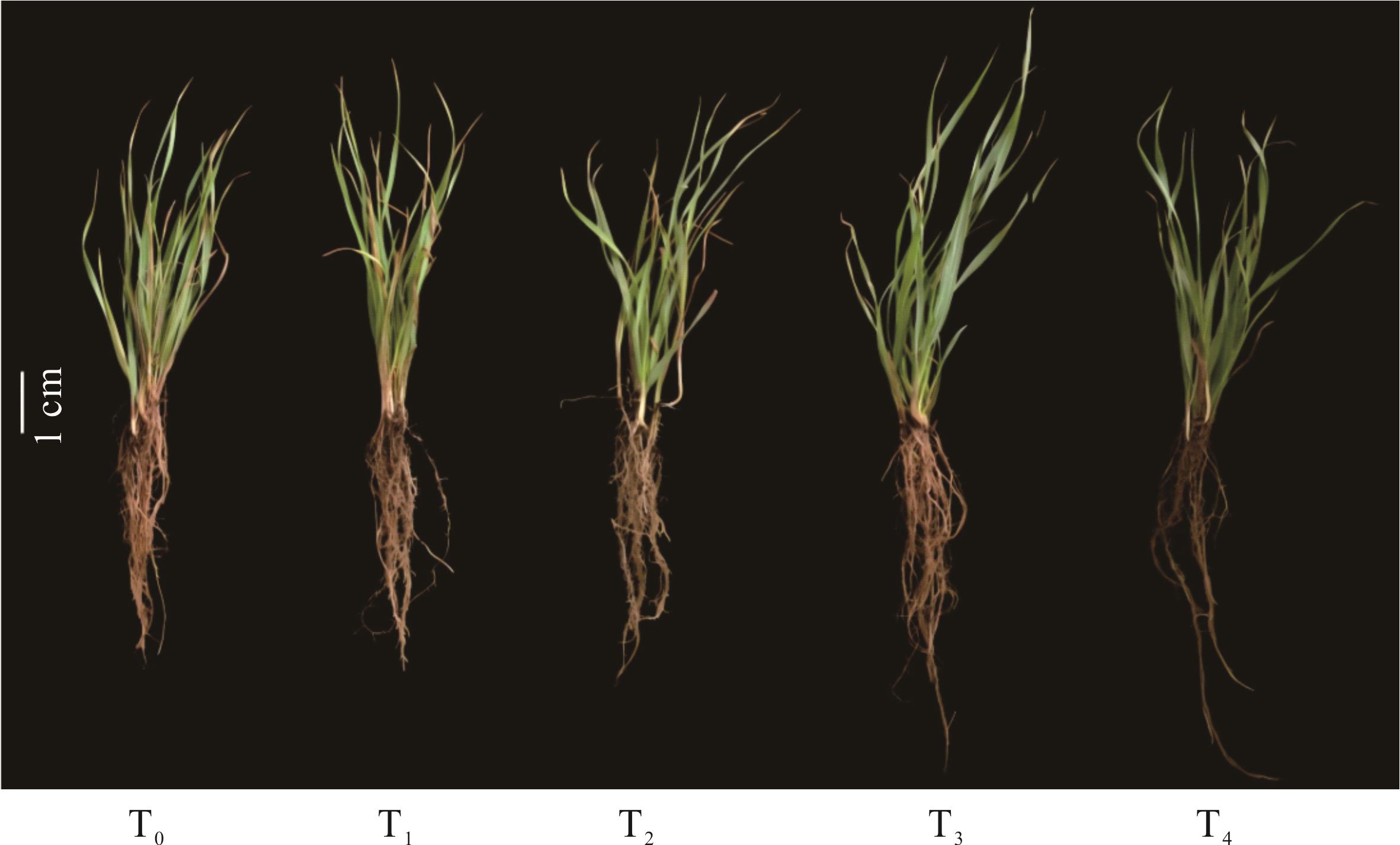
Fig.1 The phenotypic characteristics of B. inermis seedlings
处理 Treatment | 株高 Plant height (cm) | 叶长 Length of leaf (mm) | 叶宽 Leaf width (mm) | 叶面积 Leaf area (mm2) | 地上生物量 Above-ground biomass (g·株-1) |
|---|---|---|---|---|---|
| T0 | 18.16±0.90d | 101.73±2.27d | 4.56±0.42c | 472.17±220.31c | 0.21±0.03c |
| T1 | 22.12±3.97c | 163.29±5.53c | 6.12±0.60b | 706.09±208.13bc | 0.25±0.03bc |
| T2 | 22.80±0.76c | 180.45±6.93b | 6.73±0.22ab | 832.24±103.94ab | 0.28±0.04ab |
| T3 | 25.76±4.05a | 181.13±3.85b | 7.53±1.23a | 882.49±122.17ab | 0.33±0.05a |
| T4 | 24.42±1.69b | 191.62±2.99a | 7.09±0.81ab | 1029.51±81.56a | 0.25±0.03bc |
处理 Treatment | 地下生物量 Below-ground biomass (g·株-1) | 总生物量 Total biomass (g·株-1) | 根总长 Root total length (cm) | 根表面积 Root surface area (cm2) | |
| T0 | 0.12±0.01d | 0.32±0.03d | 41.01±1.29b | 3.72±0.61c | |
| T1 | 0.15±0.01c | 0.39±0.04c | 43.48±5.36b | 4.04±1.32c | |
| T2 | 0.19±0.01b | 0.46±0.05b | 45.82±5.06b | 4.55±0.60bc | |
| T3 | 0.22±0.01a | 0.55±0.04a | 60.26±3.10a | 6.10±1.08a | |
| T4 | 0.17±0.02b | 0.43±0.03bc | 59.66±2.27a | 5.82±0.29ab |
Table 2 The influence of adding biochar on the growth indicators of B. inermis seedlings under saline-alkali stress
处理 Treatment | 株高 Plant height (cm) | 叶长 Length of leaf (mm) | 叶宽 Leaf width (mm) | 叶面积 Leaf area (mm2) | 地上生物量 Above-ground biomass (g·株-1) |
|---|---|---|---|---|---|
| T0 | 18.16±0.90d | 101.73±2.27d | 4.56±0.42c | 472.17±220.31c | 0.21±0.03c |
| T1 | 22.12±3.97c | 163.29±5.53c | 6.12±0.60b | 706.09±208.13bc | 0.25±0.03bc |
| T2 | 22.80±0.76c | 180.45±6.93b | 6.73±0.22ab | 832.24±103.94ab | 0.28±0.04ab |
| T3 | 25.76±4.05a | 181.13±3.85b | 7.53±1.23a | 882.49±122.17ab | 0.33±0.05a |
| T4 | 24.42±1.69b | 191.62±2.99a | 7.09±0.81ab | 1029.51±81.56a | 0.25±0.03bc |
处理 Treatment | 地下生物量 Below-ground biomass (g·株-1) | 总生物量 Total biomass (g·株-1) | 根总长 Root total length (cm) | 根表面积 Root surface area (cm2) | |
| T0 | 0.12±0.01d | 0.32±0.03d | 41.01±1.29b | 3.72±0.61c | |
| T1 | 0.15±0.01c | 0.39±0.04c | 43.48±5.36b | 4.04±1.32c | |
| T2 | 0.19±0.01b | 0.46±0.05b | 45.82±5.06b | 4.55±0.60bc | |
| T3 | 0.22±0.01a | 0.55±0.04a | 60.26±3.10a | 6.10±1.08a | |
| T4 | 0.17±0.02b | 0.43±0.03bc | 59.66±2.27a | 5.82±0.29ab |
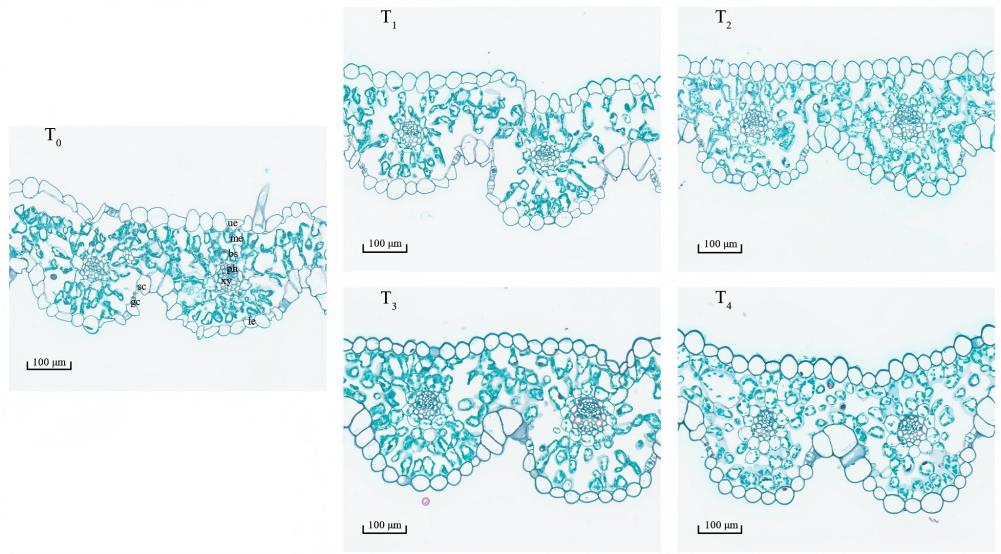
Fig.2 The influence of adding biochar on the anatomical structure of B. inermis under saline-alkali stress
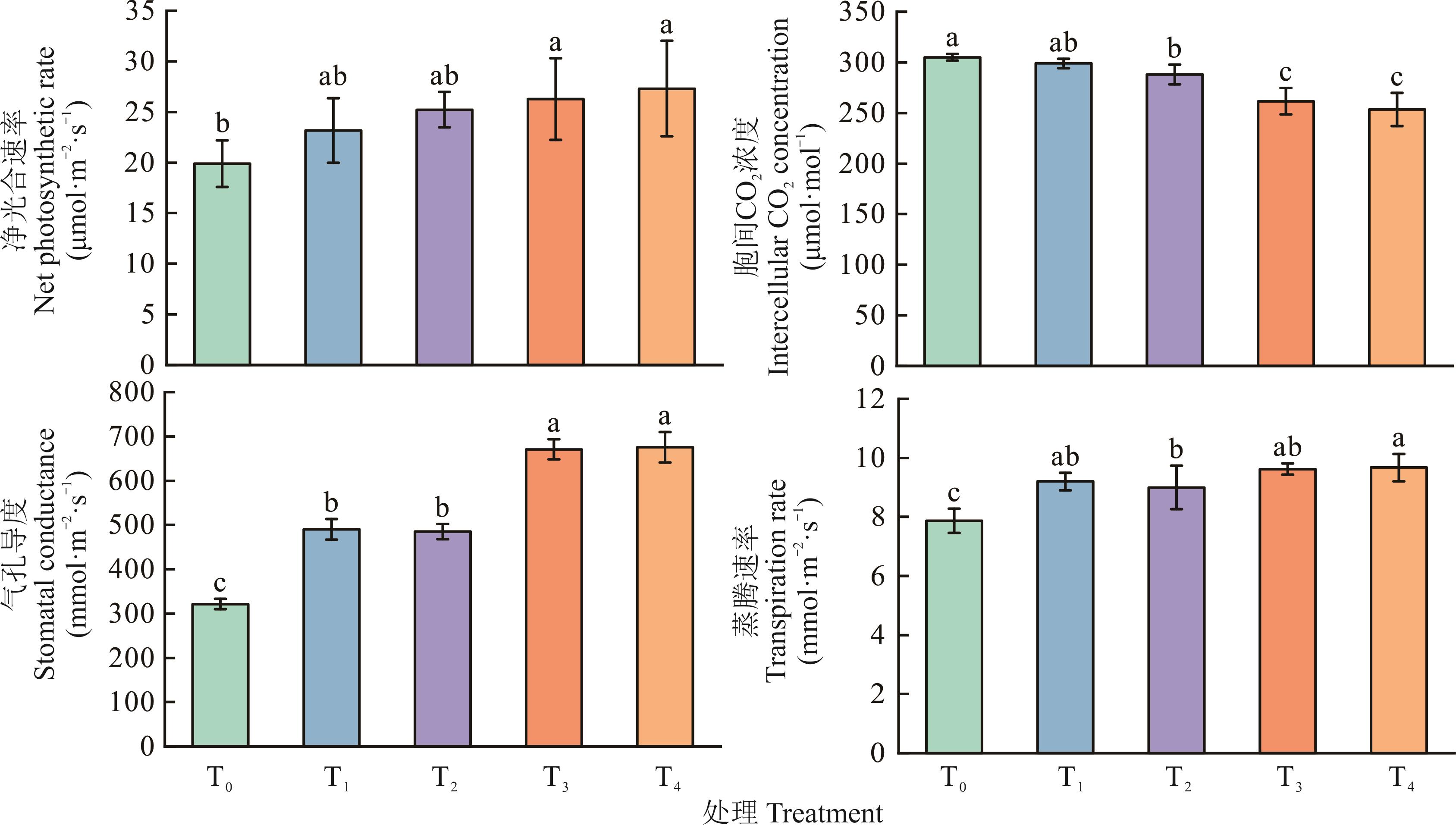
Fig.3 The influence of adding biochar on the photosynthesis of B. inermis under saline-alkali stress
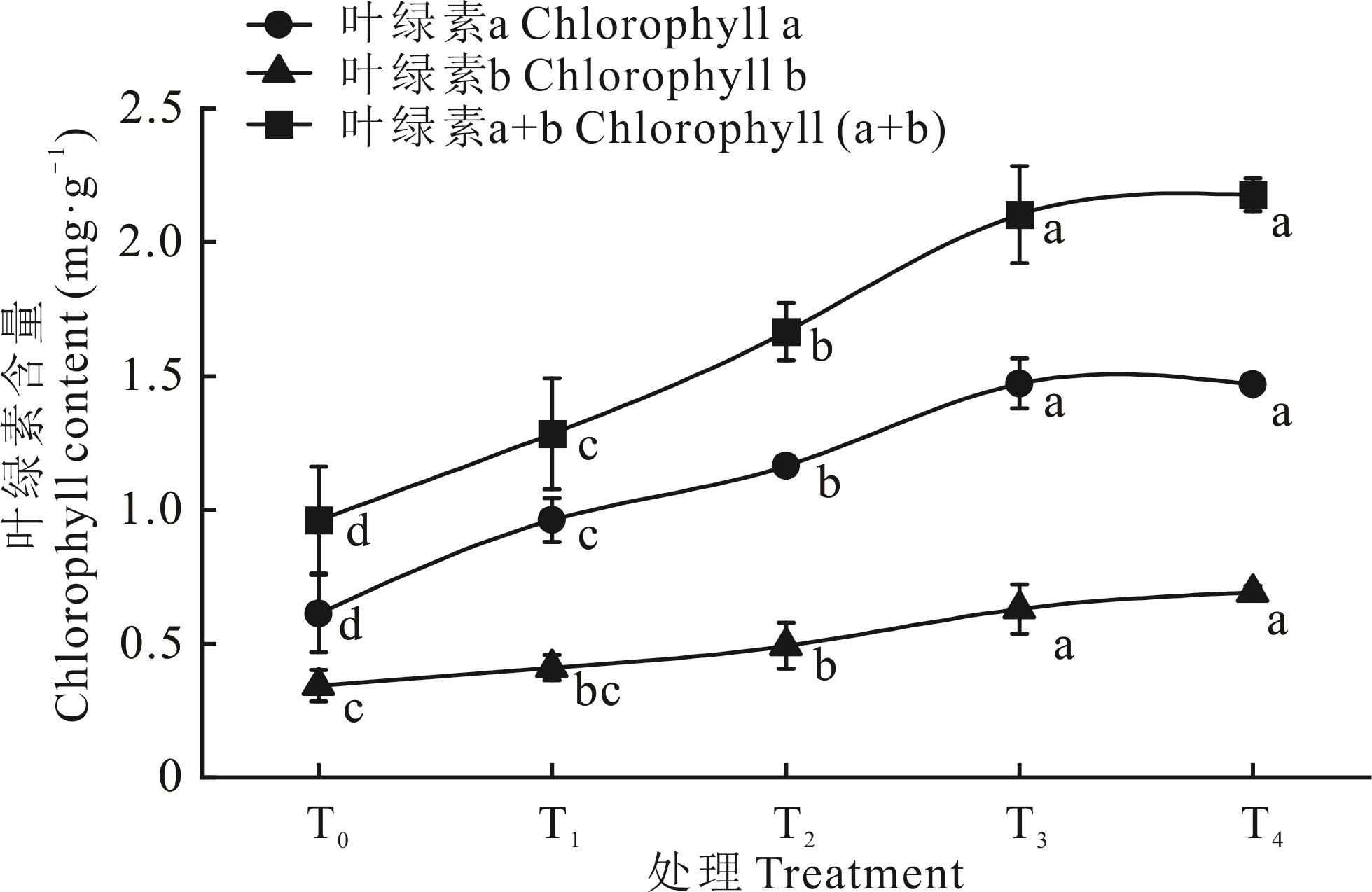
Fig.4 The effect of adding biochar on chlorophyll content in the leaves of B. inermis under saline-alkali stress

Fig.5 The influence of adding biochar on the physiological indicators of B. inermis under saline-alkali stress
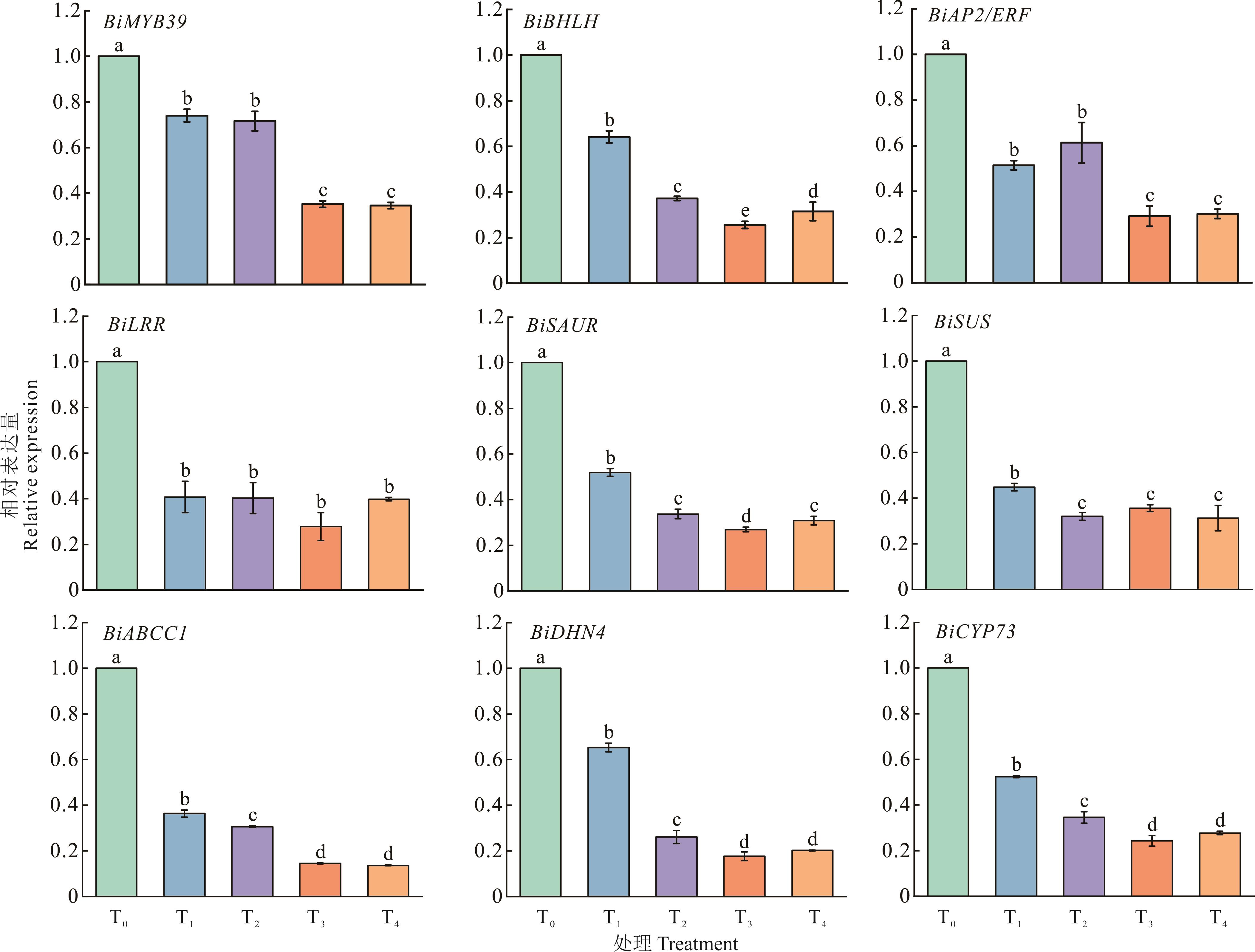
Fig.6 The effect of adding biochar on the expression levels of genes in B. inermis responding to saline-alkali stress
| [1] | Shabala S. Learning from halophytes: Physiological basis and strategies to improve abiotic stress tolerance in crops. Annals of Botany, 2013, 112(7): 1209-1221. |
| [2] | Li J G, Pu L J, Han M F, et al. Soil salinization research in China: Advances and prospects. Journal of Geographical Sciences, 2014, 24(5): 943-960. |
| [3] | Yu G X, Li Y, Liu H Y, et al. Research progress of reclamation and utilization of saline-alkali land in China. Heilongjiang Agricultural Sciences, 2025(7): 96-103. |
| 于功霞, 李迎, 刘宏元, 等. 我国盐碱地改良与利用技术研究进展. 黑龙江农业科学, 2025(7): 96-103. | |
| [4] | Wang H, Takano T, Liu S K. Screening and evaluation of saline-alkaline tolerant germplasm of rice (Oryza sativa L.) in soda saline-alkali soil. Agronomy, 2018, 8(10): 205. |
| [5] | An Y, Gao Y, Tong S Z, et al. Morphological and physiological traits related to the response and adaption of Bolboschoenus planiculmis seedlings grown under salt-alkaline stress conditions. Frontiers in Plant Science, 2021, 12: 567782. |
| [6] | Albert R. Salt regulation in halophytes. Oecologia, 1975, 21: 57-71. |
| [7] | Chen Y, Li Z J, Feng W, et al. Physiological and biochemical characteristics and saline-alkali tolerance evaluation of different maize cultivars in response to saline-alkali stress at seedling stage. Jiangsu Agricultural Sciences, 2025, 53(12): 94-100. |
| 陈悦, 李赵嘉, 冯薇, 等. 不同玉米品种苗期响应盐碱胁迫的生理生化特性及耐盐碱性评价. 江苏农业科学, 2025, 53(12): 94-100. | |
| [8] | Fang S M, Hou X, Liang X L. Response mechanisms of plants under saline-alkali stress. Frontiers in Plant Science, 2021, 12: 667458. |
| [9] | Cui L Q, Liu Y M, Yan J L, et al. Revitalizing coastal saline-alkali soil with biochar application for improved crop growth. Ecological Engineering, 2022, 179: 106594. |
| [10] | Liu D Y, Wang B H, Li J, et al. Effects of biochar on cotton seedling root morphology and root exudates under moderate and severe saline stress. Journal of Agro-Environment Science, 2025, 44(1): 50-58. |
| 刘丹阳, 王伯豪, 李君, 等. 生物炭对中重度盐胁迫下棉花苗期根系形态及根系分泌物的影响. 农业环境科学学报, 2025, 44(1): 50-58. | |
| [11] | Zhong S Z, Liu X J, Ouyang J H, et al. Effects of biochar and phosphorus fertilizer combination on the physiological growth characteristics of alfalfa in saline-alkali soil of the Yellow River Delta. Chinese Journal of Grassland, 2024, 46(7): 35-45. |
| 钟尚志, 刘学金, 欧阳江晗, 等. 黄河三角洲盐碱土下生物炭配施磷肥对紫花苜蓿生长及生理特性的影响. 中国草地学报, 2024, 46(7): 35-45. | |
| [12] | Ma K, Rao L Y. Response of growth and physiological indexes of Helianthus tuberosusto biochar under salt stress. Pratacultural Science, 2023, 40(11): 2879-2888. |
| 马凯, 饶良懿. 盐胁迫下菊芋生长和生理指标对生物炭的响应. 草业科学, 2023, 40(11): 2879-2888. | |
| [13] | Hou Y C, Pang C H, Zhang Y Q, et al. Effects of biochar and nitrogen fertilizer on the physiological growth characteristics of quinoa seedlings under saline alkali. Crops, 2024(4): 240-246. |
| 侯钰晨, 庞春花, 张永清, 等. 施用生物炭与氮肥对盐碱胁迫下藜麦幼苗生理生长特性的影响. 作物杂志, 2024(4): 240-246. | |
| [14] | Zhang X S, Dai L Y, Wang Z J, et al. The king of grass forages-Bromus inermis. Xinjiang Animal Husbandry, 2002(4): 28-29. |
| 张希山, 代连义, 王志杰, 等. 禾草饲料之王-无芒雀麦. 新疆畜牧业, 2002(4): 28-29. | |
| [15] | Yan J H, Li X C, Song W X, et al. Evaluation of salt tolerance of 57 Bromus inermis germplasm at the germination and seedling stages. Pratacultural Science, 2026, 43(2): 380-393. |
| 闫聚辉, 李小聪, 宋文学, 等. 57份无芒雀麦种质萌发期与苗期耐盐性评价. 草业科学, 2026, 43(2): 380-393. | |
| [16] | Lv N, Shi L, Dai Y Y, et al. Reclamation of saline-alkali soils in Xinjiang: A review. Journal of Irrigation and Drainage, 2024, 43(12): 1-10. |
| 吕宁, 石磊, 戴昱余, 等. 新疆盐碱地治理利用研究回顾与启示. 灌溉排水学报, 2024, 43(12): 1-10. | |
| [17] | Han M, Zhang Y X, Pan D F, et al. Effects of saline-alkaloid stress on the seed germination and seedling growth of three smooth brome varieties. Heilongjiang Agricultural Sciences, 2012(7): 119-122. |
| 韩萌, 张月学, 潘多锋, 等. 混合盐碱胁迫对3种无芒雀麦种子萌发及幼苗生长的影响. 黑龙江农业科学, 2012(7): 119-122. | |
| [18] | Li R Q, Wang Y X, Sun Y L, et al. Effects of salt stress on the growth, physiology, and biochemistry of five Bromus inermis varieties. Acta Prataculturae Sinica, 2023, 32(1): 99-111. |
| 李瑞强, 王玉祥, 孙玉兰, 等. 盐胁迫对5份无芒雀麦苗期生长和生理生化的影响及综合性评价. 草业学报, 2023, 32(1): 99-111. | |
| [19] | Jiererge, Sui X Q, Shi G Q, et al. Effects of nitrogen level and arbuscular mycorrhizal fungi on the growth indicator and seed yield of Bromus inermis. Acta Agrestia Sinica, 2024, 32(11): 3507-3515. |
| 吉尔尔格, 隋晓青, 石国庆, 等. 氮水平和丛枝菌根真菌对无芒雀麦生长指标和种子产量的影响. 草地学报, 2024, 32(11): 3507-3515. | |
| [20] | Meng X, Yu J H, Xie J M, et al. Effect of exogenous silicon on growth and photosynthetic fluorescence characteristics of cucumber seedlings under autotoxicity. Acta Botanica Boreali-Occidentalia Sinica, 2020, 40(10): 1688-1697. |
| 孟鑫, 郁继华, 颉建明, 等. 外源硅对自毒作用下黄瓜幼苗生长及光合特性的影响. 西北植物学报, 2020, 40(10): 1688-1697. | |
| [21] | Cui Q L. Effect of water stress on membrane permeability and malondialdehyde content in seabuckthorn cells. Modern Agricultural Science and Technology, 2017(11): 139-145. |
| 崔庆利. 水分胁迫对沙棘细胞膜透性及丙二醛含量的影响. 现代农业科技, 2017(11): 139-145. | |
| [22] | Wang M C. Effect of pea aphid hazard on soluble protein and tannin content changes of four Medicago sativa cultivars (lines). Modern Agriculture, 2020(8): 24-25. |
| 王明春. 豌豆蚜危害对四种苜蓿品种(系)可溶性蛋白和单宁含量变化的影响. 现代农业, 2020(8): 24-25. | |
| [23] | Hu X R, Tao M, Lu X X, et al. Study on the genetic integrity of ultra-dried seed of rice with isozyme of α-Amy and SOD. Journal of Plant Genetic Resources, 2007, 8(2): 228-230. |
| 胡小荣, 陶梅, 卢新雄, 等. α-淀粉酶和超氧化物歧化酶等位酶与水稻种子超干燥保存遗传完整性的研究. 植物遗传资源学报, 2007, 8(2): 228-230. | |
| [24] | Zhang X F, Shi D L, Zhang L. A simple method of observing the stomatal structure of plants. Bulletin of Biology, 2002(6): 42. |
| 张秀芳, 石东里, 张兰. 观察植物气孔结构的简易方法. 生物学通报, 2002(6): 42. | |
| [25] | Li Q, Song J X, Zhou Y, et al. Full-length transcriptomics reveals complex molecular mechanism of salt tolerance in Bromus inermis L. Frontiers in Plant Science, 2022, 13: 917338. |
| [26] | Song W X, Gao X Q, Li H P, et al. Transcriptome analysis and physiological changes in the leaves of two Bromus inermis L. genotypes in response to salt stress. Frontiers in Plant Science, 2023, 4: 1313113. |
| [27] | Ni Z Y. Functional study of stress-responsive miR169c and its target gene GmNFYA3 and miR394a from soybean (Glycine max L. Merr). Beijing: Chinese Academy of Agricultural Sciences, 2013. |
| 倪志勇. 大豆抗逆相关miR169c及其靶位点GmNFYA3和miR394a的功能研究. 北京: 中国农业科学院, 2013. | |
| [28] | Jaiswal A K, Elad Y, Paudel I, et al. Linking the belowground microbial composition, diversity and activity to soilborne disease suppression and growth promotion of tomato amended with biochar. Scientific Reports, 2017, 7(1): 44382. |
| [29] | Wang Y F. Chitosan-modified biochar promotes seed germination and seedling growth of wheat under salt stress. Molecular Plant Breeding, 2023, 21(19): 6493-6499. |
| 王乙富. 壳聚糖改性生物炭促进盐胁迫下小麦种子萌发和幼苗生长. 分子植物育种, 2023, 21(19): 6493-6499. | |
| [30] | Yang Y, Die P X, Zhang S Y, et al. Effects of biochar on the root growth of Kosteletzkya pentacarpos and soil characteristics under saline-alkali condition. Modern Agricultural Science and Technology, 2024(13): 90-94, 115. |
| 杨怡, 迭鹏翔, 张松彦, 等. 生物炭对盐碱条件下海滨锦葵根系生长及土壤特性的影响. 现代农业科技, 2024(13): 90-94, 115. | |
| [31] | He K, He G, Wang C P, et al. Biochar amendment ameliorates soil properties and promotes Miscanthus growth in a coastal saline-alkali soil. Applied Soil Ecology, 2020, 155: 103674. |
| [32] | Yan J F, Yang K X, Wang Z K, et al. The comprehensive effects of biochar on soil fertility and maize growth in coastal saline-alkali soil. Journal of Ludong University (Natural Science Edition), 2025, 41(4): 318-327, 342. |
| 闫军芬, 杨凯心, 王志康, 等. 生物炭对滨海盐碱农田土壤肥力和玉米生长的影响. 鲁东大学学报(自然科学版), 2025, 41(4): 318-327, 342. | |
| [33] | Zhao W B, Wang S, Liu L L, et al. Effect of biochar amendment on saline-alkaline soil amelioration and plant growth: A literature review. Chinese Journal of Soil Science, 2024, 55(2): 551-561. |
| 赵维彬, 王松, 刘玲玲, 等. 生物炭改良盐碱地效果及其对植物生长的影响研究进展. 土壤通报, 2024, 55(2): 551-561. | |
| [34] | Ren H X, Wang D M, Wang H, et al. Effects of biochar on the photosynthetic and antioxidant characteristics of ryegrass and alfalfa under saline-alkali stress. Transactions of the Chinese Society of Agricultural Engineering, 2021, 37(17): 116-123. |
| 任怀新, 王冬梅, 王慧, 等. 生物炭对盐碱胁迫下黑麦草和紫花苜蓿光合及抗氧化特征的影响. 农业工程学报, 2021, 37(17): 116-123. | |
| [35] | Li S P, Zeng L S, Li X L, et al. Amelioration of saline soil with different biochar fertilization formulas and its effects on growth and photosynthesis of Brassica chinensis and cotton. Journal of Soil and Water Conservation, 2019, 33(2): 363-368. |
| 李思平, 曾路生, 李旭霖, 等. 不同配方生物炭改良盐渍土对小白菜和棉花生长及光合作用的影响. 水土保持学报, 2019, 33(2): 363-368. | |
| [36] | Wang X L, Han W D. The salt stress on photosynthetic characteristics and anatomy of the leaves of Heritiera littoralis seedlings. Journal of Quanzhou Normal University, 2015, 33(6): 8-11, 23. |
| 王秀丽, 韩维栋. 盐胁迫处理对银叶树幼苗叶片光合及解剖特征影响. 泉州师范学院学报, 2015, 33(6): 8-11, 23. | |
| [37] | Yang X Y, Huang Y Z, Hao C L, et al. The influence of osmotic stress on the physiological indicators and leaf structure of Chrysanthemum seedlings. Journal of Nuclear Agricultural Sciences, 2025, 39(7): 1566-1580. |
| 杨小英, 黄艳竹, 郝春磊, 等. 渗透胁迫对切花菊幼苗生理指标和叶片结构的影响. 核农学报, 2025, 39(7): 1566-1580. | |
| [38] | Liu J, Cai H, Liu Y, et al. A study on physiological characteristics and comparison of salt tolerance of two Medicago sativa at the seeding stage. Acta Prataculturae Sinica, 2013, 22(2): 250-256. |
| 刘晶, 才华, 刘莹, 等. 两种紫花苜蓿苗期耐盐生理特性的初步研究及其耐盐性比较. 草业学报, 2013, 22(2): 250-256. | |
| [39] | Huang J, Kong Y L, Wu L L, et al. Biochar regulates the salt tolerance of rice seedlings under salt stress. Chinese Journal of Ecology, 2021, 40(3): 627-634. |
| 黄晶, 孔亚丽, 吴龙龙, 等. 生物炭调控盐胁迫下水稻幼苗耐盐性能. 生态学杂志, 2021, 40(3): 627-634. | |
| [40] | He K, Xu Y, He G, et al. Combined application of acidic biochar and fertilizer synergistically enhances Miscanthus productivity in coastal saline-alkaline soil. Science of the Total Environment, 2023, 893: 164811. |
| [41] | Noguera D, Barot S, Laossi K R, et al. Biochar but not earthworms enhances rice growth through increased protein turnover. Soil Biology and Biochemistry, 2012, 52: 13-20. |
| [42] | Zhang Q Q, Zhu J H, Ni Y M, et al. The structure and function of plant bHLH transcription factors. Journal of Tropical and Subtropical Botany, 2011, 19(1): 84-90. |
| 张全琪, 朱家红, 倪燕妹, 等. 植物bHLH转录因子的结构特点及其生物学功能. 热带亚热带植物学报, 2011, 19(1): 84-90. | |
| [43] | Lan M J, Hou M, Xiao M Q, et al. Research progress of AP2/ERF transcription factors participating in plant secondary metabolism and stress response. Journal of Plant Genetic Resources, 2023, 24(5): 1223-1235. |
| 兰孟焦, 后猛, 肖满秋, 等. AP2/ERF转录因子参与植物次生代谢和逆境胁迫响应的研究进展. 植物遗传资源学报, 2023, 24(5): 1223-1235. | |
| [44] | Feng L, Zhang H W, Huang R F. Advance in research of plant receptor-like protein kinases. Journal of Agricultural Science and Technology, 2012, 14(6): 43-48. |
| 冯蕾, 张海文, 黄荣峰. 植物LRR类受体蛋白激酶的研究进展. 中国农业科技导报, 2012, 14(6): 43-48. | |
| [45] | Liu C Y, Wang Y H. Plant auxin responsive gene SAUR: A review. Chinese Agricultural Science Bulletin, 2024, 40(18): 83-89. |
| 刘超逸, 王宇航. 植物生长素响应基因SAUR研究进展. 中国农学通报, 2024, 40(18): 83-89. | |
| [46] | Aryal B, Xia J, Hu Z H, et al. An LRR receptor kinase controls ABC transporter substrate preferences during plant growth-defense decisions. Current Biology, 2023, 33(10): 2008-2023. |
| [47] | Lv A, Su L T, Liu X C, et al. Characterization of dehydrin protein, CdDHN4-L and CdDHN4-S, and their differential protective roles against abiotic stress in vitro. BMC Plant Biology, 2018, 18(1): 299. |
| [48] | Knosp S, Kriegshauser L, Tatsumi K, et al. An ancient role for CYP73 monooxygenases in phenylpropanoid biosynthesis and embryophyte development. The EMBO Journal, 2024, 43(18): 4092-4109. |
| [49] | Zuo R, Xu M L, Chai G H, et al. Function and regulation mechanism of plant MYB transcription factors. Chinese Bulletin of Life Sciences, 2012, 24(10): 1133-1140. |
| 左然, 徐美玲, 柴国华, 等. 植物MYB转录因子功能及调控机制研究进展. 生命科学, 2012, 24(10): 1133-1140. | |
| [50] | Sun X M, Zhang T Y, Zhang S Y, et al. Transcriptional regulation and functional research of sucrose synthase in plant development. Planta, 2025, 262(3): 65. |
| [1] | Jia-bao ZHANG. Harnessing soil biotic potential to enrich soil carbon and ecological functionality of cultivated soil [J]. Acta Prataculturae Sinica, 2026, 35(9): 1-7. |
| [2] | Ying ZHAO, Cong-cong ZHANG, Yu-ting SONG, Chong-min ZHANG, Yue AN, Bin-bin YANG, Yong MA, Bao-qiang WANG. Promoting effect of 2,4-epibrassinolide on the growth of quinoa seedlings under saline-alkali stress [J]. Acta Prataculturae Sinica, 2026, 35(9): 100-112. |
| [3] | Xue-feng LIANG, Shu-mei FANG, Xi-long LIANG. Regulatory mechanisms of pre-mRNA alternative splicing in plant responses to saline-alkali stress [J]. Acta Prataculturae Sinica, 2026, 35(9): 236-246. |
| [4] | Jin-di LIU, Shi-yong CHEN, Jin LI, Tao JIANG, Guo-ling LIANG, Qing-ping ZHOU. Identification of the sucrose transporter gene family in oats and its response to drought and saline-alkali conditions [J]. Acta Prataculturae Sinica, 2026, 35(8): 144-156. |
| [5] | Ruo-hong LI, Chang-ran LI, Jia-yi FU, Xin-yu HU, Pei-sheng MAO. Effects of nano-iron priming and biochar encrusting on the salt tolerance of Festuca sinensis at the seed germination and seedling growth stages [J]. Acta Prataculturae Sinica, 2026, 35(8): 32-44. |
| [6] | Jing SUN, Yan-liang SUN, Dong-jie XIA, Kong-qin WEI, Kai-xin YANG, Xiao-qing SUI, Qian-bing ZHANG. Effects of nitrogen-phosphorus and water coupling on soil nutrients and the photosynthetic characteristics and production performance of Bromus inermis [J]. Acta Prataculturae Sinica, 2026, 35(7): 105-116. |
| [7] | Rui GAN, Jiererge, Xiao-qing SUI, Hai-jun LIU, Yu-xuan LIU, Gui-li JIN, MAIMAITI·Mu-yesaier. Effects of arbuscular mycorrhizal fungi on growth characteristics and sugar content of Bromus inermis [J]. Acta Prataculturae Sinica, 2026, 35(6): 122-130. |
| [8] | Yu-lin NIU, Ming-fang BAO, Wen-hu WANG, Xin CHEN, Kai-qiang LIU, Wen-hui LIU, Yan QIN. A multivariate evaluation of agronomic traits, yield and seed production in ten accessions of Bromus inermis from the Three-River-Source Region [J]. Acta Prataculturae Sinica, 2026, 35(6): 83-92. |
| [9] | Yue-qi LI, Tao MA, Yu-ping DING, Ming SU, Tao LI, Xiao-ying MA, Feng-lan MA, Meng-hu WAN, Qing-yun LI, Dan ZHANG, Na WU, Ji-li LIU. Adaptation of maize varieties in saline and alkaline land in Ningxia based on growth-nutrient accumulation-yield synergistic regulation [J]. Acta Prataculturae Sinica, 2026, 35(6): 93-107. |
| [10] | Xiao-cong LI, Ju-hui YAN, Xing WANG, Peng-fei HU, Yu-nong YE, Bing-zhe FU. Effects of different inter-row planting ratios of alfalfa and smooth brome on grass production performance and soil physicochemical properties [J]. Acta Prataculturae Sinica, 2026, 35(5): 113-125. |
| [11] | Yi-han WANG, Lu-meng SHI, Zhi-jian LI, Bang-wei ZHOU. Effects of grass species and biochar application rate on soda saline-alkali soil improvement and forage growth in northeast China [J]. Acta Prataculturae Sinica, 2026, 35(5): 139-150. |
| [12] | Chao-rong LIU, Yong-cheng CHEN, Ying CHEN, Xu-dong ZHANG, Tian-yu HU, Li-he SU, Fan-fan ZHANG, Xu-zhe WANG, Kun YAO, Chun-hui MA. Differences in saline-alkali tolerance of five Leymus chinensis cultivars grown in saline-alkali soil from Xinjiang [J]. Acta Prataculturae Sinica, 2026, 35(4): 29-41. |
| [13] | Chang LIU, Ji-shan CHEN, Rui-fen ZHU, Wan-bin SUN, Bo YAO, Shi-kui DONG. Mitigation of soil microbial carbon and phosphorus limitations through organic fertilizer and biochar inputs in subtropical cultivated grassland [J]. Acta Prataculturae Sinica, 2026, 35(4): 54-66. |
| [14] | Yi-lin DI, Si-tian LIU, Xin-ying LIU, Yong DU, Zhou LI. Effects of γ-aminobutyric acid on cadmium stress tolerance and cadmium uptake and transport in creeping bentgrass [J]. Acta Prataculturae Sinica, 2026, 35(2): 208-220. |
| [15] | Ning CHEN, Feng-xuan BAO, Hui-xiang ZHAO, Nan WANG, Ru-yu JIANG, Guo-liang LI, Xiang-ping LIU, Shan-min QU, Wei-guang YANG. Physiological characteristics of the alfalfa root collar during overwintering under soda saline-alkali stress in cold areas [J]. Acta Prataculturae Sinica, 2025, 34(9): 78-86. |
| Viewed | ||||||
|
Full text |
|
|||||
|
Abstract |
|
|||||
