
ISSN 1004-5759 CN 62-1105/S
Acta Prataculturae Sinica ›› 2026, Vol. 35 ›› Issue (12): 197-209.DOI: 10.11686/cyxb2025490
Dan-xia KE( ), Zhao-yuan ZHOU, Ke-xin ZHANG, Jia-nuo LIN, Xiao-li SONG
Received:2025-12-02
Revised:2026-03-16
Online:2026-12-20
Published:2026-11-02
Contact:
Dan-xia KE
Dan-xia KE, Zhao-yuan ZHOU, Ke-xin ZHANG, Jia-nuo LIN, Xiao-li SONG. Cloning and salt tolerance functional analysis of the sugar transporter gene LjSWEET10 from Lotus japonicus[J]. Acta Prataculturae Sinica, 2026, 35(12): 197-209.
| 引物Primer | 引物序列 Sequence of primer (5′-3′) | 引物Primer | 引物序列 Sequence of primer (5′-3′) |
|---|---|---|---|
| LjSWEET10-F | ATGGCCATTAGTCATGATTC | Q-AtABI5-R | GTTCGGGTTTGGATTAGGTTTAGG |
| LjSWEET10-R | TTACCCTTTGGTTTCTTG | Q-AtDREB1A-F | AGGAGACGTTGGTGGAGGCT |
| LjSWEET10-GFP-F | GG | Q-AtDREB1A-R | ACGTCGTCATCATCGCCGTC |
| LjSWEET10-GFP-R | GC | Q-AtMYC2-F | GCGTTGATGGATTTGGAGTT |
| LjSWEET10-pDR196-F | TCC | Q-AtMYC2-R | TTGCTCTGAGCTGTTCTTGC |
| LjSWEET10-pDR196-R | AA | Q-AtSOS1-F | TCGTTTCAGCCAAATCAGAAAGT |
| Q-LjSWEET10-F | CACTTTGCTAAGTGGGG | Q-AtSOS1-R | TTTGCCTTGTGCTGCTTTCC |
| Q-LjSWEET10-R | CACTGAGAGAAGAGAAT | Q-AtACT-F | GGTAACATTGTGCTCAGTGGTGG |
| Q-AtABI5-F | AGAGGGATAGCGAACGAGTCTAGTC | Q-AtACT-R | AACGACCTTAATCTTCATGCTGC |
Table 1 The primers used in this study
| 引物Primer | 引物序列 Sequence of primer (5′-3′) | 引物Primer | 引物序列 Sequence of primer (5′-3′) |
|---|---|---|---|
| LjSWEET10-F | ATGGCCATTAGTCATGATTC | Q-AtABI5-R | GTTCGGGTTTGGATTAGGTTTAGG |
| LjSWEET10-R | TTACCCTTTGGTTTCTTG | Q-AtDREB1A-F | AGGAGACGTTGGTGGAGGCT |
| LjSWEET10-GFP-F | GG | Q-AtDREB1A-R | ACGTCGTCATCATCGCCGTC |
| LjSWEET10-GFP-R | GC | Q-AtMYC2-F | GCGTTGATGGATTTGGAGTT |
| LjSWEET10-pDR196-F | TCC | Q-AtMYC2-R | TTGCTCTGAGCTGTTCTTGC |
| LjSWEET10-pDR196-R | AA | Q-AtSOS1-F | TCGTTTCAGCCAAATCAGAAAGT |
| Q-LjSWEET10-F | CACTTTGCTAAGTGGGG | Q-AtSOS1-R | TTTGCCTTGTGCTGCTTTCC |
| Q-LjSWEET10-R | CACTGAGAGAAGAGAAT | Q-AtACT-F | GGTAACATTGTGCTCAGTGGTGG |
| Q-AtABI5-F | AGAGGGATAGCGAACGAGTCTAGTC | Q-AtACT-R | AACGACCTTAATCTTCATGCTGC |

Fig.1 Cloning of the LjSWEET10 gene and prediction of its protein structure

Fig.2 Sequence alignment and phylogenetic analysis of LjSWEET10 and its homologs
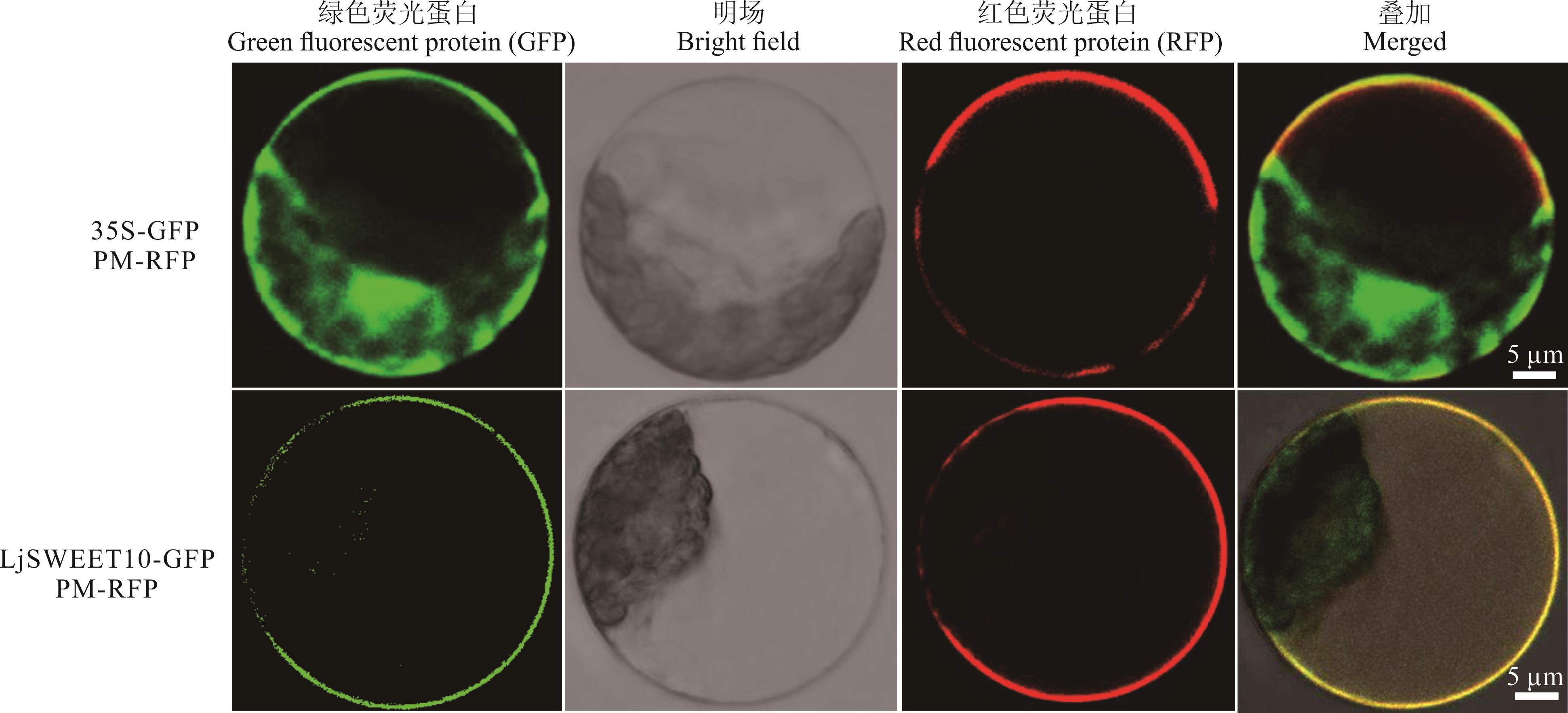
Fig.3 Subcellular localization of LjSWEET10
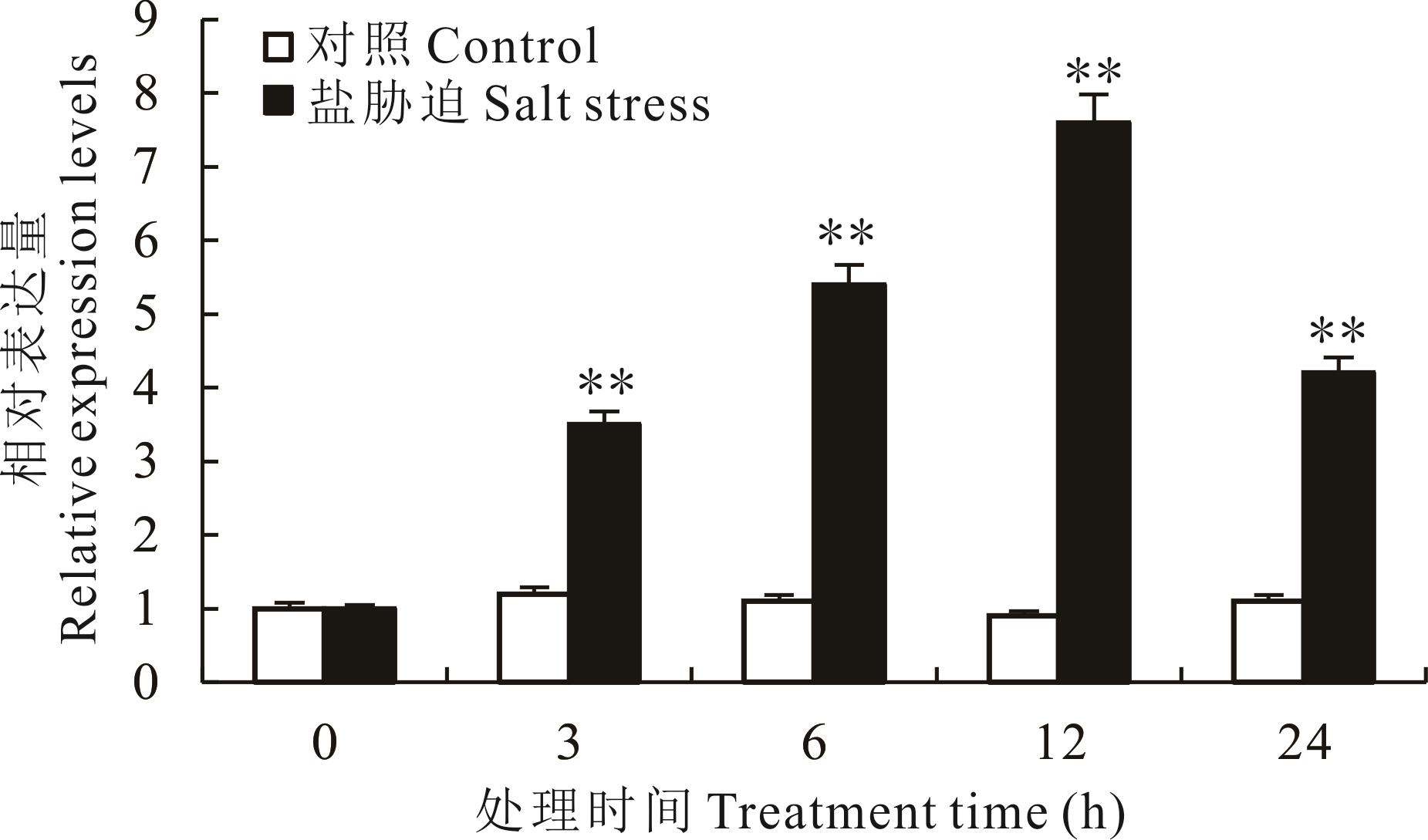
Fig.4 Expression analysis of LjSWEET10 gene in L. japonicus under salt stress
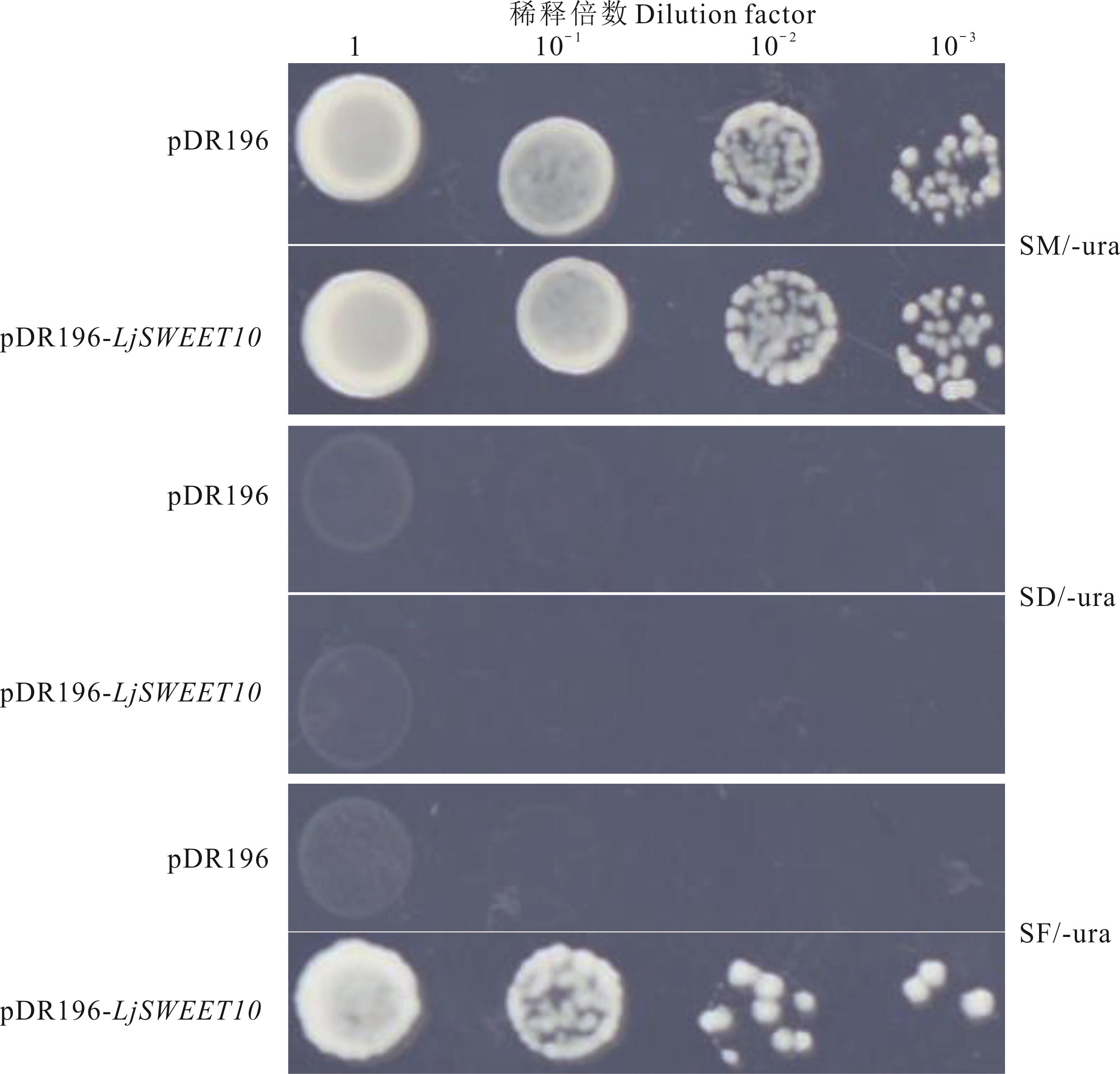
Fig. 5 Analysis of hexose transport types by LjSWEET10 in yeast
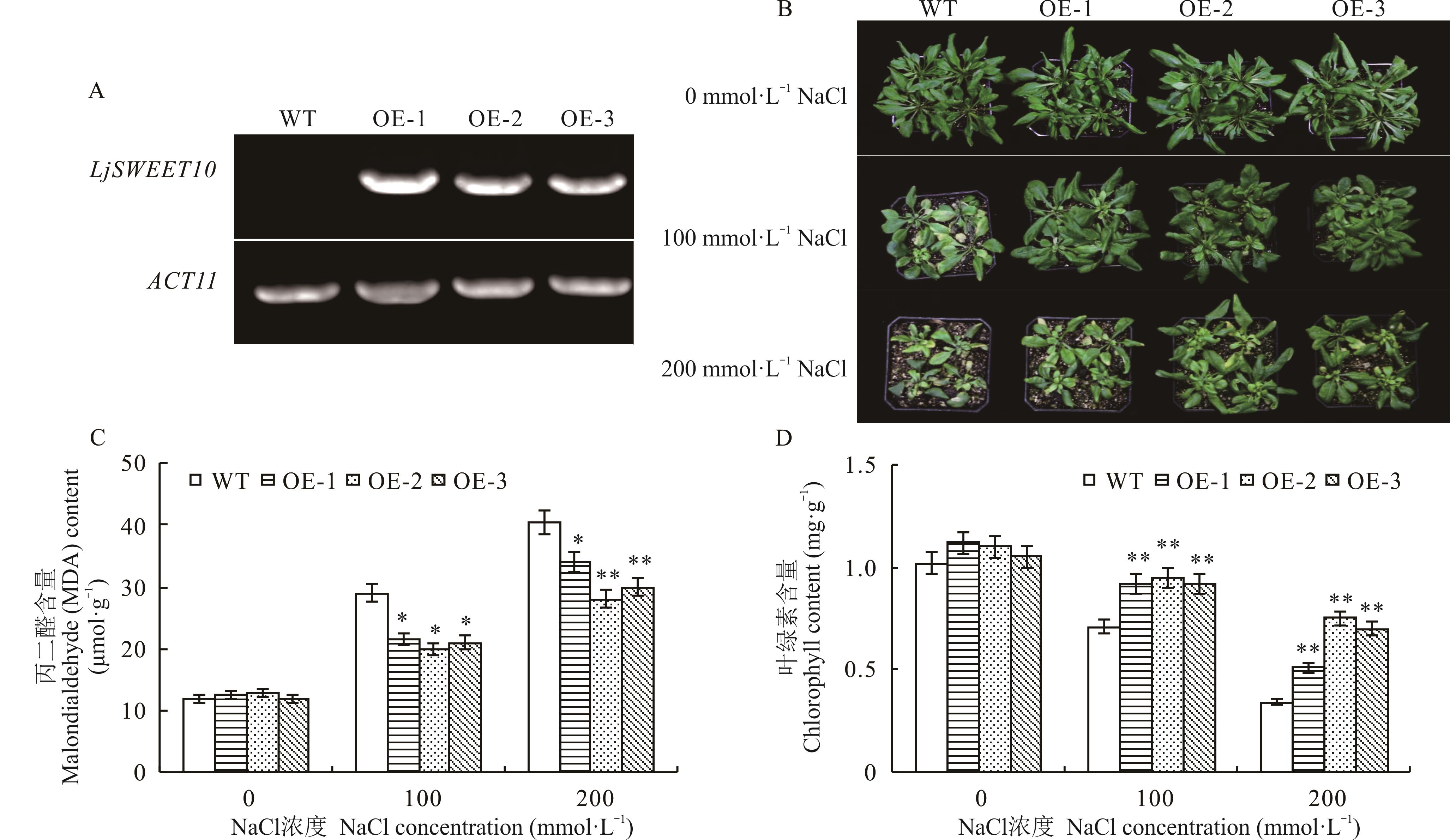
Fig.6 Salt stress phenotype analysis and physiological index detection of transgenic A. thaliana overexpressing LjSWEET10
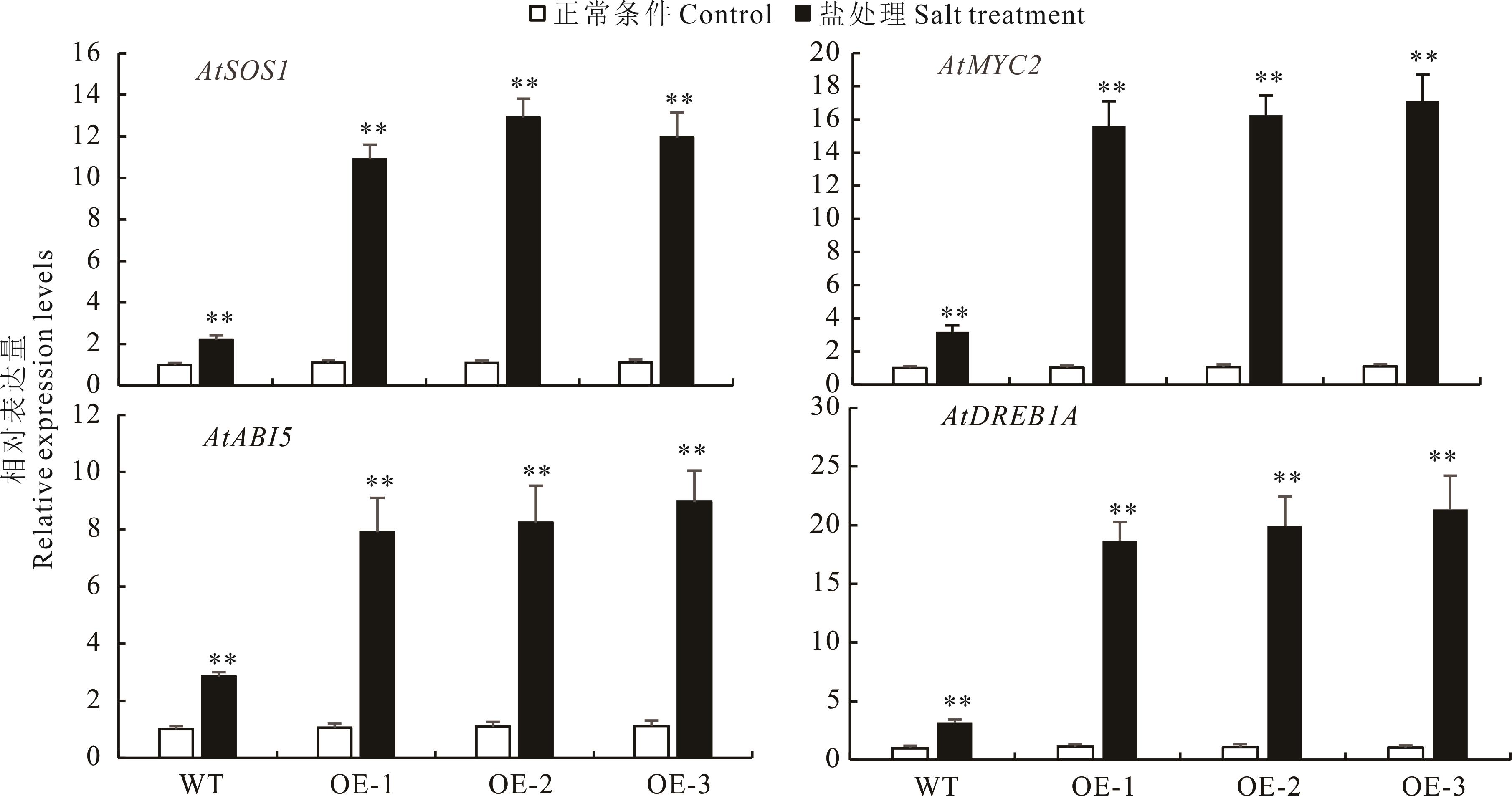
Fig.7 Expression of stress-related genes in transgenic A. thaliana treated with 200 mmol·L-1 NaCl
| [1] | Qadir M, Quillérou E, Nangia V, et al. Economics of salt-induced land degradation and restoration. Natural Resources Forum, 2014, 38(4): 282-295. |
| [2] | Liu Y F, Peng H, Wang W W, et al. Research progress on the physiological and molecular mechanisms of salt tolerance for plants. Jiangsu Agricultural Sciences, 2019, 47(12): 30-36. |
| 刘云芬, 彭华, 王薇薇, 等. 植物耐盐性生理与分子机制研究进展. 江苏农业科学, 2019, 47(12): 30-36. | |
| [3] | Ziska L H, Bunce J A, Shimono H, et al. Food security and climate change: On the potential to adapt global crop production by active selection to rising atmospheric carbon dioxide. Proceedings, Biological Sciences, 2012, 279: 4097-4105. |
| [4] | Park H J, Kim W, Yun D. A new insight of salt stress signaling in plant. Molecules and Cells, 2016, 39(6): 447-459. |
| [5] | Ding Z Y. Evaluation of salt tolerance and seed mutagenesis screening of Lotus corniculatus. Nanjing: Nanjing Agricultural University, 2022. |
| 丁振宇. 百脉根耐盐性评价及种子诱变筛选. 南京: 南京农业大学, 2022. | |
| [6] | Chen L Q, Hou B H, Lalonde S, et al. Sugar transporters for intercellular exchange and nutrition of pathogens. Nature, 2010, 468: 527-532. |
| [7] | Eom J S, Chen L Q, Sosso D, et al. SWEETs, transporters for intracellular and intercellular sugar translocation. Current Opinion in Plant Biology, 2015, 25: 53-62. |
| [8] | Tao Y, Cheung L S, Li S, et al. Structure of a eukaryotic SWEET transporter in a homotrimeric complex. Nature, 2015, 527: 259-263. |
| [9] | Chen L Q, Qu X Q, Hou B H, et al. Sucrose efflux mediated by SWEET proteins as a key step for phloem transport. Science, 2012, 335(6065): 207-211. |
| [10] | Lin I W, Sosso D, Chen L Q, et al. Nectar secretion requires sucrose phosphate synthases and the sugar transporter SWEET9.Nature, 2014, 508(7497): 546-549. |
| [11] | Sun M X, Huang X Y, Yang J, et al. Arabidopsis RPG1 is important for primexine deposition and functions redundantly with RPG2 for plant fertility at the late reproductive stage. Plant Reproduction, 2013, 26(2): 83-91. |
| [12] | Chen L Q, Lin I W, Qu X Q, et al. A cascade of sequentially expressed sucrose transporters in the seed coat and endosperm provides nutrition for the Arabidopsis embryo. The Plant Cell, 2015, 27(3): 607-619. |
| [13] | Sosso D, Luo D, Li Q N, et al. Seed filling in domesticated maize and rice depends on SWEET-mediated hexose transport. Nature Genetics,2015, 47(12): 1489-1493. |
| [14] | La H V, Chu H D, Tran C D, et al. Insights into the gene and protein structures of the CaSWEET family members in chickpea (Cicer arietinum), and their gene expression patterns in different organs under various stress and abscisic acid treatments. Gene, 2022, 819: 146210. |
| [15] | Wang L, Yao L N, Hao X Y, et al. Tea plant SWEET transporters: expression profiling, sugar transport, and the involvement of CsSWEET16 in modifying cold tolerance in Arabidopsis. Plant Molecular Biology, 2018, 96(6): 577-592. |
| [16] | Yuan M, Wang S P. Rice MtN3/saliva/SWEET family genes and their homologs in cellular organisms. Molecular Plant, 2013, 6(3): 665-674. |
| [17] | Xuan Y H, Hu Y B, Chen L Q, et al. Functional role of oligomerization for bacterial and plant SWEET sugar transporter family. Proceedings of the National Academy of Sciences of the United States of America, 2013, 110(39): 3685-3694. |
| [18] | Durand M, Porcheron B, Hennion N, et al. Water deficit enhances C export to the roots in Arabidopsis thaliana plants with contribution of sucrose transporters in both shoot and roots. Plant Physiology, 2016, 170(3): 1460-1479. |
| [19] | Chen Q C, Hu T, Li X H, et al. Phosphorylation of SWEET sucrose transporters regulates plant root∶shoot ratio under drought. Nature Plants, 2022, 8(1): 68-77. |
| [20] | Valifard M, Le H R, Muller J, et al. Vacuolar fructose transporter SWEET17 is critical for root development and drought tolerance. Plant Physiology, 2021, 187(4): 2716-2730. |
| [21] | Mathan J, Singh A, Ranjan A. Sucrose transport in response to drought and salt stress involves ABA mediated induction of OsSWEET13 and OsSWEET15 in rice. Physiologia Plantarum, 2021, 171(4): 620-637. |
| [22] | Wang H, Yan S J, Xin H J, et al. A subsidiary celllocalized glucose transporter promotes stomatal conductance and photosynthesis. The Plant Cell, 2019, 31(6): 1328-1343. |
| [23] | Liu M T, Liu T Y, Lu J Y, et al. Characterization and functional analysis of ZmSWEET15a in maize. DNA and Cell Biology, 2022, 41(6): 564-574. |
| [24] | Gautam T, Dutta M, Jaiswal V, et al. Emerging roles of SWEET sugar transporters in plant development and abiotic stress responses. Cells, 2022, 11(8): 1303. |
| [25] | Chen G, Hu J, Dong L L, et al. The tolerance of salinity in rice requires the presence of a functional copy of FLN2. Biomolecules, 2019, 10(1): 17. |
| [26] | Seo P J, Park J M, Kang S K, et al. An Arabidopsis senescence-associated protein SAG29 regulates cell viability under high salinity. Planta, 2011, 233(1): 189-200. |
| [27] | Ke D X, Hou S B, Zhou Z Y. GmIFS interacts with GmNFR1α and plays a positive role in soybean legume-rhizobia symbiosis. Plant Science, 2026, 365: 113011. |
| [28] | Wang X Y, Wang Z M, Tang X Y, et al. The SlDOF9-SlSWEET17 module: A switch for controlling sugar distribution between nematode induced galls and roots in tomato. Advanced Science, 2025, 12(28): e2501771. |
| [29] | Ke D X, He Y L, Fan L X, et al. The soybean TGA transcription factor GmTGA13 plays important roles in the response to salinity stress. Plant Biology, 2022, 24(2): 313-322. |
| [30] | Livak K, Schmittgen T. Analysis of relative gene expression data using real-time quantitative PCR and the 2-ΔΔCT method. Methods, 2001, 25(4): 402-408. |
| [31] | Horie T, Karahara I, Katsuhara M. Salinity tolerance mechanisms in glycophytes: An overview with the central focus on rice plants. Rice, 2012, 5(1): 11. |
| [32] | Shu S, TangY Y, Zhou X P, et al. Physiological mechanism of transglutaminase-mediated improvement in salt tolerance of cucumber seedlings. Plant Physiology and Biochemistry, 2020, 156: 333-344. |
| [33] | Cheng X, Wang Y W, Bao A K, et al. Overexpression of AVP1 enhanced salt and drought tolerance of transgenic Lotus corniculatus L. Plant Physiology Communications, 2010, 46(8): 808-816. |
| 程星, 王燕雯, 包爱科, 等. 超表达AVP1基因提高转基因百脉根的耐盐性和抗旱性. 植物生理学通讯, 2010, 46(8): 808-816. | |
| [34] | Liu F, Chen C, Zhang K X, et al. Cloning and identification of drought tolerance function of the LjbHLH34 gene in Lotus japonicus. Acta Prataculturae Sinica, 2023, 32(1): 178-191. |
| 刘福, 陈诚, 张凯旋, 等. 日本百脉根 LjbHLH34 基因克隆及耐旱功能鉴定. 草业学报, 2023, 32(1): 178-191. | |
| [35] | Wang Y W. Studies on co-expression of ZxVP1-1 and ZxNHX gene in Lotus corniculatus L. and identification the salt and drought tolerance of the transgenic plants. Lanzhou: Lanzhou University, 2011. |
| 王燕雯. 共表达霸王ZxNHX及ZxVP1-1基因提高百脉根的耐盐性和抗旱性研究. 兰州: 兰州大学, 2011. | |
| [36] | Ke D X, Peng K P, Xia Y J, et al. Cloning of salt-stressed responsive gene GmWRKY6 and salt resistance analysis of transgenic Lotus japonicus. Acta Prataculturae Sinica, 2018, 27(8): 95-106. |
| 柯丹霞, 彭昆鹏, 夏远君, 等. 盐胁迫应答基因 GmWRKY6 的克隆及转基因百脉根的抗盐分析. 草业学报, 2018, 27(8): 95-106. | |
| [37] | Liu J, Liu L, Tian L, et al. Overexpression of LjPLT3 enhances salt tolerance in Lotus japonicus. International Journal of Molecular Sciences, 2023, 24(6): 5149. |
| [38] | Wang D, Gong Y, Li Y, et al. Genome-wide analysis of the homeodomain-leucine zipper family in Lotus japonicus and the overexpression of LjHDZ7 in Arabidopsis for salt tolerance. Frontiers in Plant Science, 2022, 13: 955199. |
| [39] | Song C H, Yang Z J, Luo Z Y, et al. Research progress in plant sugar transporter SWEETs. Journal of Capital Normal University (Natural Science Edition), 2024, 45(4): 58-67. |
| 宋春晖, 杨梓健, 罗志勇, 等. 植物糖转运蛋白 SWEETs 研究进展. 首都师范大学学报(自然科学版), 2024, 45(4): 58-67. | |
| [40] | Li Y L, Zhou S H, Xue M Y, et al. Cloning of the gene ZjWRKY63 from Zoysia japonica and its salt resistance analysis in transgenic Arabidopsis. Acta Prataculturae Sinica, 2025, 34(12): 157-169. |
| 李永龙, 周生辉, 薛梦瑶, 等. 结缕草 ZjWRKY63基因的克隆及转基因拟南芥的耐盐性分析. 草业学报, 2025, 34(12): 157-169. | |
| [41] | Wang J, Wu Y D, Yang Y J, et al. SWEET family sugar transporters and their upstream regulatory factors in plant. Plant Physiology Journal, 2024, 60(4): 597-605. |
| 王洁, 吴叶蝶, 杨亚军, 等. 植物SWEET家族糖转运蛋白及其上游调控因子. 植物生理学报, 2024, 60(4): 597-605. |
| [1] | Feng LI, Xu-hu GUO, Hui-fen CAO, Xiang-rui KONG, Dong-xue YANG, Dong-xu ZHANG, Yong-fang ZHANG. Functional analysis of quinoa NAC transcription factor CqNAC66 in response to drought and salt stress [J]. Acta Prataculturae Sinica, 2026, 35(8): 170-181. |
| [2] | Meng-yu REN, Li-qun WANG, Li-li NAN, Jia-yu GUO. Responses of new alfalfa lines to salt stress [J]. Acta Prataculturae Sinica, 2026, 35(6): 24-34. |
| [3] | Shao-yan YUAN, Yuan-kun LIU, Shi-jie CAI, Ting-xin LEI, Ping-ping ZHOU, Jun-zhen WANG, Hong-hai YAN. Comprehensive evaluation of the salt tolerance of diverse oat germplasm at the seedling stage [J]. Acta Prataculturae Sinica, 2026, 35(6): 49-59. |
| [4] | Zheng LI, Hai-ying HU, Jian LAN, Li DING, Wen-bo WEI, Yu-lian LI, Qiao-li MA. Evaluation and screening of salt tolerance of triticale germplasm resources at the germination stage [J]. Acta Prataculturae Sinica, 2026, 35(5): 225-238. |
| [5] | Shi-chao ZHANG, Guo-wen CUI, De-peng ZHANG, Fu-ying HAN, Ding DING, Xiang-li LYU, Shuo LIN, Le-ran CHEN, Ji-ru LI, Hua CAI. Establishment of a tissue culture-free genetic transformation system for alfalfa and its applications in salt-tolerance gene functional characterization and gene editing [J]. Acta Prataculturae Sinica, 2026, 35(3): 223-234. |
| [6] | Zhi-juan DANG, Xiao-wei WANG, Jia-ning YANG, Ya-feng GAO, Fo-li DU, Han-wen SHEN, Xin ZHAO, Zheng-dong LANG, Yi-chuan SUN, Zhi-wei YANG, Jun-cheng WANG, Hua-jun WANG, Li-rong YAO. Physiological responses of Halogeton glomeratus to salt stress and analysis of its salt tolerance threshold at the seedling stage [J]. Acta Prataculturae Sinica, 2026, 35(11): 157-169. |
| [7] | Yi-hua WANG, Ci REN, Pan-yu ZHANG, Cui-ling LIU, Liang-liang HE, Jie-yi LI, Chao LIU, Shu CHEN. A functional study of the role of SgNAC1 in salt tolerance in Stylosanthes [J]. Acta Prataculturae Sinica, 2026, 35(10): 144-155. |
| [8] | Hao-le QI, Si-ning WANG, Xiao-xia LI, Feng-ling SHI. Multivariate evaluation of the salt tolerance of Buchloe dactyloides germplasm lines and construction of a preliminary evaluation model [J]. Acta Prataculturae Sinica, 2026, 35(1): 119-129. |
| [9] | Shou-yu GAO, Wen-jing LIU, Yu-ying LI, Qing-yuan XIANG, Jia-jun XU, Lei-qi SHU, Zhao-zhong LI. Physiological and biochemical responses of Bothriochloa ischaemum seedlings to salt stress at seedling stage and definition of salt tolerance threshold [J]. Acta Prataculturae Sinica, 2025, 34(3): 164-174. |
| [10] | Yong-long LI, Sheng-hui ZHOU, Meng-yao XUE, Yuan GAO, Le JU, Yi-bing CHEN, Song-lin FU, Jian-hao HAO, Heng LI, Kun ZHANG, Zhi-fang ZUO. Cloning of the gene ZjWRKY63 from Zoysia japonica and its salt resistance analysis in transgenic Arabidopsis [J]. Acta Prataculturae Sinica, 2025, 34(12): 157-169. |
| [11] | Dan-xia KE, Shi-bo HOU, Zhao-yuan ZHOU, Yun-hao MA, Zhi-jie CHEN, Xiao-li SONG, Jia-nuo LIN. Functional identification of the role of soybean gene GmPP2C28 in the nitrogen-fixation process of Lotus japonicus [J]. Acta Prataculturae Sinica, 2025, 34(10): 164-173. |
| [12] | Meng WANG, Xue-li LU, Ju-ying WANG, Meng-chao ZHANG, Yi-ru SONG, Chen MENG, Li ZHANG, Zong-chang XU. Evaluation and screening of the salt tolerance of triticale germplasm at the germination and seedling stages [J]. Acta Prataculturae Sinica, 2024, 33(5): 58-68. |
| [13] | Yi-yin ZHANG, Xue-ying LI, Bin WANG, Ke-chen SONG, Jian LAN, Hai-ying HU. Effects of salt stress on water use efficiency and osmotic adjustment of seedlings of different triticale strains [J]. Acta Prataculturae Sinica, 2024, 33(4): 87-98. |
| [14] | Xin-yue ZHOU, Qing-xue JIANG, Hui-li JIA, Lin MA, Lu FAN, Xue-min WANG. Cloning and salt-tolerance functional analysis of alfalfa MsBBX20 gene [J]. Acta Prataculturae Sinica, 2024, 33(10): 55-73. |
| [15] | Shang-qin HU, Jun-cheng WANG, Li-rong YAO, Er-jing SI, Xiao-le MA, Ke YANG, Hong ZHANG, Ya-xiong MENG, Hua-jun WANG, Bao-chun LI. Cloning and preliminary functional analysis of the root gene HgAKR6C of Halogeton glomeratus [J]. Acta Prataculturae Sinica, 2024, 33(1): 61-74. |
| Viewed | ||||||
|
Full text |
|
|||||
|
Abstract |
|
|||||
