
ISSN 1004-5759 CN 62-1105/S
Acta Prataculturae Sinica ›› 2026, Vol. 35 ›› Issue (12): 124-138.DOI: 10.11686/cyxb2025493
Zi-rui GUO1( ), Wen-yan ZHU2, Xin-miao ZHENG1, Ping SUN1()
Received:2025-12-02
Revised:2026-03-23
Online:2026-12-20
Published:2026-11-02
Contact:
Ping SUN
Zi-rui GUO, Wen-yan ZHU, Xin-miao ZHENG, Ping SUN. Alleviation of polyethylene nanoparticle stress in multi-cut alfalfa using selenium application[J]. Acta Prataculturae Sinica, 2026, 35(12): 124-138.
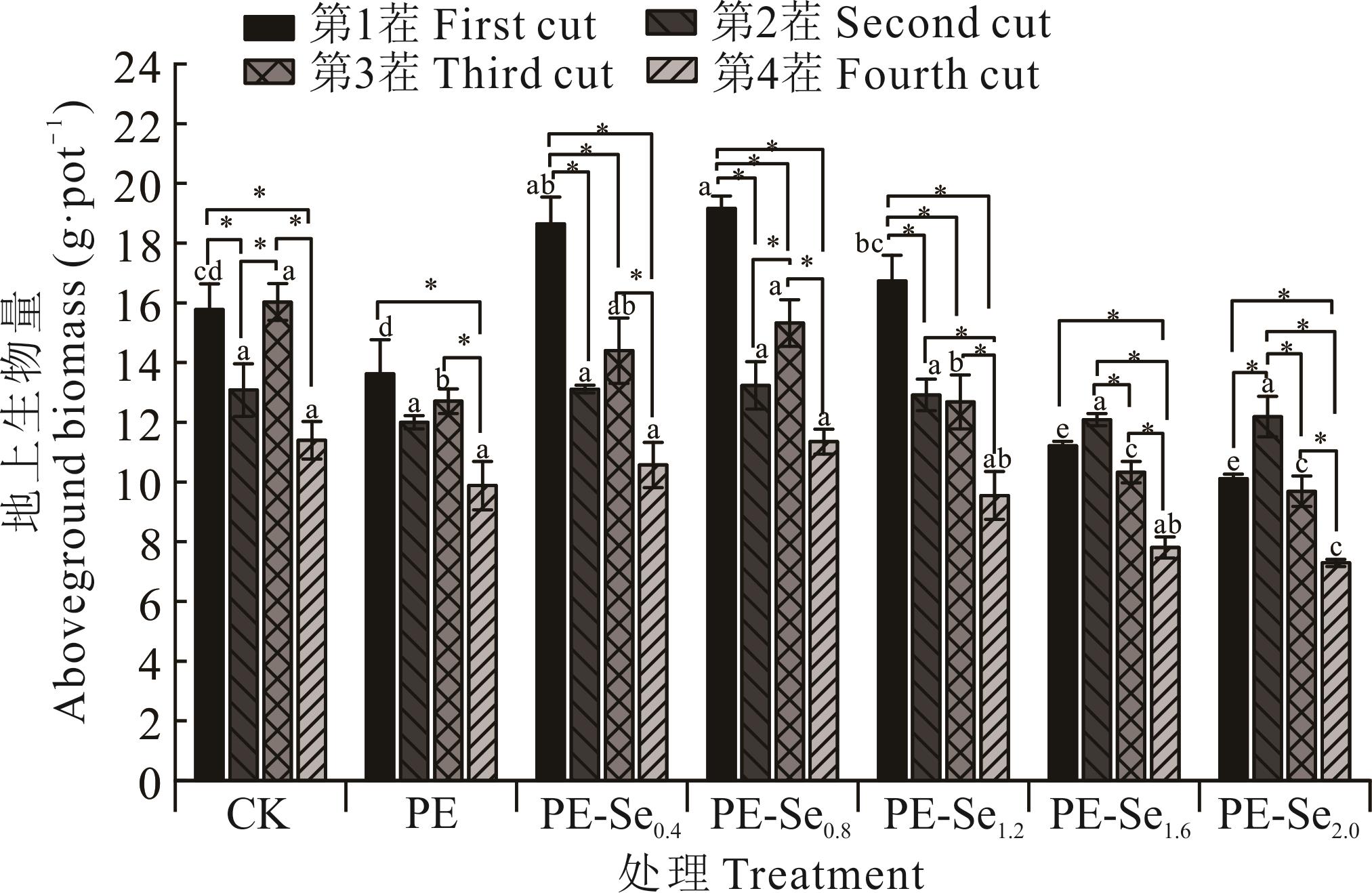
Fig.1 Effects of selenium(Se) application rate and cutting number on the aboveground biomass of alfalfa grown in polyethylene nanoparticles(PE-NPs) soil
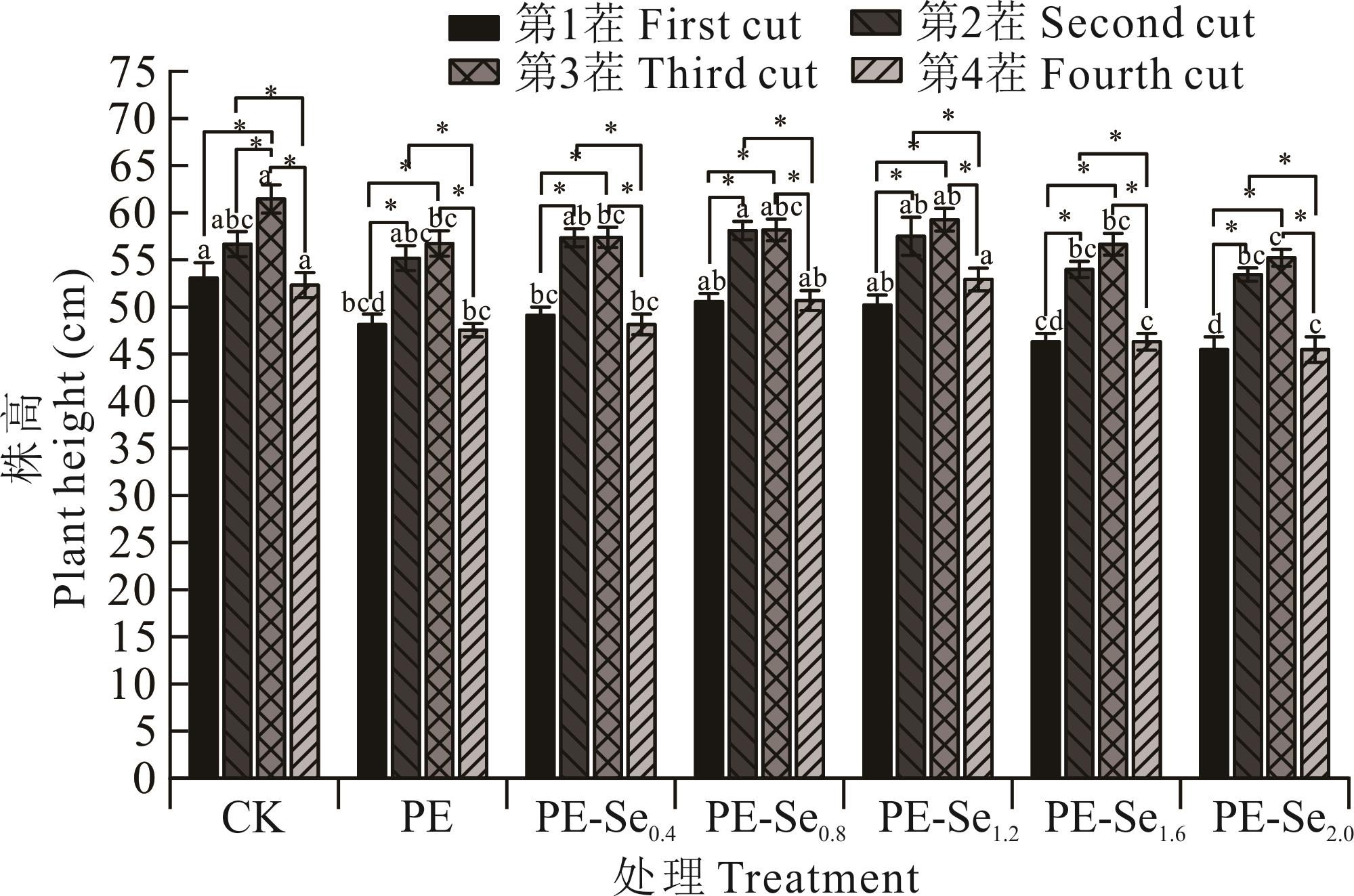
Fig.2 Effects of selenium (Se) application rate and cutting number on the plant height of alfalfa grown in polyethylene nanoparticles (PE-NPs) soil
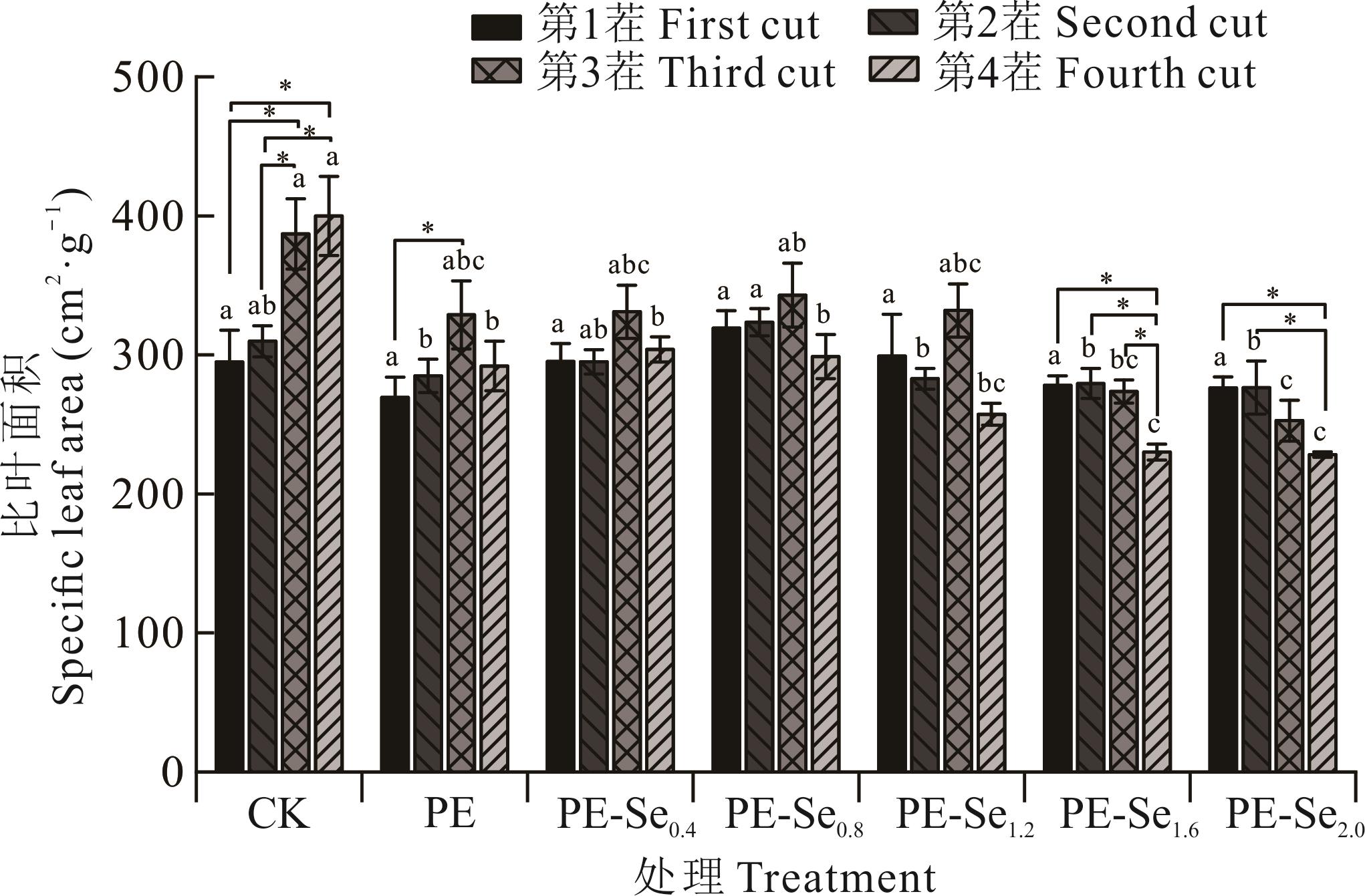
Fig.3 Effects of selenium (Se) application rate and cutting number on the specific leaf area of alfalfa grown in polyethylene nanoparticles (PE-NPs) soil
因素 Factor | 地上生物量 Aboveground biomass | 株高 Plant height | 比叶面积 Specific leaf area |
|---|---|---|---|
| 茬数Cutting number | <0.001 | <0.001 | <0.001 |
| Se浓度Concentration | <0.001 | <0.001 | <0.001 |
| 交互作用Interaction | <0.001 | 0.979 | 0.236 |
Table 1 P-values for the main effects and interactions of cutting frequency and soil selenium (Se) content on growth indices in the two-factor ANOVA
因素 Factor | 地上生物量 Aboveground biomass | 株高 Plant height | 比叶面积 Specific leaf area |
|---|---|---|---|
| 茬数Cutting number | <0.001 | <0.001 | <0.001 |
| Se浓度Concentration | <0.001 | <0.001 | <0.001 |
| 交互作用Interaction | <0.001 | 0.979 | 0.236 |
处理 Treatment | 干物质 Dry matter | 粗灰分 Crude ash | 粗蛋白质 Crude protein | 粗脂肪 Ether extract | 中性洗涤纤维 Neutral detergent fiber | 酸性洗涤纤维 Acid detergent fiber |
|---|---|---|---|---|---|---|
| CK | 27.00±0.27a | 8.24±0.03d | 17.96±0.26a | 2.81±0.03c | 39.75±0.52b | 25.75±0.21b |
| PE | 26.11±0.20a | 8.23±0.07d | 18.06±0.25a | 2.93±0.04bc | 40.12±0.44b | 25.62±0.19bc |
| PE-Se0.4 | 21.39±0.11c | 7.55±0.05e | 16.93±0.33b | 2.97±0.05b | 41.95±0.60a | 25.65±0.33bc |
| PE-Se0.8 | 20.12±0.15d | 7.48±0.14e | 18.77±0.34a | 3.14±0.04a | 39.52±0.49b | 24.88±0.21c |
| PE-Se1.2 | 21.28±0.07c | 8.52±0.10c | 18.32±0.21a | 3.13±0.08a | 41.84±0.56a | 25.87±0.24b |
| PE-Se1.6 | 21.94±0.11b | 8.97±0.10b | 18.17±0.16a | 3.00±0.03ab | 43.35±0.24a | 26.94±0.19a |
| PE-Se2.0 | 22.18±0.17b | 9.21±0.07a | 18.28±0.20a | 2.96±0.03b | 43.14±0.49a | 27.00±0.26a |
Table 2 Effects of different selenium (Se) application concentrations on the nutrient components of the first-cut alfalfa grown in polyethylene nanoparticles (PE-NPs) soil (%)
处理 Treatment | 干物质 Dry matter | 粗灰分 Crude ash | 粗蛋白质 Crude protein | 粗脂肪 Ether extract | 中性洗涤纤维 Neutral detergent fiber | 酸性洗涤纤维 Acid detergent fiber |
|---|---|---|---|---|---|---|
| CK | 27.00±0.27a | 8.24±0.03d | 17.96±0.26a | 2.81±0.03c | 39.75±0.52b | 25.75±0.21b |
| PE | 26.11±0.20a | 8.23±0.07d | 18.06±0.25a | 2.93±0.04bc | 40.12±0.44b | 25.62±0.19bc |
| PE-Se0.4 | 21.39±0.11c | 7.55±0.05e | 16.93±0.33b | 2.97±0.05b | 41.95±0.60a | 25.65±0.33bc |
| PE-Se0.8 | 20.12±0.15d | 7.48±0.14e | 18.77±0.34a | 3.14±0.04a | 39.52±0.49b | 24.88±0.21c |
| PE-Se1.2 | 21.28±0.07c | 8.52±0.10c | 18.32±0.21a | 3.13±0.08a | 41.84±0.56a | 25.87±0.24b |
| PE-Se1.6 | 21.94±0.11b | 8.97±0.10b | 18.17±0.16a | 3.00±0.03ab | 43.35±0.24a | 26.94±0.19a |
| PE-Se2.0 | 22.18±0.17b | 9.21±0.07a | 18.28±0.20a | 2.96±0.03b | 43.14±0.49a | 27.00±0.26a |
处理 Treatment | 干物质 Dry matter | 粗灰分 Crude ash | 粗蛋白质 Crude protein | 粗脂肪 Ether extract | 中性洗涤纤维 Neutral detergent fiber | 酸性洗涤纤维 Acid detergent fiber |
|---|---|---|---|---|---|---|
| CK | 24.20±0.12bc | 7.42±0.10c | 16.88±0.18b | 3.07±0.04ab | 41.83±0.24a | 26.18±0.16a |
| PE | 25.85±0.78a | 6.73±0.20d | 18.99±0.33a | 3.19±0.07a | 34.56±0.64d | 23.19±0.31c |
| PE-Se0.4 | 26.14±0.40a | 6.67±0.08d | 18.46±0.23a | 2.78±0.06d | 37.71±0.50c | 24.96±0.18b |
| PE-Se0.8 | 24.45±0.18b | 7.75±0.05b | 17.09±0.17b | 2.90±0.04bcd | 40.74±0.49ab | 25.68±0.27ab |
| PE-Se1.2 | 26.97±0.41a | 7.78±0.09b | 17.24±0.25b | 2.88±0.07cd | 39.62±0.57b | 25.08±0.30b |
| PE-Se1.6 | 22.21±0.28cd | 8.02±0.07b | 19.05±0.16a | 3.00±0.10bc | 34.96±0.26d | 23.18±0.13c |
| PE-Se2.0 | 23.24±0.30d | 8.60±0.05a | 17.47±0.22b | 2.88±0.06cd | 41.43±0.44a | 25.56±0.27ab |
Table 3 Effects of different selenium (Se) application concentrations on the nutrient components of the second-cut alfalfa grown in polyethylene nanoparticles (PE-NPs) soil (%)
处理 Treatment | 干物质 Dry matter | 粗灰分 Crude ash | 粗蛋白质 Crude protein | 粗脂肪 Ether extract | 中性洗涤纤维 Neutral detergent fiber | 酸性洗涤纤维 Acid detergent fiber |
|---|---|---|---|---|---|---|
| CK | 24.20±0.12bc | 7.42±0.10c | 16.88±0.18b | 3.07±0.04ab | 41.83±0.24a | 26.18±0.16a |
| PE | 25.85±0.78a | 6.73±0.20d | 18.99±0.33a | 3.19±0.07a | 34.56±0.64d | 23.19±0.31c |
| PE-Se0.4 | 26.14±0.40a | 6.67±0.08d | 18.46±0.23a | 2.78±0.06d | 37.71±0.50c | 24.96±0.18b |
| PE-Se0.8 | 24.45±0.18b | 7.75±0.05b | 17.09±0.17b | 2.90±0.04bcd | 40.74±0.49ab | 25.68±0.27ab |
| PE-Se1.2 | 26.97±0.41a | 7.78±0.09b | 17.24±0.25b | 2.88±0.07cd | 39.62±0.57b | 25.08±0.30b |
| PE-Se1.6 | 22.21±0.28cd | 8.02±0.07b | 19.05±0.16a | 3.00±0.10bc | 34.96±0.26d | 23.18±0.13c |
| PE-Se2.0 | 23.24±0.30d | 8.60±0.05a | 17.47±0.22b | 2.88±0.06cd | 41.43±0.44a | 25.56±0.27ab |
处理 Treatment | 干物质 Dry matter | 粗灰分 Crude ash | 粗蛋白质 Crude protein | 粗脂肪 Ether extract | 中性洗涤纤维 Neutral detergent fiber | 酸性洗涤纤维 Acid detergent fiber |
|---|---|---|---|---|---|---|
| CK | 23.49±0.12a | 8.51±0.07cd | 15.97±0.19d | 2.80±0.05b | 46.21±0.34b | 28.39±0.18bc |
| PE | 20.43±0.28bc | 8.70±0.20bc | 17.53±0.33c | 2.90±0.06b | 45.96±0.67b | 27.73±0.50c |
| PE-Se0.4 | 20.91±0.19bc | 8.15±0.22de | 19.23±0.24a | 2.98±0.07d | 40.71±0.47c | 25.40±0.23e |
| PE-Se0.8 | 20.28±0.49c | 8.08±0.10e | 18.42±0.21b | 2.87±0.06c | 43.24±0.78c | 26.77±0.24d |
| PE-Se1.2 | 20.10±0.40c | 8.64±0.11c | 18.41±0.26b | 2.84±0.04b | 46.64±0.41b | 28.49±0.20bc |
| PE-Se1.6 | 18.65±0.26d | 9.07±0.10b | 17.11±0.19c | 3.08±0.07a | 49.85±0.39a | 29.66±0.14a |
| PE-Se2.0 | 21.27±0.22b | 9.97±0.08a | 17.33±0.34c | 2.60±0.08a | 48.84±0.65a | 28.93±0.32ab |
Table 4 Effects of different selenium (Se) application concentrations on the nutrient components of third-cut alfalfa in polyethylene nanoparticles (PE-NPs) soil (%)
处理 Treatment | 干物质 Dry matter | 粗灰分 Crude ash | 粗蛋白质 Crude protein | 粗脂肪 Ether extract | 中性洗涤纤维 Neutral detergent fiber | 酸性洗涤纤维 Acid detergent fiber |
|---|---|---|---|---|---|---|
| CK | 23.49±0.12a | 8.51±0.07cd | 15.97±0.19d | 2.80±0.05b | 46.21±0.34b | 28.39±0.18bc |
| PE | 20.43±0.28bc | 8.70±0.20bc | 17.53±0.33c | 2.90±0.06b | 45.96±0.67b | 27.73±0.50c |
| PE-Se0.4 | 20.91±0.19bc | 8.15±0.22de | 19.23±0.24a | 2.98±0.07d | 40.71±0.47c | 25.40±0.23e |
| PE-Se0.8 | 20.28±0.49c | 8.08±0.10e | 18.42±0.21b | 2.87±0.06c | 43.24±0.78c | 26.77±0.24d |
| PE-Se1.2 | 20.10±0.40c | 8.64±0.11c | 18.41±0.26b | 2.84±0.04b | 46.64±0.41b | 28.49±0.20bc |
| PE-Se1.6 | 18.65±0.26d | 9.07±0.10b | 17.11±0.19c | 3.08±0.07a | 49.85±0.39a | 29.66±0.14a |
| PE-Se2.0 | 21.27±0.22b | 9.97±0.08a | 17.33±0.34c | 2.60±0.08a | 48.84±0.65a | 28.93±0.32ab |
处理 Treatment | 干物质 Dry matter | 粗灰分 Crude ash | 粗蛋白质 Crude protein | 粗脂肪 Ether extract | 中性洗涤纤维 Neutral detergent fiber | 酸性洗涤纤维 Acid detergent fiber |
|---|---|---|---|---|---|---|
| CK | 21.41±0.15b | 8.04±0.08d | 17.08±0.32d | 2.74±0.05d | 40.79±0.49bc | 24.68±0.27c |
| PE | 20.80±0.28bc | 8.47±0.11c | 17.57±0.14d | 2.92±0.04bc | 42.54±0.44a | 25.94±0.23a |
| PE-Se0.4 | 20.85±0.25bc | 8.05±0.11d | 19.69±0.15b | 3.07±0.06a | 39.34±0.41cd | 25.04±0.30bc |
| PE-Se0.8 | 20.50±0.15c | 8.22±0.17cd | 19.01±0.31c | 3.01±0.05ab | 40.36±0.84bcd | 24.98±0.40bc |
| PE-Se1.2 | 20.50±0.21c | 8.09±0.10d | 19.41±0.14bc | 3.12±0.04a | 40.90±0.49bc | 25.73±0.27ab |
| PE-Se1.6 | 21.23±0.19b | 8.84±0.15b | 19.71±0.20b | 2.88±0.04bc | 41.21±0.60ab | 25.59±0.26ab |
| PE-Se2.0 | 24.27±0.16a | 10.20±0.09a | 20.73±0.14a | 2.83±0.03cd | 38.92±0.40d | 23.83±0.21d |
Table 5 Effects of different selenium (Se) application concentrations on the nutrient components of fourth-cut alfalfa in polyethylene nanoparticles (PE-NPs) soil (%)
处理 Treatment | 干物质 Dry matter | 粗灰分 Crude ash | 粗蛋白质 Crude protein | 粗脂肪 Ether extract | 中性洗涤纤维 Neutral detergent fiber | 酸性洗涤纤维 Acid detergent fiber |
|---|---|---|---|---|---|---|
| CK | 21.41±0.15b | 8.04±0.08d | 17.08±0.32d | 2.74±0.05d | 40.79±0.49bc | 24.68±0.27c |
| PE | 20.80±0.28bc | 8.47±0.11c | 17.57±0.14d | 2.92±0.04bc | 42.54±0.44a | 25.94±0.23a |
| PE-Se0.4 | 20.85±0.25bc | 8.05±0.11d | 19.69±0.15b | 3.07±0.06a | 39.34±0.41cd | 25.04±0.30bc |
| PE-Se0.8 | 20.50±0.15c | 8.22±0.17cd | 19.01±0.31c | 3.01±0.05ab | 40.36±0.84bcd | 24.98±0.40bc |
| PE-Se1.2 | 20.50±0.21c | 8.09±0.10d | 19.41±0.14bc | 3.12±0.04a | 40.90±0.49bc | 25.73±0.27ab |
| PE-Se1.6 | 21.23±0.19b | 8.84±0.15b | 19.71±0.20b | 2.88±0.04bc | 41.21±0.60ab | 25.59±0.26ab |
| PE-Se2.0 | 24.27±0.16a | 10.20±0.09a | 20.73±0.14a | 2.83±0.03cd | 38.92±0.40d | 23.83±0.21d |
茬 Cut | 主成分 Principal component | 提取平方和载入Extraction sums of squared loadings | 提取载荷平方和Extraction sums of squared loadings | ||||
|---|---|---|---|---|---|---|---|
特征值 Eigenvalue | 贡献率Contribution rate (%) | 累积贡献率Cumulative contribution rate (%) | 特征值 Eigenvalue | 贡献率Contribution rate (%) | 累积贡献率Cumulative contribution rate (%) | ||
| 1 | 1 | 3.384 | 67.677 | 67.677 | 3.384 | 67.677 | 67.677 |
| 2 | 1.188 | 23.752 | 91.429 | 1.188 | 23.752 | 91.429 | |
| 3 | 0.355 | 7.107 | 98.536 | ||||
| 4 | 0.071 | 1.423 | 99.959 | ||||
| 5 | 0.002 | 0.041 | 100.000 | ||||
| 2 | 1 | 2.986 | 59.723 | 59.723 | 2.986 | 59.723 | 59.723 |
| 2 | 1.684 | 33.679 | 93.402 | 1.684 | 33.679 | 93.402 | |
| 3 | 0.239 | 4.776 | 98.178 | ||||
| 4 | 0.073 | 1.455 | 99.633 | ||||
| 5 | 0.018 | 0.367 | 100.000 | ||||
| 3 | 1 | 3.004 | 60.084 | 60.084 | 3.004 | 60.084 | 60.084 |
| 2 | 1.642 | 32.842 | 92.926 | 1.642 | 32.842 | 92.926 | |
| 3 | 0.279 | 5.573 | 98.499 | ||||
| 4 | 0.074 | 1.485 | 99.984 | ||||
| 5 | 0.001 | 0.016 | 100.000 | ||||
| 4 | 1 | 3.190 | 63.807 | 63.807 | 3.190 | 63.807 | 63.807 |
| 2 | 1.118 | 22.366 | 86.173 | 1.118 | 22.366 | 86.173 | |
| 3 | 0.657 | 13.149 | 99.323 | ||||
| 4 | 0.022 | 0.445 | 99.767 | ||||
| 5 | 0.012 | 0.233 | 100.000 | ||||
Table 6 Principal component analysis of aboveground biomass and nutritional quality for the first to fourth cuts
茬 Cut | 主成分 Principal component | 提取平方和载入Extraction sums of squared loadings | 提取载荷平方和Extraction sums of squared loadings | ||||
|---|---|---|---|---|---|---|---|
特征值 Eigenvalue | 贡献率Contribution rate (%) | 累积贡献率Cumulative contribution rate (%) | 特征值 Eigenvalue | 贡献率Contribution rate (%) | 累积贡献率Cumulative contribution rate (%) | ||
| 1 | 1 | 3.384 | 67.677 | 67.677 | 3.384 | 67.677 | 67.677 |
| 2 | 1.188 | 23.752 | 91.429 | 1.188 | 23.752 | 91.429 | |
| 3 | 0.355 | 7.107 | 98.536 | ||||
| 4 | 0.071 | 1.423 | 99.959 | ||||
| 5 | 0.002 | 0.041 | 100.000 | ||||
| 2 | 1 | 2.986 | 59.723 | 59.723 | 2.986 | 59.723 | 59.723 |
| 2 | 1.684 | 33.679 | 93.402 | 1.684 | 33.679 | 93.402 | |
| 3 | 0.239 | 4.776 | 98.178 | ||||
| 4 | 0.073 | 1.455 | 99.633 | ||||
| 5 | 0.018 | 0.367 | 100.000 | ||||
| 3 | 1 | 3.004 | 60.084 | 60.084 | 3.004 | 60.084 | 60.084 |
| 2 | 1.642 | 32.842 | 92.926 | 1.642 | 32.842 | 92.926 | |
| 3 | 0.279 | 5.573 | 98.499 | ||||
| 4 | 0.074 | 1.485 | 99.984 | ||||
| 5 | 0.001 | 0.016 | 100.000 | ||||
| 4 | 1 | 3.190 | 63.807 | 63.807 | 3.190 | 63.807 | 63.807 |
| 2 | 1.118 | 22.366 | 86.173 | 1.118 | 22.366 | 86.173 | |
| 3 | 0.657 | 13.149 | 99.323 | ||||
| 4 | 0.022 | 0.445 | 99.767 | ||||
| 5 | 0.012 | 0.233 | 100.000 | ||||
茬 Cut | 成分 Component | 干物质 Dry matter (X1) | 地上生物量 Aboveground biomass (X2) | 粗蛋白质 Crude protein (X3) | 酸性洗涤纤维 Acid detergent fiber (X4) | 中性洗涤纤维 Neutral detergent fiber (X5) |
|---|---|---|---|---|---|---|
| 1 | Y1 | 0.934 | 0.917 | -0.049 | 0.993 | 0.824 |
| Y2 | -0.212 | -0.281 | 0.958 | 0.096 | 0.376 | |
| 2 | Y1 | 0.066 | 0.065 | 0.974 | 0.983 | 0.988 |
| Y2 | 0.936 | 0.937 | 0.073 | 0.033 | 0.100 | |
| 3 | Y1 | -0.027 | 0.572 | 0.833 | 0.966 | 0.964 |
| Y2 | 0.940 | 0.724 | -0.506 | 0.173 | 0.259 | |
| 4 | Y1 | 0.676 | -0.031 | 0.395 | 0.967 | 0.905 |
| Y2 | 0.574 | -0.982 | 0.769 | 0.108 | 0.206 |
Table 7 Characteristics of load distribution of rotated component matrix for the first to fourth cuts
茬 Cut | 成分 Component | 干物质 Dry matter (X1) | 地上生物量 Aboveground biomass (X2) | 粗蛋白质 Crude protein (X3) | 酸性洗涤纤维 Acid detergent fiber (X4) | 中性洗涤纤维 Neutral detergent fiber (X5) |
|---|---|---|---|---|---|---|
| 1 | Y1 | 0.934 | 0.917 | -0.049 | 0.993 | 0.824 |
| Y2 | -0.212 | -0.281 | 0.958 | 0.096 | 0.376 | |
| 2 | Y1 | 0.066 | 0.065 | 0.974 | 0.983 | 0.988 |
| Y2 | 0.936 | 0.937 | 0.073 | 0.033 | 0.100 | |
| 3 | Y1 | -0.027 | 0.572 | 0.833 | 0.966 | 0.964 |
| Y2 | 0.940 | 0.724 | -0.506 | 0.173 | 0.259 | |
| 4 | Y1 | 0.676 | -0.031 | 0.395 | 0.967 | 0.905 |
| Y2 | 0.574 | -0.982 | 0.769 | 0.108 | 0.206 |
| 茬Cut | 第1主成分The first principal component | 第2主成分The second principal component |
|---|---|---|
| 1 | F1=0.934X1+0.917X2-0.049X3+0.993X4+0.824X5 | F2=-0.212X1-0.281X2+0.958X3+0.096X4+0.376X5 |
| 2 | F1=0.066X1+0.065X2+0.974X3+0.983X4+0.988X5 | F2=0.936X1+0.937X2-0.073X3+0.033X4+0.100X5 |
| 3 | F1=-0.027X1+0.572X2+0.833X3+0.966X4+0.964X5 | F2=0.940X1+0.724X2-0.506X3+0.173X4+0.259X5 |
| 4 | F1=0.676X1-0.031X2+0.395X3+0.967X4+0.905X5 | F2=0.574X1-0.982X2+0.769X3+0.108X4+0.206X5 |
Table 8 Standardized expressions of principal components for aboveground biomass and nutritional quality indices across the first to fourth cuts
| 茬Cut | 第1主成分The first principal component | 第2主成分The second principal component |
|---|---|---|
| 1 | F1=0.934X1+0.917X2-0.049X3+0.993X4+0.824X5 | F2=-0.212X1-0.281X2+0.958X3+0.096X4+0.376X5 |
| 2 | F1=0.066X1+0.065X2+0.974X3+0.983X4+0.988X5 | F2=0.936X1+0.937X2-0.073X3+0.033X4+0.100X5 |
| 3 | F1=-0.027X1+0.572X2+0.833X3+0.966X4+0.964X5 | F2=0.940X1+0.724X2-0.506X3+0.173X4+0.259X5 |
| 4 | F1=0.676X1-0.031X2+0.395X3+0.967X4+0.905X5 | F2=0.574X1-0.982X2+0.769X3+0.108X4+0.206X5 |
茬 Cut | 处理 Treatment | F3 | F4 | F | 综合排名CR | 茬 Cut | 处理 Treatment | F3 | F4 | F | 综合排名CR |
|---|---|---|---|---|---|---|---|---|---|---|---|
| 1 | CK | 1.658 | 0.186 | 1.844 | 3 | 3 | CK | 0.787 | 0.643 | 1.430 | 1 |
| PE | 1.649 | 0.187 | 1.836 | 4 | PE | 0.974 | 0.225 | 1.199 | 5 | ||
| PE-Se0.4 | 2.021 | -0.073 | 1.948 | 2 | PE-Se0.4 | 2.053 | 0.319 | 2.372 | 7 | ||
| PE-Se0.8 | 2.638 | 0.248 | 2.886 | 1 | PE-Se0.8 | 1.602 | 0.313 | 1.915 | 6 | ||
| PE-Se1.2 | 1.596 | 0.147 | 1.743 | 5 | PE-Se1.2 | 0.962 | 0.136 | 1.098 | 4 | ||
| PE-Se1.6 | 0.079 | 0.161 | 0.240 | 6 | PE-Se1.6 | 0.225 | -0.037 | 0.188 | 2 | ||
| PE-Se2.0 | 0.007 | 0.188 | 0.195 | 7 | PE-Se2.0 | 0.390 | 0.126 | 0.516 | 3 | ||
| 2 | CK | 1.927 | 0.705 | 2.632 | 1 | 4 | CK | 0.851 | -0.176 | 0.675 | 5 |
| PE | 0.018 | 0.141 | 0.159 | 7 | PE | 0.065 | -0.122 | -0.057 | 7 | ||
| PE-Se0.4 | 1.140 | 0.628 | 1.768 | 3 | PE-Se0.4 | 1.134 | 0.012 | 1.146 | 2 | ||
| PE-Se0.8 | 0.323 | 0.506 | 0.829 | 5 | PE-Se0.8 | 0.860 | -0.102 | 0.758 | 4 | ||
| PE-Se1.2 | 0.590 | 0.528 | 1.118 | 4 | PE-Se1.2 | 0.550 | 0.015 | 0.565 | 6 | ||
| PE-Se1.6 | 1.864 | 0.098 | 1.962 | 2 | PE-Se1.6 | 0.669 | 0.165 | 0.834 | 3 | ||
| PE-Se2.0 | 0.350 | 0.136 | 0.486 | 6 | PE-Se2.0 | 2.179 | 0.430 | 2.609 | 1 |
Table 9 Membership function analysis and comprehensive ranking (CR) of different selenium (Se) applications for the first to fourth cuts
茬 Cut | 处理 Treatment | F3 | F4 | F | 综合排名CR | 茬 Cut | 处理 Treatment | F3 | F4 | F | 综合排名CR |
|---|---|---|---|---|---|---|---|---|---|---|---|
| 1 | CK | 1.658 | 0.186 | 1.844 | 3 | 3 | CK | 0.787 | 0.643 | 1.430 | 1 |
| PE | 1.649 | 0.187 | 1.836 | 4 | PE | 0.974 | 0.225 | 1.199 | 5 | ||
| PE-Se0.4 | 2.021 | -0.073 | 1.948 | 2 | PE-Se0.4 | 2.053 | 0.319 | 2.372 | 7 | ||
| PE-Se0.8 | 2.638 | 0.248 | 2.886 | 1 | PE-Se0.8 | 1.602 | 0.313 | 1.915 | 6 | ||
| PE-Se1.2 | 1.596 | 0.147 | 1.743 | 5 | PE-Se1.2 | 0.962 | 0.136 | 1.098 | 4 | ||
| PE-Se1.6 | 0.079 | 0.161 | 0.240 | 6 | PE-Se1.6 | 0.225 | -0.037 | 0.188 | 2 | ||
| PE-Se2.0 | 0.007 | 0.188 | 0.195 | 7 | PE-Se2.0 | 0.390 | 0.126 | 0.516 | 3 | ||
| 2 | CK | 1.927 | 0.705 | 2.632 | 1 | 4 | CK | 0.851 | -0.176 | 0.675 | 5 |
| PE | 0.018 | 0.141 | 0.159 | 7 | PE | 0.065 | -0.122 | -0.057 | 7 | ||
| PE-Se0.4 | 1.140 | 0.628 | 1.768 | 3 | PE-Se0.4 | 1.134 | 0.012 | 1.146 | 2 | ||
| PE-Se0.8 | 0.323 | 0.506 | 0.829 | 5 | PE-Se0.8 | 0.860 | -0.102 | 0.758 | 4 | ||
| PE-Se1.2 | 0.590 | 0.528 | 1.118 | 4 | PE-Se1.2 | 0.550 | 0.015 | 0.565 | 6 | ||
| PE-Se1.6 | 1.864 | 0.098 | 1.962 | 2 | PE-Se1.6 | 0.669 | 0.165 | 0.834 | 3 | ||
| PE-Se2.0 | 0.350 | 0.136 | 0.486 | 6 | PE-Se2.0 | 2.179 | 0.430 | 2.609 | 1 |

Fig.4 Compensation indices of aboveground growth and nutrition in alfalfa under different concentrations of selenium and cutting number
| [1] | Hou W L, Kang W J, Lu B F, et al. Effects of rhizobial strains with different symbiotic effects on the photosynthetic characteristics and respiratory metabolism of alfalfa. Acta Prataculturae Sinica, 2025, 34(11): 66-80. |
| 侯文璐, 康文娟, 陆保福, 等. 不同共生效应根瘤菌株对紫花苜蓿光合特性和呼吸代谢的影响. 草业学报, 2025, 34(11): 66-80. | |
| [2] | Wang X G, Han J G, Liu F Y, et al. Effect of cutting on reproductive growth stage, the seed yield and seed quality of alfalfa (Medicago sativa L. ). Acta Agrestia Sinica, 2005, 13(4): 274-277. |
| 王显国, 韩建国, 刘富渊, 等. 刈割对紫花苜蓿生殖生育期的调控及对种子产量和质量性状的影响. 草地学报, 2005,13(4): 274-277. | |
| [3] | Thompson C R, Olsen Y, Mitchell P R, et al. Lost at sea where is all the plastic? Science, 2004, 304(5672): 838. |
| [4] | Piccardo M, Renzi M, Terlizzi A. Nanoplastics in the oceans: Theory, experimental evidence and real world. Marine Pollution Bulletin, 2020, 157: 111317. |
| [5] | Wu T, Jiao Y Y, Jiao H H. Meta-analysis of the occurrence characteristics and influencing factors of microplastics in agricultural soil in China. Environmental Science, 2025, 46(1): 498-509. |
| 吴婷, 焦旸洋, 焦海华. 我国农用土壤微塑料赋存特征及其影响因素的Meta分析. 环境科学, 2025, 46(1): 498-509. | |
| [6] | Liu B S, Li W F, Pan X L, et al. The persistently breaking trade-offs of three-decade plastic film mulching: Microplastic pollution, soil degradation and reduced cotton yield. Journal of Hazardous Materials, 2022, 439: 129586. |
| [7] | Yu L, Zhang J D, Liu Y, et al. Distribution characteristics of microplastics in agricultural soils from the largest vegetable production base in China. Science of the Total Environment, 2021, 756: 143860. |
| [8] | Guo S, Zhang J J, Liu J W, et al. Organic fertilizer and irrigation water are the primary sources of microplastics in the facility soil, Beijing. Science of the Total Environment, 2023, 895: 165005. |
| [9] | Weithmann N, Möller J N, Löder M G J, et al. Organic fertilizer as a vehicle for the entry of microplastic into the environment. Science Advances, 2018, 4(4): aap8060. |
| [10] | Ren S Y, Wang K, Zhang J R, et al. Potential sources and occurrence of macro-plastics and microplastics pollution in farmland soils: A typical case of China. Critical Reviews in Environmental Science and Technology, 2024, 54(7): 533-556. |
| [11] | Chang N, Chen L, Wang N, et al. Unveiling the impacts of microplastic pollution on soil ecosystems: a comprehensive review. Science of the Total Environment, 2024, 951(8): 175643. |
| [12] | Dong Y M, Gao M L, Song Z G, et al. Microplastic particles increase arsenic toxicity to rice seedlings. Environmental Pollution, 2020, 259: 113892. |
| [13] | Bai H H, Yang Y Q, Huang Y. Distribution of microplastics and their effects on nutrient absorption in strawberry plants. Scientia Horticulturae, 2024, 332: 113214. |
| [14] | Titov A F, Kaznina N M, Karapetyan T A, et al. Role of selenium in plants, animals, and humans. Biology Bulletin Reviews, 2022, 12(2): 189-200. |
| [15] | Li Y X, Zhu N L, Liang X J, et al. A comparative study on the accumulation, translocation and transformation of selenite, selenate, and SeNPs in a hydroponic-plant system. Ecotoxicology and Environmental Safety, 2020, 189: 109955. |
| [16] | Schiavon M, Pilon-Smits E. Selenium biofortification and phytoremediation phytotechnologies: A review. Journal of Environmental Quality, 2017, 46(1): 10-19. |
| [17] | Bai X Q, Jia C Y, Li W S, et al. An investigation of foliar spraying of selenium fertilizer for selenium enrichment and cadmium reduction in alfalfa. Acta Prataculturae Sinica, 2024, 33(1): 50-60. |
| 白旭琴, 贾春云, 李文栓, 等. 叶面喷施硒肥对紫花苜蓿富硒降镉效果的影响. 草业学报, 2024, 33(1): 50-60. | |
| [18] | Gui J Y, Rao S, Huang X R, et al. Interaction between selenium and essential micronutrient elements in plants: A systematic review. Science of the Total Environment, 2022, 853: 158673. |
| [19] | Gupta M, Gupta S. An overview of selenium uptake, metabolism, and toxicity in plants. Frontiers in Plant Science, 2017, 7: 2074. |
| [20] | Fatima M, Maqbool A, Sardar R, et al. Nano-selenium: A green promising approach against abiotic stresses in plants. Journal of Soil Science and Plant Nutrition, 2024, 24(3): 6000-6023. |
| [21] | Santos D C L, Martins S G, Lima S D J, et al. Enhancing wheat resilience to water deficit through selenium biofortification: Perspectives on physiological, biochemical and nutritional responses. Journal of Soil Science and Plant Nutrition, 2024, 24(4): 7418-7435. |
| [22] | Zheng X M, Zhu W Y, Guo Z R, et al. Study on selenium fertilizer mitigation of nutritional inhibition in Medicago sativa induced by high-concentration polyethylene nanoplastics. Feed Research, 2025, 48(16): 104-109. |
| 郑鑫淼, 朱文琰, 郭紫瑞, 等. 硒肥缓解高浓度聚乙烯纳米塑料对紫花苜蓿营养抑制的研究. 饲料研究, 2025, 48(16): 104-109. | |
| [23] | Sun P, Zheng X M, Zhu W Y, et al. Moderate application of selenium alleviates the stress of high concentration polypropylene nanoplastics on alfalfa (Medicago sativa L.). Journal of Henan University of Science and Technology (Natural Science), 2025,46(6)79-88. |
| 孙平, 郑鑫淼, 朱文琰, 等. 适量施硒缓解高浓度聚丙烯纳米塑料对紫花苜蓿的胁迫. 河南科技大学学报(自然科学版), 2025, 46(6)79-88. | |
| [24] | Fan J X, Zhao G L. Sorption characteristics and fraction distribution changes of selenite in soil. Sustainability, 2018, 10(7): 2491. |
| [25] | Chen S Y, Jiang R F, Li H F. Uptake and translocation of selenate or selenite by wheat and rice seedlings. Environmental Science, 2011, 32(1): 284-289. |
| 陈思杨, 江荣风, 李花粉. 苗期小麦和水稻对硒酸盐/亚硒酸盐的吸收及转运机制. 环境科学, 2011, 32(1): 284-289. | |
| [26] | Huang Q Q, Chen S Y, Wang Q, et al. Effects of selenite/selenate and their coexistence in plant on selenium uptake and translocation in rice. Journal of Agro-Environment Science, 2014, 33(11): 2098-2103. |
| 黄青青, 陈思杨, 王琪, 等. 亚硒酸盐/硒酸盐及相互作用对水稻吸收及转运硒的影响. 农业环境科学学报, 2014, 33(11): 2098-2103. | |
| [27] | Chen Z D, Qiu S L, Feng D Q, et al. Effects of selenium application on the production and selenium accumulation of hybrid Pennisetum. Acta Agrestia Sinica, 2024, 32(3): 838-847. |
| 陈钟佃, 邱水玲, 冯德庆, 等. 土壤施硒量对杂交狼尾草生长和硒积累的影响. 草地学报, 2024, 32(3): 838-847. | |
| [28] | Ma P, Liu Z G, Sha Y S, et al. Nitrogen utilization characteristics of alfalfa at the seedling stage and screening of nitrogen-efficient varieties. Acta Prataculturae Sinica, 2026, 35(4): 112-123. |
| 马苹, 刘志国, 沙煜舒, 等. 紫花苜蓿苗期氮利用特性及氮高效品种的筛选. 草业学报, 2026, 35(4): 112-123. | |
| [29] | Yang H, Yang X F, Ning Z P, et al. The beneficial and hazardous effects of selenium on the health of the soil-plant-human system: An overview. Journal of Hazardous Materials, 2021, 422: 126876. |
| [30] | Ma X R, Qian Y H, Yan X X, et al. Effects of combining organic manure and chemical fertilizer on the productivity and nutritional quality of alfalfa. Pratacultural Science, 2026, DOI: 10.11829/j.issn.1001-0629.2025-0300. |
| 马雪融, 钱一翰, 闫晓旭, 等. 有机肥配施化肥对紫花苜蓿生产性能及营养品质的影响. 草业科学, 2026, DOI: 10.11829/j.issn.1001-0629.2025-0300. | |
| [31] | Yin L S, Wen X F, Huang D L, et al. Interactions between microplastics/nanoplastics and vascular plants. Environmental Pollution, 2021, 290: 117999. |
| [32] | Li C N, Wang L, Zhou J Q, et al. Effect of microplastics on the growth and physiological characteristics ofalfalfa (Medicago sativa). Acta Prataculturae Sinica, 2023, 32(5): 138-146. |
| 李超男, 王磊, 周继强, 等. 微塑料对紫花苜蓿生长及生理特性的影响. 草业学报, 2023, 32(5): 138-146. | |
| [33] | Li D, Zhou C R, Zhang J B, et al. Nanoselenium foliar applications enhance the nutrient quality of pepper by activating the capsaicinoid synthetic pathway. Journal of Agricultural and Food Chemistry, 2020, 68(37): 9888-9895. |
| [34] | Asli S, Neuman P M. Colloidal suspensions of clay or titanium dioxide nanoparticles can inhibit leaf growth and transpiration via physical effects on root water transport. Plant Cell & Environment, 2010, 32(5): 577-584. |
| [35] | Huang M G, Huang Y X, Liu L, et al. The effects of micro/nano-plastics exposure on plants and their toxic mechanisms: A review from multi-omics perspectives. Journal of Hazardous Materials, 2024, 465: 133279. |
| [36] | Gao M L, Liu Y, Song Z G. Effects of polyethylene microplastic on the phytotoxicity of di-n-butyl phthalate in lettuce (Lactuca sativa L. var. ramosa Hort). Chemosphere, 2019, 237: 124482. |
| [37] | Jiang X L, Qiao Y T, Li X J, et al. Effects of foliar spraying of excessive selenium on yields and contents of selenium and mineral elements of maize. Journal of Nuclear Agricultural Sciences, 2021, 35(12): 2841-2849. |
| 蒋曦龙, 乔月彤, 李晓靖, 等. 叶面过量施硒对玉米产量、硒和矿质营养元素含量的影响. 核农学报, 2021, 35(12): 2841-2849. | |
| [38] | Jin X W, Zhu X, Huang J, et al.Effects of selenium on chloroplast and photosynthesis. Molecular Plant Breeding, 2019, 17(1): 288-294. |
| 金小琬, 朱茜, 黄进, 等. 硒对叶绿体及光合作用的影响. 分子植物育种, 2019, 17(1): 288-294. | |
| [39] | Djanaguiraman M, Devi D D, Shanker K A, et al. Selenium an antioxidative protectant in soybean during senescence. Plant and Soil, 2005, 272(112): 77-86. |
| [40] | Gill S S, Tuteja N. Reactive oxygen species and antioxidant machinery in abiotic stress tolerance in crop plants. Plant Physiology and Biochemistry, 2010, 48(12): 909-930. |
| [41] | Shi L J, Bai W B, Cao C L, et al. Effects of different selenium application methods on selenium-enriched effect, yield and quality of sorghum. Journal of Shanxi Agricultural Sciences, 2021, 49(10): 1200-1204. |
| 史丽娟, 白文斌, 曹昌林, 等. 施硒方式对高粱富硒效果、产量及品质的影响. 山西农业科学, 2021, 49(10): 1200-1204. | |
| [42] | Mu T T, Zhang F Y, Li Z H, et al. Effects of spraying selenium on selenium Content, conversion rate of organic selenium and quality of foxtail millet in different stages. Acta Agriculturae Boreali-Sinica, 2018, 33(6): 193-198. |
| 穆婷婷, 张福耀, 李志华, 等. 不同时期施硒对谷子硒含量、有机硒转化率及谷子品质的影响. 华北农学报, 2018, 33(6): 193-198. | |
| [43] | Ramady H, Abdalla N, Taha S H. Selenium and nano selenium in plant nutrition. Environmental Chemistry Letters, 2016, 14(1): 123-147. |
| [44] | Feng R W, Wei C Y, Tu S X. The roles of selenium in protecting plants against abiotic stresses. Environmental and Experimental Botany, 2013, 87: 58-68. |
| [45] | Milla R, Reich B P, Niinemets Ü, et al. Environmental and developmental controls on specific leaf area are little modified by leaf allometry. Functional Ecology, 2008, 22(4): 565-576. |
| [46] | Sarah G, Paloma R, Jordi M, et al. Tree mortality across biomes is promoted by drought intensity, lower wood density and higher specific leaf area. Ecology Letters, 2017, 20(4): 539-553. |
| [47] | Shi X, Yang G L, Zheng Y L. Effects of microplastics, fertilization and pesticides on alien and native plants. Plants, 2024, 13(21): 2947. |
| [48] | Liu W X, Cai J P, Fu J L, et al. Responses of leaf functional traits of different grassland plants to desertification and their adaptation strategies. Chinese Journal of Applied Ecology, 2025, 36(8): 2379-2387. |
| 刘万新, 蔡江平, 付佳琳, 等. 不同草地植物叶功能性状对沙化的响应及适应策略. 应用生态学报, 2025, 36(8): 2379-2387. | |
| [49] | Zoltán K, Áron S, Béla K, et al. Uptake dynamics of ionic and elemental selenium forms and their metabolism in multiple-harvested alfalfa (Medicago sativa L. ). Plants, 2021, 10(7): 1277. |
| [50] | Ren Y R, Zhang Q, Li X, et al. Effects of selenium content on growth, antioxidant activity, and key selenium-enriched gene expression in alfalfa sprouts. Foods, 2024, 13(14): 2261. |
| [51] | Gao C Y, Xiao M, Gong Z Q, et al. Selenium biofortification and increased nutritional quality in alfalfa (Medicago sativa L. ) using foliar application of selenium-rich nutrient solution. Journal of Soil Science and Plant Nutrition, 2023, 23(3): 3600-3611. |
| [52] | Wang Y, Zhang J S, He C X, et al. Effects of intercropping and mowing frequency on biological nitrogen fixation capacity, nutritive value, and yield in alfalfa (Medicago sativa L. cv. Vernal). Plants, 2025, 14(2): 240. |
| [53] | Wei Y, Wu X X, Li Y D, et al. Effects of an arbuscular mycorrhizal fungus and rhizobium on the growth and nutritional value of Medicago sativa. Pratacultural Science, 2020, 37 (6): 1115-1123. |
| 魏勇, 吴茜茜, 李应德, 等. AM真菌和根瘤菌对紫花苜蓿生长及其营养价值的影响. 草业科学, 2020, 37 (6): 1115-1123. | |
| [54] | Wang S, Lyu J Y, Zhong S Z, et al. Evaluation of biomass yield and nutritional value of Silphium perfoliatum L. under different cutting frequencies during leafy stage. Chinese Journal of Animal Nutrition, 2025, 37(10): 7206-7217. |
| 王硕, 吕静仪, 钟荣珍, 等. 叶丛期不同刈割茬次串叶松香草的生物产量及营养价值评价. 动物营养学报, 2025, 37(10): 7206-7217. | |
| [55] | Zheng C C, Wang Y J, Sun H, et al. Effects of clipping on nitrogen allocation strategy and compensatory growth of Leymus chinensis under saline-alkali conditions. Chinese Journal of Applied Ecology, 2017, 28(7): 2222-2230. |
| 郑聪聪, 王永静, 孙昊, 等. 盐碱条件下刈割干扰对羊草的氮素分配策略及补偿生长的影响. 应用生态学报, 2017, 28(7): 2222-2230. | |
| [56] | Wang Y, Dai X L, Ma X Y, et al. Yield and quality changes of alfalfa in response to rotationally grazing. Acta Agrestia Sinica, 2022, 30(9): 2477-2482. |
| 王瑜, 代先林, 马晓颖, 等. 划区轮牧对放牧型紫花苜蓿人工草地产量与品质的影响. 草地学报, 2022, 30(9): 2477-2482. | |
| [57] | Monirifar H, Mirmozaffari Roudsari A, Ghassemi S, et al. Harvest time and cultivar effects on growth, physiological traits, yield and quality of alfalfa in saline condition. International Journal of Plant Production, 2020, 14(1): 453-462. |
| [58] | Tälle M, Deák B, Poschlod P, et al. Similar effects of different mowing frequencies on the conservation value of semi-natural grasslands in Europe. Biodiversity and Conservation, 2018, 27(10): 2451-2475. |
| [59] | Tian J J, Wan W F, Liu Q, et al. Response of alfalfa growth and rhizosphere properties to soil phosphorus supply and mowing in a salt-affected soil. Frontiers in Plant Science, 2025, 16: 1565162. |
| [60] | Andreas S, Johanna P, Yakov K. C and N allocation in soil under ryegrass and alfalfa estimated by ¹³C and ¹⁵N labelling. Plant and Soil, 2013, 368(112): 581-590. |
| [61] | Gulinigaer A, Zhang X Y, Wan J C, et al. Effects of growth years and cutting times on nutrient composition and digestibility of cultivated Glycyrrhiza uralensis. Pratacultural Science, 2022, 39(11): 2317-2325. |
| 古丽尼尕尔·艾依斯热洪, 张修业, 万江春, 等. 育龄及刈割频次对栽培甘草营养成分及消化率的影响. 草业科学, 2022, 39(11): 2317-2325. | |
| [62] | Yang Y J, Wang J M, Wu F, et al. Effects of nitrogen fertilization and mowing on soil aggregate distribution and organic carbon content of degraded grassland in northwest Liaoning Province. Journal of Dalian Minzu University, 2026, 28(1): 13-19. |
| 杨沂杰, 王佳铭, 吴飞, 等. 施氮和刈割对辽西北退化草地土壤团聚体分布及有机碳含量的影响. 大连民族大学学报, 2026, 28(1): 13-19. | |
| [63] | Fidler D B, George P B L, Le Brun L J, et al. Soil microbial adaptation to carbon deprivation: shifts in lignocellulolytic gene profiles following long-term plant exclusion. Environmental Microbiome, 2025, 21(1): 9. |
| [64] | Samarina L, Malyukova L, Wang S, et al. Nitrogen deficiency differentially affects lignin biosynthesis genes and flavanols accumulation in tolerant and susceptible tea genotypes (Camellia sinensis (L. ) Kuntze). Plant Stress, 2024, 14: 100581. |
| [1] | Shi-yu PENG, Qi-shun MO, Qiong-bo LIU, Yan-lin RAN, Feng YANG, Li-li NIU, Ting-tao YANG, Zhi-hong CHEN, Sheng-jiang HE, Chao CHEN, Zhou LI. Comprehensive evaluation and screening of silage maize varieties in multiple ecological regions of Guizhou Province based on grey relational analysis and a DTOPSIS framework [J]. Acta Prataculturae Sinica, 2026, 35(9): 113-128. |
| [2] | Qi-lin ZHANG, Xiao-jun WANG, Jing LI, Chong-qing CHENG, Guo-ling LIANG, Wen-hui LIU, Ze-liang JU, Zhi-feng JIA, Xiang MA, Wen LI. Mixed sowing with different combinations of oat and annual leguminous forages in the Qinghai Lake area [J]. Acta Prataculturae Sinica, 2026, 35(9): 198-210. |
| [3] | Dong-wen YU, Xiao-tong WANG, Yong-long MA, Xuan WU, Jin-hui YANG, Yu-hua TONG, Shu-xia LI. Effects of 2,4-epibrassinolide on the physiological characteristics of alfalfa under drought stress [J]. Acta Prataculturae Sinica, 2026, 35(9): 63-74. |
| [4] | Jin-hui YANG, Xiao-tong WANG, Yong-long MA, Dong-wen YU, Yu-hua TONG, Shu-xia LI. Effect of CeO2 NPs on the salt tolerance of alfalfa seedlings [J]. Acta Prataculturae Sinica, 2026, 35(8): 45-54. |
| [5] | Zhao-peng HUANG, Rong HE, Li-li NAN, Jia-le LIU, Wen-ke YANG. Effects of exogenous melatonin on endogenous hormones and organic acids in alfalfa seedlings under low-phosphorus stress [J]. Acta Prataculturae Sinica, 2026, 35(8): 55-64. |
| [6] | Xia WANG, Meng-yu YAN, Qian-xi WANG, Zhen-wu WEI, Jia WEI, Zheng-feng CAO, Yan-yan LV, Chuan-jie ZHANG, Xue-yang MIN. A comparative study of the yield of alfalfa (Medicago sativa) varieties with different fall dormancy in the Yangtze-Huaihe region [J]. Acta Prataculturae Sinica, 2026, 35(8): 65-83. |
| [7] | Fen-qi CHEN, Jin-qing ZHANG, Yi-jian YU, Zhen-yu LI. Identification, bioinformatics analysis of AP2 subfamily genes and MsBBM gene cloning in alfalfa [J]. Acta Prataculturae Sinica, 2026, 35(7): 117-134. |
| [8] | Hao-zhen LIU, Jia-lu CHAO, Shi-qin ZHAO, Cheng WANG, Jing-hong ZHANG, Shou-jiang SUN. Genome-wide identification of BBR-BPC genes in Medicago sativa and their transcript profiles in response to seed aging [J]. Acta Prataculturae Sinica, 2026, 35(7): 135-150. |
| [9] | Wu LI, Jia-jing LI, Jie-bing LI, Zhen-zhou LI, Ming GUO, Yan NIU, Hao SUN, De-feng LI, Ying-hua SHI, Zhen-tian LI, Bo-shuai LIU, Ya-lei CUI, Zhi-chang WANG, Yong-tao LI, Xiao-yan ZHU. Optimization of fermentation and ultrasound-assisted extraction parameters for alfalfa saponins [J]. Acta Prataculturae Sinica, 2026, 35(7): 201-216. |
| [10] | Jiang-ping MA, Li-juan CAO, Wen-wen ZHANG, Meng-yu ZHAO, Teng-fei WANG, Yi-yin ZHANG, Bin WANG, Jia-wang LI, Xiao-bing WANG, Jian LAN. Effects of reseeding and phosphorus application on productivity and soil in improvement of degraded alfalfa stands [J]. Acta Prataculturae Sinica, 2026, 35(7): 92-104. |
| [11] | Jiang-bo XU, Chang-wei MEI, Dong CHEN, Run-yao JIANG, Song-chang GUO, Xiu-hong WU, Ju-ying LUO, Hai-yuan HUANG, Fang LIU. The effect of alfalfa meal on the average daily gain, slaughter performance, meat quality, and serum biochemical indicators of two different hybrid lines of Liangsan pigs [J]. Acta Prataculturae Sinica, 2026, 35(6): 202-215. |
| [12] | Meng-yu REN, Li-qun WANG, Li-li NAN, Jia-yu GUO. Responses of new alfalfa lines to salt stress [J]. Acta Prataculturae Sinica, 2026, 35(6): 24-34. |
| [13] | Wen-hui DENG, Xiao-na ZHAO, Jia-yi YONG, Si-yu GUAN, Guo-qiang HU, Teng-fei WANG, Hai-ying HU. Effects of intercropping oat with different densities on alfalfa seed yield and its constituent factors [J]. Acta Prataculturae Sinica, 2026, 35(4): 100-111. |
| [14] | Ping MA, Zhi-guo LIU, Yu-shu SHA, Ya-ling LIU, Xiao-mei TUO, Bing-zhe FU, Xue-qing GAO. Nitrogen utilization characteristics of alfalfa at the seedling stage and screening of nitrogen-efficient varieties [J]. Acta Prataculturae Sinica, 2026, 35(4): 112-123. |
| [15] | Tian ZHANG, Hua-juan LENG, Jing CUI, Fei HE, Xue WANG, Ming-na LI, Qing-chuan YANG, Jun-mei KANG. Identification of synaptotagmin gene family members in alfalfa and their transcript profiles under abiotic stresses [J]. Acta Prataculturae Sinica, 2026, 35(4): 158-168. |
| Viewed | ||||||
|
Full text |
|
|||||
|
Abstract |
|
|||||
