
ISSN 1004-5759 CN 62-1105/S
Acta Prataculturae Sinica ›› 2025, Vol. 34 ›› Issue (9): 12-25.DOI: 10.11686/cyxb2024421
Previous Articles Next Articles
Ze-yu XIANG1( ), Zhong-bing TANG1, Xin-heng PENG2, Xiao-long YANG3, Chuang-ming YANG4, Xiang-dong QIU5, Chun-fa CHEN1, Yan-song PENG1, Sai-xia ZHOU1()
Received:2024-10-24
Revised:2024-12-05
Online:2025-09-20
Published:2025-07-02
Contact:
Sai-xia ZHOU
Ze-yu XIANG, Zhong-bing TANG, Xin-heng PENG, Xiao-long YANG, Chuang-ming YANG, Xiang-dong QIU, Chun-fa CHEN, Yan-song PENG, Sai-xia ZHOU. Plant community characteristics and niches in mountain meadows of Wugong Mountain[J]. Acta Prataculturae Sinica, 2025, 34(9): 12-25.
海拔 Elevation (m) | 优势物种 Dominant species | 植被盖度Vegetation coverage (%) | |
|---|---|---|---|
| 1380 | 野古草A. hirta,大叶胡枝子Lespedeza davidii,奇蒿Artemisia anomala | 85 | |
| 1402 | 野古草A. hirta,蕨Pteridium aquilinum var. latiusculum,三叶委陵菜Potentilla freyniana | 85 | |
| 1404 | 野古草A. hirta,野菊Chrysanthemum indicum,条穗薹草Carex nemostachys | 99 | |
| 1473 | 野古草A. hirta,剑叶耳草Hedyotis caudatifolia,蕨P. aquilinum var. latiusculum | 90 | |
| 1524 | 野古草A. hirta,野菊C. indicum,双蝴蝶Tripterospermum chinense | 99 | |
| 1531 | 芒M. sinensis,野古草A. hirta,三叶委陵菜P. freyniana | 98 | |
| 1557 | 黑鳞珍珠茅Scleria hookeriana,野古草A. hirta,大叶胡枝子L. davidii | 95 | |
| 1568 | 芒M. sinensis,野古草A. hirta,蕨P. aquilinum var. latiusculum | 90 | |
| 1576 | 芒M. sinensis,灯芯草Juncus effusus,野古草A. hirta | 95 | |
| 1578 | 野古草A. hirta,戟叶堇菜Viola betonicifolia,三叶委陵菜P. freyniana | 95 | |
| 1584 | 台湾剪股颖Agrostis sozanensis,签草Carex doniana,野古草A. hirta | 75 | |
| 1586 | 野古草A. hirta,条穗薹草C. nemostachys,半边月Weigela japonica var. sinica | 100 | |
| 1593 | 芒M. sinensis,野古草A. hirta,台湾剪股颖A. sozanensis | 98 | |
| 1595 | 芒M. sinensis,野古草A. hirta,签草C. doniana | 94 | |
| 1602 | 芒M. sinensis,光脚金星蕨Parathelypteris japonica,野古草A. hirta | 98 | |
| 1696 | 野古草A. hirta,狭穗薹草Carex ischnostachya,芒M. sinensis | 97 | |
| 1704 | 狭穗薹草C. ischnostachya,芒M. sinensis,野古草A. hirta | 99 | |
| 1705 | 芒M. sinensis,狭穗薹草C. ischnostachya,野古草A. hirta | 98 | |
| 1719 | 野古草A. hirta,细叶卷柏Selaginella labordei,剪股颖Agrostis clavata | 92 | |
| 1725 | 狭穗薹草C. ischnostachya,台湾剪股颖A. sozanensis,芒M. sinensis | 95 | |
| 1799 | 野古草A. hirta,芒M. sinensis,狭穗薹草C. ischnostachya | 94 | |
| 1800 | 芒M. sinensis,狭穗薹草C. ischnostachya,野古草A. hirta | 97 | |
| 1804 | 野古草A. hirta,条穗薹草C. nemostachys,剪股颖A. clavata | 97 | |
| 1811 | 狭穗薹草C. ischnostachya,芒M. sinensis,剪股颖A. clavata | 99 | |
| 1859 | 野古草A. hirta,蕨状薹草Carex filicina,羽叶蓼Persicaria runcinata | 97 | |
| 1875 | 剪股颖A. clavata,芒M. sinensis,黄山蟹甲草Parasenecio hwangshanicus | 99 | |
| 1905 | 芒M. sinensis,狭穗薹草C. ischnostachya,野古草A. hirta | 99 | |
| 1909 | 芒M. sinensis,狭穗薹草C. ischnostachya,野古草A. hirta | 99 | |
| 1917 | 剪股颖A. clavata,狭穗薹草C. ischnostachya,芒M. sinensis | 93 | |
| 1918 | 芒M. sinensis,野古草A. hirta,狭穗薹草C. ischnostachya | 95 |
Table 1 Basic information of main species in meadow quadrats
海拔 Elevation (m) | 优势物种 Dominant species | 植被盖度Vegetation coverage (%) | |
|---|---|---|---|
| 1380 | 野古草A. hirta,大叶胡枝子Lespedeza davidii,奇蒿Artemisia anomala | 85 | |
| 1402 | 野古草A. hirta,蕨Pteridium aquilinum var. latiusculum,三叶委陵菜Potentilla freyniana | 85 | |
| 1404 | 野古草A. hirta,野菊Chrysanthemum indicum,条穗薹草Carex nemostachys | 99 | |
| 1473 | 野古草A. hirta,剑叶耳草Hedyotis caudatifolia,蕨P. aquilinum var. latiusculum | 90 | |
| 1524 | 野古草A. hirta,野菊C. indicum,双蝴蝶Tripterospermum chinense | 99 | |
| 1531 | 芒M. sinensis,野古草A. hirta,三叶委陵菜P. freyniana | 98 | |
| 1557 | 黑鳞珍珠茅Scleria hookeriana,野古草A. hirta,大叶胡枝子L. davidii | 95 | |
| 1568 | 芒M. sinensis,野古草A. hirta,蕨P. aquilinum var. latiusculum | 90 | |
| 1576 | 芒M. sinensis,灯芯草Juncus effusus,野古草A. hirta | 95 | |
| 1578 | 野古草A. hirta,戟叶堇菜Viola betonicifolia,三叶委陵菜P. freyniana | 95 | |
| 1584 | 台湾剪股颖Agrostis sozanensis,签草Carex doniana,野古草A. hirta | 75 | |
| 1586 | 野古草A. hirta,条穗薹草C. nemostachys,半边月Weigela japonica var. sinica | 100 | |
| 1593 | 芒M. sinensis,野古草A. hirta,台湾剪股颖A. sozanensis | 98 | |
| 1595 | 芒M. sinensis,野古草A. hirta,签草C. doniana | 94 | |
| 1602 | 芒M. sinensis,光脚金星蕨Parathelypteris japonica,野古草A. hirta | 98 | |
| 1696 | 野古草A. hirta,狭穗薹草Carex ischnostachya,芒M. sinensis | 97 | |
| 1704 | 狭穗薹草C. ischnostachya,芒M. sinensis,野古草A. hirta | 99 | |
| 1705 | 芒M. sinensis,狭穗薹草C. ischnostachya,野古草A. hirta | 98 | |
| 1719 | 野古草A. hirta,细叶卷柏Selaginella labordei,剪股颖Agrostis clavata | 92 | |
| 1725 | 狭穗薹草C. ischnostachya,台湾剪股颖A. sozanensis,芒M. sinensis | 95 | |
| 1799 | 野古草A. hirta,芒M. sinensis,狭穗薹草C. ischnostachya | 94 | |
| 1800 | 芒M. sinensis,狭穗薹草C. ischnostachya,野古草A. hirta | 97 | |
| 1804 | 野古草A. hirta,条穗薹草C. nemostachys,剪股颖A. clavata | 97 | |
| 1811 | 狭穗薹草C. ischnostachya,芒M. sinensis,剪股颖A. clavata | 99 | |
| 1859 | 野古草A. hirta,蕨状薹草Carex filicina,羽叶蓼Persicaria runcinata | 97 | |
| 1875 | 剪股颖A. clavata,芒M. sinensis,黄山蟹甲草Parasenecio hwangshanicus | 99 | |
| 1905 | 芒M. sinensis,狭穗薹草C. ischnostachya,野古草A. hirta | 99 | |
| 1909 | 芒M. sinensis,狭穗薹草C. ischnostachya,野古草A. hirta | 99 | |
| 1917 | 剪股颖A. clavata,狭穗薹草C. ischnostachya,芒M. sinensis | 93 | |
| 1918 | 芒M. sinensis,野古草A. hirta,狭穗薹草C. ischnostachya | 95 |
| 指标Index | E1 | E2 | E3 |
|---|---|---|---|
| 群落高度Community height (cm) | 0.38±0.08a | 0.36±0.09a | 0.34±0.11a |
| 群落盖度Community coverage (%) | 93.10±5.32a | 94.60±7.31a | 96.90±2.23a |
| 物种丰富度Species richness | 12.40±2.72a | 15.00±5.08a | 15.80±5.31a |
| Margalef 指数Margalef index (Ma) | 2.43±0.44a | 2.69±0.85a | 2.73±0.88a |
| Simpson 指数Simpson index (D) | 0.86±0.04b | 0.89±0.05ab | 0.91±0.02a |
| Shannon-Wiener 指数Shannon-Wiener index (H) | 1.92±0.20b | 2.12±0.40ab | 2.25±0.33a |
| Pielou 指数Pielou index (E) | 0.77±0.03b | 0.79±0.06ab | 0.83±0.03a |
| β多样性β diversity (βsor) | 0.63±0.05a | 0.61±0.09a | 0.57±0.09a |
| 物种周转Species turnover (βsim) | 0.58±0.06a | 0.52±0.10ab | 0.46±0.11b |
| 物种嵌套Species nesting (βsne) | 0.05±0.01b | 0.09±0.02a | 0.11±0.05a |
| 地上生物量Aboveground biomass (g·m-2) | 323.60±188.79a | 355.57±83.29a | 383.36±99.24a |
Table 2 Plant community structure of Wugong mountain meadow
| 指标Index | E1 | E2 | E3 |
|---|---|---|---|
| 群落高度Community height (cm) | 0.38±0.08a | 0.36±0.09a | 0.34±0.11a |
| 群落盖度Community coverage (%) | 93.10±5.32a | 94.60±7.31a | 96.90±2.23a |
| 物种丰富度Species richness | 12.40±2.72a | 15.00±5.08a | 15.80±5.31a |
| Margalef 指数Margalef index (Ma) | 2.43±0.44a | 2.69±0.85a | 2.73±0.88a |
| Simpson 指数Simpson index (D) | 0.86±0.04b | 0.89±0.05ab | 0.91±0.02a |
| Shannon-Wiener 指数Shannon-Wiener index (H) | 1.92±0.20b | 2.12±0.40ab | 2.25±0.33a |
| Pielou 指数Pielou index (E) | 0.77±0.03b | 0.79±0.06ab | 0.83±0.03a |
| β多样性β diversity (βsor) | 0.63±0.05a | 0.61±0.09a | 0.57±0.09a |
| 物种周转Species turnover (βsim) | 0.58±0.06a | 0.52±0.10ab | 0.46±0.11b |
| 物种嵌套Species nesting (βsne) | 0.05±0.01b | 0.09±0.02a | 0.11±0.05a |
| 地上生物量Aboveground biomass (g·m-2) | 323.60±188.79a | 355.57±83.29a | 383.36±99.24a |

Fig.1 Correlation analysis of plant community structure characteristics under topographic environment
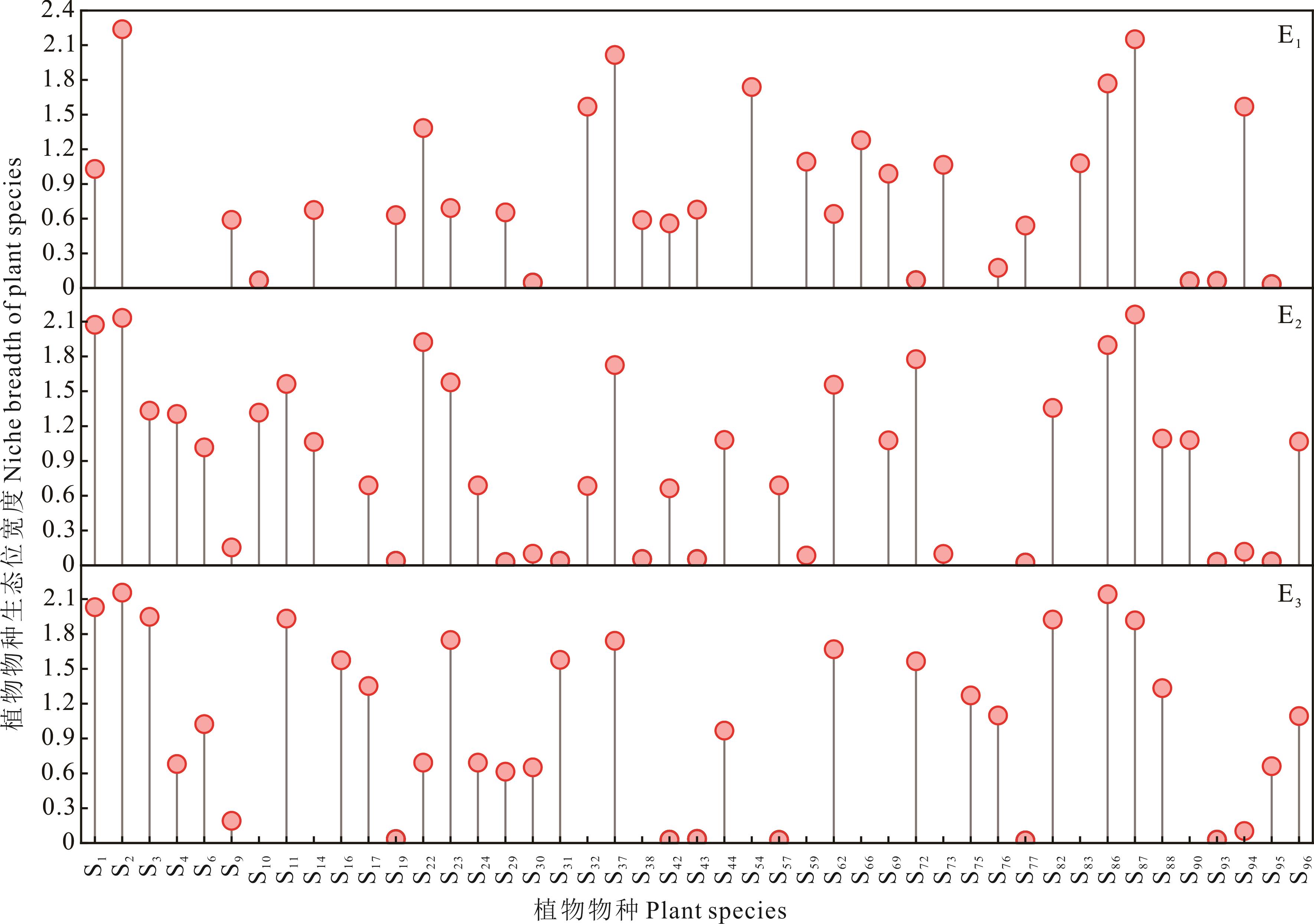
Fig.2 Niche breadth of main plant species of different elevation transects
物种 Species | 生态属性Ecological attributes (ΔOik ) | 生态响应速率Ecological response rate (ER) | ||||
|---|---|---|---|---|---|---|
| E1 | E2 | E3 | E1 | E2 | E3 | |
| 芒M. sinensis | 3.04 | 3.74 | 2.81 | 0.339 | 0.555 | 0.722 |
| 野古草A. hirta | 2.08 | 4.87 | 5.11 | 1.077 | 0.438 | 0.422 |
| 华北剪股颖A. clavata | - | 7.84 | 4.14 | - | 0.170 | 0.471 |
| 台湾剪股颖A. sozanensis | - | 3.14 | 1.57 | - | 0.416 | 0.434 |
| 求米草O. undulatifolius | - | 10.39 | 6.68 | - | 0.098 | 0.153 |
| 条穗薹草C. nemostachys | 8.55 | -0.03 | -0.23 | 0.069 | -4.472 | -0.829 |
| 签草C. doniana | -2.23 | 2.25 | - | -0.030 | 0.584 | - |
| 狭穗薹草C. ischnostachya | - | 7.61 | 4.19 | - | 0.205 | 0.461 |
| 牡蒿A. japonica | 6.82 | 7.12 | - | 0.099 | 0.150 | - |
| 珠光香青A. margaritacea | - | - | 5.98 | - | - | 0.263 |
| 香青A. sinica | - | 9.44 | 5.22 | - | 0.073 | 0.259 |
| 三脉紫菀A. ageratoides | 4.51 | -5.51 | -9.43 | 0.140 | -0.007 | -0.004 |
| 异叶黄鹌菜Y. heterophylla | 3.28 | 4.54 | 9.53 | 0.422 | 0.424 | 0.073 |
| 一枝黄花S. decurrens | 2.13 | 5.08 | 6.24 | 0.324 | 0.310 | 0.280 |
| 林荫千里光S. nemorensis | - | 7.32 | 0.12 | - | 0.094 | 5.712 |
| 九华蒲儿根S. jiuhuashanicus | 1.22 | -13.35 | 0.13 | 0.537 | -0.002 | 4.683 |
| 小蓬草E. canadensis | -3.57 | -1.54 | 14.01 | -0.013 | -0.065 | 0.047 |
| 鬼针草B. pilosa | - | -8.42 | 7.52 | - | -0.005 | 0.210 |
| 野菊C. indicum | 3.59 | 10.72 | - | 0.437 | 0.064 | - |
| 三叶委陵菜P. freyniana | 2.65 | 6.21 | 5.79 | 0.762 | 0.278 | 0.301 |
| 尼泊尔蓼P. nepalensis | 1.74 | -5.22 | - | 0.338 | -0.011 | - |
| 戟叶堇菜V. betonicifolia | 2.72 | 2.74 | -12.94 | 0.205 | 0.242 | -0.002 |
| 紫花堇菜V. grypoceras | 1.00 | -3.15 | -8.83 | 0.680 | -0.017 | -0.004 |
| 福建堇菜V. kosanensis | - | 4.48 | 4.42 | - | 0.241 | 0.219 |
| 大叶胡枝子L. davidii | 3.40 | - | - | 0.512 | - | - |
| 腺茎柳叶菜E. brevifolium | - | 7.11 | -13.97 | - | 0.097 | -0.002 |
| 武当菝葜S. outanscianensis | 1.72 | -0.48 | - | 0.637 | -0.179 | - |
| 前胡P. praeruptorum | 4.72 | 5.52 | 2.26 | 0.136 | 0.282 | 0.737 |
| 剑叶耳草H. caudatifolia | 0.89 | - | - | 1.430 | - | - |
| 双蝴蝶T. chinense | 1.59 | 6.75 | - | 0.623 | 0.160 | - |
| 轮叶沙参A. tetraphylla | -2.22 | 5.64 | 7.50 | -0.031 | 0.315 | 0.209 |
| 杜鹃R. simsii | 2.99 | -1.73 | - | 0.356 | -0.057 | - |
| 羽毛地杨梅L. plumosa | - | - | 9.44 | - | - | 0.135 |
| 灯芯草J. effusus | -0.13 | - | 3.16 | -1.373 | - | 0.348 |
| 平车前P. depressa | 2.63 | -17.69 | -16.78 | 0.206 | -0.001 | -0.001 |
| 牯岭藜芦V. schindleri | - | 4.90 | 3.81 | - | 0.277 | 0.504 |
| 髭脉桤叶树C. barbinervis | 0.80 | - | - | 1.355 | - | - |
| 小连翘H. erectum | 3.57 | 5.57 | 3.96 | 0.496 | 0.341 | 0.541 |
| 狼尾花L. barystachys | 2.48 | 4.31 | 5.89 | 0.866 | 0.501 | 0.325 |
| 油点草T. macropoda | - | 6.28 | 5.51 | - | 0.174 | 0.242 |
| 小二仙草G. micranthus | -2.69 | 5.09 | - | -0.022 | 0.212 | - |
| 中国繁缕S. chinensis | -2.50 | -9.86 | -12.33 | -0.025 | -0.003 | -0.002 |
| 蕨P. aquilinum | 0.85 | -1.31 | -1.66 | 1.835 | -0.090 | -0.062 |
| 日本安蕨A. niponicum | -9.52 | -10.01 | 2.46 | -0.004 | -0.003 | 0.269 |
| 细叶卷柏S. labordei | - | 6.51 | 8.07 | - | 0.164 | 0.136 |
Table 3 Ecological attributes (ΔOik ) and ecological response rate (ER) of main species in Wugong Mountain meadow
物种 Species | 生态属性Ecological attributes (ΔOik ) | 生态响应速率Ecological response rate (ER) | ||||
|---|---|---|---|---|---|---|
| E1 | E2 | E3 | E1 | E2 | E3 | |
| 芒M. sinensis | 3.04 | 3.74 | 2.81 | 0.339 | 0.555 | 0.722 |
| 野古草A. hirta | 2.08 | 4.87 | 5.11 | 1.077 | 0.438 | 0.422 |
| 华北剪股颖A. clavata | - | 7.84 | 4.14 | - | 0.170 | 0.471 |
| 台湾剪股颖A. sozanensis | - | 3.14 | 1.57 | - | 0.416 | 0.434 |
| 求米草O. undulatifolius | - | 10.39 | 6.68 | - | 0.098 | 0.153 |
| 条穗薹草C. nemostachys | 8.55 | -0.03 | -0.23 | 0.069 | -4.472 | -0.829 |
| 签草C. doniana | -2.23 | 2.25 | - | -0.030 | 0.584 | - |
| 狭穗薹草C. ischnostachya | - | 7.61 | 4.19 | - | 0.205 | 0.461 |
| 牡蒿A. japonica | 6.82 | 7.12 | - | 0.099 | 0.150 | - |
| 珠光香青A. margaritacea | - | - | 5.98 | - | - | 0.263 |
| 香青A. sinica | - | 9.44 | 5.22 | - | 0.073 | 0.259 |
| 三脉紫菀A. ageratoides | 4.51 | -5.51 | -9.43 | 0.140 | -0.007 | -0.004 |
| 异叶黄鹌菜Y. heterophylla | 3.28 | 4.54 | 9.53 | 0.422 | 0.424 | 0.073 |
| 一枝黄花S. decurrens | 2.13 | 5.08 | 6.24 | 0.324 | 0.310 | 0.280 |
| 林荫千里光S. nemorensis | - | 7.32 | 0.12 | - | 0.094 | 5.712 |
| 九华蒲儿根S. jiuhuashanicus | 1.22 | -13.35 | 0.13 | 0.537 | -0.002 | 4.683 |
| 小蓬草E. canadensis | -3.57 | -1.54 | 14.01 | -0.013 | -0.065 | 0.047 |
| 鬼针草B. pilosa | - | -8.42 | 7.52 | - | -0.005 | 0.210 |
| 野菊C. indicum | 3.59 | 10.72 | - | 0.437 | 0.064 | - |
| 三叶委陵菜P. freyniana | 2.65 | 6.21 | 5.79 | 0.762 | 0.278 | 0.301 |
| 尼泊尔蓼P. nepalensis | 1.74 | -5.22 | - | 0.338 | -0.011 | - |
| 戟叶堇菜V. betonicifolia | 2.72 | 2.74 | -12.94 | 0.205 | 0.242 | -0.002 |
| 紫花堇菜V. grypoceras | 1.00 | -3.15 | -8.83 | 0.680 | -0.017 | -0.004 |
| 福建堇菜V. kosanensis | - | 4.48 | 4.42 | - | 0.241 | 0.219 |
| 大叶胡枝子L. davidii | 3.40 | - | - | 0.512 | - | - |
| 腺茎柳叶菜E. brevifolium | - | 7.11 | -13.97 | - | 0.097 | -0.002 |
| 武当菝葜S. outanscianensis | 1.72 | -0.48 | - | 0.637 | -0.179 | - |
| 前胡P. praeruptorum | 4.72 | 5.52 | 2.26 | 0.136 | 0.282 | 0.737 |
| 剑叶耳草H. caudatifolia | 0.89 | - | - | 1.430 | - | - |
| 双蝴蝶T. chinense | 1.59 | 6.75 | - | 0.623 | 0.160 | - |
| 轮叶沙参A. tetraphylla | -2.22 | 5.64 | 7.50 | -0.031 | 0.315 | 0.209 |
| 杜鹃R. simsii | 2.99 | -1.73 | - | 0.356 | -0.057 | - |
| 羽毛地杨梅L. plumosa | - | - | 9.44 | - | - | 0.135 |
| 灯芯草J. effusus | -0.13 | - | 3.16 | -1.373 | - | 0.348 |
| 平车前P. depressa | 2.63 | -17.69 | -16.78 | 0.206 | -0.001 | -0.001 |
| 牯岭藜芦V. schindleri | - | 4.90 | 3.81 | - | 0.277 | 0.504 |
| 髭脉桤叶树C. barbinervis | 0.80 | - | - | 1.355 | - | - |
| 小连翘H. erectum | 3.57 | 5.57 | 3.96 | 0.496 | 0.341 | 0.541 |
| 狼尾花L. barystachys | 2.48 | 4.31 | 5.89 | 0.866 | 0.501 | 0.325 |
| 油点草T. macropoda | - | 6.28 | 5.51 | - | 0.174 | 0.242 |
| 小二仙草G. micranthus | -2.69 | 5.09 | - | -0.022 | 0.212 | - |
| 中国繁缕S. chinensis | -2.50 | -9.86 | -12.33 | -0.025 | -0.003 | -0.002 |
| 蕨P. aquilinum | 0.85 | -1.31 | -1.66 | 1.835 | -0.090 | -0.062 |
| 日本安蕨A. niponicum | -9.52 | -10.01 | 2.46 | -0.004 | -0.003 | 0.269 |
| 细叶卷柏S. labordei | - | 6.51 | 8.07 | - | 0.164 | 0.136 |
| 指标Index | E1 | E2 | E3 |
|---|---|---|---|
| 物种数Species numbers | 52 | 57 | 54 |
| 种对数Species pairs numbers | 2652 | 3192 | 2862 |
| 生态位重叠>0.6的种对数The number of species pairs with niche overlap >0.6 | 455 | 593 | 610 |
| 生态位重叠>0.7的种对数The number of species pairs with niche overlap >0.7 | 411 | 516 | 536 |
| 生态位重叠>0.8的种对数The number of species pairs with niche overlap >0.8 | 371 | 471 | 481 |
| 生态位重叠>0.9的种对数The number of species pairs with niche overlap >0.9 | 331 | 434 | 432 |
| 生态位重叠>1.0的种对数The number of species pairs with niche overlap >1.0 | 304 | 410 | 393 |
| 生态位重叠总和Sum of niche overlap | 4715.47 | 9819.53 | 9403.00 |
Table 4 Results of niche overlap competition among plant species in Wugong Mountain meadow
| 指标Index | E1 | E2 | E3 |
|---|---|---|---|
| 物种数Species numbers | 52 | 57 | 54 |
| 种对数Species pairs numbers | 2652 | 3192 | 2862 |
| 生态位重叠>0.6的种对数The number of species pairs with niche overlap >0.6 | 455 | 593 | 610 |
| 生态位重叠>0.7的种对数The number of species pairs with niche overlap >0.7 | 411 | 516 | 536 |
| 生态位重叠>0.8的种对数The number of species pairs with niche overlap >0.8 | 371 | 471 | 481 |
| 生态位重叠>0.9的种对数The number of species pairs with niche overlap >0.9 | 331 | 434 | 432 |
| 生态位重叠>1.0的种对数The number of species pairs with niche overlap >1.0 | 304 | 410 | 393 |
| 生态位重叠总和Sum of niche overlap | 4715.47 | 9819.53 | 9403.00 |

Fig.3 Niche overlap coefficient of plant species of different elevation transects
| [1] | McIlroy S K, Allen-Diaz B H. Plant community distribution along water table and grazing gradients in montane meadows of the Sierra Nevada Range (California, USA). Wetlands Ecology and Management, 2012, 20(4): 287-296. |
| [2] | Li W, Cao W X, Wang J L, et al. Effects of grazing regime on vegetation structure, productivity, soil quality, carbon and nitrogen storage of alpine meadow on the Qinghai-Tibetan Plateau. Ecological Engineering, 2017, 98: 123-133. |
| [3] | Saggar S, Jha N, Deslippe J, et al. Denitrification and N2O:N2 production in temperate grasslands: processes, measurements, modelling and mitigating negative impacts. Science of the Total Environment, 2013, 465: 173-195. |
| [4] | Xiu L N, Feng Q S, Liang T G, et al. Spatial and temporal distribution of grassland and human occupancy condition in China from 2001 to 2009. Pratacultural Science, 2014, 31(1): 66-74. |
| 修丽娜, 冯琦胜, 梁天刚, 等. 2001-2009年中国草地面积动态与人类活动的关系. 草业科学, 2014, 31(1): 66-74. | |
| [5] | Ren J Z, Zhang Y J. Grassland resources in the south of China and its development strategy. Journal of China University of Metrology, 2002, 13(3): 11-17. |
| 任继周, 张英俊. 中国南方草地资源及其发展战略. 中国计量学院学报, 2002, 13(3): 11-17. | |
| [6] | Zhang X L, Zhang Y, Niu D K, et al. Spatial-temporal dynamics of upland meadow coverage on Wugong Mountain based on TM NDVI. Acta Ecologica Sinica, 2018, 38(7): 2414-2424. |
| 张学玲, 张莹, 牛德奎, 等. 基于TM NDVI的武功山山地草甸植被覆盖度时空变化研究. 生态学报, 2018, 38(7): 2414-2424. | |
| [7] | Deng B L, Li Z Z, Zhang L, et al. Increases in soil CO2 and N2O emissions with warming depend on plant species in restored alpine meadows of Wugong Mountain, China. Journal of Soils and Sediments, 2016, 16(3): 777-784. |
| [8] | Deng B L, Zheng L Y, Ma Y C, et al. Effects of mixing biochar on soil N2O, CO2, and CH4 emissions after prescribed fire in alpine meadows of Wugong Mountain, China. Journal of Soils and Sediments, 2020, 20(3): 3062-3072. |
| [9] | Li Z, Zhang L, Chen J, et al. Response of soil sulfur availability to elevation and degradation in the Wugong Mountain meadow, China. Plant Soil and Environment, 2017, 63(6): 250-256. |
| [10] | Li Z, Siemann E, Deng B L, et al. Soil microbial community responses to soil chemistry modifications in alpine meadows following human trampling. Catena, 2020, 194: 104717. |
| [11] | Jiang L B, Zhang L, Deng B L, et al. Alpine meadow restorations by non-dominant species increased soil nitrogen transformation rates but decreased their sensitivity to warming. Journal of Soils and Sediments, 2017, 17(9): 2329-2337. |
| [12] | Rana S, Cheng X N, Wu Y F, et al. Evaluation of soil and water conservation function in the Wugong mountain meadow based on the comprehensive index method. Heliyon, 2022, 8(12): e11867. |
| [13] | Rana S, Xu Z H, Jemim R S, et al. Soil quality assessment in tourism-disturbed subtropical mountain meadow areas of Wugong Mountain, central Southeast China. Life, 2022, 12(8): 1136. |
| [14] | Chardon N I, Rixen C, Wipf S, et al. Human trampling disturbance exerts different ecological effects at contrasting elevational range limits. Journal of Applied Ecology, 2019, 56(6): 1389-1399. |
| [15] | Gao Y G, Li Y H, Xu H Q. Assessing ecological quality based on remote sensing images in Wugong mountain. Earth and Space Science, 2022, 9(3): e2021EA001918. |
| [16] | Zhang J T. Quantitative ecology (The third edition). Beijing: Science Press, 2018. |
| 张金屯. 数量生态学(第三版). 北京: 科学出版社, 2018. | |
| [17] | Baselga A. Partitioning the turnover and nestedness components of beta diversity. Global Ecology and Biogeography, 2010, 19(1): 134-143. |
| [18] | Zhang Q P, Wang J, Lv F. Study of spatial distribution of alpine meadow in Hezuo City. Chinese Journal of Grassland, 2021, 43(5): 90-96. |
| 张起鹏, 王建, 吕飞. 合作市高寒草甸空间分布规律研究. 中国草地学报, 2021, 43(5): 90-96. | |
| [19] | Zhang C S, Xie G D, Bao W K, et al. Effects of topographic factors on the plant species richness and distribution pattern of alpine meadow in source region of Lancang River, Southwest China. Chinese Journal of Ecology, 2012, 31(11): 2767-2774. |
| 张昌顺, 谢高地, 包维楷, 等. 地形对澜沧江源区高寒草甸植物丰富度及其分布格局的影响. 生态学杂志, 2012, 31(11): 2767-2774. | |
| [20] | Dong S K, Sha W, Su X K, et al. The impacts of geographic, soil and climatic factors on plant diversity, biomass and their relationships of the alpine dry ecosystems: Cases from the Aerjin Mountain Nature Reserve, China. Ecological Engineering, 2019, 127: 170-177. |
| [21] | Zhou Y D, Ochola A C, Njogu A W, et al. The species richness pattern of vascular plants along a tropical elevational gradient and the test of elevational Rapoport’s rule depend on different life-forms and phytogeographic affinities. Ecology and Evolution, 2019, 9(8): 4495-4503. |
| [22] | Wang X, Zhu J L, Peng S T, et al. Patterns of grassland community composition and structure along an elevational gradient on the Qinghai-Tibet Plateau. Journal of Plant Ecology, 2022, 15(4): 808-817. |
| [23] | Dorji T, Moe S R, Klein J A, et al. Plant species richness, evenness, and composition along environmental gradients in an alpine meadow grazing ecosystem in central Tibet, China. Arctic Antarctic and Alpine Research, 2014, 46(2): 308-326. |
| [24] | Gong X, Huo X R, Li W, et al. Vegetation community characteristics and spatial differentiation in mountain grassland in Luoshan, Ningxia. Acta Prataculturae Sinica, 2025, 34(2): 1-15. |
| 龚昕, 霍新茹, 李雯, 等. 宁夏罗山山地草原植被群落特征及其空间分异. 草业学报, 2025, 34(2): 1-15. | |
| [25] | Zhang X, Ye M, Chen W L, et al. Influence of topography on species diversity of grassland plant communities in the Altai Mountains. Chinese Journal of Grassland, 2024, 46(7): 57-71. |
| 张西, 叶茂, 陈维龙, 等. 地形对阿尔泰山草地植物群落物种多样性的影响. 中国草地学报, 2024, 46(7): 57-71. | |
| [26] | Niu Y J, Zhou J W, Yang S W, et al. Quantitative apportionment of slope aspect and altitude to soil moisture and temperature and plant distribution on alpine meadow. Chinese Journal of Applied Ecology, 2017, 28(5): 1489-1497. |
| 牛钰杰, 周建伟, 杨思维, 等. 坡向和海拔对高寒草甸山体土壤水热和植物分布格局的定量分解. 应用生态学报, 2017, 28(5): 1489-1497. | |
| [27] | Wang W H, Wang S L, Liang G L, et al. Effects of slope categories of differing aspect and position on plant community diversity in alpine shrubland in the Qilian Mountains. Acta Prataculturae Sinica, 2025, 34(1): 17-28. |
| 王文虎, 王世林, 梁国玲, 等. 坡向和坡位对祁连山高寒灌丛植物群落多样性的影响. 草业学报, 2025, 34(1): 17-28. | |
| [28] | Ding S, Ouyang J, Lv D, et al. Niche characteristics of dominant species populations in Castanopsis fargesii forest in Jinggang mountain national nature reserve. Journal of Central South University of Forestry & Technology, 2014, 34(7): 99-103. |
| 丁松, 欧阳杰, 吕丹, 等. 井冈山国家自然保护区栲树林优势种群生态位特征. 中南林业科技大学学报, 2014, 34(7): 99-103. | |
| [29] | Zhang J, Caiwendaiji, Suonancairen, et al. The correlation and niche of survival community of in Maduo County, Qinghai Province. Pratacultural Science, 2019, 36(11): 2752-2765. |
| 张静, 才文代吉, 索南才仁, 等. 青海玛多梭罗以礼草生存群落种间关联及生态位. 草业科学, 2019, 36(11): 2752-2765. | |
| [30] | Xiang Z Y, Bhatt A, Tang Z B, et al. Disturbance of plateau zokor-made mound stimulates plant community regeneration in the Qinghai-Tibetan Plateau, China. Journal of Arid Land, 2021, 13(10): 1054-1070. |
| [31] | Yang M Z. Preliminary study on the distribution and classification of grassland in Fujian Province. Grassland of China, 1983(2): 12-17. |
| 杨睦忠. 福建省草地分布规律及类型划分的初步探讨. 中国草原, 1983(2): 12-17. | |
| [32] | Yang B Z, Kong D Z. The quantitative classification, ordination and rational utilization of grassland vegetation types of the Nanling Mountains, Hunan Province. Journal of Natural Resources, 1991, 6(2): 153-169. |
| 杨宝珍, 孔德珍. 湖南南岭草地植被类型的数量分类、排序及其合理利用. 自然资源学报, 1991, 6(2): 153-169. | |
| [33] | Wang S Z, Xie F. The grassland resources and their utilization in south China. Acta Agrestia Sinica, 1991, 1(1): 1-9. |
| 王素珍, 谢帆. 我国南方草地资源及其利用. 草地学报, 1991, 1(1): 1-9. | |
| [34] | Song J Z, Sun Y, Ji X, et al. Reproductive allocation characteristics of Agrostis clavata populations in Changbai Mountain area. Jiangsu Agricultural Sciences, 2014, 42(8): 178-180. |
| 宋金枝, 孙颖, 季旭, 等. 长白山区华北剪股颖种群生殖分配特征. 江苏农业科学, 2014, 42(8): 178-180. | |
| [35] | Liu X F. Cultivation technology and application of Oplismenus undulatifolius. Forest By-Product and Speciality in China, 2017(3): 34-36. |
| 刘香芬. 求米草栽培技术及应用. 中国林副特产, 2017(3): 34-36. | |
| [36] | Kang R Q, Bai X M, Ran F, et al. Community characteristics and soil nutrient status of 9 Carex L. plants in central and eastern Gansu Province. Acta Botanica Boreali-Occidentalia Sinica, 2023, 43(2): 305-315. |
| 康瑞卿, 白小明, 冉福, 等. 甘肃中东部地区9种薹草属植物分布区群落特征和土壤养分状况. 西北植物学报, 2023, 43(2): 305-315. | |
| [37] | Lan L Y, Ma L L, Guo X M, et al. Status of grassland resources and above-ground net primary productivity in Jiangxi Province. South China Forestry Science, 2022, 50(3): 54-60. |
| 兰龙焱, 马丽丽, 郭晓敏, 等. 江西省草地资源现状及地上净初级生产力研究. 南方林业科学, 2022, 50(3): 54-60. | |
| [38] | Gu F T. The classification system of the grassland vegetation of Shandong Province. Grassland of China, 1990(3): 19-25. |
| 谷奉天. 山东草地植被的分类系统. 中国草地, 1990(3): 19-25. | |
| [39] | Guo X, Li L, Wang C Z, et al. Studies on Henan Province rangeland resource regional planning. Acta Agrestia Sinica, 2019, 27(3): 719-727. |
| 郭孝, 李黎, 王成章, 等. 河南省天然草地资源区划的研究. 草地学报, 2019, 27(3): 719-727. | |
| [40] | Liao Y F, Huang X S. Community characteristics and floristic composition of montane shrub meadow in Lianhua Mountain, Huidong, Guangdong. Anhui Agricultural Science Bulletin, 2022, 28(7): 31-33. |
| 廖远芳, 黄潇洒. 广东惠东莲花山山地灌丛草甸区系组成及群落特征. 安徽农学通报, 2022, 28(7): 31-33. | |
| [41] | Guan H L, Fan J W, Li Y Z, et al. Estimation of carbon distribution and storage of natural grassland in Hainan Island. Ecology and Environmental Sciences, 2019, 28(6): 1092-1099. |
| 官惠玲, 樊江文, 李愈哲, 等. 海南岛天然草地有机碳分布格局及碳储量估算. 生态环境学报, 2019, 28(6): 1092-1099. | |
| [42] | Qiao G L, Jin X B, Gu Z M, et al. Carrying capacity of high-altitude grassland in warm seasons in the middle section of Tianshan Mountain from 2000 to 2018. Transactions of the Chinese Society of Agricultural Engineering, 2021, 37(22): 253-261. |
| 乔郭亮, 金晓斌, 顾铮鸣, 等. 2000-2018年天山中段高海拔草地暖季承载力. 农业工程学报, 2021, 37(22): 253-261. | |
| [43] | Miao C L, Fu S, Liu J, et al. Aboveground biomass analysis of an alpine meadow based on unmanned aerial vehicle hyperspectral images in the Haibei pilot area. Pratacultural Science, 2022, 39(10): 1992-2004. |
| 苗春丽, 伏帅, 刘洁, 等. 基于UAV成像高光谱图像的高寒草甸地上生物量——以海北试验区为例. 草业科学, 2022, 39(10): 1992-2004. | |
| [44] | Guo Y H, Pu X J, Pu X P, et al. Change tendency of the aboveground biomass and nutrition quality in the alpine pastoral area of Qinghai Tibet. Acta Agrestia Sinica, 2021, 29(4): 734-742. |
| 郭艳红, 蒲小剑, 蒲小朋, 等. 青藏高寒牧区天然草地地上生物量和营养品质的变化规律. 草地学报, 2021, 29(4): 734-742. | |
| [45] | Ain N U, Haider F U, Fatima M, et al. Genetic determinants of biomass in C4 crops: molecular and agronomic approaches to increase biomass for biofuels. Frontiers in Plant Science, 2022, 13: 839588. |
| [46] | Ou Y X, Zhang Y R, Li Y L. A review on carbon dynamics and budget of biomass energy species of Miscanthus spp. Ecology and Environmental Sciences, 2013, 22(9): 1633-1638. |
| 欧阳旭, 张亚茹, 李跃林. 基于生物质能的芒属(Miscanthus)植物碳动态和收支研究进展. 生态环境学报, 2013, 22(9): 1633-1638. | |
| [47] | Zhang Z J, Yan Y J, Tian Y, et al. Distribution and conservation of orchid species richness in China. Biological Conservation, 2015, 181: 64-72. |
| [48] | Hinsley A, de Boer H J, Fay M F, et al. A review of the trade in orchids and its implications for conservation. Botanical Journal of the Linnean Society, 2018, 186(4): 435-455. |
| [49] | Jin X H, Xiang X G, Chen B. Biodiversity of orchids in remnant native forests in Nujiang Valley, Yunnan Province, China. Biodiversity Science, 2011, 19(1): 120-123. |
| 金效华, 向小果, 陈彬. 怒江河谷低海拔地区残存原生植被中兰科植物多样性. 生物多样性, 2011, 19(1): 120-123. | |
| [50] | Chen W. The biological zero and accumulated temperature for seed germination of six Asteraceae species in eastern Guangdong. Journal of Northwest Normal University (Natural Science), 2016, 52(4): 93-98. |
| 陈文. 粤东6种菊科植物种子萌发的生物学零度和积温. 西北师范大学学报(自然科学版), 2016, 52(4): 93-98. | |
| [51] | Yan X L, Liu Q R, Shou H Y, et al. The categorization and analysis on the geographic distribution patterns of Chinese alien invasive plants. Biodiversity Science, 2014, 22(5): 667-676. |
| 闫小玲, 刘全儒, 寿海洋, 等. 中国外来入侵植物的等级划分与地理分布格局分析. 生物多样性, 2014, 22(5): 667-676. |
| [1] | Bin FENG, Xiao-xia YANG, Yu-zhen LIU, Wen-ting LIU, Wei-dong LYU, Yan-fen ZHANG, Quan-min DONG. Effects of different livestock classes on species diversity, niches, and interspecific associations in alpine grassland [J]. Acta Prataculturae Sinica, 2025, 34(8): 1-14. |
| [2] | Wei TANG, Zi-guang LI, Qing-tian ZHAO, Juan SUN. Effects of oat (Avena sativa) planting density on the growth and rhizosphere fungal community structure of Digitaria sanguinalis and Echinochloa crusgalli [J]. Acta Prataculturae Sinica, 2025, 34(8): 149-164. |
| [3] | Shan-shan TANG, Min HU. Differences in enzyme activity and bacterial community structure in rhizosphere soil of four grass species [J]. Acta Prataculturae Sinica, 2025, 34(8): 99-108. |
| [4] | Tian-ci KONG, Xue-qing MA, Chen-bang HE, Tai-yan FAN, Guang-xin LU, He-xing QI. Effects of fungal diseases of silage maize on microbial diversity of silage fermentation [J]. Acta Prataculturae Sinica, 2025, 34(7): 95-106. |
| [5] | Shuang YAN, Fei XIA, Wei WEI, Jing-long WANG, Hao-yang WU, Lin-ling RAN, Yun-yin XUE, Hao SHI, Shai-kun ZHENG, Jun-qiang WANG, Jun-dong HE. Differences along an erosion gradient in alpine meadow plant community diversity and factors influencing diversity [J]. Acta Prataculturae Sinica, 2025, 34(6): 1-13. |
| [6] | Ruo-xuan LI, Sheng-zhi-can LI, Yi-tong CHEN, Yu-hao SUN, Pei-zhi YANG, Yan-nong CUI, Ming-xiu LONG, Shu-bin HE. Effects of different planting ratios of broomcorn millet (Panicum miliaceum) on ammonia-oxidizing and denitrifying microorganisms in rhizosphere soil of alfalfa (Medicago sativa) [J]. Acta Prataculturae Sinica, 2025, 34(6): 110-121. |
| [7] | Shun-hua LUO, Xin-yu LIU, Bao-ping MENG, Xuan-li CHEN, Ren-jie HU, Hong-yan YU, Xian-ying WANG, Bo ZHANG, Yu QIN. A study of functional group diversity and productivity of alpine grassland in Qilian Mountain National Park [J]. Acta Prataculturae Sinica, 2025, 34(6): 14-26. |
| [8] | Ying-hao ZHANG, Chu-bo LIU, Kun ZHOU, Jia-cun GUO, Shi-peng LIU, Luan-zi SUN. Effects of jujube tree on the growth of alfalfa and orchardgrass in different positions within an orchard [J]. Acta Prataculturae Sinica, 2025, 34(6): 203-212. |
| [9] | Rui-bing WANG, Huan CHEN, Zhen-zhen PAN, Wei ZHAO, Shao-hao BANG, Xiao-long ZHOU, Zheng-wei REN. Mechanisms of species diversity loss in an alpine meadow community after adding different types and numbers of resources [J]. Acta Prataculturae Sinica, 2025, 34(5): 1-11. |
| [10] | Xue-ping LI, Shi-yang XU, Jian-jun LI, Yong-hong QI. Bacterial diversity and community structural changes in rhizosphere soil of naked barley disturbed by root rot [J]. Acta Prataculturae Sinica, 2025, 34(5): 118-129. |
| [11] | Xiao-hui DONG, Shang-li SHI, Guo-li YIN, San-dong CHEN, Hai-qiang GONG, Lin-bo LIU. Diversity of endophytic bacterial and fungal communities in different maize organs [J]. Acta Prataculturae Sinica, 2025, 34(5): 130-145. |
| [12] | Shou-xing WANG, Hua-kun ZHOU, Li-peng OU, Cheng-xian LI, Yan-he WANG, Xiao-chun NING, Qiang GU, Dai-jun WEI, Ming-xin YANG. Vegetation and soil microbial diversity and their relationships with soil factors in different grassland types of the three river headwaters region [J]. Acta Prataculturae Sinica, 2025, 34(4): 16-26. |
| [13] | Xin-zhu CHEN, Ping-dong LIN, Wen YUE, Ya-ni YANG, Shui-ling QIU, Xiang-li ZHENG. Effects of various additives on the quality and microbial diversity of broad bean straw silage [J]. Acta Prataculturae Sinica, 2025, 34(4): 164-174. |
| [14] | Jiang-ping MA, Yi-yin ZHANG, Teng-fei WANG, Bin WANG, Jian LAN. Interspecific relationship and forage productivity effects in mixed sowings of Sorghum bicolor and Dolichos lablab [J]. Acta Prataculturae Sinica, 2025, 34(3): 111-122. |
| [15] | An-jing JIANG, Yi-qiang DONG, Shi-jie ZHOU, Ting-ting NIE, Yue WU, Ze-yu LIU, Xing-yun SHAN, Ya-xin LEI, Kai WU, Sha-zhou AN. Distribution characteristics of grassland plant diversity along the altitudinal gradient and its driving factors: A case study of the eastern section of the northern slope of the Tianshan Mountains [J]. Acta Prataculturae Sinica, 2025, 34(3): 29-40. |
| Viewed | ||||||
|
Full text |
|
|||||
|
Abstract |
|
|||||
