
ISSN 1004-5759 CN 62-1105/S
Acta Prataculturae Sinica ›› 2026, Vol. 35 ›› Issue (11): 24-37.DOI: 10.11686/cyxb2026010
Previous Articles Next Articles
Di-yang ZOU1,2( ), Xiao-yan SONG1,2(), Yang GAO3, Fu-mei LI1,2, Xi PENG1,2, Yang LIU1,2, Lei HU1,2, Lu-ming DING1,2, Chang-ting WANG1,2
Received:2026-01-12
Revised:2026-03-12
Online:2026-11-20
Published:2026-10-12
Contact:
Xiao-yan SONG
Di-yang ZOU, Xiao-yan SONG, Yang GAO, Fu-mei LI, Xi PENG, Yang LIU, Lei HU, Lu-ming DING, Chang-ting WANG. Effects of warming and precipitation changes on soil microbial biomass and enzyme activities in alpine meadows[J]. Acta Prataculturae Sinica, 2026, 35(11): 24-37.
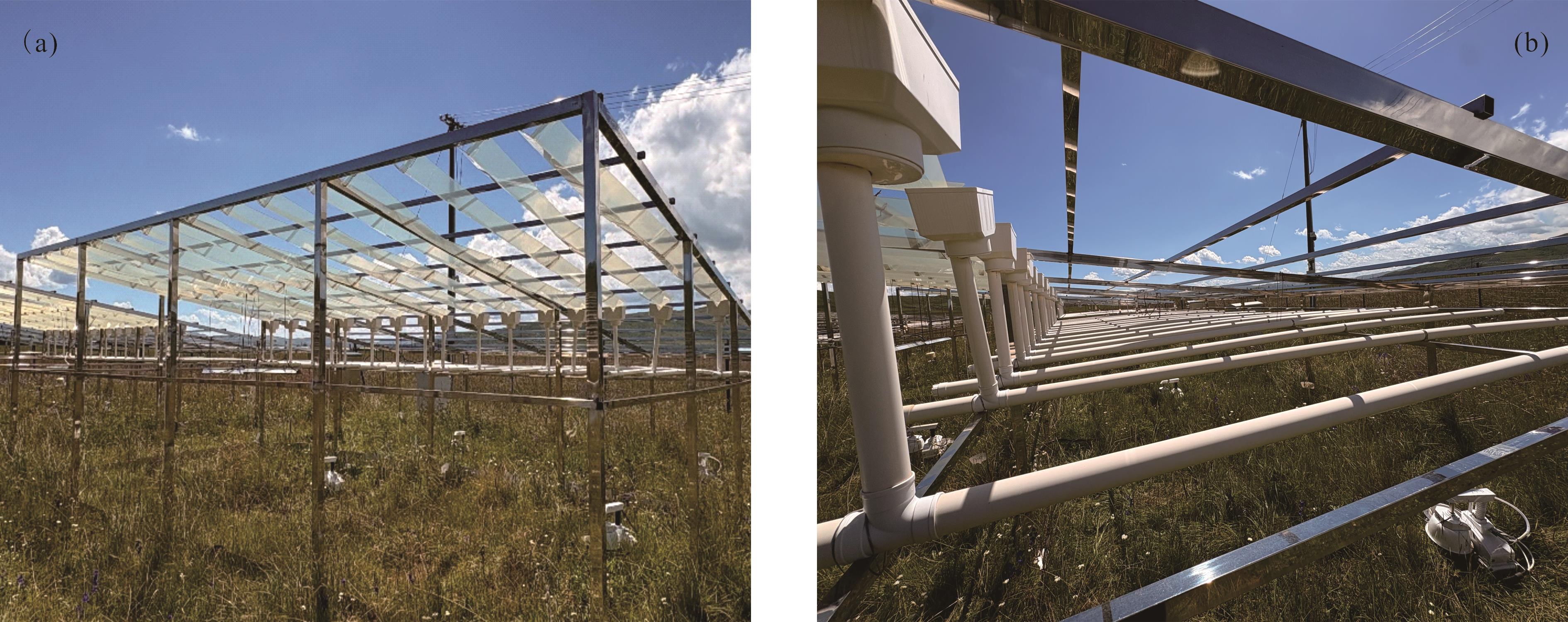
Fig.1 Schematic diagram of the experimental setup

Fig.2 Effects of warming and precipitation changes on soil temperature and moisture
项目 Item | 处理Treatment | 双因素方差分析Two-way ANOVA | |||||||
|---|---|---|---|---|---|---|---|---|---|
| 0.5PW0 | 1.0PW0 | 1.5PW0 | 0.5PW | 1.0PW | 1.5PW | T | P | T×P | |
| 地上生物量Aboveground biomass (g·m-2) | 196.21±28.21a | 258.17±25.25a | 361.75±56.67a | 273.76±6.49a | 301.48±1.63a | 331.93±64.43a | * | ||
| 地下生物量Belowground biomass (g·m-2) | 762.60±247.38a | 322.37±87.41a | 685.47±236.67a | 1039.91±67.86a | 350.10±45.44a | 837.12±228.93a | * | ||
| 丰富度指数Richness index | 18.00±0.58a | 20.33±1.76a | 14.67±1.67a | 16.33±3.18a | 18.00±0.58a | 17.33±2.40a | |||
| 辛普森指数Simpson index | 0.88±0.01a | 0.89±0.01a | 0.80±0.09a | 0.84±0.03a | 0.88±0.00a | 0.89±0.02a | |||
| 香农-威纳指数Shannon-Wiener index | 2.39±0.06a | 2.54±0.05a | 2.11±0.32a | 2.18±0.20a | 2.40±0.05a | 2.43±0.16a | |||
| 均匀度指数Pielou index | 0.83±0.01a | 0.85±0.01a | 0.78±0.10a | 0.79±0.02a | 0.83±0.02a | 0.86±0.03a | |||
| pH | 6.07±0.08a | 6.16±0.07a | 6.00±0.01a | 5.97±0.05a | 6.04±0.03a | 5.93±0.03a | * | ||
| 容重 Bulk density (g·cm-3) | 1.31±0.03a | 1.22±0.12a | 1.25±0.07a | 1.33±0.05a | 1.18±0.07a | 1.19±0.09a | |||
| 土壤有机碳Soil organic carbon (SOC, g·kg-1) | 36.83±3.99a | 36.30±2.65a | 35.07±4.06a | 34.60±1.35a | 37.53±0.65a | 36.87±3.37a | |||
| 土壤全氮Soil total nitrogen (TN, g·kg-1) | 3.17±0.43a | 3.07±0.19a | 2.97±0.27a | 2.97±0.09a | 3.23±0.03a | 3.30±0.40a | |||
| 土壤碳氮比SOC/TN | 11.73±0.38a | 11.71±0.23a | 11.76±0.30a | 11.61±0.21a | 11.64±0.15a | 11.22±0.11a | |||
| 铵态氮 NH4+-N (mg·kg-1) | 12.16±2.15a | 14.04±2.30a | 15.59±1.23a | 10.92±0.41a | 15.25±2.26a | 15.56±1.37a | |||
| 硝态氮 NO3--N (mg·kg-1) | 5.72±0.77a | 5.53±0.91a | 6.40±0.45a | 5.69±0.34a | 5.47±0.61a | 5.57±0.59a | |||
Table 1 Vegetation characteristics and soil physicochemical properties under warming and precipitation changes
项目 Item | 处理Treatment | 双因素方差分析Two-way ANOVA | |||||||
|---|---|---|---|---|---|---|---|---|---|
| 0.5PW0 | 1.0PW0 | 1.5PW0 | 0.5PW | 1.0PW | 1.5PW | T | P | T×P | |
| 地上生物量Aboveground biomass (g·m-2) | 196.21±28.21a | 258.17±25.25a | 361.75±56.67a | 273.76±6.49a | 301.48±1.63a | 331.93±64.43a | * | ||
| 地下生物量Belowground biomass (g·m-2) | 762.60±247.38a | 322.37±87.41a | 685.47±236.67a | 1039.91±67.86a | 350.10±45.44a | 837.12±228.93a | * | ||
| 丰富度指数Richness index | 18.00±0.58a | 20.33±1.76a | 14.67±1.67a | 16.33±3.18a | 18.00±0.58a | 17.33±2.40a | |||
| 辛普森指数Simpson index | 0.88±0.01a | 0.89±0.01a | 0.80±0.09a | 0.84±0.03a | 0.88±0.00a | 0.89±0.02a | |||
| 香农-威纳指数Shannon-Wiener index | 2.39±0.06a | 2.54±0.05a | 2.11±0.32a | 2.18±0.20a | 2.40±0.05a | 2.43±0.16a | |||
| 均匀度指数Pielou index | 0.83±0.01a | 0.85±0.01a | 0.78±0.10a | 0.79±0.02a | 0.83±0.02a | 0.86±0.03a | |||
| pH | 6.07±0.08a | 6.16±0.07a | 6.00±0.01a | 5.97±0.05a | 6.04±0.03a | 5.93±0.03a | * | ||
| 容重 Bulk density (g·cm-3) | 1.31±0.03a | 1.22±0.12a | 1.25±0.07a | 1.33±0.05a | 1.18±0.07a | 1.19±0.09a | |||
| 土壤有机碳Soil organic carbon (SOC, g·kg-1) | 36.83±3.99a | 36.30±2.65a | 35.07±4.06a | 34.60±1.35a | 37.53±0.65a | 36.87±3.37a | |||
| 土壤全氮Soil total nitrogen (TN, g·kg-1) | 3.17±0.43a | 3.07±0.19a | 2.97±0.27a | 2.97±0.09a | 3.23±0.03a | 3.30±0.40a | |||
| 土壤碳氮比SOC/TN | 11.73±0.38a | 11.71±0.23a | 11.76±0.30a | 11.61±0.21a | 11.64±0.15a | 11.22±0.11a | |||
| 铵态氮 NH4+-N (mg·kg-1) | 12.16±2.15a | 14.04±2.30a | 15.59±1.23a | 10.92±0.41a | 15.25±2.26a | 15.56±1.37a | |||
| 硝态氮 NO3--N (mg·kg-1) | 5.72±0.77a | 5.53±0.91a | 6.40±0.45a | 5.69±0.34a | 5.47±0.61a | 5.57±0.59a | |||
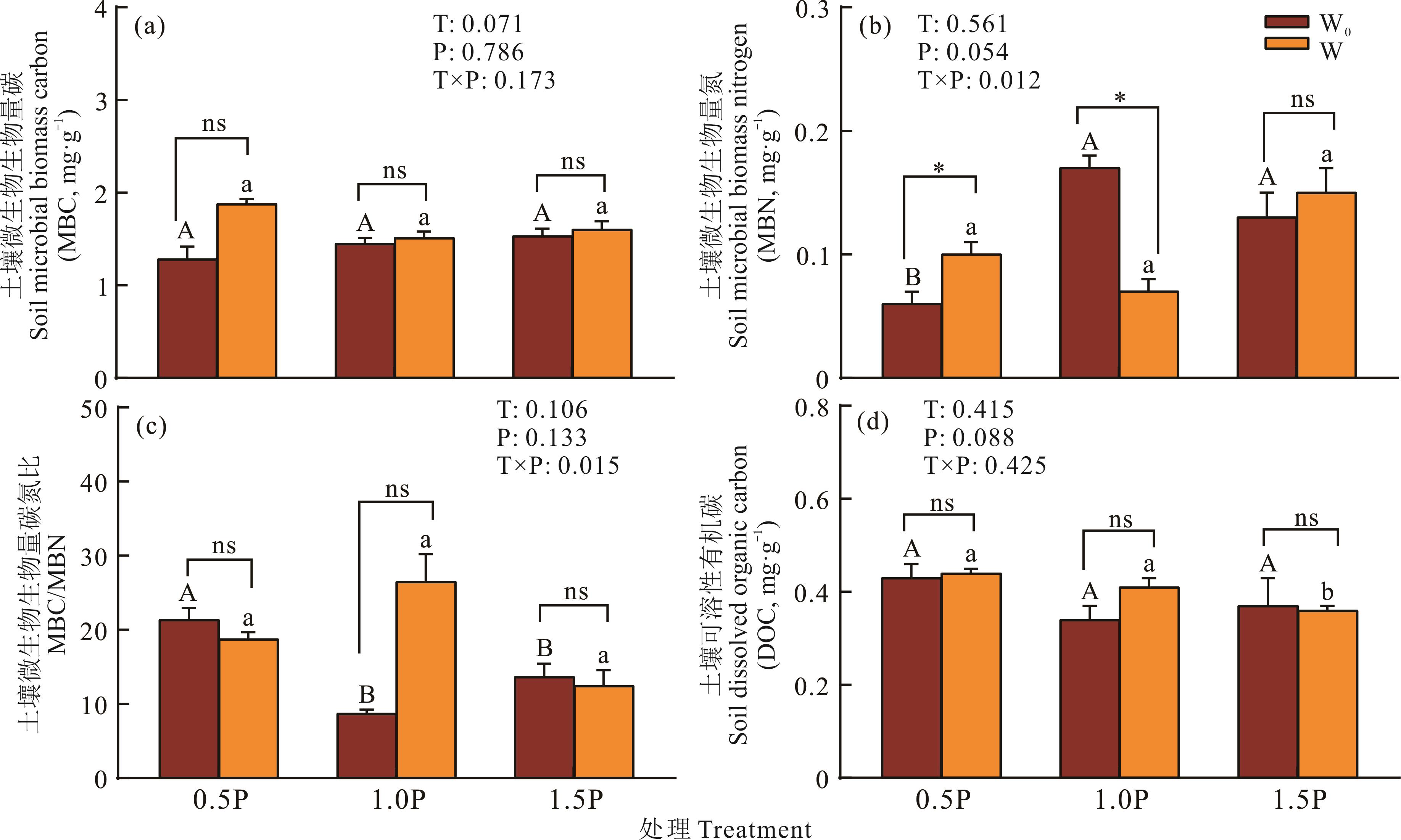
Fig.3 Effects of warming and precipitation changes on soil microbial biomass carbon and nitrogen and dissolved organic carbon
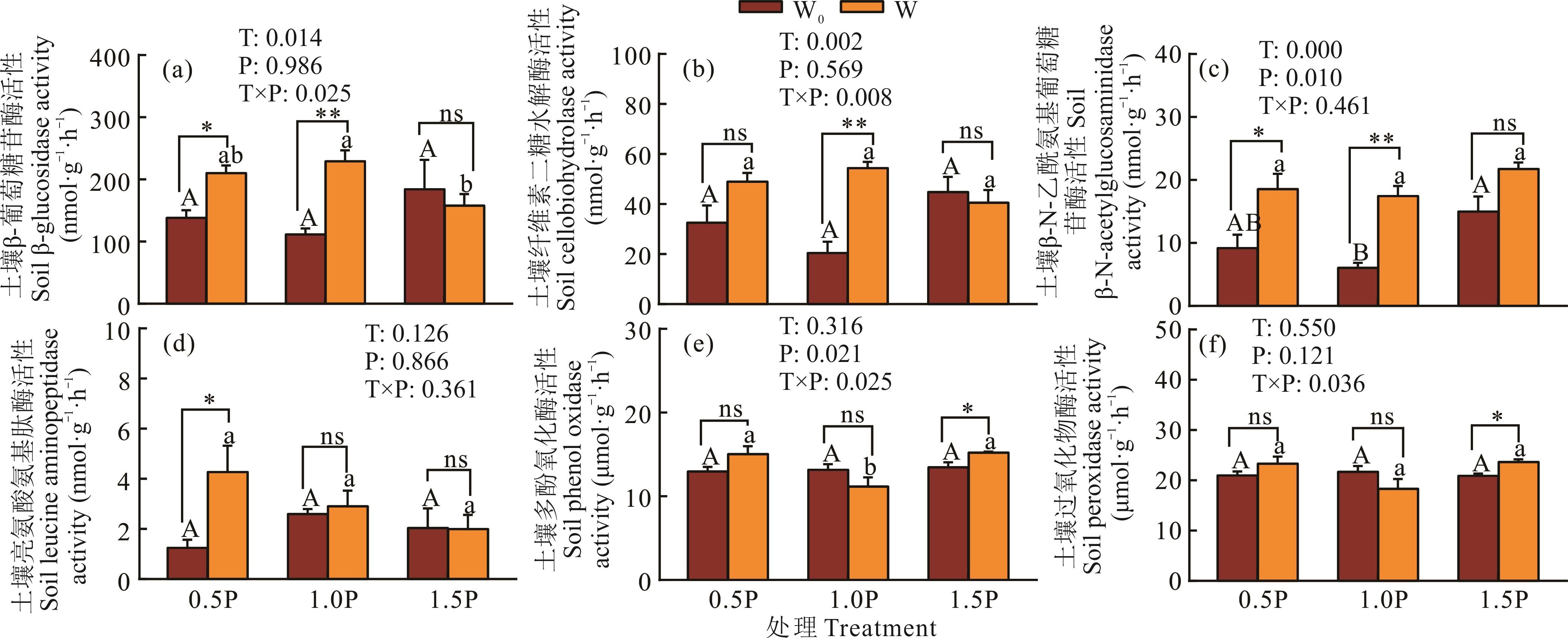
Fig.4 Effects of warming and precipitation changes on soil enzyme activities
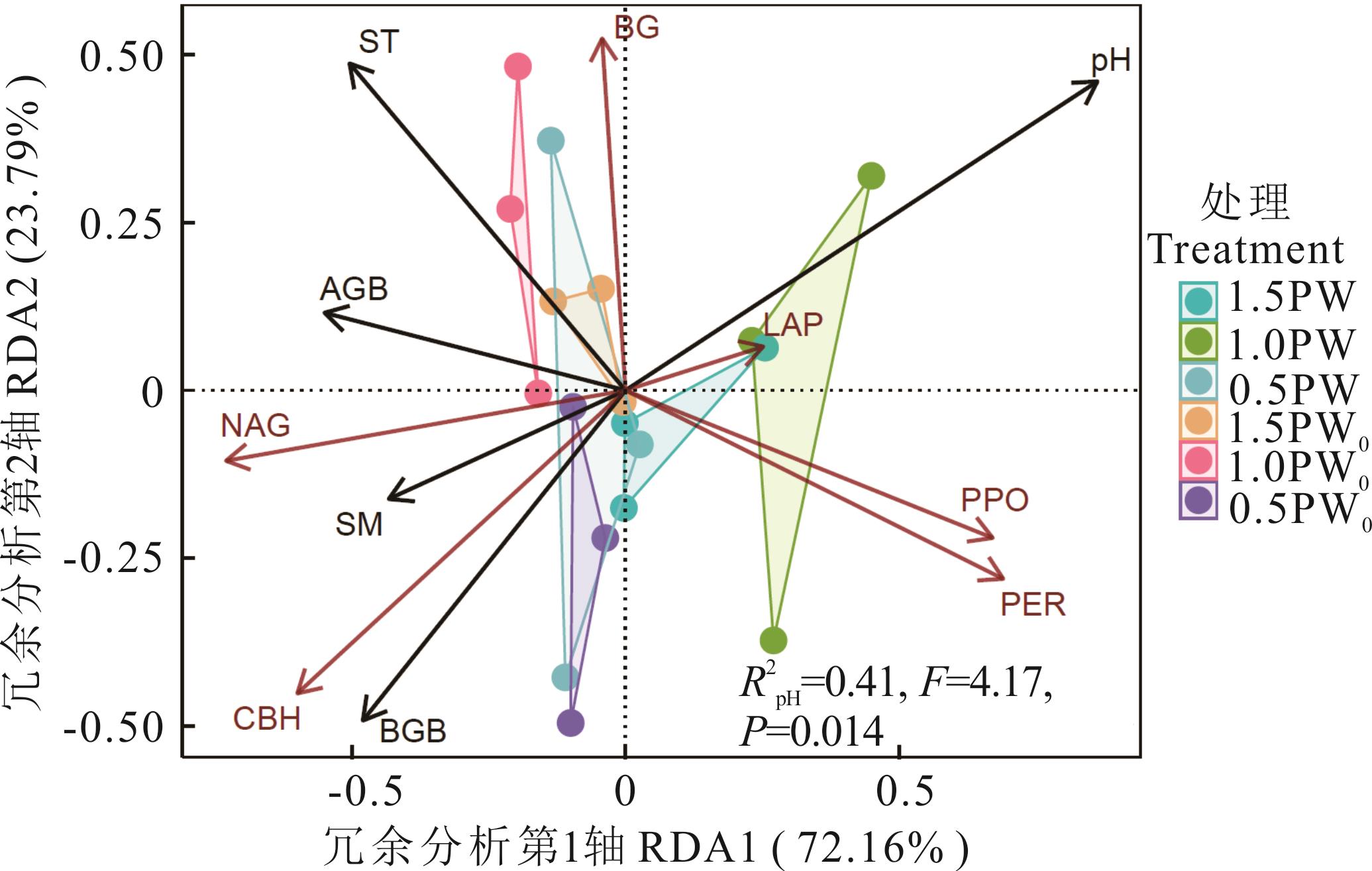
Fig.5 Redundancy analysis of soil enzyme activities and key factors

Fig.6 Correlations among vegetation characteristics, soil physicochemical properties, and soil enzyme activities
| [1] | Qiu J. Double threat for Tibet. Nature, 2014, 512(7514): 240-241. |
| [2] | Yang Y X, Hu Z Y, Lu F Q, et al. Progress of recent 60 years’climate change and its environmental impacts on the Qinghai-Xizang Plateau. Plateau Meteorology, 2022, 41(1): 1-10. |
| 杨耀先, 胡泽勇, 路富全, 等. 青藏高原近60年来气候变化及其环境影响研究进展. 高原气象, 2022, 41(1): 1-10. | |
| [3] | Wang Y F, Lv W W, Xue K, et al. Grassland changes and adaptive management on the Qinghai-Tibetan Plateau. Nature Reviews Earth & Environment, 2022, 3(10): 668-683. |
| [4] | Sardans J, Peñuelas J, Estiarte M. Changes in soil enzymes related to C and N cycle and in soil C and N content under prolonged warming and drought in a Mediterranean shrubland. Applied Soil Ecology, 2008, 39(2): 223-235. |
| [5] | Jiang M H, Ni M Y, Zhou J C, et al. Effects of warming and precipitation reduction on soil enzyme activity in a young Cunninghamia lanceolata plantation.Chinese Journal of Ecology, 2018, 37(11): 3210-3219. |
| 江淼华, 倪梦颖, 周嘉聪, 等. 增温和降雨减少对杉木幼林土壤酶活性的影响. 生态学杂志, 2018, 37(11): 3210-3219. | |
| [6] | Blagodatskaya E, Kuzyakov Y. Active microorganisms in soil: critical review of estimation criteria and approaches. Soil Biology and Biochemistry, 2013, 67: 192-211. |
| [7] | Xu M P, Ren C J, Zhang W, et al. Responses mechanism of C∶N∶P stoichiometry of soil microbial biomass and soil enzymes to climate change. Chinese Journal of Applied Ecology, 2018, 29(7): 2445-2454. |
| 许淼平, 任成杰, 张伟, 等. 土壤微生物生物量碳氮磷与土壤酶化学计量对气候变化的响应机制. 应用生态学报, 2018, 29(7): 2445-2454. | |
| [8] | Xiao W, Chen X, Jing X, et al. A meta-analysis of soil extracellular enzyme activities in response to global change. Soil Biology and Biochemistry, 2018, 123: 21-32. |
| [9] | Wang H H, Huang W D, He Y Z, et al. Effects of short-term warming and precipitation reduction on soil microbial biomass carbon, nitrogen and enzyme activity in sandy grassland. Journal of Desert Research, 2022, 42(3): 274-281. |
| 王怀海, 黄文达, 何远政, 等. 短期增温和降水减少对沙质草地土壤微生物量碳氮和酶活性的影响. 中国沙漠, 2022, 42(3): 274-281. | |
| [10] | Steinweg J M, Dukes J S, Paul E A, et al. Microbial responses to multi-factor climate change: effects on soil enzymes. Frontiers in Microbiology, 2013, 4: 146. |
| [11] | Li J W. Responses and driving mechanisms of terrestrial nutrient stoichiometric characteristics under precipitation change. Beijing: University of Chinese Academy of Sciences, 2022. |
| 李继伟. 降水变化下植被生态系统养分计量特征的响应规律及其驱动机制. 北京: 中国科学院大学, 2022. | |
| [12] | Xu Z W, Yu G R, Zhang X Y, et al. Soil enzyme activity and stoichiometry in forest ecosystems along the North-South Transect in eastern China (NSTEC). Soil Biology and Biochemistry, 2017, 104: 152-163. |
| [13] | Liu X F, Tian Y, Heinzle J, et al. Long-term soil warming decreases soil microbial necromass carbon by adversely affecting its production and decomposition. Global Change Biology, 2024, 30(6): e17379. |
| [14] | Jing X, Wang Y H, Chung H, et al. No temperature acclimation of soil extracellular enzymes to experimental warming in an alpine grassland ecosystem on the Tibetan Plateau. Biogeochemistry, 2014, 117(1): 39-54. |
| [15] | Sinsabaugh R L. Phenol oxidase, peroxidase and organic matter dynamics of soil. Soil Biology and Biochemistry, 2010, 42(3): 391-404. |
| [16] | Liu M R, Liu S T, Ma C Y, et al. Research progress of the responses of grassland plants and soil to the variation of temperature and precipitation. Chinese Journal of Ecology, 2024, 43(12): 3787-3796. |
| 刘明蕊, 刘世婷, 马春燕, 等. 草地植物和土壤对温度和降水变化的响应研究进展. 生态学杂志, 2024, 43(12): 3787-3796. | |
| [17] | Dai J H, Wu P F, Tang S S, et al. Effects of altered precipitation on soil nematode communities in an alpine meadow. Acta Ecologica Sinica, 2023, 43(22): 9371-9383. |
| 代江慧, 吴鹏飞, 唐思思, 等. 降水变化对高寒草甸土壤线虫群落的影响. 生态学报, 2023, 43(22): 9371-9383. | |
| [18] | Li H Q, Zhang F W, Li J X, et al. Differential responses of CO2 and latent heat fluxes to climatic anomalies on two alpine grasslands on the northeastern Qinghai-Tibetan Plateau. Science of the Total Environment, 2023, 900: 165863. |
| [19] | Wang Y, Sun J, Ye C C, et al. Climatic factors drive the aboveground ecosystem functions of alpine grassland via soil microbial biomass nitrogen on the Qingzang Plateau. Chinese Journal of Plant Ecology, 2021, 45(5): 434-443. |
| 王毅, 孙建, 叶冲冲, 等. 气候因子通过土壤微生物生物量氮促进青藏高原高寒草地地上生态系统功能. 植物生态学报, 2021, 45(5): 434-443. | |
| [20] | Gang C C, Wang Z Q, Yang Y, et al. The NPP spatiotemporal variation of global grassland ecosystems in response to climate change over the past 100 years. Acta Prataculturae Sinica, 2016, 25(11): 1-14. |
| 刚成诚, 王钊齐, 杨悦, 等. 近百年全球草地生态系统净初级生产力时空动态对气候变化的响应. 草业学报, 2016, 25(11): 1-14. | |
| [21] | Yang Y H, Mohammat A, Feng J M, et al. Storage, patterns and environmental controls of soil organic carbon in China. Biogeochemistry, 2007, 84(2): 131-141. |
| [22] | Yang Y H, Fang J Y, Tang Y H, et al. Storage, patterns and controls of soil organic carbon in the Tibetan grasslands. Global Change Biology, 2008, 14(7): 1592-1599. |
| [23] | Wang X, Zhong Z K, Jian J N, et al. Effects of simulated warming and increased precipitation on soil extracellular enzyme activity and enzymatic stoichiometry of abandoned grassland. Environmental Science, 2022, 43(5): 2812-2821. |
| 王兴, 钟泽坤, 简俊楠, 等. 模拟增温和降雨增加对撂荒草地土壤胞外酶活性及计量特征的影响. 环境科学, 2022, 43(5): 2812-2821. | |
| [24] | Zhang F W, Li H Q, Song C G, et al. Responses and linkages of soil microbes, enzyme activities, and organic carbon pools to nitrogen addition and precipitation change of an alpine meadow. Scientia Sinica Vitae, 2025, 55(9): 1929-1942. |
| 张法伟, 李红琴, 宋成刚, 等. 高寒草甸土壤微生物与酶活性及有机碳库对氮添加和降水改变的关联响应. 中国科学: 生命科学, 2025, 55(9): 1929-1942. | |
| [25] | Chen Y H, Xie Z Q, Xue L P. Process optimization for measurements of soil and plant samples with carbon/nitrogen element analyzer. Modern Chemical Industry, 2016, 36(4): 185-187, 189. |
| 陈雅涵, 谢宗强, 薛丽萍. 碳氮元素分析仪测试土壤与植物样品的流程优化. 现代化工, 2016, 36(4): 185-187, 189. | |
| [26] | Bao S D. Agrochemical analysis of soil. Beijing: China Agriculture Press, 2000. |
| 鲍士旦. 土壤农化分析. 北京: 中国农业出版社, 2000. | |
| [27] | Duan A L, Han Z X, Huang Y, et al. Problems and solutions for determination of ammonium nitrogen in soil by the method of indophenol blue colorimetry. Contemporary Chemical Industry, 2021, 50(12): 2861-2864. |
| 端爱玲, 韩张雄, 黄艳, 等. 靛酚蓝比色法测定土壤中铵态氮注意事项. 当代化工, 2021, 50(12): 2861-2864. | |
| [28] | Song G, Sun B, Jiao J Y. Comparison between ultraviolet spectrophotometry and other methods in determination of soil nitrate-N. Acta Pedologica Sinica, 2007, 44(2): 288-293. |
| 宋歌, 孙波, 教剑英. 测定土壤硝态氮的紫外分光光度法与其他方法的比较. 土壤学报, 2007, 44(2): 288-293. | |
| [29] | Deng Z H, Chen Z J, Han S J, et al. The impact of nitrogen application on the stoichiometry of soil and microorganisms in secondary forests of Changbai Mountain. Journal of Forest and Environment, 2025, 45(1): 20-30. |
| 邓子豪, 陈志杰, 韩士杰, 等. 施氮对长白山次生林土壤与微生物化学计量比的影响. 森林与环境学报, 2025, 45(1): 20-30. | |
| [30] | Deforest J L. The influence of time, storage temperature, and substrate age on potential soil enzyme activity in acidic forest soils using MUB-linked substrates and L-DOPA. Soil Biology and Biochemistry, 2009, 41(6): 1180-1186. |
| [31] | Ma K P, Huang J H, Yu S L, et al. Plant community diversity in Dongling mountain, Beijing, China: Ⅱ. Species richness, evenness and species diversities. Acta Ecologica Sinica, 1995, 15(3): 268-277. |
| 马克平, 黄建辉, 于顺利, 等. 北京东灵山地区植物群落多样性的研究Ⅱ丰富度、均匀度和物种多样性指数. 生态学报, 1995, 15(3): 268-277. | |
| [32] | He M Y, Zhong Y Q W, Zhao F Z, et al. Research progress in the response of soil microbial traits to warming and their integration into carbon cycle models. Acta Agrestia Sinica, 2026, 34(3): 745-760. |
| 何梦月, 钟杨权威, 赵发珠, 等. 土壤微生物性状对增温的响应及其在碳循环模型中的应用研究进展. 草地学报, 2026, 34(3): 745-760. | |
| [33] | Xu W F, Yuan W P. Responses of microbial biomass carbon and nitrogen to experimental warming: A Meta-analysis. Soil Biology and Biochemistry, 2017, 115: 265-274. |
| [34] | Li S C, Tang S M, Chen H Y, et al. Soil nitrogen availability drives the response of soil microbial biomass to warming. Science of the Total Environment, 2024, 917: 170505. |
| [35] | Xu G, Long Z J, Ren P, et al. Differential responses of soil hydrolytic and oxidative enzyme activities to the natural forest conversion. Science of the Total Environment, 2020, 716: 136414. |
| [36] | Brockett B F T, Prescott C E, Grayston S J. Soil moisture is the major factor influencing microbial community structure and enzyme activities across seven biogeoclimatic zones in western Canada. Soil Biology and Biochemistry, 2012, 44(1): 9-20. |
| [37] | Chen J, Luo Y Q, García P P, et al. Differential responses of carbon-degrading enzyme activities to warming: Implications for soil respiration. Global Change Biology, 2018, 24(10): 4816-4826. |
| [38] | Kang S C, Xu Y W, You Q L, et al. Review of climate and cryospheric change in the Tibetan Plateau. Environmental Research Letters, 2010, 5(1): 1-5. |
| [39] | Gallo M, Amonette R, Lauber C, et al. Microbial community structure and oxidative enzyme activity in nitrogen-amended north temperate forest soils. Microbial Ecology, 2004, 48(2): 218-229. |
| [40] | Sinsabaugh R L, Carreiro M M, Repert D A. Allocation of extracellular enzymatic activity in relation to litter composition, N deposition, and mass loss. Biogeochemistry, 2002, 60(1): 1-24. |
| [41] | Liu X C, Zhang S T. Nitrogen addition shapes soil enzyme activity patterns by changing pH rather than the composition of the plant and microbial communities in an alpine meadow soil. Plant and Soil, 2019, 440(1/2): 11-24. |
| [42] | Zhalnina K, Dias R, de Quadros P D, et al. Soil pH determines microbial diversity and composition in the park grass experiment. Microbial Ecology, 2015, 69(2): 395-406. |
| [43] | Duan C W, Li X L, Li C Y, et al. Positive effects of fungal β diversity on soil multifunctionality mediated by pH in the natural restoration succession stages of alpine meadow patches. Ecological Indicators, 2023, 148: 110122. |
| [44] | Wang X D, Wu W N, Ao G K L, et al. Minor effects of warming on soil microbial diversity, richness and community structure. Global Change Biology, 2025, 31(3): e70104. |
| [45] | Wu Q C, Chen Y, Dou X H, et al. Microbial fertilizers improve soil quality and crop yield in coastal saline soils by regulating soil bacterial and fungal community structure. Science of the Total Environment, 2024, 949: 175127. |
| [46] | Shen X, Yang F, Xiao C W, et al. Increased contribution of root exudates to soil carbon input during grassland degradation. Soil Biology and Biochemistry, 2020, 146: 107817. |
| [1] | Jia-bao ZHANG. Harnessing soil biotic potential to enrich soil carbon and ecological functionality of cultivated soil [J]. Acta Prataculturae Sinica, 2026, 35(9): 1-7. |
| [2] | Yi-xin SONG, Ming-yuan LI, Ya-sheng MAIRIYANGU, Ji-lian WANG. The community structure and functional diversity of rhizosphere soil fungi of three plant species in the alpine grassland of Xinjiang [J]. Acta Prataculturae Sinica, 2026, 35(2): 167-178. |
| [3] | Zhe WANG, Jing WANG, Yao-wen XIE, Hui-fang ZHAO, Rui-xiang XIAO, Cai-wen-qiu-zang ZONGSA. Spatio-temporal variation of grassland above-ground biomass and its response to climate change in the Three-River Source region [J]. Acta Prataculturae Sinica, 2026, 35(1): 1-12. |
| [4] | Ning ZHANG, Jin-niu WANG, Dong-liang LUO, Lin ZHANG, Bo XU, Yan WU. Effects of seasonal snow cover thickness on biomass allocation of four dominant late flowering plants in an alpine meadow [J]. Acta Prataculturae Sinica, 2025, 34(2): 67-80. |
| [5] | Hai-xia DUAN, Qian SHI, Sheng-ping KANG, Hai-qing GOU, Chong-liang LUO, You-cai XIONG. Advances in research on the interactions among arbuscular mycorrhizal fungi, rhizobia, and plants [J]. Acta Prataculturae Sinica, 2024, 33(5): 166-182. |
| [6] | Zhi-yuan YOU, Shu-juan MA, Chang-ting WANG, Lu-ming DING, Xiao-yan SONG, Gao-fei YIN, Jun MAO. Using the model MaxEnt to predict plant distribution patterns of different functional groups in the alpine meadow ecosystem on Sichuan-Yunnan Plateau [J]. Acta Prataculturae Sinica, 2024, 33(3): 1-12. |
| [7] | Hai-wang YUE, Jian-wei WEI, Guang-cai WANG, Peng-cheng LIU, Shu-ping CHEN, Jun-zhou BU. Comprehensive evaluation of silage maize hybrids in the Huanghuaihai plain based on mega-environments delineated using envirotyping techniques [J]. Acta Prataculturae Sinica, 2024, 33(3): 120-138. |
| [8] | Jing XING, Wen-qiang FAN, Jia-ni WANG, Feng-ling SHI. Rhizosphere bacterial diversity and the effects of soil sterilization on the growth of two varieties of Medicago ruthenica under drought stress [J]. Acta Prataculturae Sinica, 2024, 33(12): 147-159. |
| [9] | Peng WANG, Zheng JIN, Ting YU, Kang-qiang QIN, Xin-ya SANG, Jian-ping TAO, Wei-xue LUO. Prediction of the potential distribution of Curcuma in China under current and future climate scenarios [J]. Acta Prataculturae Sinica, 2024, 33(10): 14-27. |
| [10] | Jin GUAN, Yi-di GUO, Ling-yun LIU, Shu-xia YIN, Ke TENG. An efficient protocol for Zoysia japonica mesophyll protoplast isolation and transformation, and its application in subcellular localization and protein interaction analysis [J]. Acta Prataculturae Sinica, 2023, 32(7): 61-71. |
| [11] | Zi-jing LI, Cui-ping GAO, Zhong-wu WANG, Guo-dong HAN. Research status and suggestions for grassland carbon sequestration and emission reduction in China [J]. Acta Prataculturae Sinica, 2023, 32(2): 191-200. |
| [12] | Ce YANG, Yu-xue ZHANG, He ZHANG, Chun-yan ZHENG, Feng ZHU. Recent advances in understanding the ecosystem functioning of diverse forage mixtures [J]. Acta Prataculturae Sinica, 2022, 31(9): 206-219. |
| [13] | Ze-dong ZHOU, Hui-ling MA, Xu HAN, Yuan-heng LI, Xi-liang LI, Kun-na LI. Responses of photosynthetic characteristics of Leymus chinensis in temperate typical steppe to component factors of simulated grazing [J]. Acta Prataculturae Sinica, 2022, 31(8): 81-89. |
| [14] | Jie BAI, Zhen-feng ZANG, Cong LIU, Kan-zhuo ZAN, Ming-xiu LONG, Ke-zhen WANG, Yang QU, Shu-bin HE. Lipid peroxidation and carbon and nitrogen characteristics in leaves and roots of alfalfa (Medicago sativa) in response to water and nitrogen addition [J]. Acta Prataculturae Sinica, 2022, 31(2): 213-220. |
| [15] | Xiao-min FAN, Xin JING, Bo-wen XIAO, Xiao-liang MA, Jin-sheng HE. Climate and land-use change jointly determine the spatial-temporal changes of ecosystem services in Hainan and Haibei Tibetan Autonomous Prefectures, Qinghai Province [J]. Acta Prataculturae Sinica, 2022, 31(12): 17-30. |
| Viewed | ||||||
|
Full text |
|
|||||
|
Abstract |
|
|||||
