
ISSN 1004-5759 CN 62-1105/S
Acta Prataculturae Sinica ›› 2026, Vol. 35 ›› Issue (2): 195-207.DOI: 10.11686/cyxb2025190
Previous Articles Next Articles
Zhao-ming WANG1( ), Li-na ZHENG1, Yue-hua ZHANG1, Wei ZHAO1, Xiang CHEN1,2, Zhen-yu JIA1()
Received:2025-05-09
Revised:2025-06-11
Online:2026-02-20
Published:2025-12-24
Contact:
Zhen-yu JIA
Zhao-ming WANG, Li-na ZHENG, Yue-hua ZHANG, Wei ZHAO, Xiang CHEN, Zhen-yu JIA. Bacterial community assembly in the rhizosphere and endosphere of different perennial alfalfa varieties with low fall dormancy rates[J]. Acta Prataculturae Sinica, 2026, 35(2): 195-207.
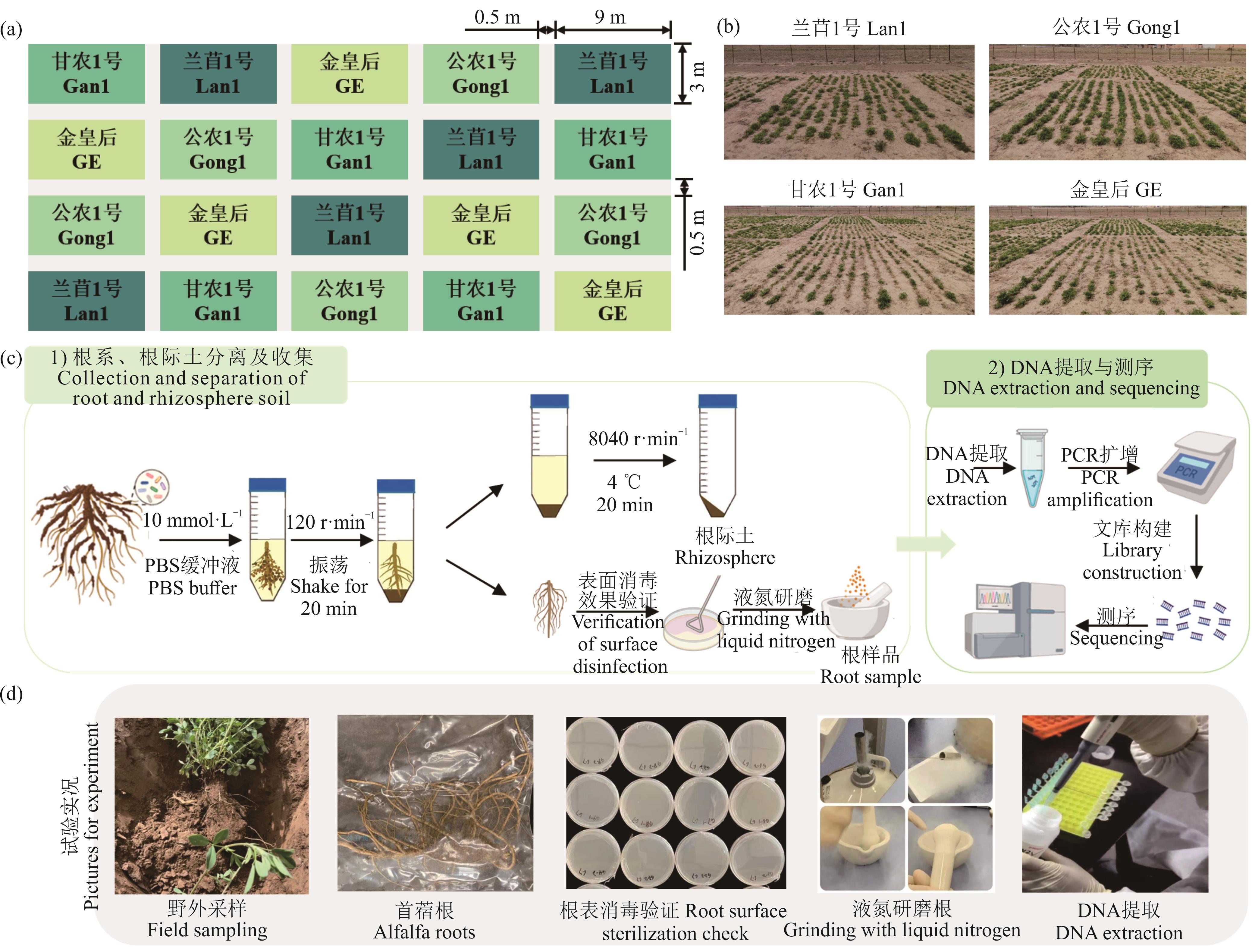
Fig.1 Field experiment setup (a, b) and sample collection and processing (c, d) in Gannan, Gansu Province

Fig.2 Differences in rhizosphere and endosphere microbial richness (a, b, c) and phylum level species composition (d) among different alfalfa varieties
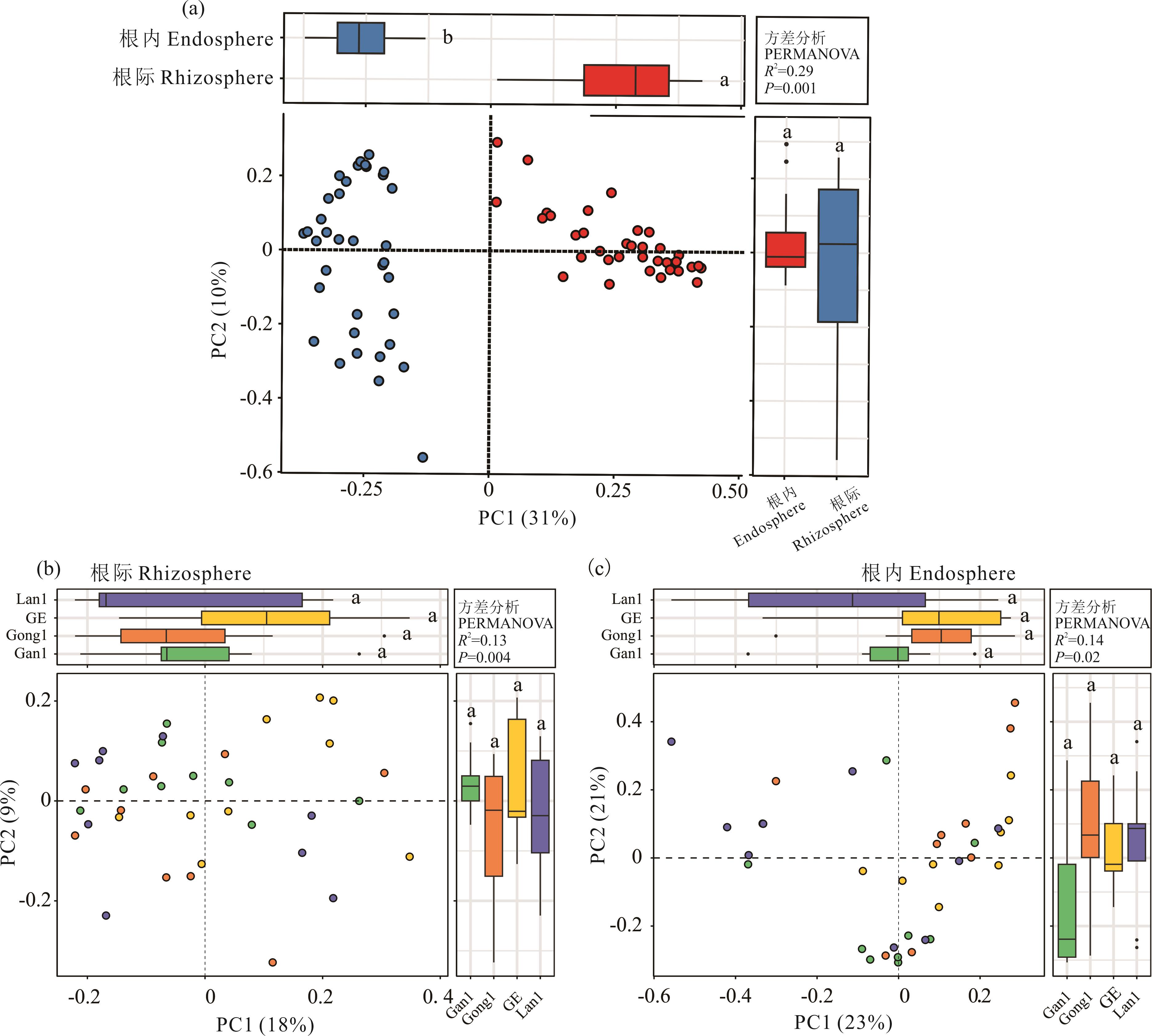
Fig. 3 Beta diversity of rhizosphere and endophytic microorganisms in different alfalfa varieties

Fig.4 Number of microorganisms with significant differences in rhizosphere and endosphere abundance among alfalfa varieties and the taxonomy of microorganisms enriched in endosphere
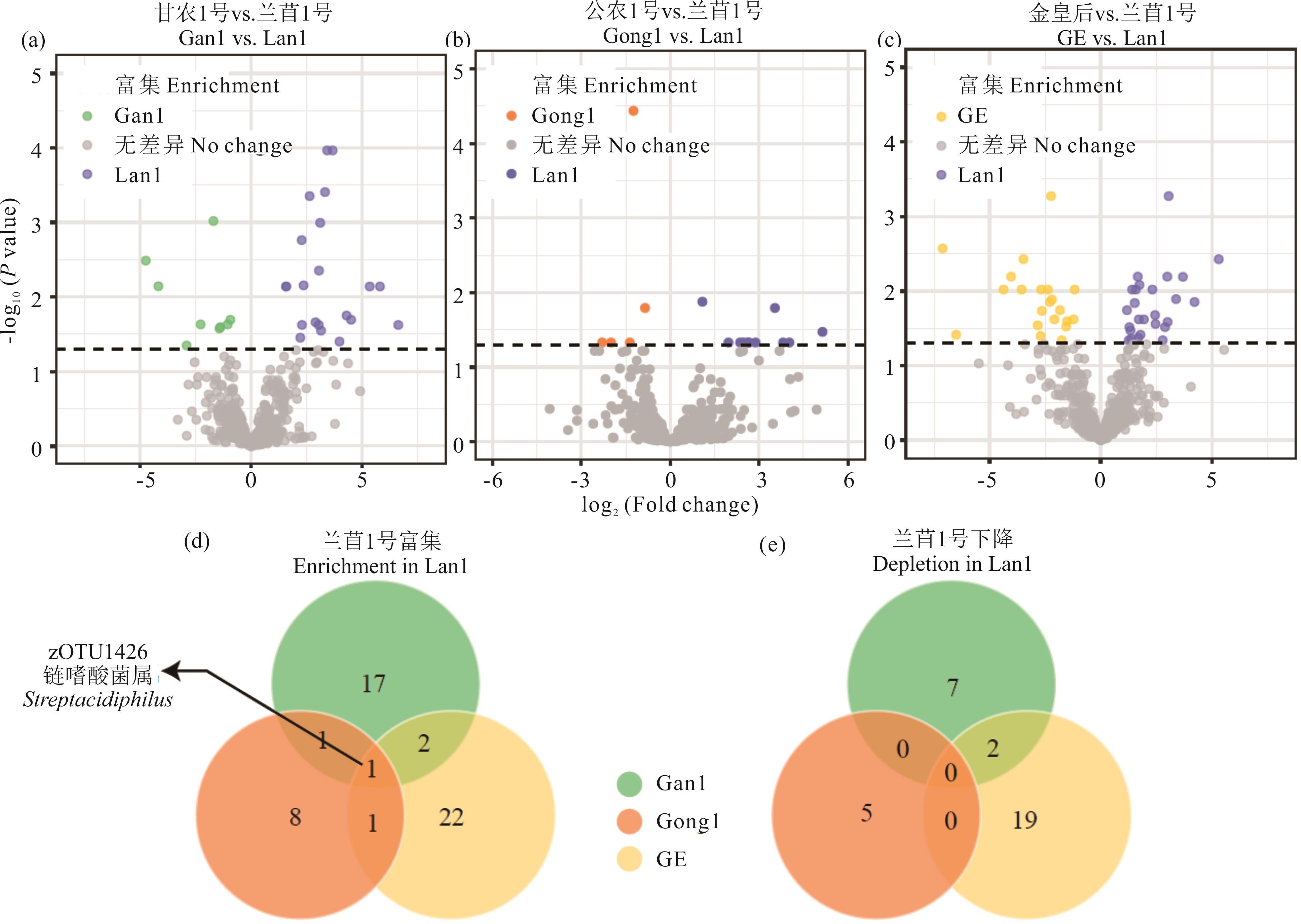
Fig.5 Differential analysis of rhizosphere microorganisms between Lanmu No.1 (Lan1) and other varieties

Fig.6 The topological structures of the interaction network of rhizosphere and endophytic bacteria in different varieties

Fig.7 Community assembly processes of rhizosphere and endosphere bacteria in different alfalfa varieties
| [1] | Shi S, Nuccio E E, Shi Z J, et al. The interconnected rhizosphere: High network complexity dominates rhizosphere assemblages. Ecology Letters, 2016, 19(8): 926-936. |
| [2] | Ruan Y, Wang D S, Guo S W, et al. Fingerprints of carbon metabolisms of gourd as rootstock and watermelon as scion in rhizosphere of different types of soils-characteristics and differences. Acta Pedologica Sinica, 2018, 55(4): 967-976. |
| 阮杨, 王东升, 郭世伟, 等. 葫芦与西瓜砧穗在不同土壤上根际碳代谢指纹特征与差异. 土壤学报, 2018, 55(4): 967-976. | |
| [3] | Kuzyakov Y, Razavi B S. Rhizosphere size and shape: Temporal dynamics and spatial stationarity. Soil Biology and Biochemistry, 2019, 135(9): 343-360. |
| [4] | Nuccio E E, Starr E, Karaoz U, et al. Niche differentiation is spatially and temporally regulated in the rhizosphere. The ISME Journal, 2020, 14(4): 999-1014. |
| [5] | Ravanbakhsh M, Kowalchuk G A, Jousset A. Root-associated microorganisms reprogram plant life history along the growth–stress resistance tradeoff. The ISME Journal, 2019, 13(12): 3093-3101. |
| [6] | Edwards J, Johnson C, Santos-Medellín C, et al. Structure, variation, and assembly of the root-associated microbiomes of rice. Proceedings of the National Academy of Sciences, 2015, 112(8): 911-920. |
| [7] | Ruan Y, Wang T T, Guo S W, et al. Plant grafting shapes complexity and co-occurrence of rhizobacterial assemblages. Microbial Ecology, 2020, 80(8): 643-655. |
| [8] | Ruan Y, Wang T T, Guo S W, et al. Chimeric plants favor asynchrony of conditionally rare bacterial species facilitating functional complementarity in rhizosphere. Biology and Fertility of Soils, 2022, 58(4): 459-470. |
| [9] | Li B, Li Y Y, Wu H M, et al. Root exudates drive interspecific facilitation by enhancing nodulation and n2 fixation. Proceedings of the National Academy of Sciences, 2016, 113(23): 6496-6501. |
| [10] | Liu Q, Dai H C, Cheng H, et al. Rhizosphere-associated bacterial and fungal communities of two maize hybrids under increased nitrogen fertilization. Frontiers in Plant Science, 2025, 16: 1549995. |
| [11] | Hou M, Leng C, Zhu J, et al. Alpine and subalpine plant microbiome mediated plants adapt to the cold environment: A systematic review. Environmental Microbiome, 2024, 19(1): 82. |
| [12] | Lan H, Gorfer M, Otgonsuren B, et al. Growth characteristics and freezing tolerance of ectomycorrhizal and saprotrophic fungi: responses to normal and freezing temperatures. Forests, 2025, 16(2): 191. |
| [13] | Zhou J Z, Ning D L. Stochastic community assembly: Does it matter in microbial ecology? Microbiology and Molecular Biology Reviews, 2017, 81(4): 1-32. |
| [14] | Sasse J, Martinoia E, Northen T. Feed your friends: Do plant exudates shape the root microbiome? Trends in Plant Science, 2018, 23(1): 25-41. |
| [15] | Wang T T, Ruan Y, Xu Q C, et al. Effect of plant-derived microbial soil legacy in a grafting system—a turn for the better. Microbiome, 2024, 12(1): 234. |
| [16] | Li H, Wang J, Liu Q, et al. Effects of consecutive monoculture of sweet potato on soil bacterial community as determined by pyrosequencing. Journal of Basic Microbiology, 2019, 59(2): 181-191. |
| [17] | Edgar R C. Search and clustering orders of magnitude faster than blast. Bioinformatics, 2010, 26(19): 2460-2461. |
| [18] | Ruan Y, Ling N, Jiang S J, et al. Warming and altered precipitation independently and interactively suppress alpine soil microbial growth in a decadal-long experiment. eLife, 2024, 12: 1-17. |
| [19] | Kong Y L, Ling N, Xue C, et al. Long-term fertilization regimes change soil nitrification potential by impacting active autotrophic ammonia oxidizers and nitrite oxidizers as assessed by DNA stable isotope probing. Environmental Microbiology, 2019, 21(4): 1224-1240. |
| [20] | Langfelder P, Horvath S. WGCNA: An R package for weighted correlation network analysis. BMC Bioinformatics, 2008, 9(1): 559. |
| [21] | Yang X, Li X F, Xie G Q, et al. Experimental construction plan for network data mining based on igraph. Computer Knowledge and Technology, 2019, 15(21): 29-31. |
| 杨雄, 李晓芳, 谢光前, 等. 基于igraph的网络数据挖掘实验建设方案. 电脑知识与技术, 2019, 15(21): 29-31. | |
| [22] | Feng K, Zhang Z J, Cai W W, et al. Biodiversity and species competition regulate the resilience of microbial biofilm community. Molecular Ecology, 2017, 26(21): 6170-6182. |
| [23] | Feng Y, Chen R, Stegen J C, et al. Two key features influencing community assembly processes at regional scale: Initial state and degree of change in environmental conditions. Molecular Ecology, 2018, 27(24): 5238-5251. |
| [24] | Ling N, Song Y, Raza W, et al. The response of root-associated bacterial community to the grafting of watermelon. Plant and Soil, 2015, 391(1): 253-264. |
| [25] | Wang J, Jiang L B, Wu R L. Plant grafting: How genetic exchange promotes vascular reconnection. New Phytologist, 2017, 214(1): 56-65. |
| [26] | Gaion L A, Trevisan B L, Carvalho R F. Grafting in vegetable crops: A great technique for agriculture. International Journal of Vegetable Science, 2018, 24(1): 85-102. |
| [27] | Maynard D S, Crowther T W, Bradford M A. Competitive network determines the direction of the diversity-function relationship. Proceedings of the National Academy of Sciences, 2017, 114(43): 11464-11469. |
| [28] | Konopka A, Lindemann S, Fredrickson J. Dynamics in microbial communities: Unraveling mechanisms to identify principles. The ISME Journal, 2015, 9(7): 1488-1495. |
| [29] | Wei Z, Yang T, Friman V P, et al. Trophic network architecture of root-associated bacterial communities determines pathogen invasion and plant health. Nature Communications, 2015, 6(1): 8413. |
| [30] | van Elsas J D, Chiurazzi M, Mallon C A, et al. Microbial diversity determines the invasion of soil by a bacterial pathogen. Proceedings of the National Academy of Sciences, 2012, 109(4): 1159-1164. |
| [31] | Song Y, Zhu C, Raza W, et al. Coupling of the chemical niche and microbiome in the rhizosphere: Implications from watermelon grafting. Frontiers of Agricultural Science and Engineering, 2016, 3(3): 249-262. |
| [32] | Chen X, Wu J H, Yang F J, et al. New insight into the mechanism by which antifreeze peptides regulate the physiological function of Streptococcus thermophilus subjected to freezing stress. Journal of Advanced Research, 2023, 45(5): 127-140. |
| [33] | Berendsen R L, van Verk M C, Stringlis I A, et al. Unearthing the genomes of plant-beneficial Pseudomonas model strains WCS358, WCS 374 and WCS 417. BMC Genomics, 2015, 16(539): 1-23. |
| [34] | Chatterjee P, Samaddar S, Anandham R, et al. Beneficial soil bacterium Pseudomonas frederiksbergensis os261 augments salt tolerance and promotes red pepper plant growth. Frontiers in Plant Science, 2017, 8: 705. |
| [35] | Subramanian P, Kim K, Krishnamoorthy R, et al. Cold stress tolerance in psychrotolerant soil bacteria and their conferred chilling resistance in tomato (Solanum lycopersicum Mill.) under low temperatures. PLoS One, 2016, 11(8): e0161592. |
| [36] | Matteo C, Alessandra S D F, Stefania D, et al. Native soils with their microbiotas elicit a state of alert in tomato plants. New Phytologist, 2018, 220(4): 1296-1308. |
| [37] | Layeghifard M, Hwang D M, Guttman D S. Disentangling interactions in the microbiome: A network perspective. Trends in Microbiology, 2017, 25(3): 217-228. |
| [38] | Toju H, Okayasu K, Notaguchi M. Leaf-associated microbiomes of grafted tomato plants. Scientific Reports, 2019, 9(1): 1787. |
| [39] | Song Y, Ling N, Ma J H, et al. Grafting resulted in a distinct proteomic profile of watermelon root exudates relative to the un-grafted watermelon and the rootstock plant. Journal of Plant Growth Regulation, 2016, 35(3): 778-791. |
| [40] | Wagg C, Schlaeppi K, Banerjee S, et al. Fungal-bacterial diversity and microbiome complexity predict ecosystem functioning. Nature Communications, 2019, 10(1): 4841. |
| [41] | Peng G S, Wu J. Optimal network topology for structural robustness based on natural connectivity. Physica A: Statistical Mechanics and Its Applications, 2016, 443: 212-220. |
| [42] | Hassan S, Mathesius U. The role of flavonoids in root-rhizosphere signalling: Opportunities and challenges for improving plant-microbe interactions. Journal of Experimental Botany, 2012, 63(9): 3429-3444. |
| [43] | He D X, Singh S K, Peng L, et al. Flavonoid-attracted Aeromonas sp. from the Arabidopsis root microbiome enhances plant dehydration resistance. The ISME Journal, 2022, 16(11): 2622-2632. |
| [44] | Attia S, Russel J, Mortensen M S, et al. Unexpected diversity among small-scale sample replicates of defined plant root compartments. The ISME Journal, 2022, 16(4): 997-1003. |
| [45] | Fukami T. Historical contingency in community assembly: Integrating niches, species pools, and priority effects. Annual Review of Ecology Evolution and Systematics, 2015, 46(1): 1-23. |
| [46] | Chase J M. Community assembly: When should history matter? Oecologia, 2003, 136(4): 489-498. |
| [47] | Doornbos R F, Loon L C V, Bakker P A H M. Impact of root exudates and plant defense signaling on bacterial communities in the rhizosphere. A review. Agronomy for Sustainable Development, 2012, 32(1): 227-243. |
| [1] | Yi-xin SONG, Ming-yuan LI, Ya-sheng MAIRIYANGU, Ji-lian WANG. The community structure and functional diversity of rhizosphere soil fungi of three plant species in the alpine grassland of Xinjiang [J]. Acta Prataculturae Sinica, 2026, 35(2): 167-178. |
| [2] | Hong-yu MA, Xiao-guo ZHOU, Bao WANG, Yu-chuan SONG, Aikeremu·Abulatijiang, Shao-li JIANG, Jiu-zhou MIN, Hong-mei ZHAO, Jun-hui CHENG. Differences in soil microbial functional gene abundance between rhizosphere soils of Haloxylon ammodendron and Tamarix chinensis in the Junggar Desert [J]. Acta Prataculturae Sinica, 2025, 34(8): 109-122. |
| [3] | Shan-shan TANG, Min HU. Differences in enzyme activity and bacterial community structure in rhizosphere soil of four grass species [J]. Acta Prataculturae Sinica, 2025, 34(8): 99-108. |
| [4] | Ying WANG, Ming-yuan LI, Mairiyangu·Yasheng, Ji-lian WANG. Comparative study of rhizosphere soil fungal community structure among different plants in Tomur Peak, Xinjiang [J]. Acta Prataculturae Sinica, 2025, 34(7): 83-94. |
| [5] | Ruo-xuan LI, Sheng-zhi-can LI, Yi-tong CHEN, Yu-hao SUN, Pei-zhi YANG, Yan-nong CUI, Ming-xiu LONG, Shu-bin HE. Effects of different planting ratios of broomcorn millet (Panicum miliaceum) on ammonia-oxidizing and denitrifying microorganisms in rhizosphere soil of alfalfa (Medicago sativa) [J]. Acta Prataculturae Sinica, 2025, 34(6): 110-121. |
| [6] | Wen-hui DENG, Ke-chen SONG, Hao ZHANG, Si-yu GUAN, Jia-yi YONG, Hai-ying HU. Structure and diversity characteristics of the rhizosphere microbial community of dominant plants on the desert steppe under changing precipitation [J]. Acta Prataculturae Sinica, 2025, 34(5): 12-26. |
| [7] | Hui-yun TAO, Run-yan YANG, Yan-can LI, Ya-peng LIU, He-xing QI. Diversity of microorganisms in the rhizosphere soil of Kobresia humilis and their responses to environmental factors in the source region of the Yellow River [J]. Acta Prataculturae Sinica, 2025, 34(12): 16-32. |
| [8] | Ye-xin LYU, Mao YE, Jiao-rong QIAN, Wei-long CHEN, Jing CHE, Miao-miao LI, Guo-yan ZENG. Biodiversity and phylogenetic diversity of grasslands in the Habahe forest area of Xinjiang and analysis of the influencing factors [J]. Acta Prataculturae Sinica, 2025, 34(12): 50-61. |
| [9] | Chun-yan LI, Qian-jin WANG, Xin-he ZHOU, Wen-jing CAO, Meng-li ZHAO, Fang-bo YU. Effects of Burkholderia sp. SX9 inoculants on Trifolium repens growth and soil improvement [J]. Acta Prataculturae Sinica, 2025, 34(11): 53-65. |
| [10] | Sheng-ran HE, Xiao-jing LIU, Ya-jiao ZHAO, Xue WANG, Jing WANG. Effects of alfalfa/sweet sorghum intercropping on rhizosphere soil characteristics and microbial community characteristics [J]. Acta Prataculturae Sinica, 2024, 33(5): 92-105. |
| [11] | Yuan MA, Xiao-li WANG, Yu-shou MA, De-gang ZHANG. Effects of the degree of alpine meadow degradation on the rhizosphere soil fungal community and the ecological network of dominant species [J]. Acta Prataculturae Sinica, 2024, 33(2): 125-137. |
| [12] | Jing XING, Wen-qiang FAN, Jia-ni WANG, Feng-ling SHI. Rhizosphere bacterial diversity and the effects of soil sterilization on the growth of two varieties of Medicago ruthenica under drought stress [J]. Acta Prataculturae Sinica, 2024, 33(12): 147-159. |
| [13] | Xin-yi YANG, Fu-qiang YANG, Xu-jiao ZHOU, Ming-jun WANG, Hai-xia HUANG, Song-song LU, Xiao-wei ZHANG, Wei-bo DU, Xu-hu WANG, Qing TIAN, An ZHAO, Wan-peng HE, Xiao-lei ZHOU. Mechanism of herbaceous community assembly in a burned area of Picea asperata-Abies fargesii forest on the northeastern margin of the Qinghai-Tibetan Plateau [J]. Acta Prataculturae Sinica, 2023, 32(8): 40-47. |
| [14] | Dai-xiang XU, Jian-feng YANG, Hang SU, Jian-rong ZHAI, Cai QI, Long-gang ZHAO, Yan-jun GUO. Effect of the metabolites in rhizosphere soil on microbial communities of crop intercropping system [J]. Acta Prataculturae Sinica, 2023, 32(11): 65-80. |
| [15] | Yuan-yuan LI, Ting-ting XU, Zhe AI, Zhao-na ZHOU, Fei MA. Relationship between plant functional traits and rhizosphere bacterial community structure of two Caragana species [J]. Acta Prataculturae Sinica, 2022, 31(7): 38-49. |
| Viewed | ||||||
|
Full text |
|
|||||
|
Abstract |
|
|||||
