
ISSN 1004-5759 CN 62-1105/S
Acta Prataculturae Sinica ›› 2026, Vol. 35 ›› Issue (5): 175-184.DOI: 10.11686/cyxb2025236
Na-na LIU1,2( ), Yan-mei LIU1,2(), Hang-yu YANG3(), Yuan-qi ZHANG1,2, Kun LI1,2
Received:2025-06-16
Revised:2025-08-08
Online:2026-05-20
Published:2026-03-11
Contact:
Yan-mei LIU,Hang-yu YANG
Na-na LIU, Yan-mei LIU, Hang-yu YANG, Yuan-qi ZHANG, Kun LI. The degradation effects of soil glyphosate pesticide by plant crops[J]. Acta Prataculturae Sinica, 2026, 35(5): 175-184.
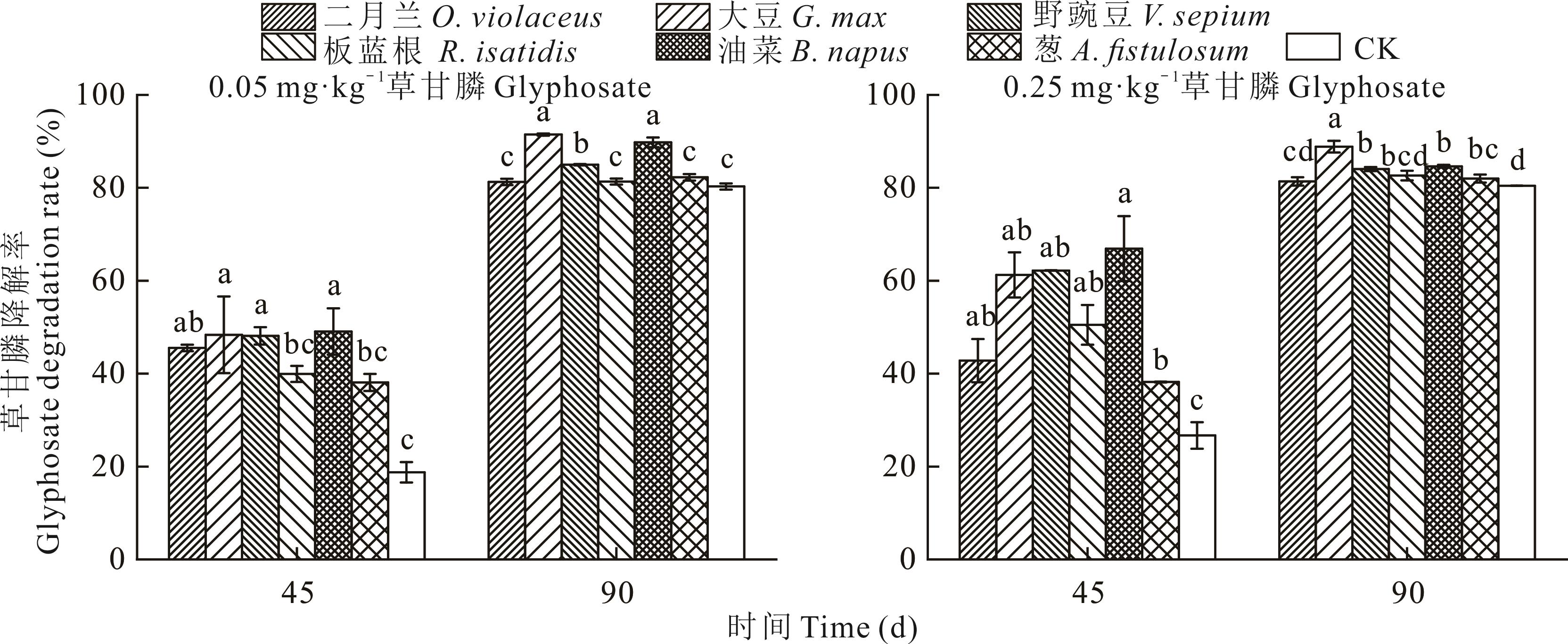
Fig.1 Degradation effects of plant crops on soil glyphosate
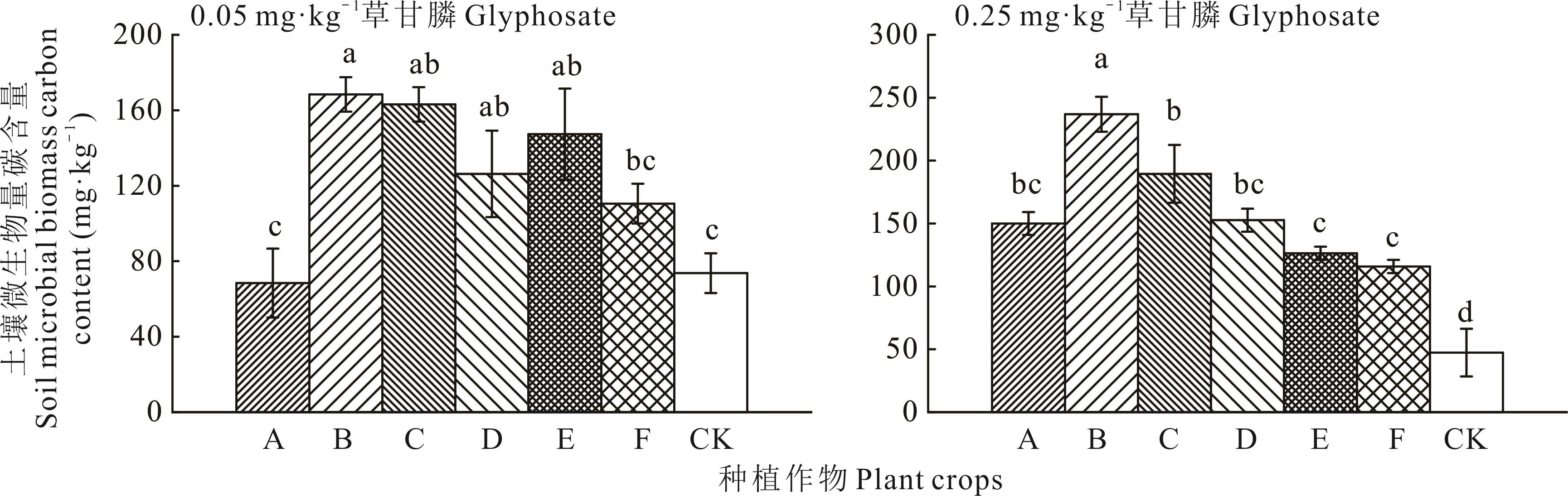
Fig.2 The effects of plant crops on microbial biomass carbon in glyphosate-residual soil
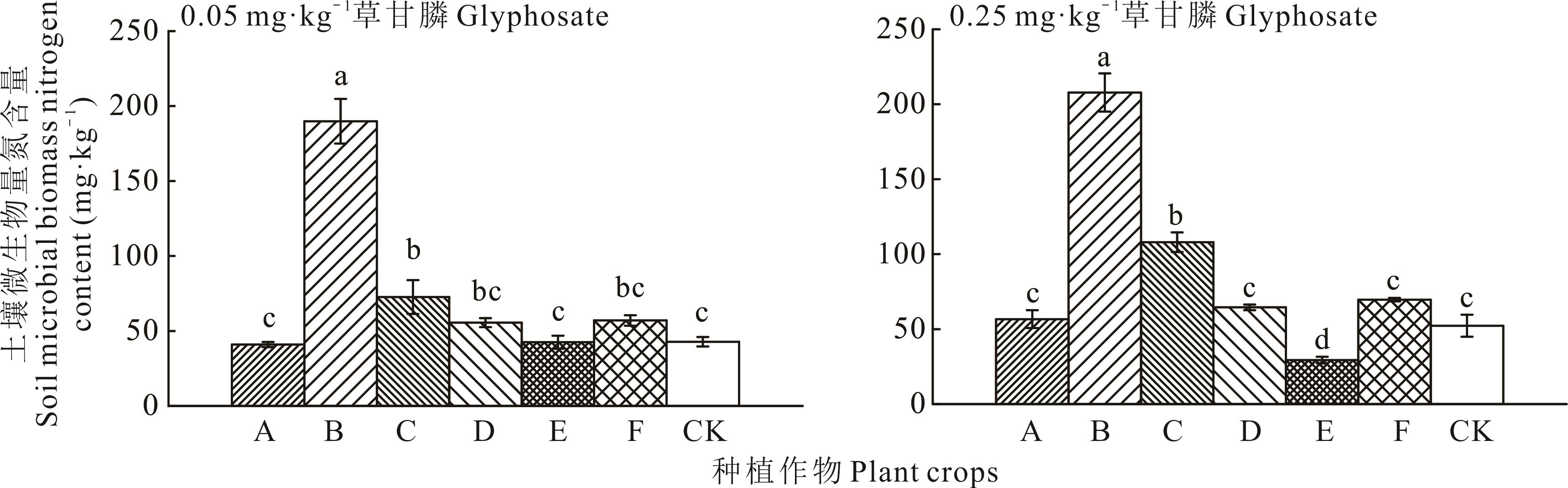
Fig.3 The effects of plant crops on microbial biomass nitrogen in glyphosate-residual soil
指标 Index | 变异来源 Source of variation | 平方和 Sum of squares | 自由度 Degree of freedom | 均方 Mean square | F值 F value |
|---|---|---|---|---|---|
土壤微生物量碳 Soil microbial biomass carbon | 植物类型Plant type | 64642.85 | 6 | 10773.81*** | 15.51 |
| 农药浓度Pesticide concentration | 4327.15 | 1 | 4327.15* | 6.23 | |
植物类型×农药浓度 Plant type×pesticide concentration | 28956.41 | 6 | 4826.07*** | 6.95 | |
土壤微生物量氮 Soil microbial biomass nitrogen | 植物类型Plant type | 113048.91 | 6 | 18841.49*** | 124.50 |
| 农药浓度Pesticide concentration | 1619.20 | 1 | 1619.20** | 10.70 | |
植物类型×农药浓度 Plant type×pesticide concentration | 1860.65 | 6 | 310.11ns | 2.05 |
Table 1 Multifactorial analysis of plant crops on soil microbial carbon and nitrogen after the degradation of glyphosate
指标 Index | 变异来源 Source of variation | 平方和 Sum of squares | 自由度 Degree of freedom | 均方 Mean square | F值 F value |
|---|---|---|---|---|---|
土壤微生物量碳 Soil microbial biomass carbon | 植物类型Plant type | 64642.85 | 6 | 10773.81*** | 15.51 |
| 农药浓度Pesticide concentration | 4327.15 | 1 | 4327.15* | 6.23 | |
植物类型×农药浓度 Plant type×pesticide concentration | 28956.41 | 6 | 4826.07*** | 6.95 | |
土壤微生物量氮 Soil microbial biomass nitrogen | 植物类型Plant type | 113048.91 | 6 | 18841.49*** | 124.50 |
| 农药浓度Pesticide concentration | 1619.20 | 1 | 1619.20** | 10.70 | |
植物类型×农药浓度 Plant type×pesticide concentration | 1860.65 | 6 | 310.11ns | 2.05 |
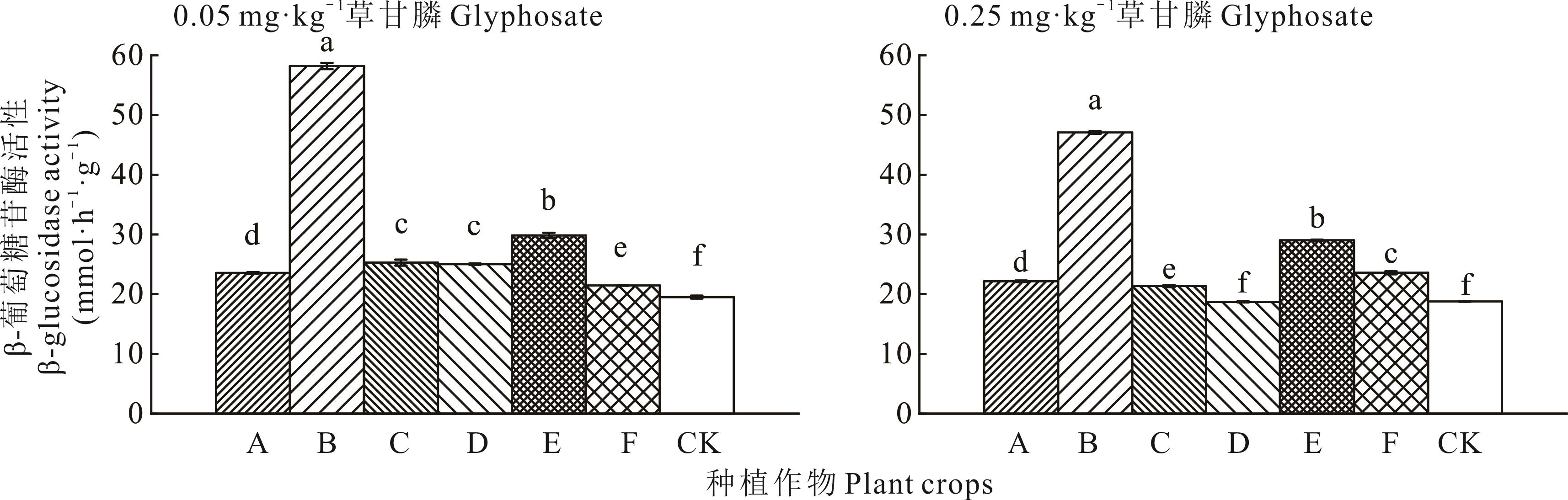
Fig.4 The effects of plant crops on β-glucosidase activity in glyphosate-residual soil
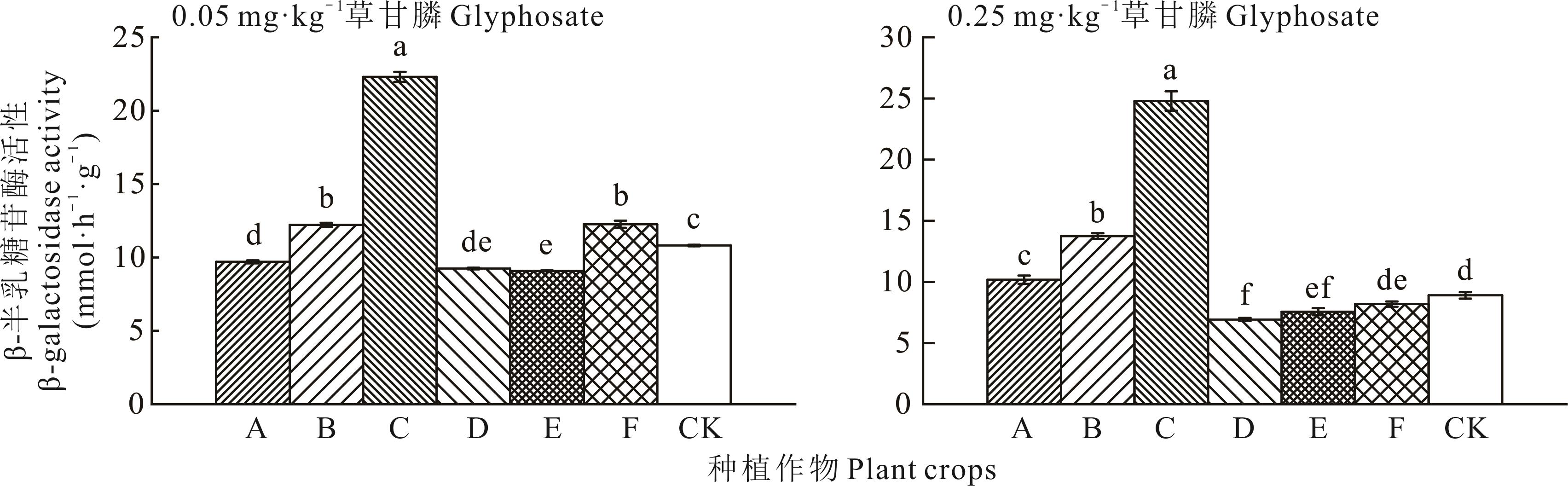
Fig.5 The effects of plant crops on the β-galactosidase activity in glyphosate-residual soil
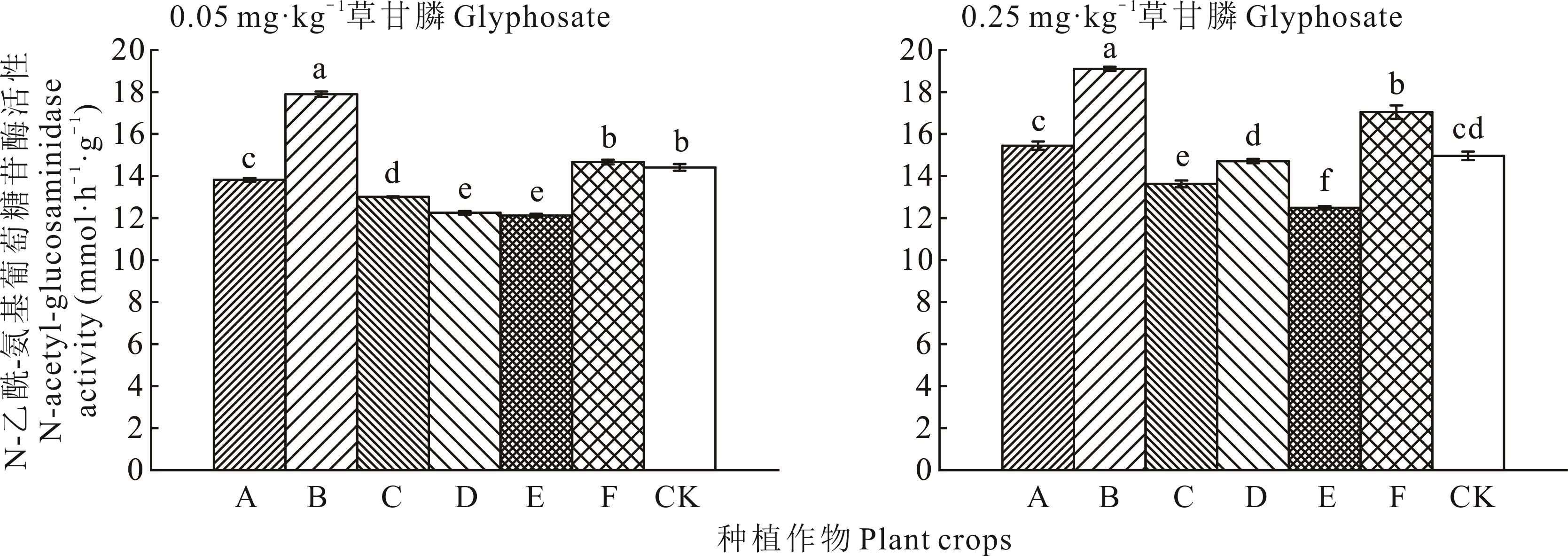
Fig.6 The effects of plant crops on the N-acetylglucosaminidase activity in glyphosate-residual soil
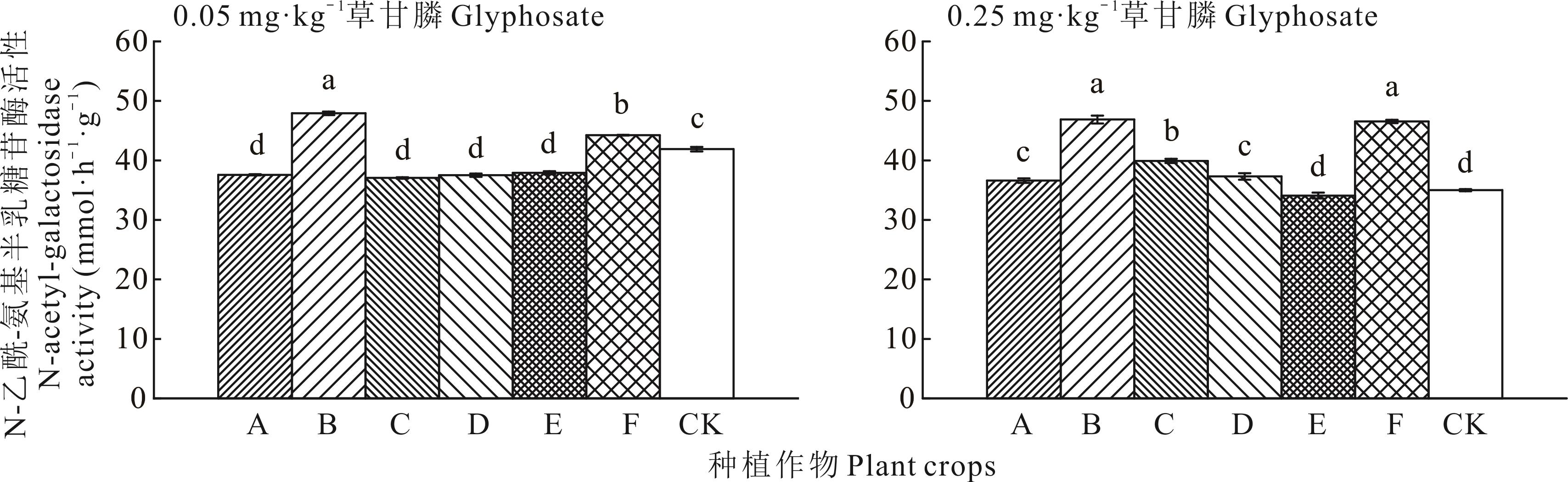
Fig.7 The effects of plant crops on the N-acetyl-galactosidase activity in glyphosate-residual soil

Fig.8 The effects of plant crops on the alkaline phosphatase activity in glyphosate-residual soil
| [1] | Wang B. Screening, identification and key substance analysis of glyphosate degrading bacteria. Changchun: Jilin Agricultural University, 2021. |
| 王冰. 草甘膦降解菌的筛选、鉴定及关键物质分析. 长春: 吉林农业大学, 2021. | |
| [2] | Maggi F, Cecilia D L, Tang F H M, et al. The global environmental hazard of glyphosate use. Science of the Total Environment, 2020, 717: 137-167. |
| [3] | Liu T, Jiang H Z, Zhang H S, et al. Research progress on animals toxicity of glyphosate. China Animal Husbandry & Veterinary Medicine, 2023, 50(7): 3026-3033. |
| 刘田, 江海圳, 张海森, 等. 草甘膦动物毒性的研究进展. 中国畜牧兽医, 2023, 50(7): 3026-3033. | |
| [4] | Zhang Y, Dai Q H, Yan Y J, et al. Research progress on the impact of glyphosate herbicide application on soil quality. Journal of Soil and Water Conservation, 2023, 37(4): 7-13. |
| 张友, 戴全厚, 严友进, 等. 施用草甘膦除草剂对土壤质量影响的研究进展. 水土保持学报, 2023, 37(4): 7-13. | |
| [5] | Tong M M, Gao W J, Jiao W T, et al. The uptake, translocation, metabolism and distribution of glyphosate in non-target tea plant (Camellia sinensis L.). Journal of Agricultural & Food Chemistry, 2017, 65(35): 7638-7646. |
| [6] | Hu L, He W X, Wang X D, et al. Effect of glyphosate on soil enzyme. Journal of Agro-Environment Science, 2009, 28(4): 680-685. |
| 呼蕾, 和文祥, 王旭东, 等. 草甘膦的土壤酶效应研究. 农业环境科学学报, 2009, 28(4): 680-685. | |
| [7] | Liu R J, Zhao Y, Wang Y H, et al. Research progress of organophosphorus pesticide residues status and removal methods. The Food Industry, 2019, 40(9): 299-302. |
| 刘仁杰, 赵悦, 王玉华, 等. 有机磷农药残留现状及去除方法的研究进展. 食品工业, 2019, 40(9): 299-302. | |
| [8] | Zuo J H. Comparative study on the value of atropine and pralidoxime in pre-hospital emergency treatment of organophosphorus pesticide poisoning (SAOPP). Cardiovascular Disease Electronic Journal of Integrated Traditional Chinese and Western Medicine, 2020, 8(16): 177-178. |
| 左继华. 对比研究阿托品、解磷定院前急救有机磷农药中毒(SAOPP)的价值. 中西医结合心血管病电子杂志, 2020, 8(16): 177-178. | |
| [9] | Tarazona J V, Court-Marques D, Tiramani M, et al. Glyphosate toxicity and carcinogenicity: a review of the scientific basis of the European Union assessment and its differences with IARC. Archives of Toxicology, 2017, 91(8): 2723-2743. |
| [10] | George J, Prasad S, Mahmood Z, et al. Studies on glyphosate-induced carcinogenicity in mouse skin: A proteomic approach. Journal of Proteomics, 2010, 73(5): 951-964. |
| [11] | Myers J P, Antoniou M N, Blumberg B, et al. Concerns over use of glyphosate-based herbicides and risks associated with exposures: a consensus statement. Environmental Health, 2016, 15(1): 19. |
| [12] | Chirakkara R A, Cameselle C, Reddy K R. Assessing the applicability of phytoremediation of soils with mixed organic and heavy metal contaminants. Reviews in Environmental Science and Bio-technology, 2016, 15(2): 299-326. |
| [13] | Cindy P, Martin P. The impact and toxicity of glyphosate and glyphosate-based herbicides on health and immunity. Journal of Immunotoxicology, 2020, 17(1): 163-174. |
| [14] | Roos A J D, Aaron B, Rusiecki J A, et al. Cancer incidence among glyphosate-exposed pesticide applicators in the agricultural health study. Environmental Health Perspectives, 2005, 113(1): 49-54. |
| [15] | Zhang B W, Li F P, Xu Y L. The improvement effects of 10 herbaceous plants on soil of stony mining spoils. Jiangsu Agricultural Sciences, 2018, 46(21): 286-290. |
| 张博文, 李富平, 许永利. 10种草本植物对石矿迹地土壤的改良效果. 江苏农业科学, 2018, 46(21): 286-290. | |
| [16] | Li Z J, Ma G R. The mechanism of phytoremediation of soil contaminated by organic pollutants. Chinese Journal of Soil Science, 2005, 36(3): 436-439. |
| 李兆君, 马国瑞. 有机污染物污染土壤环境的植物修复机理. 土壤通报, 2005, 36(3): 436-439. | |
| [17] | Wang J F, Xing S Z, Duan L Z, et al. Effects using hybrid sudan grass (Sorghum bicolor×S. sudanense) to remediate DDT and its main degradation product in contaminated soil. Acta Prataculturae Sinica, 2006, 15(6): 77-80. |
| 汪建飞, 邢素芝, 段立珍, 等. 杂交苏丹草修复DDT及其主要降解产物污染土壤效果研究. 草业学报, 2006, 15(6): 77-80. | |
| [18] | Zhang S Q. Study on degradation of organochlorine pesticides in rhizosphere soil of garden plants by root exudates. Environmental Science & Technology, 2022, 45(1): 145-153. |
| 张淑琴. 月季根系分泌物促进根际土壤有机氯农药降解研究. 环境科学与技术, 2022, 45(1): 145-153. | |
| [19] | Liu H L. Effects of glyphosate-resistant transgenic soybean on soil microbe and enzyme activity. Taiyuan: Shanxi University, 2019. |
| 刘慧璐. 抗草甘膦转基因大豆对土壤微生物和酶活性的影响. 太原: 山西大学, 2019. | |
| [20] | Peng N N. Divergence of soil microbial biomass carbon and nitrogen and its influencing factors in Chongming Dongtan wetland. Shanghai: East China Normal University, 2022. |
| 彭娜娜. 崇明东滩湿地土壤微生物生物量碳氮分异及影响因素分析. 上海: 华东师范大学, 2022. | |
| [21] | Lin J J, Zhu B, Cheng W X. Decadally cycling soil carbon is more sensitive to warming than faster-cycling soil carbon. Global Change Biology, 2015, 21(12): 4602-4612. |
| [22] | Cheng F, Peng X B, Zhao P, et al. Soil microbial biomass, basal respiration and enzyme activity of main forest types in the Qinling mountains. PLoS One, 2013, 8(6): e67353. |
| [23] | Hu Y B, Liang C F, Jin J, et al. Effects of long-term sod cultivation on Chinese hickory plantation soil fungal community and enzyme activities. Environmental Science, 2023, 44(5): 2945-2954. |
| 胡颖槟, 梁辰飞, 金锦, 等. 长期生草栽培对山核桃人工林土壤真菌群落和酶活性的影响. 环境科学, 2023, 44(5): 2945-2954. | |
| [24] | Yang J H, Wang C L, Dai H L. Soil chemical analysis and environmental monitoring. Beijing: China Land Press, 2008. |
| 杨剑虹, 王成林, 代亨林. 土壤农化分析与环境监测. 北京: 中国大地出版社, 2008. | |
| [25] | Nanjing Institute of Environmental Sciences, Ministry of Ecology and Environment. Determination of glyphosate in soil and sediment-high performance liquid chromatography: HJ 1055-2019. Jiangsu: China Environmental Publishing Group, 2019. |
| 生态环境部南京环境科学研究所. 土壤和沉积物 草甘膦的测定 高效液相色谱法: HJ 1055-2019. 江苏: 中国环境出版集团, 2019. | |
| [26] | Vance E D, Brookes P C, Jenkinson D S. An extraction method for measuring soil microbial biomass C. Soil Biology & Biochemistry, 1987, 19(6): 703-707. |
| [27] | Brookes P C, Landman A, Pruden G J, et al. Chloroform fumigation and the release of soil nitrogen: A rapid direct extraction method for measuring microbial biomass nitrogen in soil. Soil Biology & Biochemistry, 1985, 17(6): 837-842. |
| [28] | Steinweg M J, Dukes S J, Wallenstein D M. Modeling the effects of temperature and moisture on soil enzyme activity: Linking laboratory assays to continuous field data. Soil Biology and Biochemistry, 2012, 55(1): 85-92. |
| [29] | Bai D S, Wang Y W, Yang X, et al. Effects of long-term (10 years) remediation of Caragana on soil enzyme activities, heavy metals, microbial diversity and metabolic spectrum of coal gangue. Ecological Engineering, 2022, 181(1): 106679. |
| [30] | Liu J, Li Y L, Ke L. Effects of maize and soybean phytoremedying petroleum polluted acid soil. Journal of Ecology and Rural Environment, 2012, 28(3): 300-304. |
| 刘健, 李妍丽, 柯林. 玉米和黄豆对酸性土壤中石油的去除效果. 生态与农村环境学报, 2012, 28(3): 300-304. | |
| [31] | Liu C M, McLean P A, Sookdeo C C, et al. Degradation of the herbicide glyphosate by members of the family rhizobiaceae. Applied and Environmental Microbiology, 1991, 57(6): 1799-1804. |
| [32] | Zhang F J, He J, Lü C W, et al. Accumulation of aged HCH-DDT by corn (Zea mays L.) and wheat (Triticum aestivum L.) roots from soils. Journal of Agro-Environment Science, 2014, 33(7): 1265-1272. |
| 张福金, 何江, 吕昌伟, 等. 作物根系对土壤中老化HCH-DDT的富集作用. 农业环境科学学报, 2014, 33(7): 1265-1272. | |
| [33] | Xu Y C, Shen Q R, Ran W. Effects of zero-tillage and application of manure on soil microbial biomass C, N and P after sixteen years of cropping. Acta Pedologica Sinica, 2002, 39(1): 89-96. |
| 徐阳春, 沈其荣, 冉炜. 长期免耕与施用有机肥对土壤微生物生物量碳、氮、磷的影响. 土壤学报, 2002, 39(1): 89-96. | |
| [34] | Sun G D. Biological characteristics and biodegradation of organochlorine pesticides in contaminated soils. Beijing: Tsinghua University, 2015. |
| 孙广东. 有机氯农药污染土壤生物学特性及降解效应研究. 北京: 清华大学, 2015. | |
| [35] | Kong P J, Zheng J, Luan L, et al. Effects of different types of straw returning on the bacterial community, organic carbon mineralization and maize yield in upland red soil. Environmental Science, 2021, 42(12): 6047-6057. |
| 孔培君, 郑洁, 栾璐, 等. 不同秸秆还田方式对旱地红壤细菌群落、有机碳矿化及玉米产量的影响. 环境科学, 2021, 42(12): 6047-6057. | |
| [36] | Liu Y L, Qian H Y, Zhang X, et al. Impacts of arbuscular mycorrhizal fungi (AMF) on growth, N bio-fixation, and phosphorus uptake of legume crop. Chinese Journal of Applied Ecology, 2021, 32(5): 1761-1767. |
| 刘云龙, 钱浩宇, 张鑫, 等. 丛枝菌根真菌对豆科作物生长和生物固氮及磷素吸收的影响. 应用生态学报, 2021, 32(5): 1761-1767. |
| [1] | Chang LIU, Ji-shan CHEN, Rui-fen ZHU, Wan-bin SUN, Bo YAO, Shi-kui DONG. Mitigation of soil microbial carbon and phosphorus limitations through organic fertilizer and biochar inputs in subtropical cultivated grassland [J]. Acta Prataculturae Sinica, 2026, 35(4): 54-66. |
| [2] | Jia-hui KANG, Min-na ZHENG, Rui-jie GONG, Zhi-shun HAN, Yan-ni CHEN, Xiu-zhi LIANG. Effects of nitrogen and phosphorus supplementation on ecological stoichiometric characteristics of soil microbial-extracellular enzymes in annual artificial grassland [J]. Acta Prataculturae Sinica, 2026, 35(1): 13-24. |
| [3] | Ying ZHANG, Shan-mu HE, Ao-lei HE, Chang-ning LI, Tuo YAO. Effects of microbial inoculants combined with organic calcium protein on alfalfa growth and soil enzyme activity [J]. Acta Prataculturae Sinica, 2026, 35(1): 25-39. |
| [4] | Shan-shan TANG, Min HU. Differences in enzyme activity and bacterial community structure in rhizosphere soil of four grass species [J]. Acta Prataculturae Sinica, 2025, 34(8): 99-108. |
| [5] | Yun-huan JIA, Wen-ying HU, Jian DENG, Xue ZHAO, Zi-yue CHEN, Ya-nan WANG, Jiang-wen LI, Xiao-xi ZHANG. Effects of nitrogen addition on soil microbial nutrient limitation characteristics in grassland in the Loess Hilly Region [J]. Acta Prataculturae Sinica, 2025, 34(2): 221-232. |
| [6] | Xiang OU, Hai LIAN, Rong-qiang CHEN, Jing-yun QIU, Li-juan WU, Xian-hong CAO, Qiang ZHANG, Xiao-wen LEI. Effects of different fertilization treatments on soil physical and chemical properties and enzyme activity of rare earth mine tailings after planting king grass [J]. Acta Prataculturae Sinica, 2025, 34(2): 94-108. |
| [7] | Wen-jun ZHAO, Ting LIANG, Jian-song WANG, Kui LIU, Yu FENG, Zheng-xu WANG, Zi-he XU, Yun-cong ZHU, Meng-meng SUN, Xiang-wei LI, Li-bo FU, Mei YIN, Guo-peng ZHOU, Hua CHEN, Wei-dong CAO. Planting and incorporation of smooth vetch together with reduced nitrogen fertilizer application enhances tobacco yield and soil quality [J]. Acta Prataculturae Sinica, 2025, 34(10): 74-84. |
| [8] | Jia-ni YAO, Shuang LIU, Jun-jie ZHANG, Ming-zhu HU, Jin-xia DAI. Enzyme activity and microbial metabolic diversity in typical shrub rhizosphere soil in Ningxia desert steppe [J]. Acta Prataculturae Sinica, 2024, 33(9): 1-14. |
| [9] | Ting-ting ZHANG, Yu-le LIU, Hong CHEN, Ling-xin XU, Xiang-wei CHEN, En-heng WANG, Jun-xin YAN. Effects of different exogenous substances on the seed germination, seedling growth, and physiology of Melilotus suaveolens under salt, alkali, and drought stress [J]. Acta Prataculturae Sinica, 2024, 33(8): 122-132. |
| [10] | Lin-xi HUANG, Qian CHEN, Xian-yan ZHANG, Shun YAN, Yun YANG, Pei-yao XIN, Qiong WANG. Effect of two kinds of tree litter leaf extracts on soil enzyme activities and eco-enzymatic stoichiometry of Axonopus compressus [J]. Acta Prataculturae Sinica, 2024, 33(4): 35-46. |
| [11] | Dong ZHANG, Chen HOU, Wen-ming MA, Chang-ting WANG, Zhuo-ma DENGZENG, Ting ZHANG. Study on soil enzyme activities under shrub encroachment gradients in alpine grassland [J]. Acta Prataculturae Sinica, 2023, 32(9): 79-92. |
| [12] | Da-cheng SONG, Hao WU, Li-de WANG, Fei WANG, Yu-kai ZHANG, Xue-cheng ZHAO. Distribution of heavy metals and their effects on enzymatic activity in soil of artificial Hippophae rhamnoides forests of different ages near abandoned mines in Shuanglonggou [J]. Acta Prataculturae Sinica, 2023, 32(8): 61-70. |
| [13] | Yi-long ZHANG, Wen LI, Qi-kun YU, Pei-ying LI, Zong-jiu SUN. Nitrogen metabolism response mechanism to different drought stresses in leaves and roots of Cynodon dactylon [J]. Acta Prataculturae Sinica, 2023, 32(7): 175-187. |
| [14] | Xin LU, Juan QI, Shang-li SHI, Mei-mei CHE, Xia LI, Shuang-shuang DU, Ning-gang SAI, Yan-wei JIA. Effects of broad-leaved grass inhibitors combined with nitrogen on soil characteristics of alpine meadow [J]. Acta Prataculturae Sinica, 2023, 32(7): 38-48. |
| [15] | Song-ke MA, Ke HUO, Dong-xia ZHANG, Jing ZHANG, Jun-hao ZHANG, Xue-ru CHAI, He-zheng WANG. Effects of maize straw return combined with nitrogen on soil enzyme activity and nitrogen fertilizer use efficiency in western dryland wheat fields of Henan Province [J]. Acta Prataculturae Sinica, 2023, 32(6): 120-133. |
| Viewed | ||||||
|
Full text |
|
|||||
|
Abstract |
|
|||||
