
ISSN 1004-5759 CN 62-1105/S
Acta Prataculturae Sinica ›› 2027, Vol. 36 ›› Issue (1): 12-25.DOI: 10.11686/cyxb2026020
Previous Articles Next Articles
Peng MA1( ), Zong-jiu SUN1,2,3(), Yi-qiang DONG1,2,3, He-long YANG1,2,3, Yi-sheng JING1, Julihaiti·Asitaiken1, Bing-jie YU1, Wen-long ZHANG1, Gui-fang PAN1
Received:2026-01-13
Revised:2026-03-23
Online:2027-01-20
Published:2026-11-25
Contact:
Zong-jiu SUN
Peng MA, Zong-jiu SUN, Yi-qiang DONG, He-long YANG, Yi-sheng JING, Julihaiti·Asitaiken, Bing-jie YU, Wen-long ZHANG, Gui-fang PAN. Environmental drivers of soil organic carbon characteristics in alpine grassland in the Bayanbulak Nature Reserve[J]. Acta Prataculturae Sinica, 2027, 36(1): 12-25.
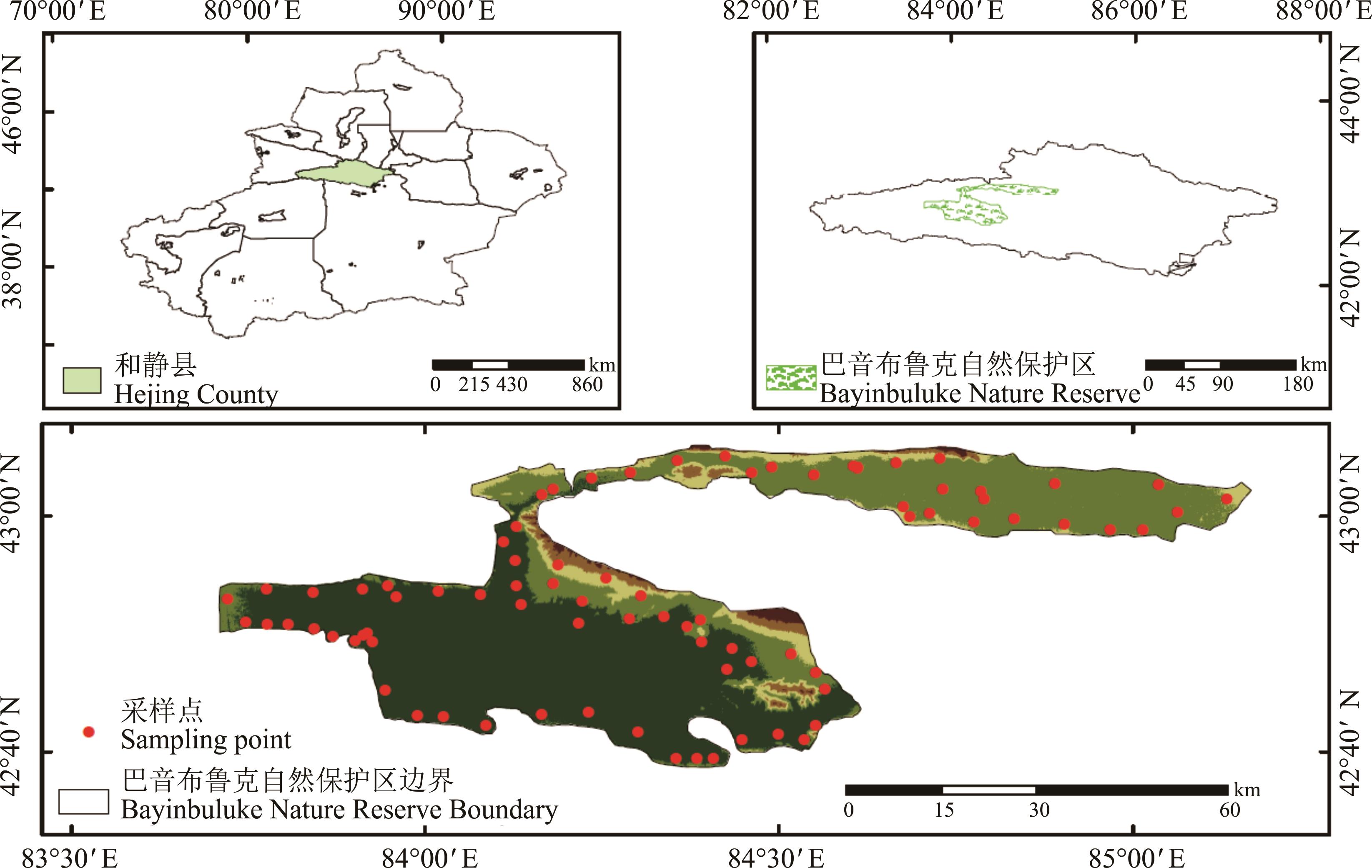
Fig. 1 Overview of the study area

Fig.2 Soil organic carbon content and density frequency distribution
因子 Factor | 测定指标 Assessment indicators | 平均值 Average | 标准差 Standard deviation | 变异系数 Coefficient of variation | 最小值 Minimum value | 最大值 Maximum value |
|---|---|---|---|---|---|---|
植被 Vegetation | 高度Height (cm) | 44.80 | 29.95 | 0.67 | 8.07 | 156.62 |
| 密度Density (plant·m-2) | 521.83 | 335.45 | 0.64 | 59.33 | 2020.33 | |
| 盖度Coverage (%) | 68.72 | 20.32 | 0.30 | 10.67 | 103.33 | |
| 生物量Biomass (g·m-2) | 154.52 | 132.48 | 0.86 | 22.36 | 849.93 | |
| Simpson指数Simpson’s index (D) | 0.71 | 0.11 | 0.15 | 0.37 | 0.91 | |
| Patrick丰富度指数Patrick richness index (S) | 8.00 | 3.46 | 0.43 | 3.67 | 24.00 | |
| Pielou均匀度指数Pielou’s evenness index (J) | 0.80 | 0.10 | 0.12 | 0.50 | 0.97 | |
| Shannon-Wiener多样性指数Shannon-Wiener diversity index (H) | 1.59 | 0.38 | 0.24 | 0.82 | 2.64 | |
土壤 Soil | pH | 8.05 | 0.15 | 0.02 | 7.44 | 8.37 |
| 全氮Total nitrogen (g·kg-1) | 2.42 | 1.43 | 0.59 | 0.50 | 6.69 | |
| 全磷Total phosphorus (g·kg-1) | 0.82 | 0.21 | 0.26 | 0.09 | 1.59 | |
| 速效钾Available potassium (mg·kg-1) | 0.73 | 0.79 | 1.09 | 0.12 | 7.03 | |
| 容重Bulk density (g·cm-3) | 0.97 | 0.26 | 0.27 | 0.39 | 1.58 | |
| 电导率Electrical conductivity (μs·cm-1) | 1049.93 | 614.78 | 0.59 | 574.50 | 3310.00 | |
| 速效磷Available phosphorus (mg·kg-1) | 19.14 | 9.83 | 0.51 | 1.45 | 60.15 | |
| 土壤含水量Soil moisture content (%) | 39.00 | 32.00 | 0.81 | 8.00 | 123.00 | |
| 土壤黏粒含量Soil clay content (%) | 20.49 | 0.86 | 0.04 | 20.00 | 22.00 | |
地形 Topography | 坡度Slope (°) | 4.05 | 2.36 | 0.58 | 0.33 | 10.20 |
| 坡向Aspect (°) | 158.90 | 110.63 | 0.70 | 0.00 | 339.78 | |
| 纬度Latitude (°) | 42.90 | 0.13 | 0.00 | 42.66 | 43.08 | |
| 经度Longitude (°) | 84.34 | 0.35 | 0.00 | 83.72 | 85.13 | |
| 海拔Altitude (m) | 2424.92 | 48.81 | 0.02 | 2350.00 | 2536.72 | |
气候 Climate | 蒸散发Evapotranspiration (mm) | 308.26 | 68.81 | 0.22 | 73.25 | 431.67 |
| 根部土壤湿度Root soil moisture (%) | 23.00 | 1.00 | 0.04 | 21.00 | 25.00 | |
| 表层土壤湿度Surface soil moisture (%) | 24.00 | 3.00 | 0.11 | 19.00 | 28.00 | |
| 年均温度Mean annual temperature (℃) | -3.01 | 0.34 | -0.11 | -4.10 | -2.28 | |
| 年均降水量Mean annual precipitation (mm) | 255.61 | 11.10 | 0.04 | 229.00 | 282.00 |
Table 1 Basic information statistics of vegetation, soil and environmental factors
因子 Factor | 测定指标 Assessment indicators | 平均值 Average | 标准差 Standard deviation | 变异系数 Coefficient of variation | 最小值 Minimum value | 最大值 Maximum value |
|---|---|---|---|---|---|---|
植被 Vegetation | 高度Height (cm) | 44.80 | 29.95 | 0.67 | 8.07 | 156.62 |
| 密度Density (plant·m-2) | 521.83 | 335.45 | 0.64 | 59.33 | 2020.33 | |
| 盖度Coverage (%) | 68.72 | 20.32 | 0.30 | 10.67 | 103.33 | |
| 生物量Biomass (g·m-2) | 154.52 | 132.48 | 0.86 | 22.36 | 849.93 | |
| Simpson指数Simpson’s index (D) | 0.71 | 0.11 | 0.15 | 0.37 | 0.91 | |
| Patrick丰富度指数Patrick richness index (S) | 8.00 | 3.46 | 0.43 | 3.67 | 24.00 | |
| Pielou均匀度指数Pielou’s evenness index (J) | 0.80 | 0.10 | 0.12 | 0.50 | 0.97 | |
| Shannon-Wiener多样性指数Shannon-Wiener diversity index (H) | 1.59 | 0.38 | 0.24 | 0.82 | 2.64 | |
土壤 Soil | pH | 8.05 | 0.15 | 0.02 | 7.44 | 8.37 |
| 全氮Total nitrogen (g·kg-1) | 2.42 | 1.43 | 0.59 | 0.50 | 6.69 | |
| 全磷Total phosphorus (g·kg-1) | 0.82 | 0.21 | 0.26 | 0.09 | 1.59 | |
| 速效钾Available potassium (mg·kg-1) | 0.73 | 0.79 | 1.09 | 0.12 | 7.03 | |
| 容重Bulk density (g·cm-3) | 0.97 | 0.26 | 0.27 | 0.39 | 1.58 | |
| 电导率Electrical conductivity (μs·cm-1) | 1049.93 | 614.78 | 0.59 | 574.50 | 3310.00 | |
| 速效磷Available phosphorus (mg·kg-1) | 19.14 | 9.83 | 0.51 | 1.45 | 60.15 | |
| 土壤含水量Soil moisture content (%) | 39.00 | 32.00 | 0.81 | 8.00 | 123.00 | |
| 土壤黏粒含量Soil clay content (%) | 20.49 | 0.86 | 0.04 | 20.00 | 22.00 | |
地形 Topography | 坡度Slope (°) | 4.05 | 2.36 | 0.58 | 0.33 | 10.20 |
| 坡向Aspect (°) | 158.90 | 110.63 | 0.70 | 0.00 | 339.78 | |
| 纬度Latitude (°) | 42.90 | 0.13 | 0.00 | 42.66 | 43.08 | |
| 经度Longitude (°) | 84.34 | 0.35 | 0.00 | 83.72 | 85.13 | |
| 海拔Altitude (m) | 2424.92 | 48.81 | 0.02 | 2350.00 | 2536.72 | |
气候 Climate | 蒸散发Evapotranspiration (mm) | 308.26 | 68.81 | 0.22 | 73.25 | 431.67 |
| 根部土壤湿度Root soil moisture (%) | 23.00 | 1.00 | 0.04 | 21.00 | 25.00 | |
| 表层土壤湿度Surface soil moisture (%) | 24.00 | 3.00 | 0.11 | 19.00 | 28.00 | |
| 年均温度Mean annual temperature (℃) | -3.01 | 0.34 | -0.11 | -4.10 | -2.28 | |
| 年均降水量Mean annual precipitation (mm) | 255.61 | 11.10 | 0.04 | 229.00 | 282.00 |
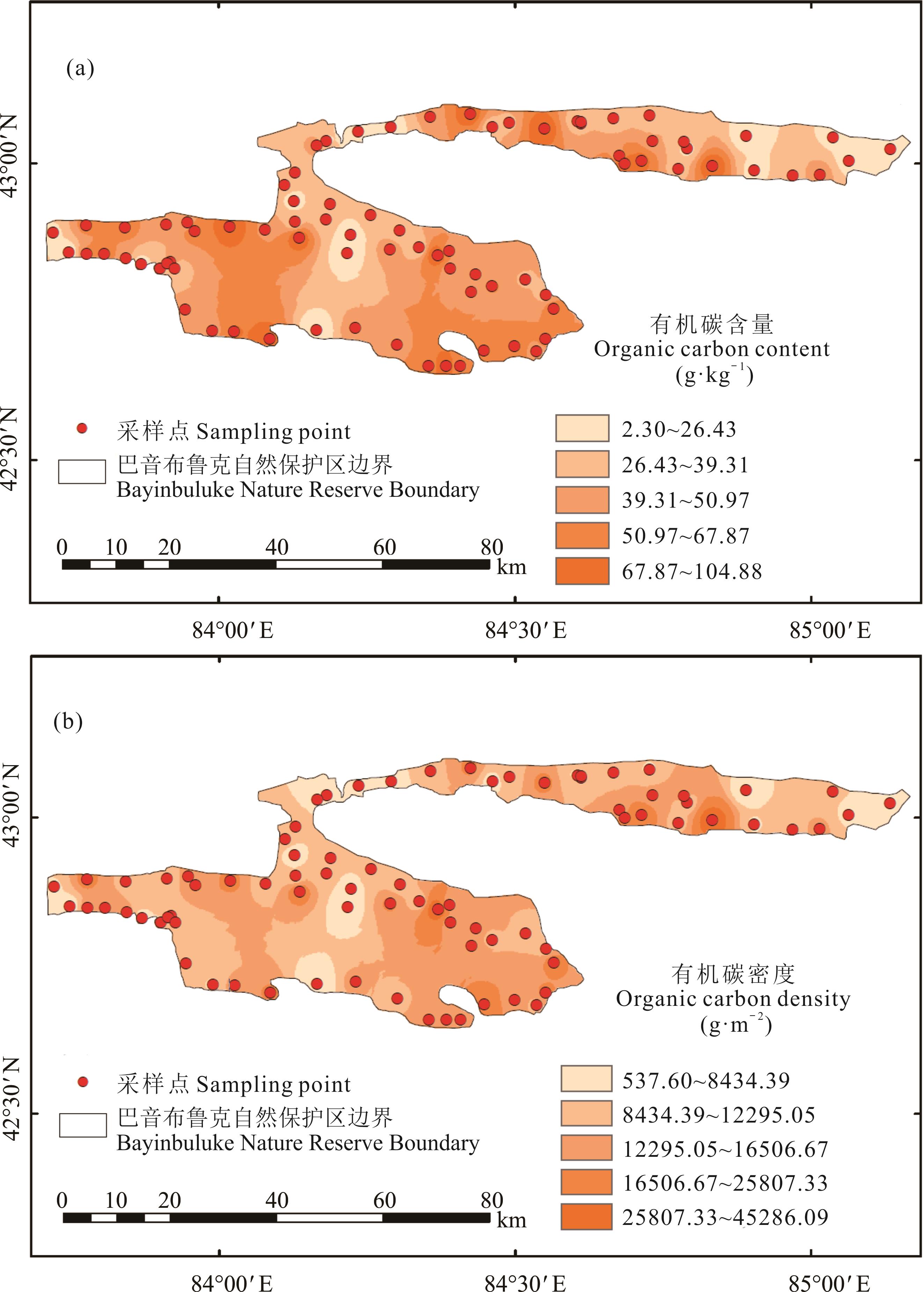
Fig.3 Spatial distribution of soil organic carbon content and density
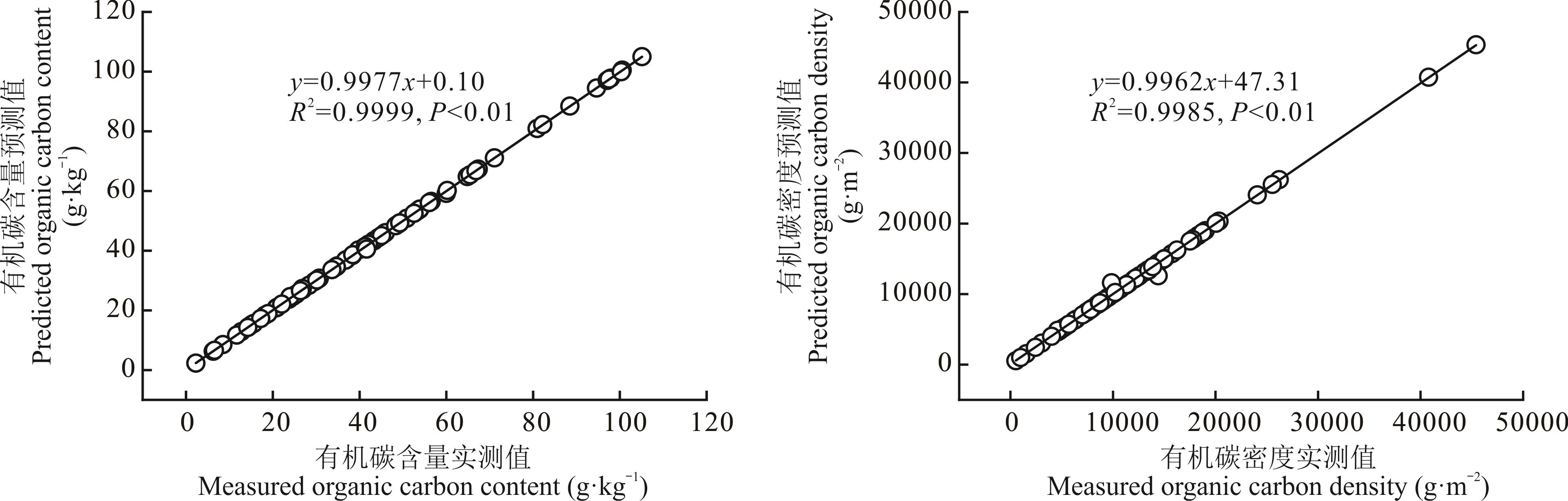
Fig.4 Linear correlation analysis of measured and predicted values of soil organic carbon content and density
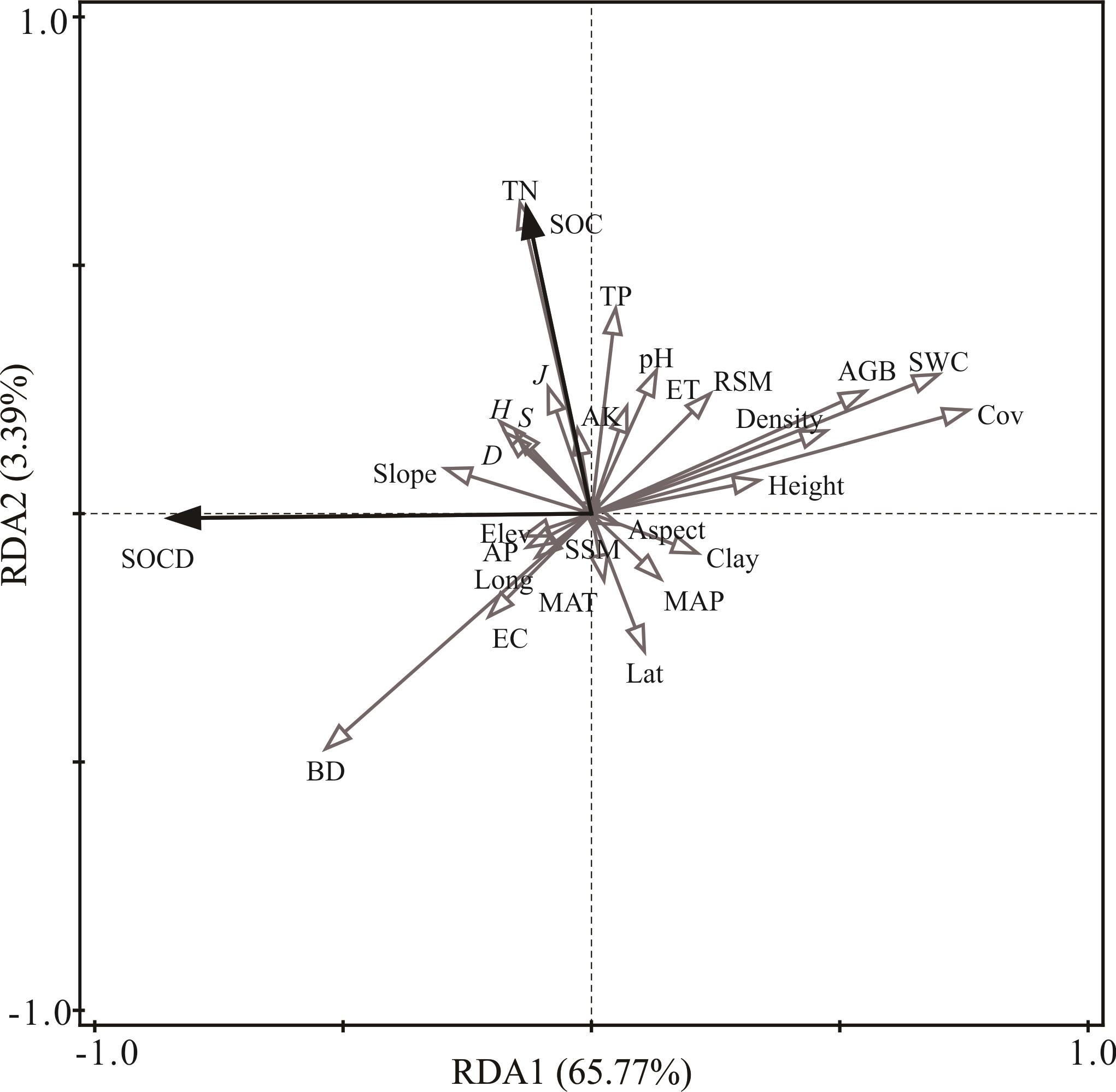
Fig.5 Redundancy analysis of soil organic carbon content and density with influencing factors
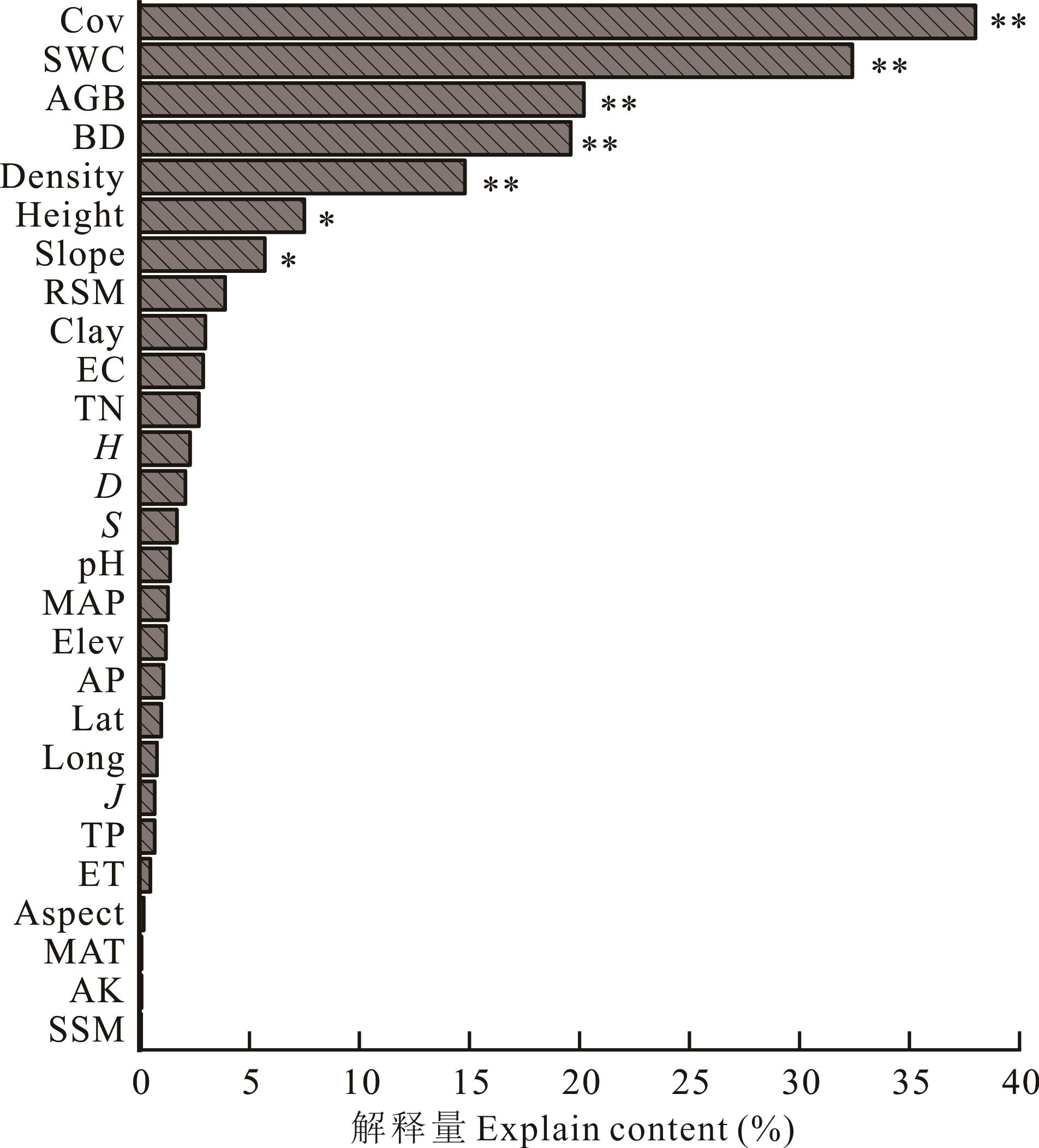
Fig.6 Redundancy analysis of influencing factors

Fig.7 Structural equation model fitting soil organic carbon content and density with influencing factors
| [1] | Chang P F, Li P, Nairsag, et al. Contributions of soil organic carbon and inorganic carbon stocks to total soil carbon stock and their driving factors across different types in Nei Mongol temperate grasslands. Chinese Journal of Plant Ecology, 2025, 49(9): 1374-1387. |
| 常鹏飞, 李平, 纳尔斯格, 等. 内蒙古温带草原不同草地类型土壤有机碳和无机碳储量对总碳储量的贡献及其驱动因素. 植物生态学报, 2025, 49(9): 1374-1387. | |
| [2] | Cheng X D, Xu G R, Wang Y Y, et al. Effects of grazing and nitrogen addition on soil organic carbon fractions and carbon stocks in salinized grasslands. Chinese Journal of Soil Science, 2025, 56(5): 1312-1320. |
| 成鑫栋, 徐国荣, 王雨媛, 等. 放牧和氮添加对盐渍化草地土壤有机碳组分及碳储量的影响. 土壤通报, 2025, 56(5): 1312-1320. | |
| [3] | Zhang G R, Wang X Y, Lv J L, et al. Impact and mechanisms of grazing exclusion on soil organic carbon dynamics in grassland. Acta Ecologica Sinica, 2025, 45(16): 8243-8252. |
| 张光茹, 王星宇, 吕佳霖, 等. 围栏封育对草地土壤有机碳动态的影响机制研究进展. 生态学报, 2025, 45(16): 8243-8252. | |
| [4] | Meng X T, Bao Y L, Wang Y, et al. An advanced soil organic carbon content prediction model via fused temporal-spatial-spectral (TSS) information based on machine learning and deep learning algorithms. Remote Sensing of Environment, 2022, 280: 113166. |
| [5] | Li X Y, Cao G C, Chen Z Y, et al. Characteristics and influencing factors of soil organic carbon content changes in typical ecosystems of microtopography in the southern slope of Qilian Mountains. Chinese Journal of Soil Science, 2025, 56(3): 722-732. |
| 李晓燕, 曹广超, 陈宗颜, 等. 祁连山南坡微地形典型生态系统土壤有机碳变化特征及影响因素分析. 土壤通报, 2025, 56(3): 722-732. | |
| [6] | Zhou H, Tian F P, Lu Y, et al. A review on influencing factors of grassland soil organic carbon storage. Chinese Agricultural Science Bulletin, 2015, 31(23): 153-157. |
| 周恒, 田福平, 路远, 等. 草地土壤有机碳储量影响因素研究进展. 中国农学通报, 2015, 31(23): 153-157. | |
| [7] | Adhikari K, Owens P R, Libohova Z, et al. Assessing soil organic carbon stock of Wisconsin, USA and its fate under future land use and climate change. Science of the Total Environment, 2019, 667(2): 833-845. |
| [8] | Liu H X, Sun Z J, Cui Y X, et al. Storage, pattern and driving factors of soil organic carbon in the desert rangelands of northern Xinjiang, north-west China. Frontiers of Earth Science, 2024, 18(3): 598-610. |
| [9] | Tian F P, Zhang Z N, Chang X F, et al. Effects of biotic and abiotic factors on soil organic carbon in semi-arid grassland. Journal of Soil Science and Plant Nutrition, 2016, 16(4): 1087-1096. |
| [10] | Dai L J, Ge J S, Wang L Q, et al. Influence of soil properties, topography, and land cover on soil organic carbon and total nitrogen concentration: A case study in Qinghai-Tibet plateau based on random forest regression and structural equation modeling. Science of the Total Environment, 2022, 821: 153440. |
| [11] | Wu Z H, Liu Y L, Li G E, et al. Influences of environmental variables and their interactions on Chinese farmland soil organic carbon density and its dynamics. Land, 2022, 11(2): 208. |
| [12] | Xia S, Song Z, Van Z L, et al. Storage, patterns and influencing factors for soil organic carbon in coastal wetlands of China. Global Change Biology, 2022, 28(20): 6065-6085. |
| [13] | Zhu X W, Wu Q E, Aletengguli, et al. Study on the current situation and theoretical livestock carrying capacity of Bayanbulak Xiaoyurudusu grassland. Xinjiang Animal Husbandry, 2021, 36(1): 43-46. |
| 朱习雯, 吾其尔, 阿勒腾古丽, 等. 巴音布鲁克小尤尔都斯草地现状及理论载畜量的研究. 新疆畜牧业, 2021, 36(1): 43-46. | |
| [14] | Guan X, An S Z, Xun Q L, et al. Construction and evaluation of a vegetation coverage retrieval model for alpine prairic in Bayanbulak grassland. Pratacultural Science, 2018, 35(5): 949-955. |
| 关欣, 安沙舟, 荀其蕾, 等. 巴音布鲁克草原高寒草原植被覆盖度反演模型构建与评价. 草业科学, 2018, 35(5): 949-955. | |
| [15] | Huang L J, Yang L, Li W C, et al. Effect of Pedicularis kansuensis invasion on plant community characteristics in Bayanbulak grassland. Pratacultural Science, 2024, 41(1): 1-14. |
| 黄丽菊, 杨磊, 李文超, 等. 甘肃马先蒿入侵对巴音布鲁克草原植物群落特征的影响. 草业科学, 2024, 41(1): 1-14. | |
| [16] | Yin W, Hu Y K, Liu Y Y, et al. A study on soil biological properties of artificial grassland over different cultivation times in Bayanbulak. Acta Prataculturae Sinica, 2010, 19(5): 218-226. |
| 尹伟, 胡玉昆, 柳妍妍, 等. 巴音布鲁克不同建植期人工草地土壤生物学特性研究. 草业学报, 2010, 19(5): 218-226. | |
| [17] | Lv Z L, Liu B, Chang F, et al. Species diversity and phylogenetic diversity in Bayinbrook alpine grasslands: elevation gradient distribution patterns and drivers. Acta Prataculturae Sinica, 2023, 32(7): 12-22. |
| 吕自立, 刘彬, 常凤, 等. 巴音布鲁克高寒草甸物种多样性与系统发育多样性沿海拔梯度分布格局及驱动因子. 草业学报, 2023, 32(7): 12-22. | |
| [18] | Huang L J. Effects of Pedicularis kansuensis invasion on plant community species and functional diversity in Bayanbulak grassland. Urumqi: Xinjiang Agricultural University, 2023.黄丽菊. 甘肃马先蒿入侵对巴音布鲁克草地植物群落物种和功能多样性的影响. 乌鲁木齐: 新疆农业大学, 2023. |
| [19] | Li K Y. Response of soil organic carbon pool and its stability to reclamation in Bayinbuluk alpine grassland. Urumqi: Xinjiang Agricultural University, 2023.李可依. 巴音布鲁克高寒草地土壤有机碳库及其稳定性对开垦的响应. 乌鲁木齐:新疆农业大学, 2023. |
| [20] | Yu W Z, Yu L H, Zhou H K, et al. Investigation into the spatio-temporal dynamics of the temperate steppe in the southern foothills of Qilian and its response to climate change. Acta Ecologica Sinica, 2025, 45(8): 3700-3715.俞文政, 于龙辉, 周华坤, 等. 祁连山南麓温性草原时空演变及其对气候变化的响应. 生态学报, 2025, 45(8): 3700-3715. |
| [21] | Wu J H. Spatial differentiation patterns and influencing factors of soil iron-bound organic carbon in alpine grasslands on the Tibetan Plateau. Lanzhou: Lanzhou University, 2024.吴金洪. 青藏高原高寒草地土壤铁结合态有机碳空间分异及其影响因素. 兰州: 兰州大学, 2024. |
| [22] | Li K H, Hu Y K, Wang X, et al. Relationships between aboveground biomass and environmental factors along an altitude gradient of alpine grassland. Chinese Journal of Applied Ecology, 2007, 18(9): 2019-2024. |
| [23] | Ayimin·Bolati, An S Z, Dong Y Q, et al. Changes of soil nutrients in different degradation stages of alpine steppe in Bayanbulak. Xinjiang Agricultural Sciences, 2017, 54(5): 953-960. |
| 阿依敏·波拉提, 安沙舟, 董乙强, 等. 巴音布鲁克高寒草原不同退化阶段土壤养分的变化. 新疆农业科学, 2017, 54(5): 953-960. | |
| [24] | Fan Y G, Hu Y K, Li K H, et al. Organic carbon content in major grassland types in Bayanbulak. Journal of Arid Land Resources and Environment, 2008, 22(8): 179-184. |
| 范永刚, 胡玉昆, 李凯辉, 等. 巴音布鲁克主要草地类型表层土壤有机碳特征及其影响因素的研究. 干旱区资源与环境, 2008, 22(8): 179-184. | |
| [25] | Mohammat·Anwar, Yang Y H, Guo Z D, et al. Carbon contents and its vertical distribution in alpine grasslands in Bayinbuluke, middle stretch of the Tianshan Mountains of Xinjiang. Chinese Journal of Plant Ecology, 2006, 30(4): 545-552. |
| 安尼瓦尔·买买提, 杨元合, 郭兆迪, 等. 新疆天山中段巴音布鲁克高山草地碳含量及其垂直分布. 植物生态学报, 2006, 30(4): 545-552. | |
| [26] | Liu S P, Feng Y W, Li J W, et al. Plant community structure characteristics of forest and abandoned grasslands at different restoration ages in the Loess Hilly-Gully region. Plant Science Journal, 2026, 44(1): 30-40. |
| 刘世鹏, 冯艺伟, 李江文, 等. 黄土丘陵沟壑区不同恢复年限的林下草地与撂荒草地的群落结构特征. 植物科学学报, 2026, 44(1): 30-40. | |
| [27] | Wang Q L, Liu C C, Wang R X, et al. Variation characteristics of understory herbaceous plant communities and soil crusts under different planting years of artificial sand fixation. Research of Soil and Water Conservation, 2026, 33(3): 95-102, 111. |
| 王巧玲, 柳超超, 王瑞霞, 等. 人工固沙不同建植年限林下草本群落及土壤结皮变化特征. 水土保持研究, 2026, 33(3): 95-102, 111. | |
| [28] | Ding C S, Cao S K, Zhang F L, et al. Spatial patterns and modeling of soil moisture in the Qinghai Lake Basin. Acta Agrestia Sinica, 2026, 34(3): 984-997. |
| 丁辰深, 曹生奎, 张富玲, 等. 青海湖流域土壤水分空间格局及模拟研究. 草地学报, 2026, 34(3): 984-997. | |
| [29] | Bao S D. Soil agrochemical analysis (The Third Edition). Beijing: China Agriculture Press, 2005.鲍士旦. 土壤农化分析(第3版). 北京: 中国农业出版社, 2005. |
| [30] | Liu H X, Dong Y Q, Cui Y X, et al. Environmental factors influencing soil organic carbon and its characteristics in desert grassland in Altay, Xinjiang. Acta Prataculturae Sinica, 2021, 30(10): 41-52. |
| 刘慧霞, 董乙强, 崔雨萱, 等. 新疆阿勒泰地区荒漠草地土壤有机碳特征及其环境影响因素分析. 草业学报, 2021, 30(10): 41-52. | |
| [31] | Hanusz Z, Tarasińska J. Normalization of the Kolmogorov-Smirnov and Shapiro-Wilk tests of normality. Biometrical Letters, 2015, 52(2): 85-93. |
| [32] | Lei Z D, Yang S X, Xie S C. Soil hydrodynamics. Beijing: Tsinghua University Press, 1988.雷志栋, 杨诗秀, 谢森传. 土壤水动力学. 北京: 清华大学出版社, 1988. |
| [33] | Lepš J, Šmilauer P. Multivariate analysis of ecological data using CANOCO. Cambridge: Cambridge University Press, 2003. |
| [34] | Wufuer·T H T, Lv T T, Sai·Bayartu, et al. Temporal-spatial patterns and influencing factors of vegetation coverage in Bayanbulak alpine grassland, China. Journal of Environmental Engineering Technology, 2022, 12(5): 1395-1401. |
| 吾甫尔·托乎提, 吕田田, 赛·巴雅尔图, 等. 巴音布鲁克高寒草原植被覆盖度时空格局及影响因素. 环境工程技术学报, 2022, 12(5): 1395-1401. | |
| [35] | Luo S W. Study on spatial distribution pattern of soil carbon-nitrogen-phosphorus in alpine grassland on Qinghai-Tibet Plateau. Lanzhou: Lanzhou University, 2022.罗帅伟. 青藏高原高寒草地土壤碳-氮-磷空间分布格局研究. 兰州: 兰州大学, 2022. |
| [36] | Cao Y Z, Wang X D, Lu X Y, et al. Soil organic carbon and nutrients along an alpine grassland transect across Northern Tibet. Journal of Mountain Science, 2013, 10(4): 564-573. |
| [37] | Li S, Jiang Z H, Zhang D G, et al. Distribution characteristics of soil organic carbon in northern slope of alpine meadow steppe in Qilian mountains in Qilian County, Qinghai Province. Pratacultural Science, 2016, 33(8): 1469-1475. |
| 李硕, 姜哲浩, 张德罡, 等. 青海省祁连县高寒草甸草原土壤有机碳分布特征. 草业科学, 2016, 33(8): 1469-1475. | |
| [38] | Ma J P. Sources and accumulation mechanisms of soil organic carbon in different grassland types in Ningxia. Yinchuan: Ningxia University, 2025.马进鹏. 宁夏不同草地类型土壤有机碳来源及积累机制研究. 银川: 宁夏大学, 2025. |
| [39] | Su Y Z, Zhao H L. Advances in researches on soil organic carbon storages affecting factors and its environmental effects. Journal of Desert Research, 2002, 22(3): 19-27. |
| 苏永中, 赵哈林. 土壤有机碳储量、影响因素及其环境效应的研究进展. 中国沙漠, 2002, 22(3): 19-27. | |
| [40] | Liu M, Liu G H. Impact factors and uncertainties of the estimation on soil organic carbon storage. Ecology and Environmental Sciences, 2014, 23(7): 1222-1232. |
| 刘苗, 刘国华. 土壤有机碳储量估算的影响因素和不确定性. 生态环境学报, 2014, 23(7): 1222-1232. | |
| [41] | Feng J Y, Jiang Z C, Jiang Z R, et al. Characteristics and influencing factors of soil organic carbon at Picea crassifolia forests in middle part of Qilian Mountains. Bulletin of Soil and Water Conservation, 2025, 45(3): 261-267, 277. |
| 冯金元, 蒋志成, 蒋志仁, 等. 祁连山中段青海云杉林土壤有机碳分布特征及影响因素. 水土保持通报, 2025, 45(3): 261-267, 277. | |
| [42] | Percival H J, Parfitt R L, Scott N A. Factors controlling soil carbon levels in New Zealand grasslands is clay content important? Soil Science Society of America Journal, 2000, 64(5): 1623-1630. |
| [43] | Zheng H J, Zhang S, Wang G C, et al.Depth-dependent accumulation and controls of particulate and mineral-associated organic carbon in Inner Mongolian grasslands. Scientia Sinica(Terrae), 2025, 55(9): 3195-3208. |
| 郑浩钧, 张帅, 王国成, 等. 内蒙古草地土壤颗粒态和矿物结合态有机碳的空间与垂直分布特征及其控制因素. 中国科学: 地球科学, 2025, 55(9): 3195-3208. | |
| [44] | Wang L H, Xue J Y, Xie Y, et al. Spatial distribution and influencing factors of soil organic carbon among different climate types in Sichuan, China. Chinese Journal of Plant Ecology, 2018, 42(3): 297-306. |
| 王丽华, 薛晶月, 谢雨, 等. 不同气候类型下四川草地土壤有机碳空间分布及影响因素. 植物生态学报, 2018, 42(3): 297-306. | |
| [45] | Zhang C F, Ma S P, He X B, et al. Distribution characteristics and influencing factors of soil organic carbon in permafrost regions of the source region of the Yangtze River, China. Chinese Journal of Ecology, 2022, 41(9): 1665-1673. |
| 张超飞, 马素萍, 何晓波, 等. 长江源多年冻土区土壤有机碳分布特征及其影响因素. 生态学杂志, 2022, 41(9): 1665-1673. | |
| [46] | Xiao L, Xiong D H, Zhang B J, et al. Analysis of soil properties in gully banks under different coverage of Kudzu in a dry-hot valley region. Acta Ecologica Sinica, 2018, 38(14): 5047-5055. |
| 校亮, 熊东红, 张宝军, 等. 干热河谷冲沟沟岸葛藤不同覆被状况及土壤性质差异分析. 生态学报, 2018, 38(14): 5047-5055. | |
| [47] | Li X M, Yang J, Li X W, et al. Distribution pattern and driving factors of soil organic carbon of natural grassland in Ningxia. Grassland and Turf, 2024, 44(4): 1-8. |
| 李旭梅, 杨钧, 李小伟, 等. 宁夏天然草地土壤有机碳分布格局及驱动因素. 草原与草坪, 2024, 44(4): 1-8. | |
| [48] | Yao Y W, Dai Q H, Gao R X, et al. Characteristics and factors influencing soil organic carbon composition by vegetation type in spoil heaps. Frontiers in Plant Science, 2023, 14: 1240217. |
| [49] | Cong G, Zhang Z D, Zhang J J, et al. Research on characteristics of soil organic carbon in different forest types in Changbai Mountain. Journal of Soil and Water Conservation, 2019, 33(3): 179-184, 191. |
| 丛高, 张志丹, 张晋京, 等. 长白山不同林型土壤有机碳特征. 水土保持学报, 2019, 33(3): 179-184, 191. | |
| [50] | Cao Q Q, Xiao H J, Liu T, et al. Soil organic carbon density and its influencing factors in croplands with different cultivation years in the northeastern Ulan Buh desert, China. Chinese Journal of Applied Ecology, 2022, 33(10): 2628-2634. |
| 曹琪琪, 肖辉杰, 刘涛, 等. 乌兰布和沙漠东北部不同耕作年限农田土壤有机碳密度及其影响因素. 应用生态学报, 2022, 33(10): 2628-2634. | |
| [51] | Jiang S X, Zhao P, Zhang J N, et al. Characteristics and influencing factors of soil organic carbon in typical vegetation in the Qilian mountains. Forest and Grassland Resources Research, 2024, 2(2): 1-7. |
| 姜生秀, 赵鹏, 张俊年, 等. 祁连山典型植被土壤有机碳分布特征及其影响因素. 林草资源研究, 2024, 2(2): 1-7. | |
| [52] | Shao D L, Zhu Y J, Tang M, et al. Distribution characteristics and influencing factors of soil organic carbon in Hippophae rhamnoides forests in Pisha sandstone area. Research of Soil and Water Conservation, 2026, 33(2): 89-95, 103. |
| 邵冬亮, 朱元吉, 唐梅, 等. 砒砂岩区沙棘林地土壤有机碳分布特征及影响因素. 水土保持研究, 2026, 33(2): 89-95, 103. |
| [1] | Jia-bao ZHANG. Harnessing soil biotic potential to enrich soil carbon and ecological functionality of cultivated soil [J]. Acta Prataculturae Sinica, 2026, 35(9): 1-7. |
| [2] | Jia-li LIAN, Jing CHEN, Xue-qing YANG, Ying ZHAO, Xu LUO, Cui HAN, Jian-ping LI. Effects of precipitation changes on the soil organic carbon distribution and stability of organic carbon pool in desert steppe [J]. Acta Prataculturae Sinica, 2026, 35(5): 85-98. |
| [3] | Jing WANG, Xu-dong LI, Tian-hu HAN, De-cao NIU, Chun-li BAI, Ding GUO. Distribution of soil aggregates in different vegetation micro-patches in alpine meadows and the relationship with organic carbon mineralization [J]. Acta Prataculturae Sinica, 2026, 35(2): 15-27. |
| [4] | Rui ZHANG, Tie-juan WANG, Bing-bing ZHANG, Jing FENG, Jin-ling SHAO. A study of the point occurrence pattern of Artemisia ordosica populations and their spatial correlation with Caragana microphylla occurrence in the Mu Us sandy land [J]. Acta Prataculturae Sinica, 2026, 35(10): 79-90. |
| [5] | Jian-min RAN, Xiao-yan SONG, Dan WANG, Chang-ting WANG. Changes in soil organic carbon fractions and carbon sequestration potential of degraded alpine meadows [J]. Acta Prataculturae Sinica, 2025, 34(9): 38-52. |
| [6] | Jun-ling CHEN, Sha-sha WANG, Jing YE, Yi LIN, Yi-xiang WANG. Soil carbon mineralization in an orchard with and without interplanted ground cover species and its temperature sensitivity under long-term conditions [J]. Acta Prataculturae Sinica, 2025, 34(9): 53-64. |
| [7] | Yu-xia WANG, Ling-tong DU, Zhi-yuan YI, Xiao LUO, Li SU, Cheng-long QIAO, Bin XUE. Spatial variation and factors influencing the soil organic carbon pool in grape-producing areas at the eastern foothills of Helan Mountain in Ningxia [J]. Acta Prataculturae Sinica, 2025, 34(7): 41-53. |
| [8] | Wen-li QIN, Jing ZHANG, Guang-min XIAO, Su-qian CUI, Jian-xun YE, Jian-fei ZHI, Li-feng ZHANG, Nan XIE, Wei FENG, Zhen-yu LIU, Xuan PAN, Yun-xia DAI, Zhong-kuan LIU. Effects of partial replacement of chemical nitrogen fertilizers with green manure on soil physical properties and maize (Zea mays) yield [J]. Acta Prataculturae Sinica, 2025, 34(6): 27-45. |
| [9] | Ying CAO, Ming-he NIE, Yan SHEN, Yan HU, Deng-bao MA, Dong LI, Teng-si HOU, Peng FANG, Xue-qin WANG. Changes in vegetation and soil characteristics and their correlations in grasslands at different stages of degradation on the desert steppe in an arid wind-sandy area of Ningxia [J]. Acta Prataculturae Sinica, 2024, 33(8): 1-14. |
| [10] | Cheng-lan ZHANG, Chun-zeng LIU, Yu-hu LYU, Ben-yin LI, Lin ZHANG, Li DING, Guang-hui DU, Xiang-ning ZHANG, Chun-feng ZHENG, Ji-shi ZHANG, Min LI, Wei-dong CAO. Effects of Chinese milk vetch combined with reduced chemical fertilizer on soil phosphorus adsorption and desorption characteristics in different years [J]. Acta Prataculturae Sinica, 2024, 33(7): 41-52. |
| [11] | Kong-qin WEI, Jun-wei ZHAO, Qian-bing ZHANG. Effects of phosphorus application on soil respiration rate and active organic carbon components of alfalfa [J]. Acta Prataculturae Sinica, 2024, 33(2): 80-92. |
| [12] | Yu SUN, Yong-sheng YANG, Qi HE, Jun-bang WANG, Xiu-juan ZHANG, Hui-ting LI, Xing-liang XU, Hua-kun ZHOU, Yu-heng ZHANG. Responses of soil water conservation function and soil physicochemical properties to a range of degradation conditions in alpine meadows of the Three River Headwater Region [J]. Acta Prataculturae Sinica, 2023, 32(6): 16-29. |
| [13] | Si-yuan LI, Yu-xuan CUI, Zong-jiu SUN, Hui-xia LIU, Hua-wei YE. Effect of grazing exclusion on soil organic carbon and stoichiometry characteristics of soil microbial biomass in sagebrush desert [J]. Acta Prataculturae Sinica, 2023, 32(6): 58-70. |
| [14] | Xin GUO, Huan LUO, Xue-mei XU, Ai-xia MA, Zhen-yan SHANG, Tian-hu HAN, De-cao NIU, Hai-yan WEN, Xu-dong LI. Effects of litter decomposition with different qualities on soil organic carbon content and its stability in grassland on the Loess Plateau [J]. Acta Prataculturae Sinica, 2023, 32(5): 83-93. |
| [15] | Yan PENG, Jing-yuan SUN, Su-jie MA, Xiang-tao WANG, Xue-hong WEI, Lei SUN. Plant community composition and soil nutrient status of degraded alpine meadow sites in Northern Tibet [J]. Acta Prataculturae Sinica, 2022, 31(8): 49-60. |
| Viewed | ||||||
|
Full text |
|
|||||
|
Abstract |
|
|||||
