
ISSN 1004-5759 CN 62-1105/S
Acta Prataculturae Sinica ›› 2025, Vol. 34 ›› Issue (10): 174-186.DOI: 10.11686/cyxb2024456
Ran ZHANG1( ), Chen-zhuo LIU1, Feng YUAN2, Ya-ling LIU2, Di DONG1, Si-ning WANG1, Bo-kun ZOU1, Xiao-xia LI1()
Received:2024-11-19
Revised:2025-01-09
Online:2025-10-20
Published:2025-07-11
Contact:
Xiao-xia LI
Ran ZHANG, Chen-zhuo LIU, Feng YUAN, Ya-ling LIU, Di DONG, Si-ning WANG, Bo-kun ZOU, Xiao-xia LI. Ion balance mechanism and transcriptome analysis of Elytrigia elongata in response to NaHCO3 stress[J]. Acta Prataculturae Sinica, 2025, 34(10): 174-186.
处理 Treatment | 地上部干重 Dry weight of aboveground (mg·10株-1) | 根系干重 Dry weight of root (mg·10株-1) | 根冠比 Root to shoot ratio (%) | 地上部含水量 The water content of aboveground (%) | 根系含水量 The water content of root (%) |
|---|---|---|---|---|---|
| CK | 4.58±0.12 | 2.44±0.05 | 53.38±0.98 | 81.74±0.44 | 90.91±0.08 |
| NaHCO3 | 3.75±0.11*** | 2.94±0.05** | 78.68±2.37** | 79.98±0.36** | 86.29±0.24** |
Table 1 Effect of NaHCO3 stress on growth indicators of E. elongata
处理 Treatment | 地上部干重 Dry weight of aboveground (mg·10株-1) | 根系干重 Dry weight of root (mg·10株-1) | 根冠比 Root to shoot ratio (%) | 地上部含水量 The water content of aboveground (%) | 根系含水量 The water content of root (%) |
|---|---|---|---|---|---|
| CK | 4.58±0.12 | 2.44±0.05 | 53.38±0.98 | 81.74±0.44 | 90.91±0.08 |
| NaHCO3 | 3.75±0.11*** | 2.94±0.05** | 78.68±2.37** | 79.98±0.36** | 86.29±0.24** |
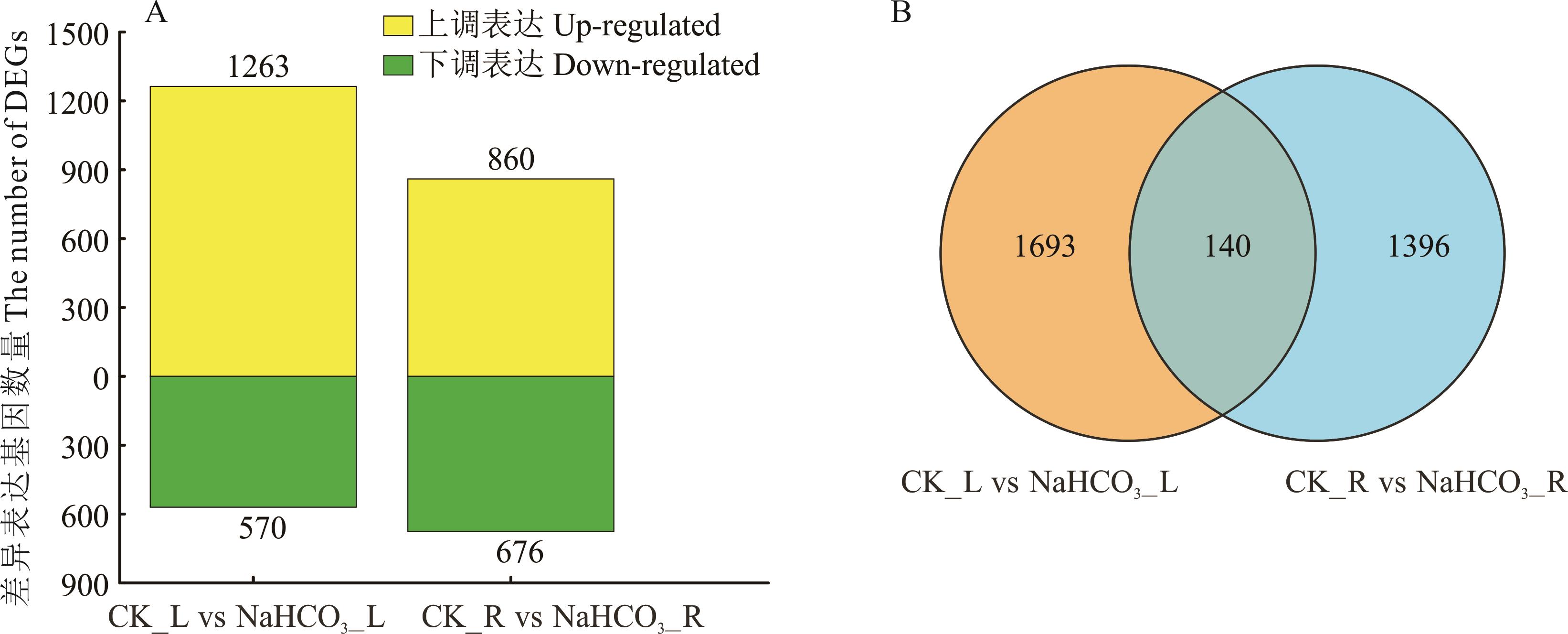
Fig.1 The number of different expression genes (DEGs) and Venn analysis
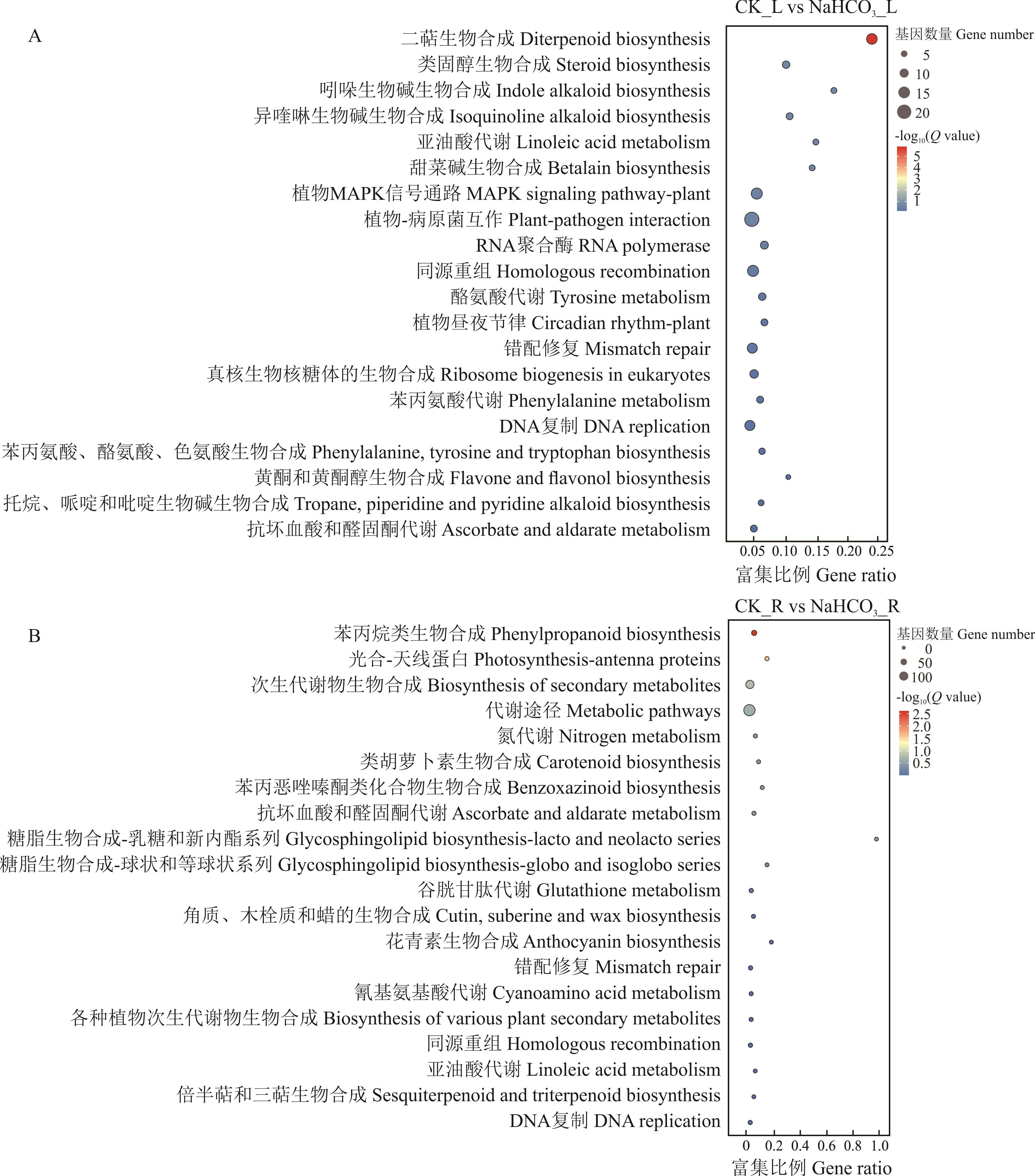
Fig.2 KEGG enrichment pathway of different expression genes (DEGs) in leaves and roots under NaHCO3 stress treatment

Fig.3 GO enrichment terms of different expression genes (DEGs) in leaves and roots under NaHCO3 stress treatment
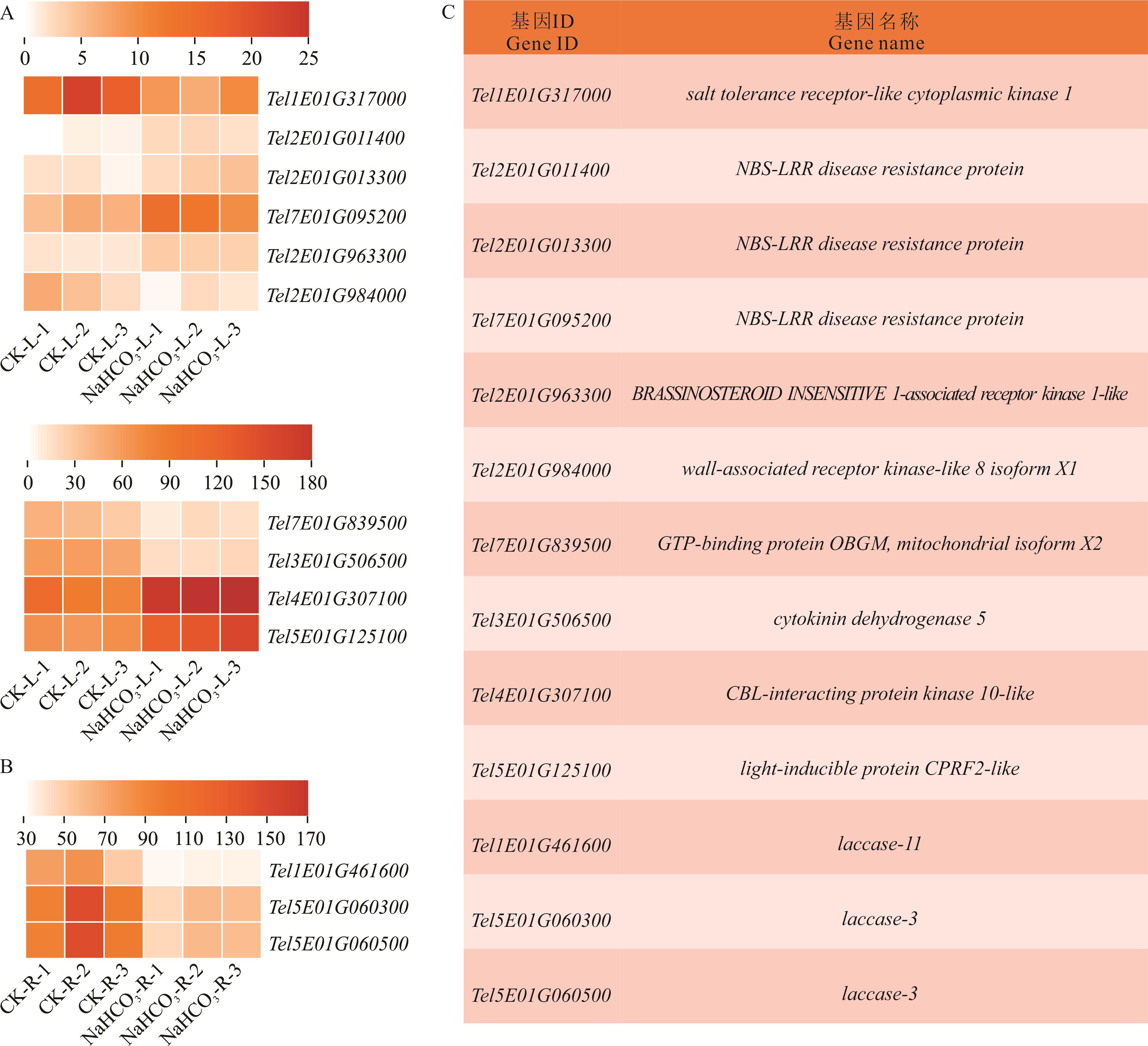
Fig.4 Heat map analysis of ion pathway candidate genes in leaves and roots under NaHCO3 stress treatment and gene names

Fig.5 Effects of NaHCO3 stress on the contents of Na+, K+, Ca2+, Mg2+, Fe3+ and Cu2+ in leaves and roots of E. elongata
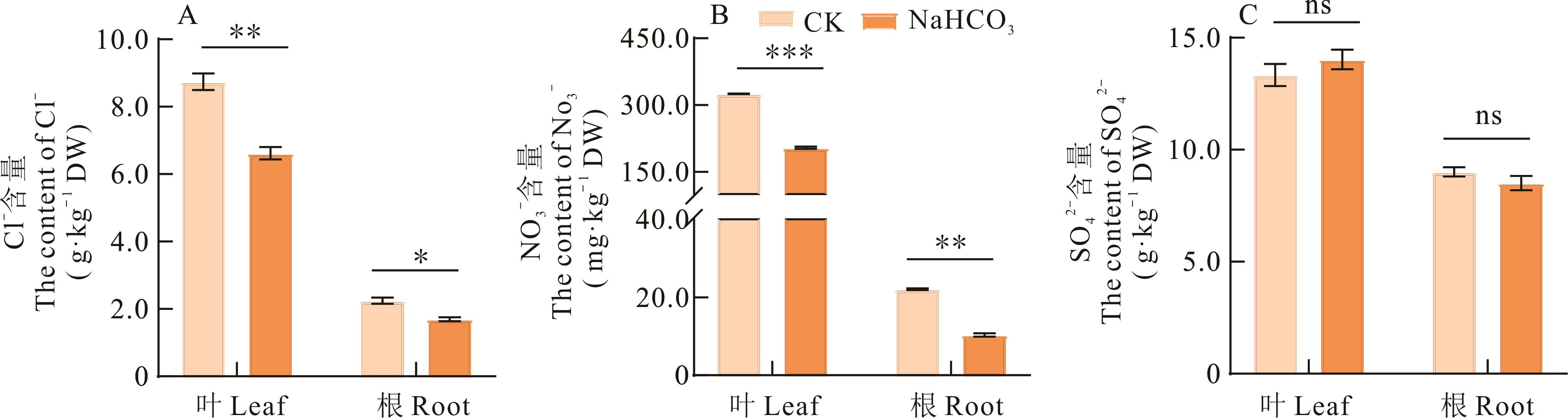
Fig.6 Effects of NaHCO3 stress on the contents of Cl-, NO3- and SO42- in leaves and roots of E. elongata
组织 Tissue | 处理 Treatment | 阳离子/Na+ Cation/Na+ | 阴离子/Cl- Anions/Cl- | |||||
|---|---|---|---|---|---|---|---|---|
| K+/Na+ | Ca2+/Na+ | Mg2+/Na+ | Fe3+/Na+ | Cu2+/Na+ | NO3-/Cl- | SO42-/Cl- | ||
叶片 Leaf | CK | 52.64±0.89 | 2.47±0.05 | 0.79±0.03 | 0.09±0.00 | 0.005±0.00 | 0.037±0.00 | 1.53±0.02 |
| NaHCO3 | 9.54±0.05*** | 0.54±0.01*** | 0.14±0.00*** | 0.03±0.00*** | 0.002±0.00*** | 0.031±0.00* | 2.12±0.12* | |
根 Root | CK | 22.52±0.37 | 1.64±0.03 | 0.38±0.01 | 0.89±0.01 | 0.01±0.00 | 0.010±0.00 | 4.02±0.21 |
| NaHCO3 | 3.87±0.03*** | 0.57±0.00*** | 0.18±0.00*** | 0.55±0.01*** | 0.002±0.00*** | 0.006±0.03** | 5.02±0.24ns | |
Table 2 Effects of NaHCO3 stress on ion allocation in the upper and underground parts of E. elongata
组织 Tissue | 处理 Treatment | 阳离子/Na+ Cation/Na+ | 阴离子/Cl- Anions/Cl- | |||||
|---|---|---|---|---|---|---|---|---|
| K+/Na+ | Ca2+/Na+ | Mg2+/Na+ | Fe3+/Na+ | Cu2+/Na+ | NO3-/Cl- | SO42-/Cl- | ||
叶片 Leaf | CK | 52.64±0.89 | 2.47±0.05 | 0.79±0.03 | 0.09±0.00 | 0.005±0.00 | 0.037±0.00 | 1.53±0.02 |
| NaHCO3 | 9.54±0.05*** | 0.54±0.01*** | 0.14±0.00*** | 0.03±0.00*** | 0.002±0.00*** | 0.031±0.00* | 2.12±0.12* | |
根 Root | CK | 22.52±0.37 | 1.64±0.03 | 0.38±0.01 | 0.89±0.01 | 0.01±0.00 | 0.010±0.00 | 4.02±0.21 |
| NaHCO3 | 3.87±0.03*** | 0.57±0.00*** | 0.18±0.00*** | 0.55±0.01*** | 0.002±0.00*** | 0.006±0.03** | 5.02±0.24ns | |
| 处理Treatment | S | S | S | S | S | S | S |
|---|---|---|---|---|---|---|---|
| CK | 0.43±0.00 | 0.48±0.02 | 0.66±0.02 | 10.12±0.15 | 1.92±0.03 | 2.63±0.15 | 0.26±0.00 |
| NaHCO3 | 0.41±0.00** | 1.32±0.05** | 1.07±0.01*** | 19.36±0.43*** | 1.65±0.01** | 2.37±0.23ns | 0.20±0.01* |
Table 3 Effects of NaHCO3 stress on cation and anion transport in E. elongata
| 处理Treatment | S | S | S | S | S | S | S |
|---|---|---|---|---|---|---|---|
| CK | 0.43±0.00 | 0.48±0.02 | 0.66±0.02 | 10.12±0.15 | 1.92±0.03 | 2.63±0.15 | 0.26±0.00 |
| NaHCO3 | 0.41±0.00** | 1.32±0.05** | 1.07±0.01*** | 19.36±0.43*** | 1.65±0.01** | 2.37±0.23ns | 0.20±0.01* |
| [1] | Shabala S, Wu H, Bose J. Salt stress sensing and early signaling events in plant roots: current knowledge and hypothesis. Plant Science, 2015, 241: 109-119. |
| [2] | Tavakkoli E, Fatehi F, Coventry S, et al. Additive effects of Na+ and Cl- ions on barley growth under salinity stress. Journal of Experimental Botany, 2011, 62(6): 2189-2203. |
| [3] | Yang Y, Guo Y. Elucidating the molecular mechanisms mediating plant salt-stress responses. New Phytologist, 2018, 217(2): 523-539. |
| [4] | Geng G, Li R, Piergiorgio S, et al. Physiological and transcriptome analysis of sugar beet reveals different mechanisms of response to neutral salt and alkaline salt stresses. Frontiers in Plant Science, 2020, 11: 571864. |
| [5] | Wang S F, Hu Y X, Li Z L. Effects of NaCl stress on growth and mineral ion uptake, transportation and distribution of Quercus virginiana. Acta Ecologica Sinica, 2010, 30(17): 4609-4616. |
| 王树凤, 胡韵雪, 李志兰. 盐胁迫对弗吉尼亚栎生长及矿质离子吸收、运输和分配的影响.生态学报, 2010, 30(17): 4609-4616. | |
| [6] | Sun J, Chen S L, Dai S X, et al. Ion flux profiles and plant ion homeostasis control under salt stress. Plant Signaling and Behavior, 2009, 4(4): 261-264. |
| [7] | Mohammad A A, Nudrat A A, Muhammad A, et al. Plant responses to environmental stresses-from gene to biotechnology. AoB Plants, 2017, 9(4).doi:10.1093/aobpla/plx025. |
| [8] | Imen T, Elena D I, Rym K, et al. Effects of NaCl or Na2SO4 salinity on plant growth, ion content and photosynthetic activity in Ocimum basilicum L. Acta Physiologiae Plantarum, 2012, 34: 607-615. |
| [9] | Luo D, Wu Z B, Shi Y J, et al. Effects of salt stress on leaf anatomical structure and ion absorption, transportation and distribution of three Ping’ou hybrid hazelnut seedlings. Acta Ecologica Sinica, 2022, 42(5): 1876-1888. |
| 罗达, 吴正保, 史彦江, 等. 盐胁迫对3种平欧杂种榛幼苗叶片解剖结构及离子吸收、运输与分配的影响. 生态学报, 2022, 42(5): 1876-1888. | |
| [10] | Xu M. Effects of saline-alkali stresses on seed germination, growth and physiological traits of Elytrigia elongate L. Changchun: Northeast Normal University, 2020. |
| 徐曼. 盐碱胁迫对长穗偃麦草种子萌发、生长及生理特性的影响. 长春: 东北师范大学, 2020. | |
| [11] | Gengmao Z, Yu H, Xing S, et al. Salinity stress increases secondary metabolites and enzyme activity in safflower. Industrial Crops and Products, 2015, 64: 175-181. |
| [12] | Zhu J K. Abiotic stress signaling and responses in plants. Cell, 2016, 167(2): 313-324. |
| [13] | Chakraborty K, Bishi S K, Goswami N, et al. Differential fine-regulation of enzyme driven ROS detoxification network imparts salt tolerance in contrasting peanut genotypes. Environmental and Experimental Botany, 2016, 128: 79-90. |
| [14] | Zhang R, Ma X, Zhu R T, et al. Metabolic pathway and transcriptional regulation of Qinghai wild Poa pratensis in response to drought stress. Acta Agrestia Sinica, 2020, 28(6): 1508-1518. |
| 张然, 马祥, 朱瑞婷, 等. 青海野生草地早熟禾响应干旱胁迫的代谢通路及转录调控分析. 草地学报, 2020, 28(6): 1508-1518. | |
| [15] | Deng X, Xu X X, Sun Q, et al. Photosynthetic characteristics and transcriptome analysis of winter wheat seedlings under different salt concentration stress. Plant Physiology Journal, 2023, 59(9): 1819-1829. |
| 邓肖, 徐学欣, 孙芹, 等. 不同盐浓度胁迫下冬小麦幼苗光合特性及转录组分析. 植物生理学报, 2023, 59(9): 1819-1829. | |
| [16] | Li X T, Cao J, Wei X J, et al. Effeet of extended exposure to NaCl stress on the growth, ion distribution and photosynthetic characteristics of malting barley (Hordeum vulgare). Acta Prataculturae Sinica, 2013, 22(6): 108-116. |
| 李先婷, 曹靖, 魏晓娟, 等. NaCl渐进胁迫对啤酒大麦幼苗生长、离子分配和光合特性的影响. 草业学报, 2013, 22(6): 108-116. | |
| [17] | Li J Y, Wang W Q, Yang L Q, et al. Study on the determination of chloride ions by hydrogen peroxide pretreatment and silver nitrate titration. Soil and Fertilizer Sciences in China, 2024(7): 241-248. |
| 李婧怡, 王玮棋, 杨柳青, 等. 过氧化氢预处理-硝酸银滴定法测定氯离子的研究.中国土壤与肥料, 2024(7): 241-248. | |
| [18] | Ma Y F, Ma Z Q, Zhang X G. Comparison of water soluble SO4 2- chemical analysis methods in soil. Modern Chemical Research, 2017(7): 21-22. |
| 马云飞, 马琢琪, 张旭光. 土壤中水溶性SO4 2-化学分析方法对比.当代化工研究, 2017(7): 21-22. | |
| [19] | Ding J Z. An improvement of determination method of NO3 - in circulating water. Shandong Chemical Industry, 2008(3): 42, 45. |
| 丁敬增. 循环水中NO3 -测定方法的改进.山东化工, 2008(3): 42, 45. | |
| [20] | Tang X Q, Bai Y F, Liu G L, et al. Effects of NaCl stress on growth and mineral ions absorption and distribution of Platycladus orientalis seedlings. Journal of Northwest A & F University (Natural Science Edition), 2018, 46(9): 60-66. |
| 唐晓倩, 白应飞, 刘广亮, 等. NaCl胁迫对侧柏幼苗生长及矿质离子吸收和分配的影响. 西北农林科技大学学报(自然科学版), 2018, 46(9): 60-66. | |
| [21] | Wang H W, Sun S, Ge W Y, et al. Horizontal gene transfer of Fhb7 from fungus underlies Fusarium head blight resistance in wheat. Science, 2020, 368(6493): e5435. |
| [22] | Niu K J. The role of 5-aminolevulinic acid on regulation mechanism of photosynthesis in Kentucky bluegrass seedlings under drought stress. Lanzhou: Gansu Agricultural University, 2018. |
| 牛奎举. 外源5-氨基乙酰丙酸对干旱胁迫下草地早熟禾光合作用的调控机制. 兰州: 甘肃农业大学, 2018. | |
| [23] | Huang T, Zhang J, Xu Z P, et al. Deciphering the effects of gene deletion on yeast longevity using network and machine learning approaches. Biochimie, 2012, 94(4): 1017-1025. |
| [24] | Munns R, Tester M. Mechanisms of salinity tolerance. Annual Review of Plant Biology, 2008, 59: 651-681. |
| [25] | Carlos S G A, Christa T. Salt stress signals shape the plant root. Current Opinion in Plant Biology, 2011, 14(3): 296-302. |
| [26] | Liu X, Wang Y. Effects of salt stress on biomass and photosynthetic fluorescence characteristics of two Glycyrrhiza seedlings. Soil and Fertilizer Sciences in China, 2022(2): 163-169. |
| 刘萱, 王芸. 盐胁迫对两种甘草幼苗生物量及光合荧光特性的影响. 中国土壤与肥料, 2022(2): 163-169. | |
| [27] | Hu G, Koh J, Yoo M J, et al. Proteomics profiling of fiber development and domestication in upland cotton (Gossypium hirsutum). Planta, 2014, 240(6): 1237-1251. |
| [28] | Luo D, Zhou Q, Wu Y. Full-length transcript sequencing and components towards salinity tolerance in the roots of cultivated alfalfa (Medicago sativa). BMC Plant Biology, 2019, 19(1): 32. |
| [29] | Yang C, Wang L, Quan C T, et al. Relative expression profiles of genes response to salt stress and constructions of gene co-expression networks in Brassica napus L. Acta Agronomica Sinica, 2024, 50(1): 237-250. |
| 杨闯, 王玲, 全成滔, 等. 甘蓝型油菜盐胁迫响应基因表达谱分析及共表达网络的构建. 作物学报, 2024, 50(1): 237-250. | |
| [30] | Sharma A, Shahzad B, Rehman A, et al. Response of phenylpropanoid pathway and the role of polyphenols in plants under abiotic stress. Molecules, 2019, 24(13): 2452. |
| [31] | Vijayata S, Ajit P S, Jyoti B. Differential expression of salt-responsive genes to salinity stress in salt-tolerant and salt-sensitive rice (Oryza sativa L.) at seedling stage. Protoplasma, 2018, 255(6): 1667-1681. |
| [32] | Zhou Y B, Liu C, Tang D Y, et al. The receptor-like cytoplasmic kinase STRK1 phosphorylates and activates CatC, thereby regulating H2O2 homeostasis and improving salt tolerance in rice. The Plant Cell, 2018, 30(5): 1100-1118. |
| [33] | Gou X P, Yin H J, He K, et al. Genetic evidence for an indispensable role of somatic embryogenesis receptor kinases in brassinosteroid signaling. PLoS Genetics, 2012, 8(1): e1002452. |
| [34] | Zuo C Y, Li Y W, Li Y L, et al. Relative expression patterns of laccase gene family members in upland Gossypium hirsutum L. Acta Agronomica Sinica, 2023, 49(9): 2344-2361. |
| 左春阳, 李亚玮, 李焱龙, 等. 陆地棉漆酶基因家族成员表达模式分析. 作物学报, 2023, 49(9): 2344-2361. | |
| [35] | Liu Q Q. Response mechanism of lignin synthesis in rice under copper stress and the role of rice laccase in plants tolerance to heavy metal. Nanjing: Nanjing Agricultural University, 2015. |
| 刘清泉. 铜胁迫下水稻木质素合成的响应机制及水稻漆酶在植物重金属耐性中的作用. 南京: 南京农业大学, 2015. | |
| [36] | Wang Q Z, Liu Q, Gao Y N, et al. Review on the mechanisms of the response to salinity-alkalinity stress in plants. Acta Ecologica Sinica, 2017, 37(16): 5565-5577. |
| 王佺珍, 刘倩, 高娅妮, 等. 植物对盐碱胁迫的响应机制研究进展. 生态学报, 2017, 37(16): 5565-5577. | |
| [37] | Benito B, Haro B, Amtmann A, et al. The twins K+ and Na+ in plants. Journal of Plant Physiology, 2014, 171(9): 723-731. |
| [38] | Luo B Y, Chen S Y, Yang Y J, et al. Ion uptake, transportation and the expression of related genes in Chrysanthemum indicum under salt stress. Journal of Northeast Forestry University, 2024, 52(2): 68-74, 83. |
| 罗玢晔, 陈胜艳, 杨宇佳, 等. 盐胁迫下野菊离子的吸收转运情况及相关基因的表达. 东北林业大学学报, 2024, 52(2): 68-74, 83. | |
| [39] | Han Y, Yin S Y, Huang L. Towards plant salinity tolerance-implications from ion transporters and biochemical regulation. Plant Growth Regulation, 2015, 76: 13-23. |
| [40] | Cao X Q, Wang W C, Yin F T, et al. Effects of exogenous calcium on ion balance and photosynthetic characteristics in leaves of rapeseed seedlings under NaHCO3 stress. Journal of Huazhong Agricultural University, 2023, 42(5): 149-157. |
| 曹小强, 王卫超, 阴法庭, 等. 外源钙对NaHCO3胁迫下油菜幼苗叶片离子平衡及光合特性的影响. 华中农业大学学报, 2023, 42(5): 149-157. | |
| [41] | Bo S, Xia B, Liu M Y, et al. Screening of salt-resistant strains of Chrysanthemum indicum and preliminary study on salt-resistant mechanism. Acta Agriculturae Boreali-occidentalis Sinica, 2023, 32(1): 90-100. |
| 薄杉, 夏斌, 刘铭宇, 等. 野菊抗盐株系筛选与抗盐机理初探. 西北农业学报, 2023, 32(1): 90-100. |
| [1] | Ting MA, Fen-qi CHEN, Yong WANG, Xue HA, Ya-jun LI, Hui-ling MA. Differentially expressed genes and related pathways in root systems of Astragalus cicer under NaCl stress [J]. Acta Prataculturae Sinica, 2025, 34(4): 104-123. |
| [2] | Xiang-qi BU, Shan-shan LI, Ying-na DUAN, Ying-chun WANG, Lin-lin ZHENG. Effects of nitric oxide on stress resistance and feed quality of Suaeda salsa under saline-alkali stress [J]. Acta Prataculturae Sinica, 2024, 33(9): 60-69. |
| [3] | Xin-yu CHENG, Ji-lian WANG, Mairiyangu·Yasheng, Ming-yuan LI. Isolation and growth-promoting characteristics of rhizobacteria producing indole-3-acetic acid from the rhizosphere soil of Kalidium foliatum [J]. Acta Prataculturae Sinica, 2024, 33(4): 110-121. |
| [4] | Bing ZENG, Pan-pan SHANG, Bing-na SHEN, Yin-chen WANG, Ming-hao QU, Yang YUAN, Lei BI, Xing-yun YANG, Wen-wen LI, Xiao-li ZHOU, Yu-qian ZHENG, Wen-qiang GUO, Yan-long FENG, Bing ZENG. Differentially expressed genes and related pathways in root systems of Dactylis glomerata under flooding stress [J]. Acta Prataculturae Sinica, 2024, 33(2): 93-111. |
| [5] | Xiao-yu LU, Ya-jie LIU, Cai-xia BAI, Jin-hua LI, Zi-he WANG, Chun-xue YANG. Effects of Chloris virgata and arbuscular mycorrhizal fungi on the growth of Leymus chinensis under alkali stress [J]. Acta Prataculturae Sinica, 2024, 33(11): 69-83. |
| [6] | Xiao-han YANG, Guo-qiang WU, Ming WEI, Bei-chen WANG. Function of high-affinity potassium transporters in maintaining ion homeostasis and other plant responses to abiotic stresses [J]. Acta Prataculturae Sinica, 2023, 32(5): 190-202. |
| [7] | Pan-pan SHANG, Bing ZENG, Ming-hao QU, Ming-yang LI, Xing-yun YANG, Yu-qian ZHENG, Bing-na SHEN, Lei BI, Cheng YANG, Bing ZENG. Analysis of metabolic pathways and differentially expressed genes of Trifolium pratense responding to waterlogging stress [J]. Acta Prataculturae Sinica, 2023, 32(4): 112-128. |
| [8] | Jian-xin LIU, Rui-rui LIU, Xiu-li LIU, Xiao-bin OU, Hai-yan JIA, Ting BU, Na LI. Effects of exogenous hydrogen sulfide on amino acid metabolism in naked oat leaves under saline-alkali stress [J]. Acta Prataculturae Sinica, 2023, 32(2): 119-130. |
| [9] | Rui-qiang LI, Yu-xiang WANG, Yu-lan SUN, Lei ZHANG, Ai-ping CHEN. Effects of salt stress on the growth, physiology, and biochemistry of five Bromus inermis varieties [J]. Acta Prataculturae Sinica, 2023, 32(1): 99-111. |
| [10] | Yong ZHANG, Xiao-xia TIAN, Ming-li ZHENG, Pei-chun MAO, Lin MENG. Analysis of drought and salt resistance of EeHKT1;4 gene from Elytrigia elongata in Arabidopsis [J]. Acta Prataculturae Sinica, 2022, 31(8): 188-198. |
| [11] | Zhi-min YANG, Rui XING, Yun-jia DING, Li-li ZHUANG. Analysis of differentially expressed genes in relation to tiller development and plant height based on transcriptomic sequencing of two tall fescue cultivars [J]. Acta Prataculturae Sinica, 2022, 31(1): 145-163. |
| [12] | Ya-qi CHEN, Kai-qi SU, Tai-xiang CHEN, Chun-jie LI. Effects of complex saline-alkali stress on seed germination and seedling physiological characteristics of Achnatherum inebrians [J]. Acta Prataculturae Sinica, 2021, 30(3): 137-157. |
| [13] | Zhen-lian FAN, Yang-jie JIA, Yuan FAN, Hui-ping SONG, Zheng-jun FENG. Growth of Elymus nutans in saline saline-alkali soil amended with calcium silicate slag: Performance and mechanism [J]. Acta Prataculturae Sinica, 2021, 30(2): 93-101. |
| [14] | Fang-zhen WANG, Cheng-hang YANG, Zi-hua HE, Zi-ru LIN, Hao-yuan ZENG, Qing MA. Analysis of differentially expressed protein kinase related genes in the xerophyte Pugionium cornutum under salt treatment [J]. Acta Prataculturae Sinica, 2021, 30(10): 116-124. |
| [15] | ZHAO Ying, WEI Xiao-hong, LI Tao-tao. Effects of exogenous nitric oxide on seed germination and seedling growth of Chenopodium quinoa under complex saline-alkali stress [J]. Acta Prataculturae Sinica, 2020, 29(4): 92-101. |
| Viewed | ||||||
|
Full text |
|
|||||
|
Abstract |
|
|||||
