欢迎访问《草业学报》官方网站,今天是

草业学报 ›› 2026, Vol. 35 ›› Issue (4): 158-168.DOI: 10.11686/cyxb2025151

• 研究论文 • 上一篇    

紫花苜蓿突触结合蛋白家族成员鉴定与非生物胁迫下的表达分析

张钿1,2(), 冷华娟1, 崔婧1, 何飞1, 王雪1, 李明娜1, 杨青川1, 康俊梅1()   

  1. 1.中国农业科学院北京畜牧兽医研究所,北京 100193
    2.哈尔滨师范大学生命科学与技术学院,黑龙江 哈尔滨 150025
  • 收稿日期:2025-04-24 修回日期:2025-08-09 出版日期:2026-04-20 发布日期:2026-02-07
  • 通讯作者: 康俊梅
  • 作者简介:Corresponding author. E-mail: kangjunmei@caas.cn
    张钿(1997-),女,河北邢台人,在读博士。E-mail: zt150944@163.com
  • 基金资助:
    国家自然科学基金(32071868);国家自然科学基金(32371770)

Identification of synaptotagmin gene family members in alfalfa and their transcript profiles under abiotic stresses

Tian ZHANG1,2(), Hua-juan LENG1, Jing CUI1, Fei HE1, Xue WANG1, Ming-na LI1, Qing-chuan YANG1, Jun-mei KANG1()   

  1. 1.Institute of Animal Science,Chinese Academy of Agricultural Sciences,Beijing 100193,China
    2.College of Life Science and Technology,Harbin Normal University,Harbin 150025,China
  • Received:2025-04-24 Revised:2025-08-09 Online:2026-04-20 Published:2026-02-07
  • Contact: Jun-mei KANG

摘要:

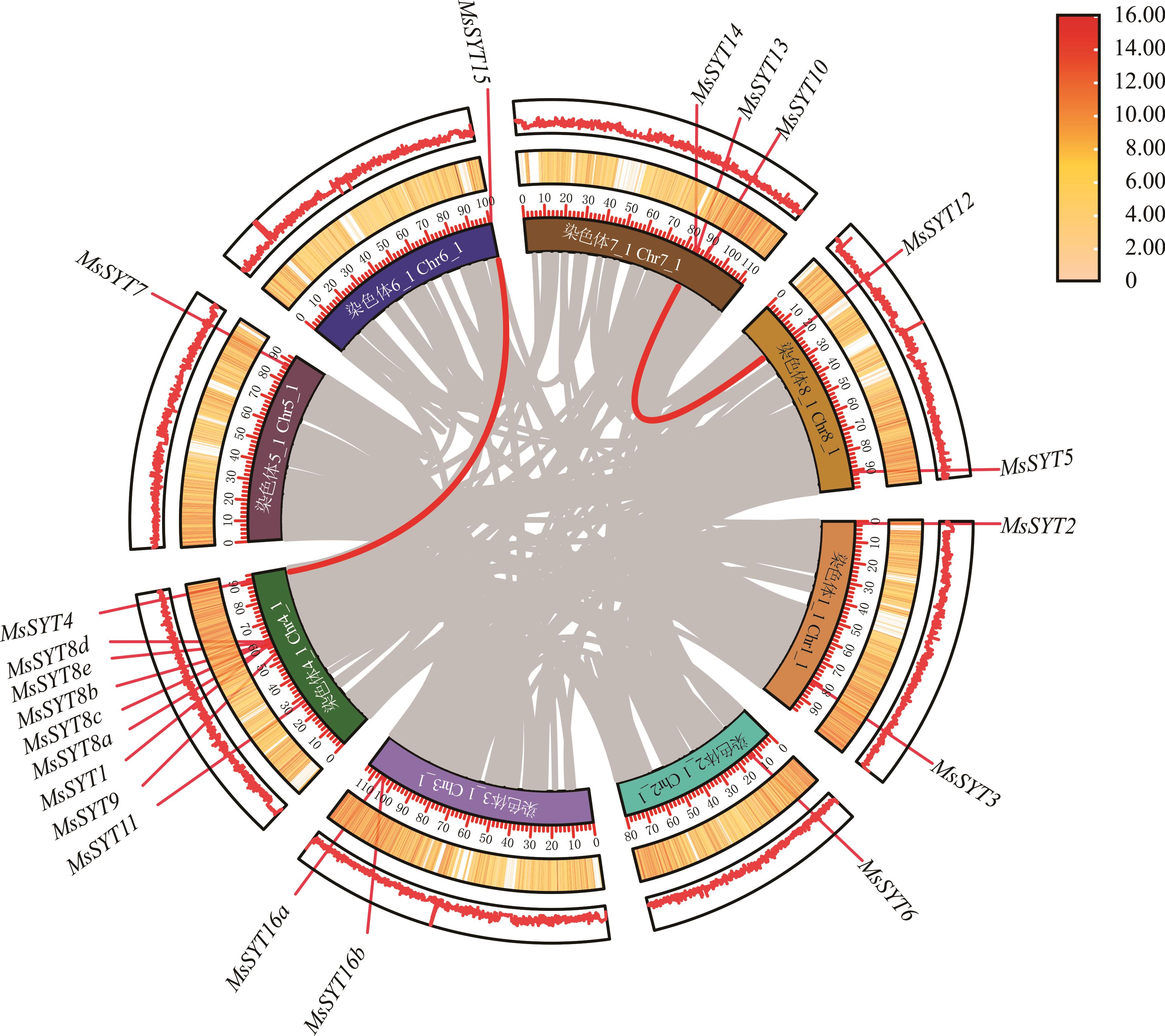
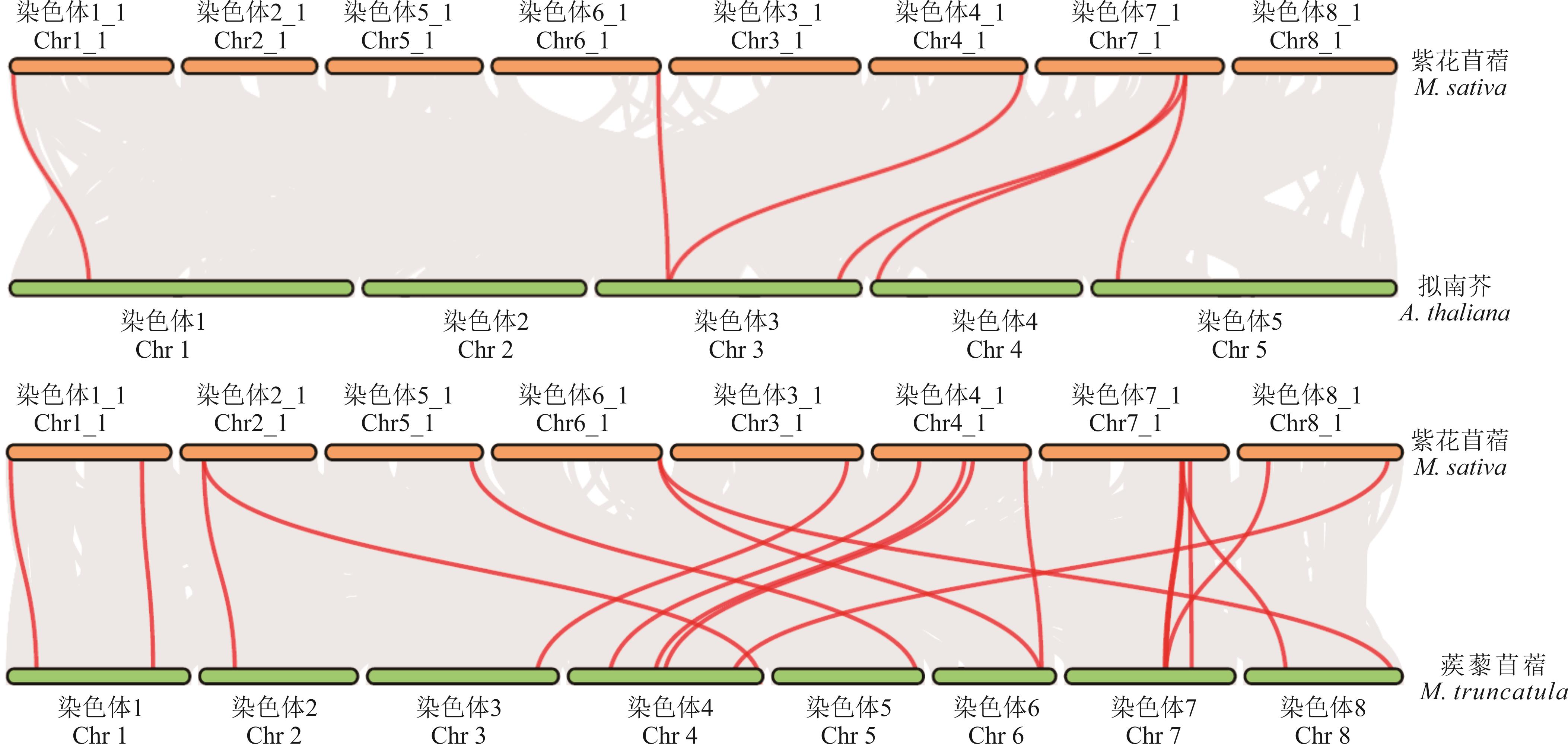
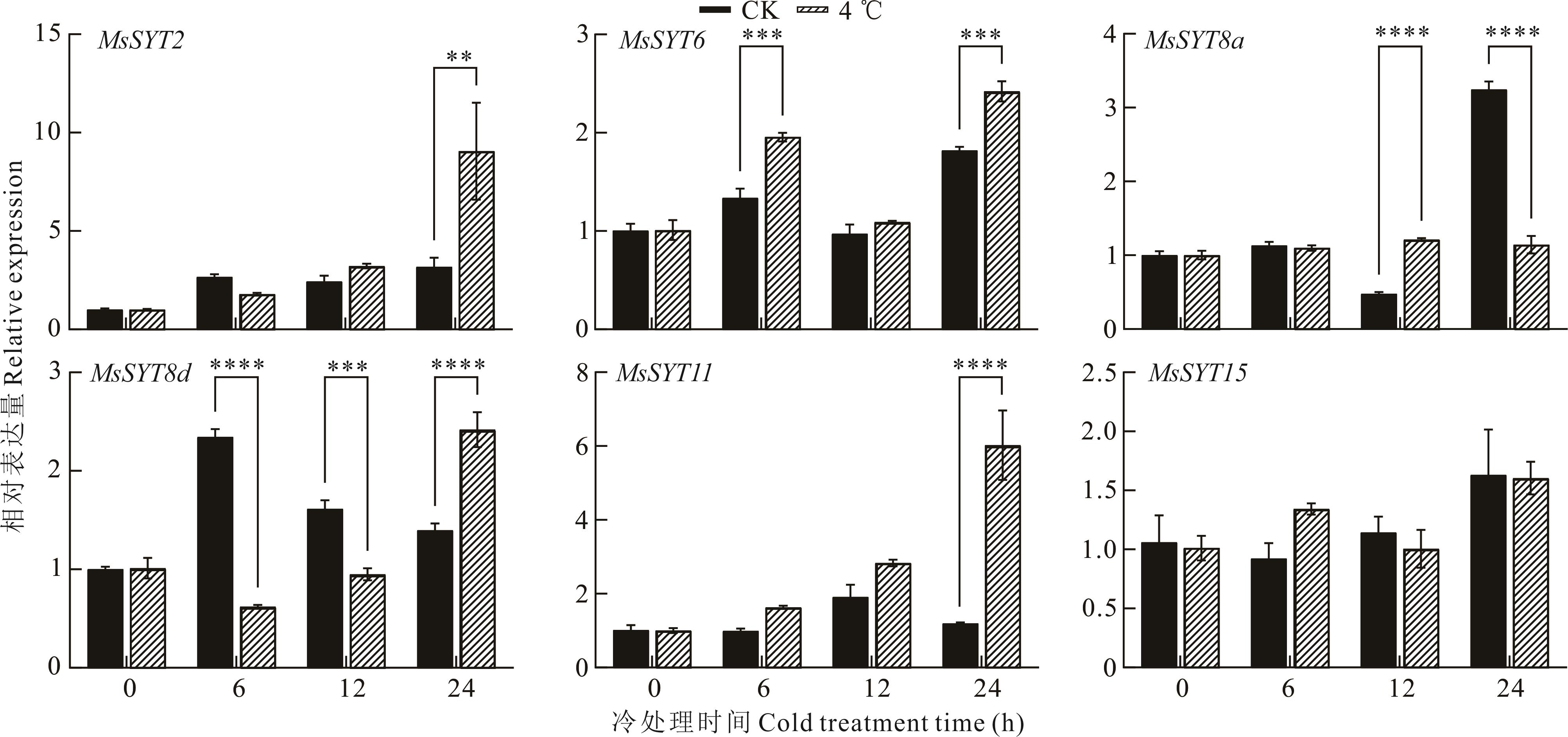
植物中的突触结合蛋白(SYT)属于钙结合蛋白家族,近年来在植物生物学研究领域备受关注。目前,仅在拟南芥中存在对SYT基因家族成员鉴定的相关报道,而豆科植物紫花苜蓿中该方面的研究仍属空白。本研究以拟南芥SYT基因家族成员为参照,运用生物信息学方法,在紫花苜蓿中成功筛选出21个SYT基因。通过对21个MsSYT、25个MtSYT和 9个AtSYT蛋白进行系统发育分析,明确了它们之间的同源性,MsSYT基因被分成4个亚家族。在对MsSYT基因的分析中发现,其家族成员的理化性质存在相对差异,但是基因结构和蛋白保守基序在各亚家族之间却高度保守。进一步对MsSYT基因的顺式作用元件进行分析,结果显示其中包含光响应元件、胁迫响应元件和激素响应元件,这表明该家族基因在植物调节生长发育和应对非生物胁迫过程中发挥重要作用。同时,染色体定位和共线性分析表明,MsSYT基因在染色体上呈不均匀分布,存在两组非串联重复片段以及两组串联重复片段。实时定量PCR(RT-qPCR)检测结果表明部分MsSYT基因对盐、冷和干旱胁迫有响应,其中MsSYT8d对这3种胁迫均表现出显著响应。本研究首次系统地对紫花苜蓿中的SYT基因进行了鉴定,并分析了其理化性质、进化特征和表达模式,为后续研究MsSYT基因在植物生长发育和非生物胁迫响应过程中的功能特性提供了坚实的理论依据。

关键词: 突触结合蛋白, 紫花苜蓿, 非生物胁迫, 表达分析

Abstract:

Synaptotagmin (SYT) proteins in plants belong to the calcium-binding protein family and have attracted much attention in the field of plant biology research. Members of the SYT family have been identified in Arabidopsis thaliana, but little is known about this gene family in the legume alfalfa (Medicago sativa). In this study, 21 SYT genes were identified in the alfalfa genome based on searches using A. thalianaSYT gene sequences. The alfalfa SYT genes were then analyzed using bioinformatics methods. Phylogenetic analysis of SYT proteins of M. sativa, M. truncatula, and Arabidopsis (21 MsSYTs, 25 MtSYTs, and nine AtSYTs) clarified their homologous relationships and divided the MsSYT genes into four subfamilies. The putative proteins encoded by MsSYT genes showed some differences in their predicted physicochemical properties, but the gene structure and conserved protein motifs were highly conserved among the subfamilies. Analyses of the promoter sequences of MsSYT genes revealed cis-acting elements including light-responsive elements, stress-responsive elements, and hormone-responsive elements, indicating that MsSYTs plays important roles in plant growth and development and in responses to abiotic stresses. Chromosome localization analyses revealed that MsSYT genes were unevenly distributed among the chromosomes, and collinearity analyses detected two sets of non-tandem repeats and two sets of tandem repeats. Real-time quantitative PCR (RT-qPCR) analyses showed that some MsSYT genes responded to salt stress, cold stress, and drought stress, and MsSYT8d responded to all three stresses. This study is the first description of SYT genes in alfalfa, the physicochemical properties of their putative encoded proteins, and their evolutionary characteristics and transcript profiles. These results provide a solid theoretical basis for further research on the functional characteristics of MsSYTs in plant growth and development and abiotic stress responses.

Key words: synaptotagmin, alfalfa, abiotic stress, expression analysis