
ISSN 1004-5759 CN 62-1105/S
Acta Prataculturae Sinica ›› 2027, Vol. 36 ›› Issue (1): 149-162.DOI: 10.11686/cyxb2026031
Yi-jian YU( ), Ya-ning LI, Yu-hang YANG, Jin-qing ZHANG()
Received:2026-01-20
Revised:2026-03-12
Online:2027-01-20
Published:2026-11-25
Contact:
Jin-qing ZHANG
Yi-jian YU, Ya-ning LI, Yu-hang YANG, Jin-qing ZHANG. Effects of alkaline salt, drought and combined salt and drought stress on the ascorbic acid-glutathione cycle and gene expression in oats[J]. Acta Prataculturae Sinica, 2027, 36(1): 149-162.
基因名称 Gene name | 基因描述 Gene description | 定位 Location | 基因标识符 Gene identification | 正向引物 Forward primer | 反向引物 Reverse primer |
|---|---|---|---|---|---|
| AsAPX1 | L-抗坏血酸过氧化物酶1 L-ascorbate peroxidase 1 | 细胞质Cytosolic | AVESA.00001b.r3.5Ag0000469 | GGCTAGGCAGAAGCTCCG | GCCGGTCTTGGAGGACAC |
| AsAPX4 | L-抗坏血酸过氧化物酶4 L-ascorbate peroxidase 4 | 过氧化物酶体Peroxisomal | AVESA.00001b.r3.5Cg0000255 | CTGGTGGCCACAGTCTGG | GCCCCTCAGATTCCCCCT |
| AsAPX6 | L-抗坏血酸过氧化物酶6 L-ascorbate peroxidase 6 | 叶绿体/线粒体Chloroplastic/mitochondrial | AVESA.00001b.r3.5Cg0001174 | GCCCTCCTTCACCTGCTG | TTTACCCCAGCCACTGCG |
| AsAPX7 | L-抗坏血酸过氧化物酶7 L-ascorbate peroxidase 7 | 叶绿体Chloroplastic | AVESA.00001b.r3.2Cg0001902 | CGGTCTCACCAACCCACC | CGAGGACGAGGAGGGGAA |
| AsAPX8 | L-抗坏血酸过氧化物酶8 L-ascorbate peroxidase 8 | 叶绿体Chloroplastic | AVESA.00001b.r3.6Dg0001347 | AGACTCCTCGTCCACCCC | TGGACGATCGGGAGCTGA |
| AsDHAR2 | 谷胱甘肽S-转移酶DHAR2 Glutathione S-transferase DHAR2 | 叶绿体Chloroplastic | AVESA.00001b.r3.7Ag0001171 | GTCCTCGTCGACCCTCCT | CTTGGCGCAGACCTCCAG |
| AsGR1 | 谷胱甘肽还原酶1 Glutathione reductase 1 | 叶绿体Chloroplastic | AVESA.00001b.r3.4Ag0002304 | CTCGCCTCTCCCCTTCCT | CGCCATGGCTCTCTCTCG |
| AsGR2 | 谷胱甘肽还原酶2 Glutathione reductase 2 | 细胞质Cytosolic | AVESA.00001b.r3.6Ag0002030 | TTGCCATCTGCGAGCTCC | TCTTCTTGGGGACGCAGC |
| AsGPX1 | 磷脂过氧化氢谷胱甘肽过氧化物酶1 Phospholipid hydroperoxide glutathione peroxidase 1 | 叶绿体Chloroplastic | AVESA.00001b.r3.5Cg0002997 | TCCCTAAGGCGGCATCCT | ATGCTCTTCTCCGTGGCG |
| AsGPX6 | 磷脂过氧化氢谷胱甘肽过氧化物酶6 Phospholipid hydroperoxide glutathione peroxidase 6 | - | AVESA.00001b.r3.2Ag0001758 | GCTCGATCTCGTCTCGCC | TCGACGTCCTTCCCGCTA |
| AsGSTU1 | 谷胱甘肽S转移酶GSTU1 Glutathione S-transferase GSTU1 | - | AVESA.00001b.r3.4Dg0002076 | GGAGCTCGGGGAGAAGGA | CGCTGAACTCCCCGTACC |
| AsGSTU6 | 谷胱甘肽S转移酶GSTU6 Glutathione S-transferase GSTU6 | - | AVESA.00001b.r3.3Dg0000108 | GTGACAAGACCCCGCTCC | TTCACGTCCGGCAAGACC |
| AsGSTZ1 | 谷胱甘肽S转移酶GSTZ1 Glutathione S-transferase GSTZ1 | - | AVESA.00001b.r3.7Ag0001549 | GCCACCGGGGATGAAGTC | CGGCGGATTCTTGGGTGT |
| AsGRXS11 | 单巯基谷胱甘肽过氧化物还原酶-S11 Monothiol glutaredoxin-S11 | - | AVESA.00001b.r3.1Cg0001274 | AGAGCCTAGAGGACCGGC | CGAACTGAAGCCGCAACG |
| AsGRXS12 | 单巯基谷胱甘肽过氧化物还原酶-S12 Monothiol glutaredoxin-S12 | - | AVESA.00001b.r3.1Dg0000630 | AGGACCGACTGAAGGCCT | GGACCCAAAGCTGACCCC |
| AsGSH2 | 谷胱甘肽合成酶Glutathione synthetase | 叶绿体Chloroplastic | AVESA.00001b.r3.6Cg0000998 | TGGTCTTGCTTGCGGTGT | TACTCAGCCCATGCAGCG |
| AsVTC2 | GDP-L-半乳糖磷酸化酶2 GDP-L-galactose phosphorylase 2 | - | AVESA.00001b.r3.4Ag0003300 | TGTCGCAAGGGAGGCAAG | GTTTCTCTGTCGGCGCCT |
| AsVTC5 | GDP-L-半乳糖磷酸化酶5 GDP-L-galactose phosphorylase 5 | - | AVESA.00001b.r3.5Cg0000798 | GTCGCAAGGGAGGCAGAG | TGGAAGTGGAGGTGGTTGA |
| AsPAL | 苯丙氨酸氨裂解酶 Phenylalanine ammonia-lyase | - | AVESA.00001b.r3.6Cg0003392 | GGCGTCCAAGAAGGTGCT | AACACGGCCTCCTTGTCG |
| AsPPO | 多酚氧化酶Polyphenol oxidase | 叶绿体Chloroplastic | AVESA.00001b.r3.2Dg0002047 | AGCTTCGAGCAGCAGTGG | GGAGCTCCAGGTCAGGGA |
| Actin | - | - | GQ339780 | GAGCGGGAAATTGTGAGGGA | GAAGAGGACCTCAGGGCAAC |
Table 1 Primer sequences used for RT-qPCR analysis
基因名称 Gene name | 基因描述 Gene description | 定位 Location | 基因标识符 Gene identification | 正向引物 Forward primer | 反向引物 Reverse primer |
|---|---|---|---|---|---|
| AsAPX1 | L-抗坏血酸过氧化物酶1 L-ascorbate peroxidase 1 | 细胞质Cytosolic | AVESA.00001b.r3.5Ag0000469 | GGCTAGGCAGAAGCTCCG | GCCGGTCTTGGAGGACAC |
| AsAPX4 | L-抗坏血酸过氧化物酶4 L-ascorbate peroxidase 4 | 过氧化物酶体Peroxisomal | AVESA.00001b.r3.5Cg0000255 | CTGGTGGCCACAGTCTGG | GCCCCTCAGATTCCCCCT |
| AsAPX6 | L-抗坏血酸过氧化物酶6 L-ascorbate peroxidase 6 | 叶绿体/线粒体Chloroplastic/mitochondrial | AVESA.00001b.r3.5Cg0001174 | GCCCTCCTTCACCTGCTG | TTTACCCCAGCCACTGCG |
| AsAPX7 | L-抗坏血酸过氧化物酶7 L-ascorbate peroxidase 7 | 叶绿体Chloroplastic | AVESA.00001b.r3.2Cg0001902 | CGGTCTCACCAACCCACC | CGAGGACGAGGAGGGGAA |
| AsAPX8 | L-抗坏血酸过氧化物酶8 L-ascorbate peroxidase 8 | 叶绿体Chloroplastic | AVESA.00001b.r3.6Dg0001347 | AGACTCCTCGTCCACCCC | TGGACGATCGGGAGCTGA |
| AsDHAR2 | 谷胱甘肽S-转移酶DHAR2 Glutathione S-transferase DHAR2 | 叶绿体Chloroplastic | AVESA.00001b.r3.7Ag0001171 | GTCCTCGTCGACCCTCCT | CTTGGCGCAGACCTCCAG |
| AsGR1 | 谷胱甘肽还原酶1 Glutathione reductase 1 | 叶绿体Chloroplastic | AVESA.00001b.r3.4Ag0002304 | CTCGCCTCTCCCCTTCCT | CGCCATGGCTCTCTCTCG |
| AsGR2 | 谷胱甘肽还原酶2 Glutathione reductase 2 | 细胞质Cytosolic | AVESA.00001b.r3.6Ag0002030 | TTGCCATCTGCGAGCTCC | TCTTCTTGGGGACGCAGC |
| AsGPX1 | 磷脂过氧化氢谷胱甘肽过氧化物酶1 Phospholipid hydroperoxide glutathione peroxidase 1 | 叶绿体Chloroplastic | AVESA.00001b.r3.5Cg0002997 | TCCCTAAGGCGGCATCCT | ATGCTCTTCTCCGTGGCG |
| AsGPX6 | 磷脂过氧化氢谷胱甘肽过氧化物酶6 Phospholipid hydroperoxide glutathione peroxidase 6 | - | AVESA.00001b.r3.2Ag0001758 | GCTCGATCTCGTCTCGCC | TCGACGTCCTTCCCGCTA |
| AsGSTU1 | 谷胱甘肽S转移酶GSTU1 Glutathione S-transferase GSTU1 | - | AVESA.00001b.r3.4Dg0002076 | GGAGCTCGGGGAGAAGGA | CGCTGAACTCCCCGTACC |
| AsGSTU6 | 谷胱甘肽S转移酶GSTU6 Glutathione S-transferase GSTU6 | - | AVESA.00001b.r3.3Dg0000108 | GTGACAAGACCCCGCTCC | TTCACGTCCGGCAAGACC |
| AsGSTZ1 | 谷胱甘肽S转移酶GSTZ1 Glutathione S-transferase GSTZ1 | - | AVESA.00001b.r3.7Ag0001549 | GCCACCGGGGATGAAGTC | CGGCGGATTCTTGGGTGT |
| AsGRXS11 | 单巯基谷胱甘肽过氧化物还原酶-S11 Monothiol glutaredoxin-S11 | - | AVESA.00001b.r3.1Cg0001274 | AGAGCCTAGAGGACCGGC | CGAACTGAAGCCGCAACG |
| AsGRXS12 | 单巯基谷胱甘肽过氧化物还原酶-S12 Monothiol glutaredoxin-S12 | - | AVESA.00001b.r3.1Dg0000630 | AGGACCGACTGAAGGCCT | GGACCCAAAGCTGACCCC |
| AsGSH2 | 谷胱甘肽合成酶Glutathione synthetase | 叶绿体Chloroplastic | AVESA.00001b.r3.6Cg0000998 | TGGTCTTGCTTGCGGTGT | TACTCAGCCCATGCAGCG |
| AsVTC2 | GDP-L-半乳糖磷酸化酶2 GDP-L-galactose phosphorylase 2 | - | AVESA.00001b.r3.4Ag0003300 | TGTCGCAAGGGAGGCAAG | GTTTCTCTGTCGGCGCCT |
| AsVTC5 | GDP-L-半乳糖磷酸化酶5 GDP-L-galactose phosphorylase 5 | - | AVESA.00001b.r3.5Cg0000798 | GTCGCAAGGGAGGCAGAG | TGGAAGTGGAGGTGGTTGA |
| AsPAL | 苯丙氨酸氨裂解酶 Phenylalanine ammonia-lyase | - | AVESA.00001b.r3.6Cg0003392 | GGCGTCCAAGAAGGTGCT | AACACGGCCTCCTTGTCG |
| AsPPO | 多酚氧化酶Polyphenol oxidase | 叶绿体Chloroplastic | AVESA.00001b.r3.2Dg0002047 | AGCTTCGAGCAGCAGTGG | GGAGCTCCAGGTCAGGGA |
| Actin | - | - | GQ339780 | GAGCGGGAAATTGTGAGGGA | GAAGAGGACCTCAGGGCAAC |
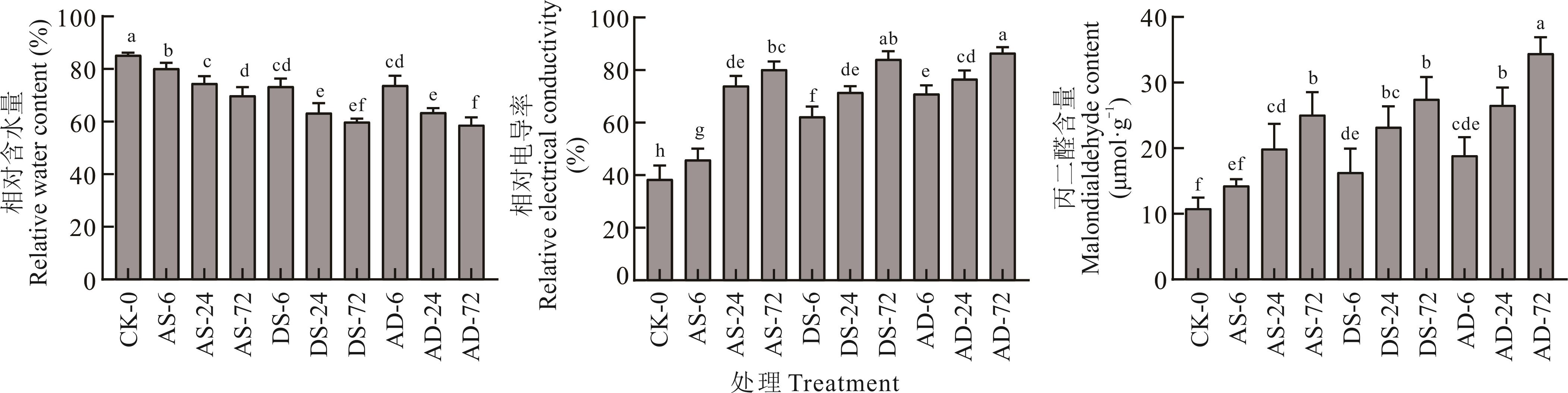
Fig.1 Effects of alkaline salt, drought, and combined stress on oat root cell membrane damage
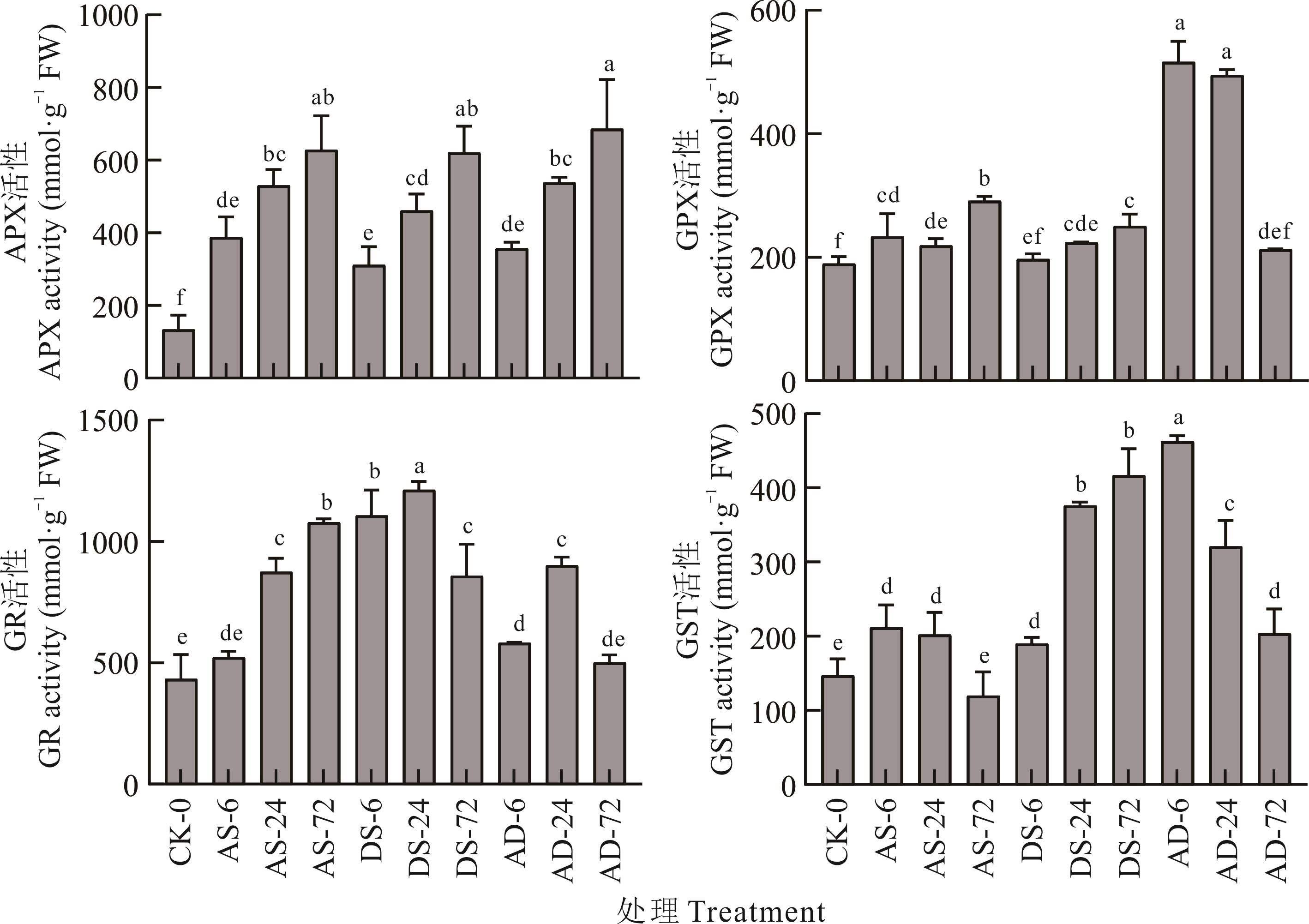
Fig.2 Changes in the activities of key enzymes in the ascorbic acid-glutathione (AsA-GSH) cycle in oat roots under alkaline salt, drought, and combined stresses

Fig.3 Changes in the contents of AsA-GSH cycle antioxidants and redox ratios in oat roots under alkaline salt, drought, and combined stresses
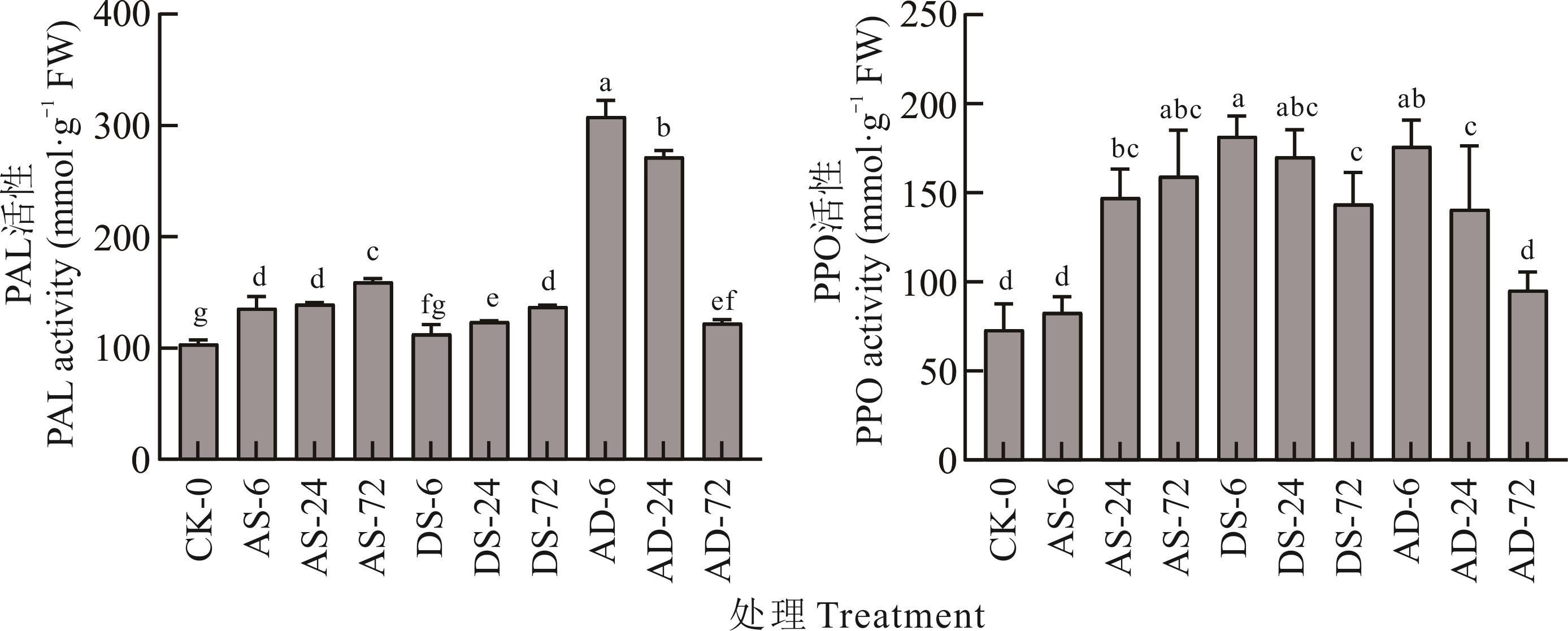
Fig.4 Changes in PAL and PPO activities in oat roots under alkaline salt, drought, and combined stresses

Fig.5 Expression of genes encoding key enzymes in the ascorbic acid-glutathione (AsA-GSH) cycle in oat roots under alkaline salt, drought, and combined stresses

Fig.6 Expression of genes related to glutathione (GSH) metabolism and redox regulation in oat roots under alkaline salt, drought, and combined stresses
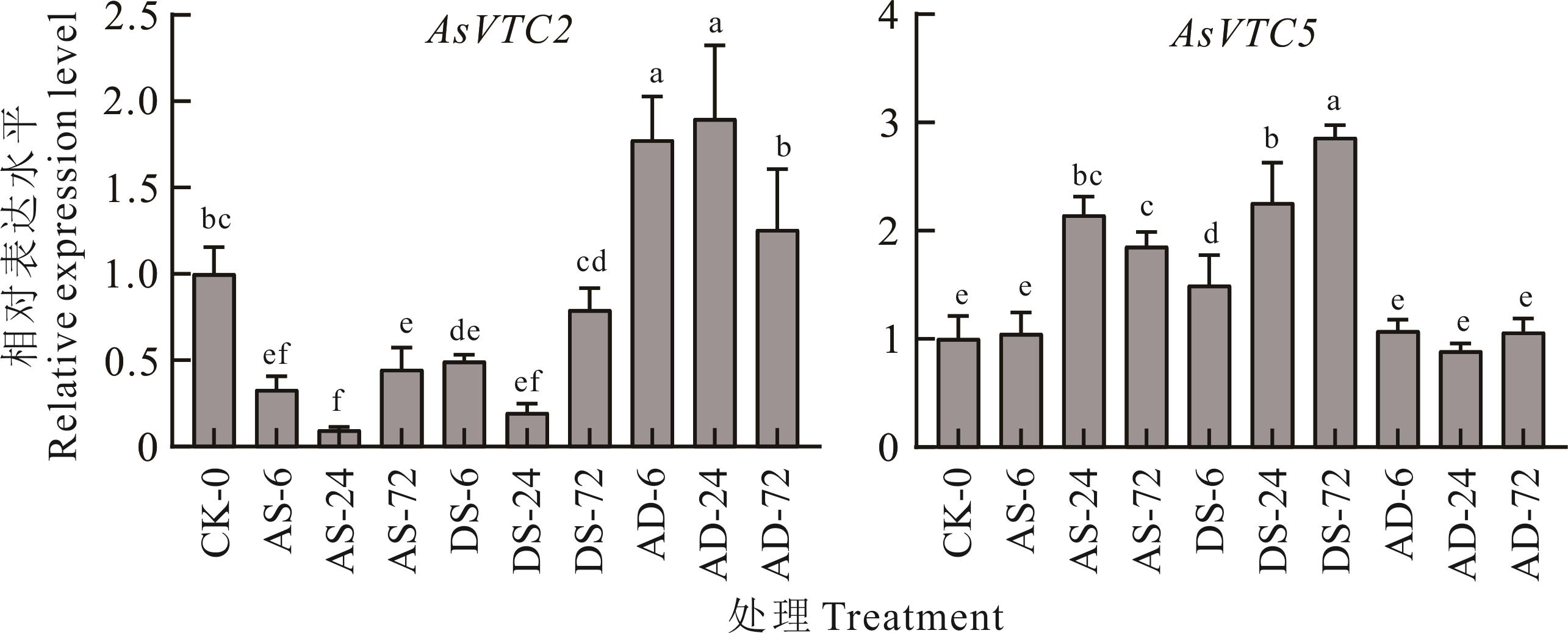
Fig.7 Expression of key genes involved in ascorbic acid (AsA) biosynthesis in oat roots under alkaline salt, drought, and combined stresses
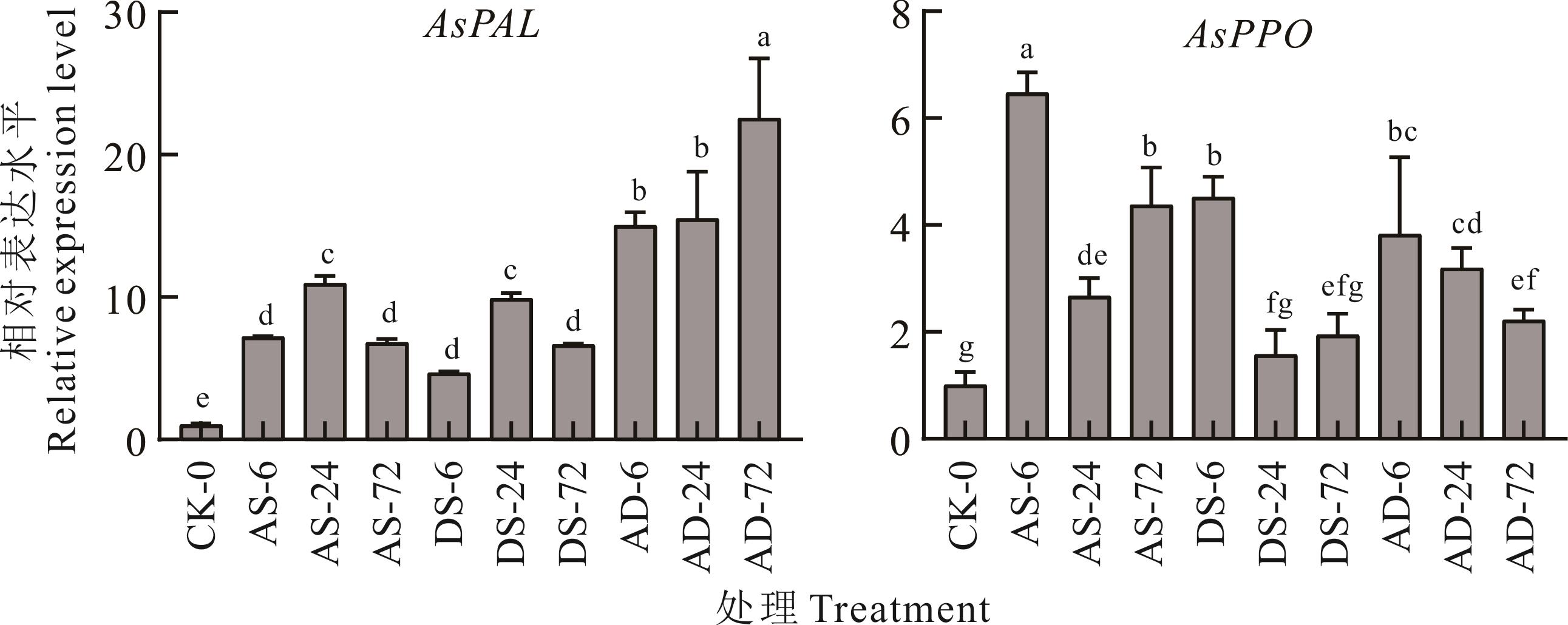
Fig.8 Expression of PAL and PPO genes in oat roots under alkaline salt, drought, and combined stresses

Fig.9 Heatmap analysis of physiological indicators of the antioxidant system and related gene expression in oats under alkaline salt, drought, and their combined stresses
| [1] | Zhao T, Lu H H, Zhang F, et al. Evaluation of forage production performance and prediction of introduction adaptability for different Avena sativa germplasms in the southeast edge of the Qinghai-Tibet plateau. Frontiers in Plant Science, 2025, 16: 1564278. |
| [2] | Wang X J, Wang J L, Ju Z L, et al. Comprehensive evaluation on production performance and nutritional quality of different varieties of forage oat in the Qinghai Lake Area. Scientia Agricultura Sinica, 2024, 57(19): 3730-3742. |
| 王小军, 王金兰, 琚泽亮, 等. 环青海湖地区不同饲用燕麦品种生产性能和营养品质综合评价. 中国农业科学, 2024, 57(19): 3730-3742. | |
| [3] | Song T, Hang J H, Shi X T, et al. Physiological responses and drought resistance evaluation of forage oat (Avena sativa L.) seedling cultivar under drought stress. Plant Signaling & Behavior, 2025, 20(1): 2574391. |
| [4] | Dong G, Zhao F Y, Chen J Q, et al. Land uses changed the dynamics and controls of carbon-water exchanges in alkali-saline Songnen Plain of Northeast China. Ecological Indicators, 2021, 133: 108353. |
| [5] | Tian Z J, Jia X Y, Chang J J, et al. Effects of salinity-alkalinity and degradation on soil phosphorus fractions and microbial communities in the Songnen Plain, Northeast China. Sustainability, 2025, 17(23): 10527. |
| [6] | Angon P B, Tahjib-Ul-Arif M, Samin S I, et al. How do plants respond to combined drought and salinity stress?-A systematic review. Plants, 2022, 11(21): 2884. |
| [7] | Zhao W, Chen X J, Wang J H, et al. Emerging mechanisms of plant responses to abiotic stress. Plants, 2025, 14(22): 3445. |
| [8] | Cao H L, Ding R S, Kang S Z, et al. Chapter three-drought, salt, and combined stresses in plants: effects, tolerance mechanisms, and strategies. Advances in Agronomy, 2023, 178: 107-163. |
| [9] | Wang Y, Hou Y Y, Ma Y Q, et al. Effect of glycine betaine treatment on chilling injury and ascorbic acid-glutathione cycle metabolism in peach fruits. Food Science, 2021, 42(13): 158-165. |
| 王懿, 侯媛媛, 马钰晴, 等. 甘氨酸甜菜碱处理对桃果实冷害及抗坏血酸-谷胱甘肽循环代谢的影响. 食品科学, 2021, 42(13): 158-165. | |
| [10] | Yang Q, Fan C F, Wang Y, et al. Role and underlying mechanism of the ascorbic acid-reduced glutathione cycle in scavenging hydrogen peroxide in postharvest melons induced by salicylic acid. Food Science, 2021, 42(1): 243-249. |
| 杨乾, 范存斐, 王毅, 等. 水杨酸处理诱导采后甜瓜抗坏血酸-还原型谷胱甘肽循环代谢清除过氧化氢的作用及机制. 食品科学, 2021, 42(1): 243-249. | |
| [11] | Costa J H, Roque A L M, Aziz S, et al. Genome-wide identification of ascorbate-glutathione cycle gene families in soybean (Glycine max) reveals gene duplication events and specificity of gene members linked to development and stress conditions. International Journal of Biological Macromolecules, 2021, 187: 528-543. |
| [12] | Hasanuzzaman M, Bhuyan M H M B, Anee T I, et al. Regulation of ascorbate-glutathione pathway in mitigating oxidative damage in plants under abiotic stress. Antioxidants, 2019, 8(9): 384. |
| [13] | Yang Z X, Zheng X, Chen L B, et al. Morphological adaptation strategies of Rumex hanus planted in saline-alkali land of arid areas. Acta Prataculturae Sinica, 2022, 31(7): 15-27. |
| 杨志新, 郑旭, 陈来宝, 等. 干旱区盐碱地食叶草根系形态分布适应策略研究. 草业学报, 2022, 31(7): 15-27. | |
| [14] | Fu Y Y, Li P H, Hamani A K M, et al. Effects of single and combined drought and salinity stress on the root morphological characteristics and root hydraulic conductivity of different winter wheat varieties. Plants, 2023, 12(14): 2694. |
| [15] | Schachtman D P, Goodger J Q D. Chemical root to shoot signaling under drought. Trends in Plant Science, 2008, 13(6): 281-287. |
| [16] | Li Z G, Yi X Y, Li Y T. Effect of pretreatment with hydrogen sulfide donor sodium hydrosulfide on heat tolerance in relation to antioxidant system in maize (Zea mays) seedlings. Biologia, 2014, 69(8): 1001-1009. |
| [17] | Koukol J, Conn E E. The metabolism of aromatic compounds in higher plants. Ⅳ. Purification and properties of the phenylalanine deaminase of Hordeum vulgare. Journal of Biological Chemistry, 1961, 236(10): 2692-2698. |
| [18] | Mayer A M, Harel E, Ben-Shaul R. Assay of catechol oxidase-a critical comparison of methods. Phytochemistry, 1966, 5(4): 783-789. |
| [19] | Zhang Y Q, Liu H, Ma X Y, et al. Genome-wide identification and expression analysis of the class Ⅲ peroxidase gene (PRXⅢ) family in Medicago sativa L. and its function in the abiotic stress response. BMC Plant Biology, 2025, 25(1): 1-15. |
| [20] | Pandey P, Singh J, Achary V M M, et al. Redox homeostasis via gene families of ascorbate-glutathione pathway. Frontiers in Environmental Science, 2015, 3: 25. |
| [21] | Wu P B, Li L J, Zhang Y L. Comprehensive evaluation of saline-alkali tolerance and comparison of rhizosphere soil organic acid content at rapeseed seedling stage. Crops, 2022(1): 110-115. |
| 吴鹏博, 李立军, 张艳丽. 油菜苗期耐盐碱性综合评价与根际土壤有机酸含量比较. 作物杂志, 2022(1): 110-115. | |
| [22] | Li M Y, Gao Z Y, Jiang L N, et al. Involvement of the ABA- and H2O2- mediated ascorbate-glutathione cycle in the drought stress responses of wheat roots. Phyton-International Journal of Experimental Botany, 2024, 93(2): 329-342. |
| [23] | Wang S J, Ma Q H, Li C, et al. Chloroplast responses to drought: integrative mechanisms and mitigation strategies. International Journal of Biological Macromolecules, 2025, 26(24): 11872. |
| [24] | Raja V, Qadir S U, Alyemeni M N, et al. Impact of drought and heat stress individually and in combination on physio-biochemical parameters, antioxidant responses, and gene expression in Solanum lycopersicum. 3 Biotech, 2020, 10(5): 208. |
| [25] | Cao H L, Ding R S, Du T S, et al. A meta-analysis highlights the cross-resistance of plants to drought and salt stresses from physiological, biochemical, and growth levels. Physiologia Plantarum, 2024, 176(2): e14282. |
| [26] | Zuo Z F, Li Y L, Wei Y J, et al. Identification of DREB genes from Zoysia japonica and their transcript profiles in response to abiotic stress. Acta Prataculturae Sinica, 2025, 34(5): 74-88. |
| 左志芳, 李永龙, 魏雨佳, 等. 结缕草DREB基因家族的鉴定及非生物胁迫下的表达模式分析. 草业学报, 2025, 34(5): 74-88. | |
| [27] | Xu Y H, Cheng J L, Hu H B, et al. Genome-wide identification of NAC family genes in oat and functional characterization of AsNAC109 in abiotic stress tolerance. Plants, 2024, 13(7): 1017. |
| [28] | Koussevitzky S, Suzuki N, Huntington S, et al. Ascorbate peroxidase 1 plays a key role in the response of Arabidopsis thaliana to stress combination. Journal of Biological Chemistry, 2008, 283(49): 34197-34203. |
| [29] | Sun M, Sun S J, Jia Z C, et al. Genome-wide analysis and expression profiling of glutathione reductase gene family in oat (Avena sativa) indicate their responses to abiotic stress during seed imbibition. International Journal of Molecular Sciences, 2022, 23(19): 11650. |
| [30] | Xu C B, Jiang L Y, Li A X, et al. Glutathione S-transferase in mediating adaptive responses of oats (Avena sativa) to osmotic and cadmium stress: genome-wide analysis. BMC Plant Biology, 2025, 25(1): 538. |
| [31] | Mazumdar A B, Chattopadhyay S. Glutathione pathways and gene networks: central players in crop adaptation to environmental stresses. Plant Growth Regulation, 2025, 105(6): 1927-1948. |
| [32] | Yengkokpam P, Mazumder P B. Antioxidant enzymatic activities and profiling of gene expression associated with organophosphate stress tolerance in Solanum melongena L. cv. Longai. 3 Biotech, 2021, 11(12): 510. |
| [1] | Ying ZHAO, Cong-cong ZHANG, Yu-ting SONG, Chong-min ZHANG, Yue AN, Bin-bin YANG, Yong MA, Bao-qiang WANG. Promoting effect of 2,4-epibrassinolide on the growth of quinoa seedlings under saline-alkali stress [J]. Acta Prataculturae Sinica, 2026, 35(9): 100-112. |
| [2] | Qi-lin ZHANG, Xiao-jun WANG, Jing LI, Chong-qing CHENG, Guo-ling LIANG, Wen-hui LIU, Ze-liang JU, Zhi-feng JIA, Xiang MA, Wen LI. Mixed sowing with different combinations of oat and annual leguminous forages in the Qinghai Lake area [J]. Acta Prataculturae Sinica, 2026, 35(9): 198-210. |
| [3] | Jin-di LIU, Shi-yong CHEN, Jin LI, Tao JIANG, Guo-ling LIANG, Qing-ping ZHOU. Identification of the sucrose transporter gene family in oats and its response to drought and saline-alkali conditions [J]. Acta Prataculturae Sinica, 2026, 35(8): 144-156. |
| [4] | De-feng HUANG, Ke-ke LI, Ke LAI, Jie BAN, Shuo WANG, Bo-kang QI, Xiao-wen ZHANG, Zhi-qiang ZHONG, Xiao-chen DENG, Xian-jun YUAN. Evaluation of yield, nutritional quality and silage quality of 18 oat varieties in Shigatse [J]. Acta Prataculturae Sinica, 2026, 35(8): 84-96. |
| [5] | Jia-yi YONG, Jia-xi YONG, Ying ZHANG, Hai-ying HU. Regrowth and forage quality responses to stubble height in five oat varieties [J]. Acta Prataculturae Sinica, 2026, 35(8): 97-111. |
| [6] | Bo-hong ZHANG, Xiang MA, Ze-liang JU, Lian-xue DUAN, Xiao-jun WANG, Zhi-feng JIA. Genetic diversity analysis and multi-trait evaluation of oat germplasm under different ecological conditions [J]. Acta Prataculturae Sinica, 2026, 35(7): 151-164. |
| [7] | Meng-yu REN, Li-qun WANG, Li-li NAN, Jia-yu GUO. Responses of new alfalfa lines to salt stress [J]. Acta Prataculturae Sinica, 2026, 35(6): 24-34. |
| [8] | Ming WEI, Xin-rui WU, Xuan WU, Hao LI, Guo-qiang WU, Wei-jie ZHANG, Zi-yi CHENG. Cloning of the betaine aldehyde dehydrogenase family BvBADH2 gene and its role in plant salt tolerance [J]. Acta Prataculturae Sinica, 2026, 35(5): 185-195. |
| [9] | Fei LI, Lin ZHANG, Ke-jia DE, Ting-xu FENG, Wei-shan LIN, Xue-mei XIANG, Xi-jie WEI. Effects of mixed sowing of oat and common vetch on the microbial diversity of inter-root soil in the Sanjiangyuan region [J]. Acta Prataculturae Sinica, 2026, 35(5): 99-112. |
| [10] | Yi-bo WANG, Xue-hua MING, Jian-yong ZHANG, Qi YUAN, Jian-ming DU, Bin WANG, Teng-fei WANG, Yi-yin ZHANG, Jian LAN, Le MU. Multi-trait evaluation of the production performance and seed yield of new oat germplasm materials in the arid area of Ningxia [J]. Acta Prataculturae Sinica, 2026, 35(4): 86-99. |
| [11] | Hao-bin JIA, Hao-yun JIANG, Ai-hua LI, Hai-bo WANG, Sun-quan LIN, Yue PAN, Jun-hong HUO, Jin-shun ZHAN. Effects of diets with different concentrate-to-roughage ratios on the growth rate, serum biochemical indexes, and rumen fermentation of Guangfeng goats [J]. Acta Prataculturae Sinica, 2026, 35(3): 170-184. |
| [12] | Xiang MA, Zhong-xing LI, Rong-chen YANG, Ze-liang JU, Zhi-feng JIA, Pei-zhi YANG. The effect of salt stress on sugar and endogenous hormone content in oat varieties with contrasting salt tolerance [J]. Acta Prataculturae Sinica, 2026, 35(3): 235-244. |
| [13] | Yi-lin DI, Si-tian LIU, Xin-ying LIU, Yong DU, Zhou LI. Effects of γ-aminobutyric acid on cadmium stress tolerance and cadmium uptake and transport in creeping bentgrass [J]. Acta Prataculturae Sinica, 2026, 35(2): 208-220. |
| [14] | Hong-shen XU, Miao-miao DOU, Hui-qiong SUN, Xin-yu WANG, Zhuo-jun LIU, Yu-ning HAO, Xiao-xia SHI, Zi-hao GUO, Xiao-dong JIANG, Chun-lai ZHANG. Identification and expression analysis of the auxin response factor (ARF) gene family in Chenopodium quinoa [J]. Acta Prataculturae Sinica, 2026, 35(12): 210-226. |
| [15] | Yi-man LIU, Hong-mei ZHANG, Yi-wen ZOU, Jun-li WANG, Bo-shuai LIU, Hao SUN, De-feng LI. Production performance and aerial root characteristics of 20 autumn-sown forage oat varieties in northern Henan [J]. Acta Prataculturae Sinica, 2026, 35(11): 132-144. |
| Viewed | ||||||
|
Full text |
|
|||||
|
Abstract |
|
|||||
