
ISSN 1004-5759 CN 62-1105/S
Acta Prataculturae Sinica ›› 2026, Vol. 35 ›› Issue (5): 139-150.DOI: 10.11686/cyxb2025213
Yi-han WANG( ), Lu-meng SHI, Zhi-jian LI, Bang-wei ZHOU()
Received:2025-05-27
Revised:2025-07-21
Online:2026-05-20
Published:2026-03-11
Contact:
Bang-wei ZHOU
Yi-han WANG, Lu-meng SHI, Zhi-jian LI, Bang-wei ZHOU. Effects of grass species and biochar application rate on soda saline-alkali soil improvement and forage growth in northeast China[J]. Acta Prataculturae Sinica, 2026, 35(5): 139-150.
| pH | 水分 Moisture (%) | 有机碳 Organic carbon (OC, %) | 磷 Phosphorus (P, %) | 氮 Nitrogen (N, %) | 钾 Potassium (K, %) | 养分含量 Nutrients content (%) |
|---|---|---|---|---|---|---|
| 8.5 | 15.3 | 63.7 | 0.97 | 1.52 | 2.84 | 5.33 |
Table 1 Basic physicochemical properties of biochar
| pH | 水分 Moisture (%) | 有机碳 Organic carbon (OC, %) | 磷 Phosphorus (P, %) | 氮 Nitrogen (N, %) | 钾 Potassium (K, %) | 养分含量 Nutrients content (%) |
|---|---|---|---|---|---|---|
| 8.5 | 15.3 | 63.7 | 0.97 | 1.52 | 2.84 | 5.33 |
含水量 Water content (WC, %) | pH | 电导率 Electric conductivity (EC, | 有效磷 Available phosphorus (AP, mg·kg-1 ) | 有机质 Organic matter (OM, g·kg-1) | 铵态氮 NH4+-N (mg·kg-1) | 硝态氮 NO3--N (mg·kg-1) | 速效钾 Available potassium (AK, mg·kg-1) |
|---|---|---|---|---|---|---|---|
| 13.27 | 8.60 | 268 | 18.45 | 8.47 | 3.72 | 5.62 | 139.42 |
Table 2 Basic physicochemical properties of experimental field soil
含水量 Water content (WC, %) | pH | 电导率 Electric conductivity (EC, | 有效磷 Available phosphorus (AP, mg·kg-1 ) | 有机质 Organic matter (OM, g·kg-1) | 铵态氮 NH4+-N (mg·kg-1) | 硝态氮 NO3--N (mg·kg-1) | 速效钾 Available potassium (AK, mg·kg-1) |
|---|---|---|---|---|---|---|---|
| 13.27 | 8.60 | 268 | 18.45 | 8.47 | 3.72 | 5.62 | 139.42 |

Fig.1 Effects of biochar addition and cultivation of different forage grass species on soil pH, electrical conductivity, water content, porosity, and bulk density
物种 Species (S) | 处理 Treatment (T) | 年份 Year (Y) | 钠离子 Na+ (mg·kg-1) | 钙离子 Ca2+ (mg·kg-1) | 镁离子 Mg2+ (mg·kg-1) | 钠吸附比Sodium adsorption ration (SAR, mmol·L-1) | 碱化度Exchangeable sodium percentage (ESP, %) | 铵态氮 NH4+-N (mg·kg-1) | 硝态氮 NO3--N (mg·kg-1) |
|---|---|---|---|---|---|---|---|---|---|
羊草 L. chinensis | CK | 2022 | 168.71±9.90a | 5.75±0.14ab | 36.56±1.19a | 7.79±0.22a | 8.94±0.17a | 4.40±0.55a | 17.75±0.56a |
| T1 | 2022 | 103.86±8.12b | 6.66±0.53a | 32.13±6.36a | 5.17±0.37b | 6.00±0.48a | 7.70±1.51a | 19.91±2.51a | |
| T2 | 2022 | 111.25±6.93b | 4.72±0.72b | 33.50±8.32a | 6.70±1.27ab | 7.62±1.47a | 4.31±0.45a | 16.21±2.24a | |
星星草 P. tenuiflora | CK | 2022 | 178.96±7.04a | 5.48±0.32ab | 33.20±1.09a | 9.26±0.31ab | 10.89±0.36ab | 4.50±0.44a | 18.20±0.81a |
| T1 | 2022 | 166.18±8.90a | 6.56±0.67a | 43.00±4.05a | 7.06±1.01b | 8.21±1.22b | 6.50±1.13a | 24.68±2.75a | |
| T2 | 2022 | 132.45±22.16a | 4.11±0.78b | 21.50±5.59b | 11.44±1.28a | 13.25±1.37a | 4.25±0.25a | 17.96±2.24a | |
羊草 L. chinensis | CK | 2023 | 110.72±1.92A | 3.98±0.02B | 11.68±0.34B | 14.36±0.45A | 16.05±0.22A | 3.31±0.14B | 4.93±0.51B |
| T1 | 2023 | 84.95±0.92C | 5.58±0.30A | 13.27±0.49B | 5.98±0.19C | 7.05±0.11C | 4.07±0.12A | 5.61±0.35AB | |
| T2 | 2023 | 95.14±0.73B | 3.25±0.20C | 17.00±0.49A | 10.18±0.32B | 11.77±0.39B | 4.46±0.20A | 6.91±0.09A | |
星星草 P. tenuiflora | CK | 2023 | 97.89±3.07A | 2.46±0.16B | 7.99±0.48B | 17.02±0.89A | 18.66±0.90A | 3.89±0.15B | 5.63±0.35B |
| T1 | 2023 | 73.32±0.71B | 3.37±0.18A | 9.56±0.58B | 6.57±0.15B | 7.72±0.21B | 4.40±0.20A | 7.47±0.47A | |
| T2 | 2023 | 79.84±1.37B | 3.84±0.22A | 13.33±0.13A | 15.31±1.64A | 16.43±1.89A | 4.57±0.10A | 6.93±0.09AB | |
| T | 9079.07** | 32.20 | 327.08 | 1790.37*** | 1432.58*** | 35.24*** | 124.56*** | ||
| S | 4561.34* | 42.11* | 12.50 | 10.25 | 47.81 | 1.82 | 4.65 | ||
| Y | 8.50×10⁴*** | 228.89*** | 1.50×10⁴*** | 975.84*** | 712.96*** | 66.84*** | 3089.10*** | ||
| T×S | 9168.85** | 17.12 | 197.39 | 145.37* | 131.52* | 1.06 | 5.48 | ||
| T×Y | 2315.07 | 92.27*** | 239.83 | 848.35*** | 660.22*** | 22.83* | 91.52*** | ||
| S×Y | 745.70 | 4.34 | 190.60 | 17.01 | 3.58 | 0.71 | 0.26 | ||
| T×S×Y | 1.60×10⁴ | 35.41 | 399.63 | 153.36 | 138.52 | 4.72 | 7.08 | ||
Table 3 Effects of biochar addition and cultivation of different forage grass species on soil saline ions and nitrogen status
物种 Species (S) | 处理 Treatment (T) | 年份 Year (Y) | 钠离子 Na+ (mg·kg-1) | 钙离子 Ca2+ (mg·kg-1) | 镁离子 Mg2+ (mg·kg-1) | 钠吸附比Sodium adsorption ration (SAR, mmol·L-1) | 碱化度Exchangeable sodium percentage (ESP, %) | 铵态氮 NH4+-N (mg·kg-1) | 硝态氮 NO3--N (mg·kg-1) |
|---|---|---|---|---|---|---|---|---|---|
羊草 L. chinensis | CK | 2022 | 168.71±9.90a | 5.75±0.14ab | 36.56±1.19a | 7.79±0.22a | 8.94±0.17a | 4.40±0.55a | 17.75±0.56a |
| T1 | 2022 | 103.86±8.12b | 6.66±0.53a | 32.13±6.36a | 5.17±0.37b | 6.00±0.48a | 7.70±1.51a | 19.91±2.51a | |
| T2 | 2022 | 111.25±6.93b | 4.72±0.72b | 33.50±8.32a | 6.70±1.27ab | 7.62±1.47a | 4.31±0.45a | 16.21±2.24a | |
星星草 P. tenuiflora | CK | 2022 | 178.96±7.04a | 5.48±0.32ab | 33.20±1.09a | 9.26±0.31ab | 10.89±0.36ab | 4.50±0.44a | 18.20±0.81a |
| T1 | 2022 | 166.18±8.90a | 6.56±0.67a | 43.00±4.05a | 7.06±1.01b | 8.21±1.22b | 6.50±1.13a | 24.68±2.75a | |
| T2 | 2022 | 132.45±22.16a | 4.11±0.78b | 21.50±5.59b | 11.44±1.28a | 13.25±1.37a | 4.25±0.25a | 17.96±2.24a | |
羊草 L. chinensis | CK | 2023 | 110.72±1.92A | 3.98±0.02B | 11.68±0.34B | 14.36±0.45A | 16.05±0.22A | 3.31±0.14B | 4.93±0.51B |
| T1 | 2023 | 84.95±0.92C | 5.58±0.30A | 13.27±0.49B | 5.98±0.19C | 7.05±0.11C | 4.07±0.12A | 5.61±0.35AB | |
| T2 | 2023 | 95.14±0.73B | 3.25±0.20C | 17.00±0.49A | 10.18±0.32B | 11.77±0.39B | 4.46±0.20A | 6.91±0.09A | |
星星草 P. tenuiflora | CK | 2023 | 97.89±3.07A | 2.46±0.16B | 7.99±0.48B | 17.02±0.89A | 18.66±0.90A | 3.89±0.15B | 5.63±0.35B |
| T1 | 2023 | 73.32±0.71B | 3.37±0.18A | 9.56±0.58B | 6.57±0.15B | 7.72±0.21B | 4.40±0.20A | 7.47±0.47A | |
| T2 | 2023 | 79.84±1.37B | 3.84±0.22A | 13.33±0.13A | 15.31±1.64A | 16.43±1.89A | 4.57±0.10A | 6.93±0.09AB | |
| T | 9079.07** | 32.20 | 327.08 | 1790.37*** | 1432.58*** | 35.24*** | 124.56*** | ||
| S | 4561.34* | 42.11* | 12.50 | 10.25 | 47.81 | 1.82 | 4.65 | ||
| Y | 8.50×10⁴*** | 228.89*** | 1.50×10⁴*** | 975.84*** | 712.96*** | 66.84*** | 3089.10*** | ||
| T×S | 9168.85** | 17.12 | 197.39 | 145.37* | 131.52* | 1.06 | 5.48 | ||
| T×Y | 2315.07 | 92.27*** | 239.83 | 848.35*** | 660.22*** | 22.83* | 91.52*** | ||
| S×Y | 745.70 | 4.34 | 190.60 | 17.01 | 3.58 | 0.71 | 0.26 | ||
| T×S×Y | 1.60×10⁴ | 35.41 | 399.63 | 153.36 | 138.52 | 4.72 | 7.08 | ||
物种 Species (S) | 处理 Treatment (T) | 产量 Yield (kg·hm-2) | 株高 Plant height (cm) | 茎粗 Stem diameter (mm) | 茎叶比 Ratio of stem to leaf | 穗长 Ear length (cm) | 叶宽 Leaf width (mm) |
|---|---|---|---|---|---|---|---|
羊草 L. chinensis | CK | 1789.68±38.73B | 82.10±1.68B | 1.78±0.04B | 2.64±0.11A | 18.68±0.43B | 5.56±0.10B |
| T1 | 2020.80±69.09A | 88.24±3.75AB | 1.84±0.05B | 3.20±0.22A | 18.70±0.37B | 5.28±0.29B | |
| T2 | 2117.52±38.63A | 92.88±0.69A | 2.10±0.03A | 2.98±0.21A | 20.60±0.56A | 6.92±0.37A | |
星星草 P. tenuiflora | CK | 574.20±43.97B | 49.08±2.94A | 1.68±0.11B | 3.35±0.05B | 14.48±0.45A | 14.46±0.96A |
| T1 | 594.90±35.51AB | 48.72±1.08A | 1.62±0.06B | 4.33±0.22A | 15.22±0.14A | 20.60±2.51A | |
| T2 | 739.50±26.77A | 52.50±2.72A | 2.12±0.06A | 4.66±0.33A | 15.48±0.35A | 21.76±1.44A | |
| T | 3.00×10⁵*** | 254.95* | 0.96*** | 4.28** | 11.47** | 97.65** | |
| S | 1.30×10⁷*** | 1.10×10⁴*** | 0.08 | 10.37*** | 136.53*** | 1271.40*** | |
| T×S | 6.10×10⁴ | 80.97 | 0.07 | 1.18 | 3.38 | 63.94* | |
Table 4 Effects of biochar application on agronomic traits and forage yield
物种 Species (S) | 处理 Treatment (T) | 产量 Yield (kg·hm-2) | 株高 Plant height (cm) | 茎粗 Stem diameter (mm) | 茎叶比 Ratio of stem to leaf | 穗长 Ear length (cm) | 叶宽 Leaf width (mm) |
|---|---|---|---|---|---|---|---|
羊草 L. chinensis | CK | 1789.68±38.73B | 82.10±1.68B | 1.78±0.04B | 2.64±0.11A | 18.68±0.43B | 5.56±0.10B |
| T1 | 2020.80±69.09A | 88.24±3.75AB | 1.84±0.05B | 3.20±0.22A | 18.70±0.37B | 5.28±0.29B | |
| T2 | 2117.52±38.63A | 92.88±0.69A | 2.10±0.03A | 2.98±0.21A | 20.60±0.56A | 6.92±0.37A | |
星星草 P. tenuiflora | CK | 574.20±43.97B | 49.08±2.94A | 1.68±0.11B | 3.35±0.05B | 14.48±0.45A | 14.46±0.96A |
| T1 | 594.90±35.51AB | 48.72±1.08A | 1.62±0.06B | 4.33±0.22A | 15.22±0.14A | 20.60±2.51A | |
| T2 | 739.50±26.77A | 52.50±2.72A | 2.12±0.06A | 4.66±0.33A | 15.48±0.35A | 21.76±1.44A | |
| T | 3.00×10⁵*** | 254.95* | 0.96*** | 4.28** | 11.47** | 97.65** | |
| S | 1.30×10⁷*** | 1.10×10⁴*** | 0.08 | 10.37*** | 136.53*** | 1271.40*** | |
| T×S | 6.10×10⁴ | 80.97 | 0.07 | 1.18 | 3.38 | 63.94* | |
物种 Species | 项目 Items | 产量 Yield | 含水量 Water content | 土壤容重 Soil bulk density | 孔隙度 Porosity | 有效磷 Available phosphorus | 有机碳 Organic carbon | 铵态氮 NH4+-N |
|---|---|---|---|---|---|---|---|---|
羊草 L. chinensis | 含水量Water content | 0.656** | ||||||
| 土壤容重Soil bulk density | -0.612* | -0.813** | ||||||
| 孔隙度Porosity | 0.643** | 0.618* | -0.507 | |||||
| 有效磷Available phosphorus | 0.660** | 0.725** | -0.483 | 0.718** | ||||
| 有机碳Organic carbon | 0.660** | 0.683** | -0.551* | 0.757** | 0.873** | |||
| 铵态氮NH4+-N | 0.721** | 0.712** | -0.529* | 0.662** | 0.912* | 0.700** | ||
| 硝态氮NO3--N | 0.741** | 0.694** | -0.643** | 0.618* | 0.594* | 0.685** | 0.558* | |
星星草 P. tenuiflora | 含水量Water content | 0.607* | ||||||
| 土壤容重Soil bulk density | -0.666** | -0.818** | ||||||
| 孔隙度Porosity | 0.707** | 0.900** | -0.906** | |||||
| 有效磷Available phosphorus | 0.345 | 0.592* | -0.736** | 0.690** | ||||
| 有机碳Organic carbon | 0.510 | 0.639* | -0.804** | 0.741** | 0.718** | |||
| 铵态氮NH4+-N | 0.345 | 0.578* | -0.560* | 0.512 | 0.608* | 0.337 | ||
| 硝态氮NO3--N | 0.234 | 0.116 | -0.342 | 0.184 | 0.554* | 0.472 | 0.373 |
Table 5 Correlation analysis between forage yield and soil physicochemical properties
物种 Species | 项目 Items | 产量 Yield | 含水量 Water content | 土壤容重 Soil bulk density | 孔隙度 Porosity | 有效磷 Available phosphorus | 有机碳 Organic carbon | 铵态氮 NH4+-N |
|---|---|---|---|---|---|---|---|---|
羊草 L. chinensis | 含水量Water content | 0.656** | ||||||
| 土壤容重Soil bulk density | -0.612* | -0.813** | ||||||
| 孔隙度Porosity | 0.643** | 0.618* | -0.507 | |||||
| 有效磷Available phosphorus | 0.660** | 0.725** | -0.483 | 0.718** | ||||
| 有机碳Organic carbon | 0.660** | 0.683** | -0.551* | 0.757** | 0.873** | |||
| 铵态氮NH4+-N | 0.721** | 0.712** | -0.529* | 0.662** | 0.912* | 0.700** | ||
| 硝态氮NO3--N | 0.741** | 0.694** | -0.643** | 0.618* | 0.594* | 0.685** | 0.558* | |
星星草 P. tenuiflora | 含水量Water content | 0.607* | ||||||
| 土壤容重Soil bulk density | -0.666** | -0.818** | ||||||
| 孔隙度Porosity | 0.707** | 0.900** | -0.906** | |||||
| 有效磷Available phosphorus | 0.345 | 0.592* | -0.736** | 0.690** | ||||
| 有机碳Organic carbon | 0.510 | 0.639* | -0.804** | 0.741** | 0.718** | |||
| 铵态氮NH4+-N | 0.345 | 0.578* | -0.560* | 0.512 | 0.608* | 0.337 | ||
| 硝态氮NO3--N | 0.234 | 0.116 | -0.342 | 0.184 | 0.554* | 0.472 | 0.373 |
物种 Species (S) | 处理 Treatment (T) | 叶绿素含量Chlorophyll content (Chl, SPAD values) | 可溶性糖含量Soluble sugar content (SSC, mg·g-1) | 脯氨酸含量 Proline content (Pro, mg·g-1) |
|---|---|---|---|---|
| 羊草L. chinensis | CK | 43.18±0.66B | 2.47±0.11A | 15.87±1.42A |
| T1 | 47.64±0.99A | 2.10±0.20AB | 12.90±1.33AB | |
| T2 | 46.70±0.75A | 1.81±0.06B | 9.82±0.44B | |
| 星星草P. tenuiflora | CK | 39.20±0.12A | 4.13±0.33A | 65.54±2.91A |
| T1 | 36.80±0.18A | 3.42±0.13A | 46.56±0.51A | |
| T2 | 39.60±0.24A | 3.77±0.17A | 31.85±5.28A | |
| T | 25.76** | 1.84* | 1981.31*** | |
| S | 1.30×10⁴*** | 20.32*** | 9250.99*** | |
| T×S | 29.74** | 0.50 | 962.72*** | |
Table 6 Effects of biochar application on forage physiological traits
物种 Species (S) | 处理 Treatment (T) | 叶绿素含量Chlorophyll content (Chl, SPAD values) | 可溶性糖含量Soluble sugar content (SSC, mg·g-1) | 脯氨酸含量 Proline content (Pro, mg·g-1) |
|---|---|---|---|---|
| 羊草L. chinensis | CK | 43.18±0.66B | 2.47±0.11A | 15.87±1.42A |
| T1 | 47.64±0.99A | 2.10±0.20AB | 12.90±1.33AB | |
| T2 | 46.70±0.75A | 1.81±0.06B | 9.82±0.44B | |
| 星星草P. tenuiflora | CK | 39.20±0.12A | 4.13±0.33A | 65.54±2.91A |
| T1 | 36.80±0.18A | 3.42±0.13A | 46.56±0.51A | |
| T2 | 39.60±0.24A | 3.77±0.17A | 31.85±5.28A | |
| T | 25.76** | 1.84* | 1981.31*** | |
| S | 1.30×10⁴*** | 20.32*** | 9250.99*** | |
| T×S | 29.74** | 0.50 | 962.72*** | |
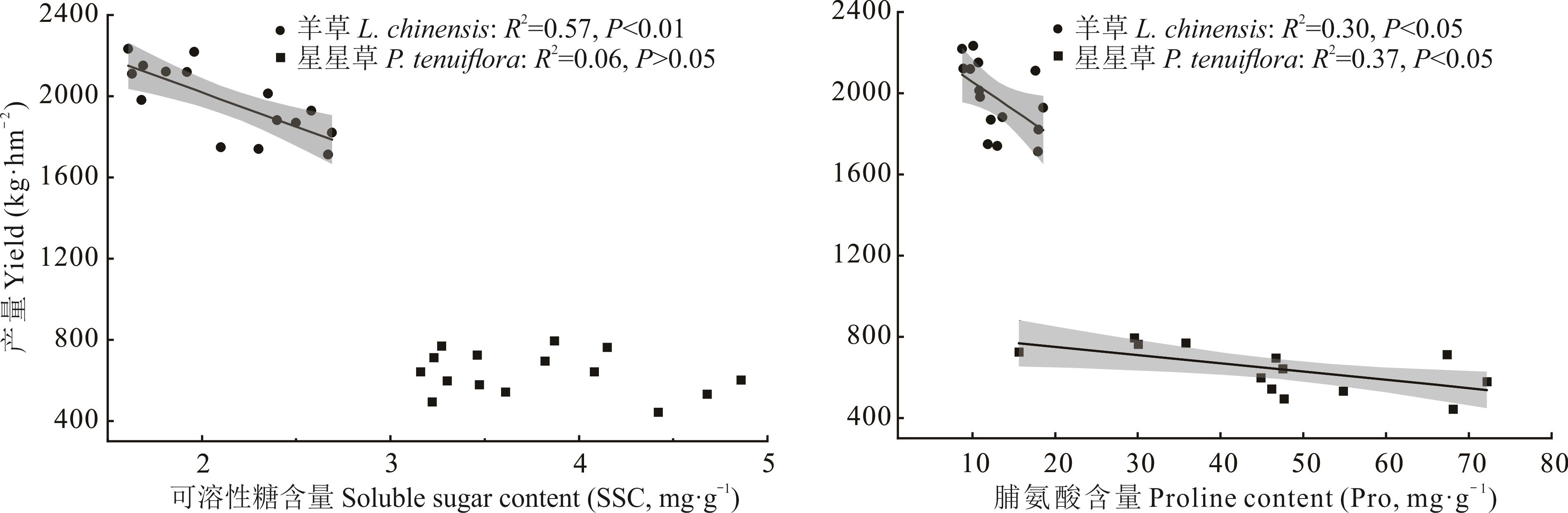
Fig.2 Correlation analysis between forage yield and forage constituents
| [1] | Li X J. The alkili-saline land and agricultural sustainable development of the western Songnen Plain in China. Geographical Science, 2000, 20(1): 51-55. |
| 李秀军. 松嫩平原西部土地盐碱化与农业可持续发展. 地理科学, 2000, 20(1): 51-55. | |
| [2] | Wang S R, Huang Y X. Research progress on saline-alkali land improvement in Songnen Plain. Soils and Crops, 2023, 12(2): 206-217. |
| 王世睿, 黄迎新. 松嫩平原盐碱地改良治理研究进展. 土壤与作物, 2023, 12(2): 206-217. | |
| [3] | Gu H B, Song Y, Pan J. Research progress of influencing factors on salinization of Songnen Plain. Journal of Anhui Agricultural Sciences, 2010, 38(10): 16895-16898. |
| 谷洪彪, 宋洋, 潘杰. 松嫩平原盐碱化形成影响因素研究进展. 安徽农业科学, 2010, 38(10): 16895-16898. | |
| [4] | Zeng Y X, Li X Q. Discussion on improvement techniques for saline-alkali land. Agriculture of Jilin, 2019(13): 80. |
| 曾玉霞, 李兴强. 盐碱地改良技术探讨. 吉林农业, 2019(13): 80. | |
| [5] | Frenkel H, Gerstl Z, Alperovitch N. Exchange-induced dissolution of gypsum and the reclamation of sodic soils. European Journal of Soil Science, 1989, 40(3): 599-611. |
| [6] | Chen W T, Guo L Z, Yan B, et al. Effects of amendments on oat growth and soil physical properties in saline-alkali soils. Journal of Gansu Agricultural University, 2024, 59(5): 136-144. |
| 陈文涛, 郭丽琢, 剡斌, 等. 改良剂对盐碱地燕麦生长及土壤物理性状的调控效应. 甘肃农业大学学报, 2024, 59(5): 136-144. | |
| [7] | Sun F L. Amelioration of saline-alkali land through hydraulic measures for rice cultivation. Hydro Science and Cold Zone Engineering, 2010(10): 30. |
| 孙福利. 水利措施改良盐碱地种植水稻. 水利科学与寒区工程, 2010(10): 30. | |
| [8] | Peng Y N, Zhao T W, Liang Y, et al. Amelioration effects of compound microbial fertilizer application on saline-alkali soil in the Hexi Corridor. South-Central Agricultural Science and Technology, 2024, 45(3): 3-8. |
| 彭轶楠, 赵廷伟, 梁燕, 等. 施用复合微生物菌肥对河西走廊盐碱地的改良效果. 中南农业科技, 2024, 45(3): 3-8. | |
| [9] | He X S, Geng Z C, She D, et al. Implications of production and agricultural utilization of biochar and its international dynamic. Transactions of the Chinese Society of Agricultural Engineering, 2011, 27(2): 1-7. |
| 何绪生, 耿增超, 佘雕, 等. 生物炭生产与农用的意义及国内外动态. 农业工程学报, 2011, 27(2): 1-7. | |
| [10] | Xiong C Q. Effects of fulvic acid and biochar on the improvement of soda-alkali soil and the growth of maize. Yangzhou: Yangzhou University, 2024. |
| 熊传琦. 黄腐酸和生物炭对苏打盐碱土壤改良效果和玉米生长的影响. 扬州: 扬州大学, 2024. | |
| [11] | Qin J, Shu J, Liu J, et al. Study on the effects of different media and sampling method on the counting of Eurotium cristatum in Fuzhuan tea of Jingyang. China Food Safety Magazine, 2022(26): 66-68. |
| 秦婧, 舒静, 刘静, 等. 不同培养基和取样方式对泾阳茯砖茶中冠突散囊菌计数的影响研究. 食品安全导刊, 2022(26): 66-68. | |
| [12] | Jiang S G. Review on soil bulk density determination method. Hubei Agricultural Sciences, 2019, 58(S2): 82-86, 91. |
| 江胜国. 国内土壤容重测定方法综述. 湖北农业科学, 2019, 58(S2): 82-86, 91. | |
| [13] | Meng Z F. Sodium adsorption ratio (SAR) for preventing secondary soil alkalization. The Journal of Shandong Agriculture and Engineering University, 1998(1): 26-28. |
| 孟昭甫. 预防土壤次生碱化的钠吸附比指标. 山东农业工程学院学报, 1998(1): 26-28. | |
| [14] | National Forestry Administration of the People’s Republic of China, Forest Soil Research Laboratory, Research Institute of Forestry, Chinese Academy of Forestry. Calculation of soil alkalization degree: LY/T 1249-1999. Beijing: China Forestry Publishing House, 1999. |
| 中华人民共和国国家林业局, 中国林业科学研究院林业研究所森林土壤研究室. 土壤碱化度的计算: LY/T 1249-1999. 北京: 中国林业出版社, 1999. | |
| [15] | Ministry of Environmental Protection of the People’s Republic of China. Soil-Determination of dry matter and water content-Gravimetric method: HJ 613-2011. Beijing: China Environmental Science Press, 2011. |
| 中华人民共和国环境保护部. 土壤 干物质和水分的测定 重量法: HJ 613-2011. 北京: 中国环境科学出版社, 2011. | |
| [16] | Li H K, Dong X L. Analysis of soil bulk density at the soil moisture station in Dianshang Village. The Farmers Consultant, 2021(3): 47, 60. |
| 李海宽, 董小丽. 店上村墒情站土壤容重的测定分析. 农业科技创新, 2021(3): 47, 60. | |
| [17] | Ministry of Environmental Protection of the People’s Republic of China. Soil quatity-Determination of available phosphorus-Sodium hydrogen carbonate solution-Mo-Sb anti spectrophotometric method: HJ 704-2014. Beijing: China Environmental Science Press, 2014. |
| 中华人民共和国环境保护部. 土壤 有效磷的测定 碳酸氢钠浸提-钼锑抗分光光度法: HJ 704-2014. 北京: 中国环境科学出版社, 2014. | |
| [18] | Ministry of Environmental Protection of the People’s Republic of China. Determination of soil organic carbon potassium dichromate oxidation-spectrophotometric method: HJ 615-2011. Beijing: China Environmental Science Press, 2011. |
| 中华人民共和国环境保护部. 土壤 有机碳的测定 重铬酸钾氧化-分光光度法: HJ 615-2011. 北京: 中国环境科学出版社, 2011. | |
| [19] | National Technical Committee on Soil Quality of Standardization Administration of China (SAC/TC 404). Soil quality-Determination of nitrate, nitrite and ammonium in soils-Extraction with potassium chloride solution and determination using automated method with segmented flow analysis: GB/T 42485-2023. Beijing: China Standards Press, 2023. |
| 全国土壤质量标准化技术委员会(SAC/TC 404). 土壤质量 土壤硝态氮、亚硝态氮和铵态氮的测定 氯化钾溶液浸提手工分析法: GB/T 42485-2023. 北京: 中国标准出版社, 2023. | |
| [20] | Zhang Q, Wei Z W, Yan T F. Correlation and path analysis of oat seed yield with agronomic characters in Jiang-Huai area. Crops, 2021(5): 146-152. |
| 张琦, 魏臻武, 闫天芳. 江淮地区燕麦籽粒产量与农艺性状的相关性及通径分析. 作物杂志, 2021(5): 146-152. | |
| [21] | Liu Q S, Jia Y L, Xiao Y, et al. Study on the adaptability evaluation of feeding oats in the eastern plain of Hebei Province. Heilongjiang Animal Science and Veterinary Medicine, 2022(3): 102-106. |
| 刘青松, 贾艳丽, 肖宇, 等. 河北东部平原区饲用燕麦适应性评价研究. 黑龙江畜牧兽医, 2022(3): 102-106. | |
| [22] | Lu C H. Study on drought resistance and evaluation on turf use quality of eight wild annual bluegrass. Lanzhou: Gansu Agricultural University, 2010. |
| 鲁存海. 8种野生早熟禾抗旱性及草坪质量综合评价研究. 兰州: 甘肃农业大学, 2010. | |
| [23] | Wystalska K, Kwarciak-Kozłowska A, Włodarczyk R. Influence of technical parameters of the pyrolysis process on the surface area, porosity, and hydrophobicity of biochar from sunflower husk pellet. Sustainability, 2023, 15(1): 394. |
| [24] | Kammann C I, Linsel S, Gößling J W, et al. Influence of biochar on drought tolerance of Chenopodium quinoa Willd and on soil-plant relations. Plant and Soil, 2011, 345(1/2): 195-210. |
| [25] | Aitken R L, Moody P W. The effect of valence and ionic-strength on the measurement of pH buffer capacity. Soil Research, 1994, 32(5): 975-984. |
| [26] | Gliniak M, Sikora J, Sadowska U, et al. Impact of biochar on soil water content and electrical conductivity. Institute of Physics Conference Series: Earth and Environmental Science, 2019, 362: 012044. |
| [27] | Fidel R B, Laird D A, Thompson M L, et al. Characterization and quantification of biochar alkalinity. Chemosphere, 2017, 167: 367-373. |
| [28] | Ma W M, Ma L, Jiao J T, et al. Impact of straw incorporation on the physicochemical profile and fungal ecology of saline-alkaline soil. Microorganisms, 2024, 12(2): 277. |
| [29] | ELsaman N K, Amin A E A Z, El-Razek M A, et al. Comparative effects of different types and doses of biochar on soil quality indicators and arugula growth under saline conditions. Scientific Reports, 2025, 15(1): 10046. |
| [30] | Sun H J, Zhang H C, Shi W M, et al. Effect of biochar on nitrogen use efficiency, grain yield and amino acid content of wheat cultivated on saline soil. Plant Soil and Environment, 2019, 65(2): 83-89. |
| [31] | Liu B Y, Dai Y S, Cheng X, et al. Straw mulch improves soil carbon and nitrogen cycle by mediating microbial community structure and function in the maize field. Frontiers in Microbiology, 2023(14): 1217966. |
| [32] | Yao Y, Gao B, Zhang M, et al. Effect of biochar amendment on sorption and leaching of nitrate, ammonium, and phosphate in a sandy soil. Chemosphere, 2012, 89(11): 1467-1471. |
| [33] | Wang S B, Gao P L, Zhang Q W, et al. Application of biochar and organic fertilizer to saline-alkali soil in the Yellow River Delta: Effects on soil water, salinity, nutrients, and maize yield. Soil Use and Management, 2022: 38(4): 1679-1692. |
| [34] | Abo-Elyousr K A M, Mousa M A A, Ibrahim O H M, et al. Calcium-rich biochar stimulates salt resistance in pearl millet (Pennisetum glaucum L.) plants by improving soil quality and enhancing the antioxidant defense. Plants, 2022, 11(10): 1301. |
| [35] | Burrell L D, Zehetner F, Rampazzo N, et al. Long-term effects of biochar on soil physical properties. Geoderma, 2016(282): 96-102. |
| [36] | Yang S H. Effects of different vegetations on soil micro-food web characteristics in the Songnen Plain Wetland. Harbin: Northeast Forestry University, 2024. |
| 杨舒涵. 松嫩平原湿地不同植被类型对土壤微食物网结构和特征的影响. 哈尔滨: 东北林业大学, 2024. | |
| [37] | Hua L, Jin S S, Luo J J. Effect of Bio-char on the micro-environment characteristics and humus in soil. Ecology and Environmental Sciences, 2012, 21(11): 1795-1799. |
| 花莉, 金素素, 洛晶晶. 生物质炭输入对土壤微域特征及土壤腐殖质的作用效应研究. 生态环境学报, 2012, 21(11): 1795-1799. | |
| [38] | Amin A E A Z. Effects of saline water on soil properties and red radish growth in saline soil as a function of co-applying wood chips biochar with chemical fertilizers. BMC Plant Biology, 2023, 23(1): 382. |
| [39] | Deng X Y, Tang F L, Zhu R F, et al. Determination and optimization of cultivation for phosphorus-solubilizing capacity in rhizosphere of Leymus chinensis and Puccinellia tenuiflora in Songnen Grassland. Heilongjiang Animal Science and Veterinary Medicine, 2017(5): 158-161. |
| 邓小宇, 唐凤兰, 朱瑞芬, 等. 松嫩草地羊草和星星草根际溶磷能力测定及优化培养. 黑龙江畜牧兽医, 2017(5): 158-161. | |
| [40] | Anjum S A, Xie X Y, Wang L C, et al. Morphological, physiological and biochemical responses of plants to drought stress. African Journal of Agricultural Research, 2011, 6(9): 2026-2032. |
| [41] | Liu J X, Sun P, Zhao X Y, et al. Regulation of antioxidant metabolic pathways in ryegrass by biochar and arbuscular mycorrhizal fungi under salt stress. Periodical of Ocean University of China, 2025, 55(4): 81-89. |
| 刘佳鑫, 孙萍, 赵新月, 等. 盐胁迫下生物炭和丛枝菌根真菌对黑麦草抗氧化代谢路径的调节作用. 中国海洋大学学报, 2025, 55(4): 81-89. | |
| [42] | Murtaza G, Rizwan M, Usman M, et al. Biochar enhances the growth and physiological characteristics of Medicago sativa, Amaranthus caudatus and Zea mays in saline soils. BMC Plant Biology, 2024, 24(1): 304. |
| [43] | Johnson J M, Ibrahim A, Dossou-Yovo E R, et al. Inorganic fertilizer use and its association with rice yield gaps in sub-Saharan Africa. Global Food Security-agriculture Policy Economics and Environment, 2023(38): 100708. |
| [1] | Chao-rong LIU, Yong-cheng CHEN, Ying CHEN, Xu-dong ZHANG, Tian-yu HU, Li-he SU, Fan-fan ZHANG, Xu-zhe WANG, Kun YAO, Chun-hui MA. Differences in saline-alkali tolerance of five Leymus chinensis cultivars grown in saline-alkali soil from Xinjiang [J]. Acta Prataculturae Sinica, 2026, 35(4): 29-41. |
| [2] | Chang LIU, Ji-shan CHEN, Rui-fen ZHU, Wan-bin SUN, Bo YAO, Shi-kui DONG. Mitigation of soil microbial carbon and phosphorus limitations through organic fertilizer and biochar inputs in subtropical cultivated grassland [J]. Acta Prataculturae Sinica, 2026, 35(4): 54-66. |
| [3] | Lei LI, Yong-kuan MA, Peng JIANG, Zhi-ming ZHU, Li-dong JI, Long LI, Xing XU. Effects of a ‘six-aspect integrated’ pattern on dynamic changes in soil water and salt contents, quality of cultivated land, and silage maize productivity in saline-alkali land in the Ningxia irrigation area [J]. Acta Prataculturae Sinica, 2026, 35(3): 68-82. |
| [4] | Liang GUO, Yu-tong HU, Yu LIAO, Cheng-yu GONG, Xiao-yan YANG, Shang-qi GUAN, Cheng-qi JU. The impact of phosphorus addition and arbuscular mycorrhizal fungi on root architecture and nutrient utilization in Leymus chinensis [J]. Acta Prataculturae Sinica, 2025, 34(8): 165-178. |
| [5] | Wen-wen QI, Hong-yuan MA, Ya-xiao LI, Yan DU, Meng-dan SUN, Hai-tao WU. Progress in research on breeding methods to produce new, high-quality forage varieties [J]. Acta Prataculturae Sinica, 2024, 33(6): 187-202. |
| [6] | Xiao-yu LU, Ya-jie LIU, Cai-xia BAI, Jin-hua LI, Zi-he WANG, Chun-xue YANG. Effects of Chloris virgata and arbuscular mycorrhizal fungi on the growth of Leymus chinensis under alkali stress [J]. Acta Prataculturae Sinica, 2024, 33(11): 69-83. |
| [7] | Si-qi YANG, Ya-jing BAO, Jia-qi YE, Shuai WU, Meng ZHANG, Meng-ran XU, Yu ZHAO, Xiao-tao LYU, Xing-guo HAN. Comparison of photosynthetic-CO2 response process and models of Leymus chinensis under differing nitrogen addition and mowing conditions [J]. Acta Prataculturae Sinica, 2023, 32(9): 160-172. |
| [8] | Yan KANG, Yao-hui WANG, Tian-hui NIU, Zhe TENG, Zhi QI, Jia YANG. Functional identification of iron transport of LcZIP1 in Leymus chinensis [J]. Acta Prataculturae Sinica, 2023, 32(9): 173-180. |
| [9] | Ji FENG, Zhi-kuo LIU, Hai-yan LI, Yun-fei YANG, Jian GUO. Effects of enclosure and long-term mowing on vegetative reproduction characteristics of Leymus chinensis and Arundinella hirta populations in the Songnen Grassland, China [J]. Acta Prataculturae Sinica, 2023, 32(5): 50-60. |
| [10] | Jin-rui WU, Meng-zhen LI, Yong YANG, Ai-jun LIU, Pu-chang WANG, Hasibagen, Shi-jie LYU, Xiang-jun YUN. Spatial distribution of the Leymus chinensis population under different grazing intensities in a typical steppe area [J]. Acta Prataculturae Sinica, 2023, 32(12): 68-76. |
| [11] | Ya TAO, Li-jun XU, Feng LI, Wen-long LI, Qi-zhong SUN, Chang XU, Ke-jian LIN. The Leymus chinensis industry in China needs to be urgently revitalized [J]. Acta Prataculturae Sinica, 2023, 32(11): 188-198. |
| [12] | Ze-dong ZHOU, Hui-ling MA, Xu HAN, Yuan-heng LI, Xi-liang LI, Kun-na LI. Responses of photosynthetic characteristics of Leymus chinensis in temperate typical steppe to component factors of simulated grazing [J]. Acta Prataculturae Sinica, 2022, 31(8): 81-89. |
| [13] | Yi-chao CHEN, Xiao-ying SUN, Zhi-jie XIE, Pan ZHOU, Lu ZHANG, Xue-li GAO, Dong LI, Xiao-feng LIU. Screening of rhizosphere growth promoting bacteria and their application in tailings improvement [J]. Acta Prataculturae Sinica, 2022, 31(7): 50-63. |
| [14] | Cheng-zhen ZHAO, Qiang LI, Rong-zhen ZHONG. Effect of mowing in different phenological growth stages on shoot regrowth, root morphology and forage yield of Leymus chinensis [J]. Acta Prataculturae Sinica, 2022, 31(3): 92-100. |
| [15] | Zhan-dong PAN, Qian-qian MA, Xiao-long CHEN, Li-qun CAI, Xue-mei CAI, Bo DONG, Jun WU, Ren-zhi ZHANG. Effects of biochar addition on nutrient levels and humus and its components in dry farmland soils on the Loess Plateau [J]. Acta Prataculturae Sinica, 2022, 31(2): 14-24. |
| Viewed | ||||||
|
Full text |
|
|||||
|
Abstract |
|
|||||
