

ISSN 1004-5759 CN 62-1105/S
草业学报 ›› 2026, Vol. 35 ›› Issue (1): 170-178.DOI: 10.11686/cyxb2025168
• 研究论文 • 上一篇
尹含雪( ), 黄海贝, 钟文锐, 张庆, 姚旋()
收稿日期:2025-04-30
修回日期:2025-06-04
出版日期:2026-01-20
发布日期:2025-11-13
通讯作者:
姚旋
作者简介:E-mail: yaoxuan@scau.edu.cn基金资助:
Han-xue YIN(), Hai-bei HUANG, Wen-rui ZHONG, Qing ZHANG, Xuan YAO()
Received:2025-04-30
Revised:2025-06-04
Online:2026-01-20
Published:2025-11-13
Contact:
Xuan YAO
摘要:
本研究旨在探讨青贮时添加不同乳酸菌对象草品质及其四环素抗性基因的影响。试验采用完全随机区组设计,以象草为青贮原料,以乳酸菌作为添加剂。共设6个处理,不添加菌液处理作为对照组(CK)。处理组为添加不同菌液,分别为植物乳杆菌处理组(菌株A,LA)、植物乳杆菌处理组(菌株B,LB)、宜春乳酪杆菌处理组(LC)、戊糖片球菌处理组(LD)和棒状腐败乳杆菌处理组(LE)。青贮30 d后开袋取样,测定营养品质、抗生素抗性基因(ARGs)。结果表明,象草青贮过程中添加不同乳酸菌,所有处理组的pH均显著低于对照组(P<0.05),同时乳酸含量均有所增加,其中LC处理组的增加尤为显著(P<0.05)。部分处理显著降低了中性洗涤纤维、酸性洗涤纤维(ADF)含量,LA、LB、LC、LD处理组的ADF含量均显著低于对照组(P<0.05)。在青贮30 d后,所有处理组的氨态氮含量均显著低于对照组(P<0.05)。试验表明,添加乳酸菌青贮后与未添加的对照组相比,四环素抗性基因(TRGs)与可移动遗传原件(MGEs)的绝对丰度显著下降(P<0.05),其中tetA、tetX、tetM、tetW和tetK的绝对丰度与intl1呈极显著的正相关关系(P<0.01),且LC与LB处理组的TRGs绝对丰度显著下降(P<0.05),推断出添加宜春乳酪杆菌和植物乳杆菌有助于降低青贮象草的TRGs。综上所述,添加不同乳酸菌有助于提高青贮象草营养品质,可以减少四环素抗性基因污染。
尹含雪, 黄海贝, 钟文锐, 张庆, 姚旋. 不同乳酸菌对象草青贮品质及四环素抗性基因的影响[J]. 草业学报, 2026, 35(1): 170-178.
Han-xue YIN, Hai-bei HUANG, Wen-rui ZHONG, Qing ZHANG, Xuan YAO. Effects of different lactic acid bacteria on silage quality and tetracycline resistance genes in elephant grass[J]. Acta Prataculturae Sinica, 2026, 35(1): 170-178.
基因 Gene | 引物序列 Primer sequences (5′-3′) | 片段大小 Clip size (bp) | 退火温度 Annealing temperature (℃) | 参考文献 References |
|---|---|---|---|---|
| 16s | F:AGTTTGATCMTGGCTCAG | 1500 | 55 | [ |
| R:AAGTCGTAACAAGGTAACC | ||||
| int1 | F:GGCTTCGTGATGCCTGCTT | 148 | 55 | [ |
| R:CATTCCTGGCCGTGGTTCT | ||||
| int2 | F:GTTATTTTATTGCTGGGATTAGGC | 164 | 56 | [ |
| R:TTTTACGCTGCTGTATGGTGC | ||||
| tetA | F:TTGGCATTCTGCATTCACTCG | 174 | 58 | [ |
| R:CCACCCGTTCCACGTTGTT | ||||
| tetB | F:TTCACCGCATAGTCCCTT | 189 | 58 | [ |
| R:TGCAATAAATCCGAGCAG | ||||
| tetG | F:CAGCTTTCGGATTCTTACGG | 134 | 54 | [ |
| R:GATTGGTGAGGCTCGTTAGC | ||||
| tetK | F:TCGATAGGAACAGCAGTA | 168 | 58 | [ |
| R:CAGCAGATCCTACTCCTT | ||||
| tetM | F:GTGGACAAAGGTACAACGAG | 171 | 55 | [ |
| R:CGGTAAAGTTCGTCACACAC | ||||
| tetO | F:AACTTAGGCATTCTGGCTCAC | 171 | 60 | [ |
| R:TCCCACTGTTCCATATCGTCA | ||||
| tetX | F:CAATAATTGGTGGTGGACCC | 131 | 57 | [ |
| R:TTCTTACCTTGGACATCCCG | ||||
| tetW | F:GAGAGCCTGCTATATGCCAGC | 168 | 61 | [ |
| R:GGGCGTATCCACAATGTTAAC |
表1 PCR引物序列
Table 1 PCR primer sequences
基因 Gene | 引物序列 Primer sequences (5′-3′) | 片段大小 Clip size (bp) | 退火温度 Annealing temperature (℃) | 参考文献 References |
|---|---|---|---|---|
| 16s | F:AGTTTGATCMTGGCTCAG | 1500 | 55 | [ |
| R:AAGTCGTAACAAGGTAACC | ||||
| int1 | F:GGCTTCGTGATGCCTGCTT | 148 | 55 | [ |
| R:CATTCCTGGCCGTGGTTCT | ||||
| int2 | F:GTTATTTTATTGCTGGGATTAGGC | 164 | 56 | [ |
| R:TTTTACGCTGCTGTATGGTGC | ||||
| tetA | F:TTGGCATTCTGCATTCACTCG | 174 | 58 | [ |
| R:CCACCCGTTCCACGTTGTT | ||||
| tetB | F:TTCACCGCATAGTCCCTT | 189 | 58 | [ |
| R:TGCAATAAATCCGAGCAG | ||||
| tetG | F:CAGCTTTCGGATTCTTACGG | 134 | 54 | [ |
| R:GATTGGTGAGGCTCGTTAGC | ||||
| tetK | F:TCGATAGGAACAGCAGTA | 168 | 58 | [ |
| R:CAGCAGATCCTACTCCTT | ||||
| tetM | F:GTGGACAAAGGTACAACGAG | 171 | 55 | [ |
| R:CGGTAAAGTTCGTCACACAC | ||||
| tetO | F:AACTTAGGCATTCTGGCTCAC | 171 | 60 | [ |
| R:TCCCACTGTTCCATATCGTCA | ||||
| tetX | F:CAATAATTGGTGGTGGACCC | 131 | 57 | [ |
| R:TTCTTACCTTGGACATCCCG | ||||
| tetW | F:GAGAGCCTGCTATATGCCAGC | 168 | 61 | [ |
| R:GGGCGTATCCACAATGTTAAC |
| 项目Item | 含量Content |
|---|---|
| 干物质Dry matter (% FM) | 36.01±0.97 |
| 中性洗涤纤维Neutral detergent fiber (NDF, % DM) | 86.92±1.84 |
| 酸性洗涤纤维Acid detergent fiber (ADF, % DM) | 41.23±0.73 |
| 可溶性碳水化合物Water-soluble carbohydrate (WSC, % DM) | 35.73±1.55 |
| 乳酸菌Lactic acid bacteria (LAB, lg cfu·g-1 FM) | 4.86±0.96 |
| 酵母菌Yeasts (lg cfu·g-1 FM) | 4.43±0.21 |
| 霉菌Moulds (lg cfu·g-1 FM) | 3.44±0.60 |
| 大肠杆菌Coliform bacteria (lg cfu·g-1 FM) | 4.32±0.28 |
表2 象草原料营养成分及其表面微生物
Table 2 Elephant grass raw material nutrients and microorganisms on their surface
| 项目Item | 含量Content |
|---|---|
| 干物质Dry matter (% FM) | 36.01±0.97 |
| 中性洗涤纤维Neutral detergent fiber (NDF, % DM) | 86.92±1.84 |
| 酸性洗涤纤维Acid detergent fiber (ADF, % DM) | 41.23±0.73 |
| 可溶性碳水化合物Water-soluble carbohydrate (WSC, % DM) | 35.73±1.55 |
| 乳酸菌Lactic acid bacteria (LAB, lg cfu·g-1 FM) | 4.86±0.96 |
| 酵母菌Yeasts (lg cfu·g-1 FM) | 4.43±0.21 |
| 霉菌Moulds (lg cfu·g-1 FM) | 3.44±0.60 |
| 大肠杆菌Coliform bacteria (lg cfu·g-1 FM) | 4.32±0.28 |
项目 Item | 处理Treatment | 标准误 SEM | P值 P-value | |||||
|---|---|---|---|---|---|---|---|---|
| CK | LA | LB | LC | LD | LE | |||
| pH | 4.77a | 4.50b | 4.44c | 4.38c | 4.49b | 4.51b | 0.029 | ** |
| 乳酸菌Lactic acid bacteria (LAB, lg cfu·g-1 FM) | 7.83a | 7.28b | 7.25b | 8.16a | 6.94b | 7.22b | 0.098 | ** |
| 大肠杆菌Coliform bacteria (lg cfu·g-1 FM) | <2.00 | <2.00 | <2.00 | <2.00 | <2.00 | <2.00 | ND | NS |
| 酵母菌Yeasts (lg cfu·g-1 FM) | <2.00 | <2.00 | <2.00 | <2.00 | <2.00 | <2.00 | ND | NS |
| 霉菌Moulds (lg cfu·g-1 FM) | <2.00 | <2.00 | <2.00 | <2.00 | <2.00 | <2.00 | ND | NS |
| 乳酸Lactic acid (La, % DM) | 1.13b | 1.29ab | 1.39ab | 1.94a | 1.71ab | 1.33ab | 0.103 | NS |
| 乙酸Acetic acid (AA,% DM) | 0.36abc | 0.28bc | 0.25c | 0.60a | 0.32bc | 0.53ab | 0.040 | * |
| 丙酸Propionic acid (PA,% DM) | 0.06a | 0.05a | 0.08a | 0.13a | 0.13a | 0.03a | 0.014 | NS |
表3 添加乳酸菌后的象草青贮品质以及微生物
Table 3 Silage quality and microbial counts of elephant grass silage after the addition of lactic acid bacteria
项目 Item | 处理Treatment | 标准误 SEM | P值 P-value | |||||
|---|---|---|---|---|---|---|---|---|
| CK | LA | LB | LC | LD | LE | |||
| pH | 4.77a | 4.50b | 4.44c | 4.38c | 4.49b | 4.51b | 0.029 | ** |
| 乳酸菌Lactic acid bacteria (LAB, lg cfu·g-1 FM) | 7.83a | 7.28b | 7.25b | 8.16a | 6.94b | 7.22b | 0.098 | ** |
| 大肠杆菌Coliform bacteria (lg cfu·g-1 FM) | <2.00 | <2.00 | <2.00 | <2.00 | <2.00 | <2.00 | ND | NS |
| 酵母菌Yeasts (lg cfu·g-1 FM) | <2.00 | <2.00 | <2.00 | <2.00 | <2.00 | <2.00 | ND | NS |
| 霉菌Moulds (lg cfu·g-1 FM) | <2.00 | <2.00 | <2.00 | <2.00 | <2.00 | <2.00 | ND | NS |
| 乳酸Lactic acid (La, % DM) | 1.13b | 1.29ab | 1.39ab | 1.94a | 1.71ab | 1.33ab | 0.103 | NS |
| 乙酸Acetic acid (AA,% DM) | 0.36abc | 0.28bc | 0.25c | 0.60a | 0.32bc | 0.53ab | 0.040 | * |
| 丙酸Propionic acid (PA,% DM) | 0.06a | 0.05a | 0.08a | 0.13a | 0.13a | 0.03a | 0.014 | NS |
项目 Item | 处理Treatment | 标准误 SEM | P值 P-value | |||||
|---|---|---|---|---|---|---|---|---|
| CK | LA | LB | LC | LD | LE | |||
| 中性洗涤纤维Neutral detergent fiber (NDF, % DM) | 73.56b | 73.26b | 73.34b | 77.05a | 77.91a | 78.46a | 0.443 | * |
| 酸性洗涤纤维Acid detergent fiber (ADF, % DM) | 44.84a | 36.61c | 40.74b | 41.78b | 41.66b | 43.64a | 0.570 | ** |
| 可溶性碳水化合物Water soluble carbohydrate (WSC, % DM) | 8.56ab | 8.33ab | 8.75ab | 7.60b | 10.23a | 9.47ab | 0.277 | NS |
| 氨态氮Ammonia nitrogen (NH3-N) | 1.10a | 0.40c | 0.40c | 0.42c | 0.65b | 0.65b | 0.057 | ** |
表4 添加乳酸菌后的象草营养成分
Table 4 Elephant grass nutrients after the addition of lactic acid bacteria
项目 Item | 处理Treatment | 标准误 SEM | P值 P-value | |||||
|---|---|---|---|---|---|---|---|---|
| CK | LA | LB | LC | LD | LE | |||
| 中性洗涤纤维Neutral detergent fiber (NDF, % DM) | 73.56b | 73.26b | 73.34b | 77.05a | 77.91a | 78.46a | 0.443 | * |
| 酸性洗涤纤维Acid detergent fiber (ADF, % DM) | 44.84a | 36.61c | 40.74b | 41.78b | 41.66b | 43.64a | 0.570 | ** |
| 可溶性碳水化合物Water soluble carbohydrate (WSC, % DM) | 8.56ab | 8.33ab | 8.75ab | 7.60b | 10.23a | 9.47ab | 0.277 | NS |
| 氨态氮Ammonia nitrogen (NH3-N) | 1.10a | 0.40c | 0.40c | 0.42c | 0.65b | 0.65b | 0.057 | ** |
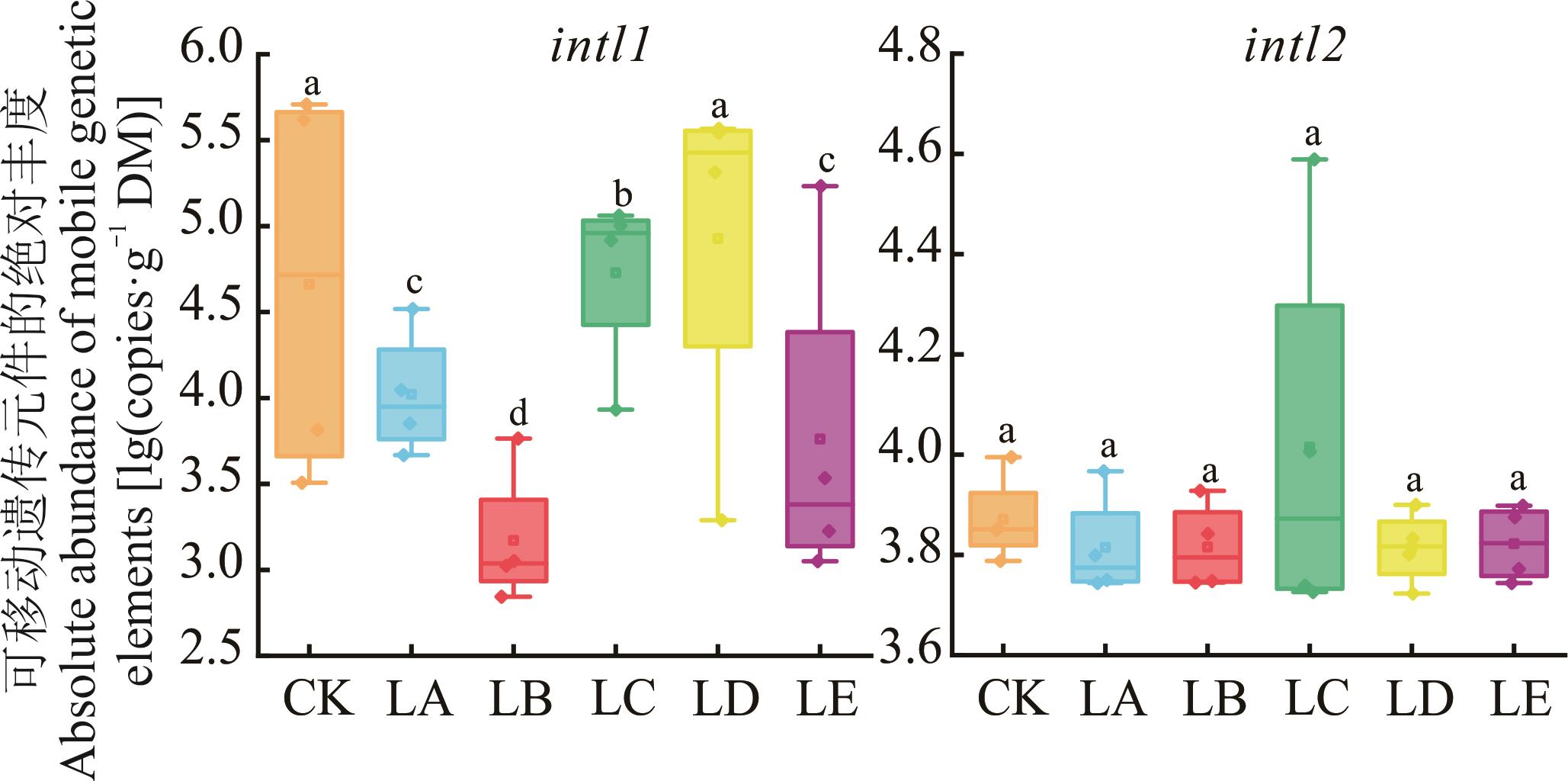
图1 发酵30 d后可移动遗传元件绝对丰度的变化不同小写字母表示不同处理间差异显著(P<0.05),下同。The different lowercase letters indicated significant differences among different treatments (P<0.05), the same below.
Fig.1 Changes in the absolute abundances of mobile genetic elements (MGEs) after 30 days of fermentation
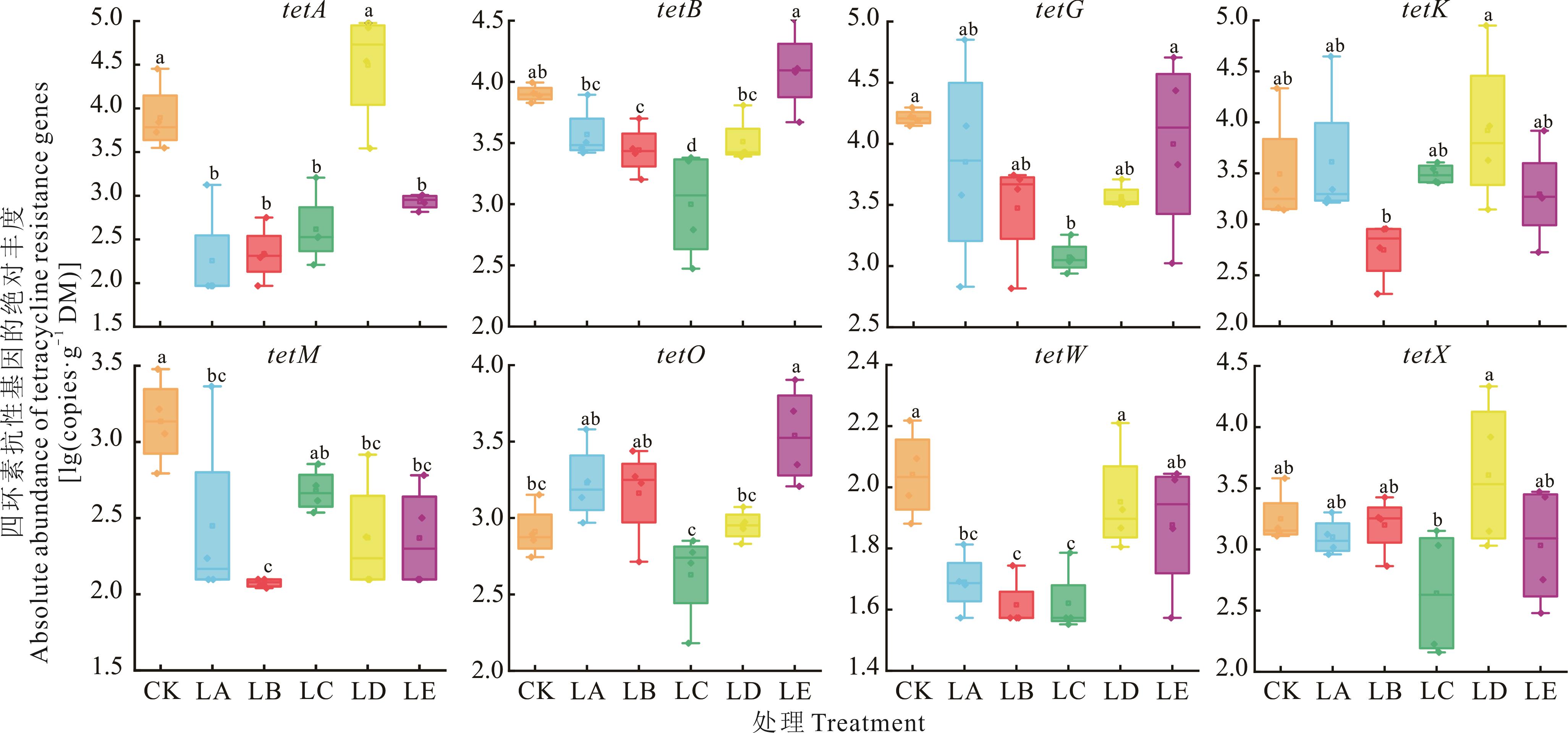
图2 发酵30 d后四环素抗性基因的绝对丰度变化
Fig.2 Changes in the absolute abundances of tetracycline resistance genes (TRGs) after 30 days of fermentation
| 基因Gene | intl1 | intl2 |
|---|---|---|
| tetA | 0.556** | -0.080 |
| tetB | 0.132 | -0.292** |
| tetG | 0.154 | -0.047 |
| tetX | 0.233** | -0.237** |
| tetM | 0.389** | -0.296** |
| tetW | 0.293** | -0.064 |
| tetO | 0.287 | -0.164** |
| tetK | 0.403** | -0.108** |
表5 四环素抗性基因与可移动遗传元件之间的相关性
Table 5 Correlations between tetracycline resistance genes (TRGs) and mobile genetic elements (MGEs)
| 基因Gene | intl1 | intl2 |
|---|---|---|
| tetA | 0.556** | -0.080 |
| tetB | 0.132 | -0.292** |
| tetG | 0.154 | -0.047 |
| tetX | 0.233** | -0.237** |
| tetM | 0.389** | -0.296** |
| tetW | 0.293** | -0.064 |
| tetO | 0.287 | -0.164** |
| tetK | 0.403** | -0.108** |
| [1] | Zhu Z W, Wang S F, Zhou M X. Analysis of factors affecting feed quality in feed production management. Feed Research, 2019, 42(12): 118-121. |
| 朱中伟, 汪善锋, 周明夏. 饲料生产管理中影响饲料品质因素的分析. 饲料研究, 2019, 42(12): 118-121. | |
| [2] | Wang C X. Research progress of silage production technology. Modern Journal of Animal Husbandry and Veterinary Medicine, 2024, 423(2): 72-75. |
| 王春晓. 青贮饲料制作技术研究进展. 现代畜牧兽医, 2024, 423(2): 72-75. | |
| [3] | Yan W M, Chen Y K, Yang P B, et al. Research progress on quality assessment methods of silage. China Animal Husbandry & Veterinary Medicine, 2024, 51(1): 135-144. |
| 闫威明, 陈雅坤, 杨鹏标, 等. 青贮饲料质量评定方法研究进展. 中国畜牧兽医, 2024, 51(1): 135-144. | |
| [4] | Tao S, Noriko O, Masataka S, et al. Fermentation quality of forage oat (Avena sativa L.) silages treated with pre-fermented juices, sorbic acid, glucose and encapsulated-glucose. Journal of the Faculty of Agriculture Kyushu University, 2003, 47(2): 341-349. |
| [5] | Shao T, Zhang L, Shimojo M, et al. Fermentation quality of Italian ryegrass (Lolium multiflorum Lam.) silages treated with encapsulated-glucose, glucose, sorbic acid and pre-fermented juices. Asian Australasian Journal of Animal Sciences, 2007, 20(20): 1699-1704. |
| [6] | Shao T, Ohba N, Shimojo M, et al. Effects of adding glucose, sorbic acid and pre-fermented juices on the fermentation quality of guineagrass (Panicum maximum Jacq.) silages. Asian Australasian Journal of Animal Sciences, 2004, 17(6): 808-813. |
| [7] | Wilkinson J L, Boxall A B A, Kolpin D W, et al. Pharmaceutical pollution of the world’s rivers. Proceedings of the National Academy of Sciences of the United States of America, 2022, 119(8): e2113947119. |
| [8] | Peng Y, Peiyan D, Yina Z, et al. Effect of pH on the mitigation of extracellular/intracellular antibiotic resistance genes and antibiotic resistance pathogenic bacteria during anaerobic fermentation of swine manure. Bioresource Technology, 2023, 373(5): 128706. |
| [9] | Lin H, Sun W C, Yu Q G, et al. Acidic conditions enhance the removal of sulfonamide antibiotics and antibiotic resistance determinants in swine manure. Environmental Pollution, 2020, 263(Part A): 14439. |
| [10] | Zhang X, Dong Z T, Usman S, et al. Metagenomics insights into the effects of lactic acid bacteria inoculation on the biological reduction of antibiotic resistance genes in alfalfa silage. Journal of Hazardous Materials, 2023, 443: 130287. |
| [11] | Zhong S. The effects of layer manure composting on tetracycline resistance genes under doxycycline stress. Guangzhou: South China Agricultural University, 2019. |
| 钟珊. 强力霉素胁迫下蛋鸡粪堆肥对四环素类抗生素抗性基因的影响. 广州: 华南农业大学, 2019. | |
| [12] | Sreejith S, Shamna S, Pratyuish P R, et al. Rapid detection of mobile resistance genes tetA and tetB from metaplasmid isolated from healthy broiler feces. Microbial Pathogenesis, 2022(166): 105504. |
| [13] | Jang H M, Kim B Y, Choi S, et al. Prevalence of antibiotic resistance genes from effluent of coastal aquaculture. South Korea. Environmental Pollution, 2018, 233: 1049-1057. |
| [14] | Lim T K, Hanifah A Y, Yusof M, et al. ermA, ermC, tetM and tetK are essential for erythromycin and tetracycline resistance among methicillin-resistant Staphylococcus aureus strains isolated from a tertiary hospital in Malaysia. Indian Journal of Medical Microbiology, 2012, 30(2): 203-207. |
| [15] | Wang C, Wang Y, Zhou W, et al. Effects of Lactobacillus plantarum (LP) and moisture on feed quality and tannin content of Moringa oleifera leaf silage. Acta Prataculturae Sinica, 2019, 28(6): 109-118. |
| 王成, 王益, 周玮, 等. 植物乳杆菌和含水量对辣木叶青贮品质和单宁含量的影响. 草业学报, 2019, 28(6): 109-118. | |
| [16] | Shu S M, Yang C H, Tang Z S, et al. Effects of different moisture contents with previously fermented juice on the quality of whipgrass (Hemarthria compressa) silage. Grass-Feeding Livestock, 2011, 153(4): 41-43. |
| 舒思敏, 杨春华, 唐智松, 等. 添加绿汁发酵液对不同含水量扁穗牛鞭草青贮料品质的影响. 草食家畜, 2011, 153(4): 41-43. | |
| [17] | Bolsen K K, Lin C, Brent B E, et al. Effect of silage additives on the microbial succession and fermentation process of alfalfa and corn silage. Journal of Dairy Science, 1992, 75(11): 3066-3083. |
| [18] | Xu Q F, Yu Z, Han J G, et al. Determining organic acid in alfalfa silage by HPLC. Grassland and Turf, 2007(2): 63-65, 67. |
| 许庆方, 玉柱, 韩建国, 等. 高效液相色谱法测定紫花苜蓿青贮中的有机酸. 草原与草坪, 2007(2): 63-65, 67. | |
| [19] | Chen X Z, Lin P D, Yue W, et al. Effects of various additives on the quality and microbial diversity of broad bean straw silage. Acta Prataculturae Sinica, 2025, 34(4): 164-174. |
| 陈鑫珠, 林平冬, 岳稳, 等. 不同添加剂对蚕豆秸秆青贮品质及微生物多样性的影响. 草业学报, 2025, 34(4): 164-174. | |
| [20] | Van Soest P J, Robertson J B, Lewis B A, et al. Methods for dietary fiber, neutral detergent fiber, and nonstarch polysaccharides in relation to animal nutrition. Journal of Dairy Science, 1991, 74(10): 3583-3597. |
| [21] | Chen X Z, Dong Z X, Zhang J G. Silage carbon sources preferred by epiphytic lactic acid bacteria. Fujian Journal of Agricultural Sciences, 2024, 39(5): 512-521. |
| 陈鑫珠, 董朝霞, 张建国. 饲草附生乳酸菌对碳源的选择性. 福建农业学报, 2024, 39(5): 512-521. | |
| [22] | Wen X. Screening of doxycycline-degrading bacteria and study on their drug resistance gene content. Guangzhou: South China Agricultural University, 2015. |
| 温馨. 强力霉素降解菌的筛选及其耐药基因含量研究. 广州: 华南农业大学, 2015. | |
| [23] | Jin H Z, Zhao Y P, Chen A H. Effects of different microbial agents on the fermentation quality and nutrient contents of corn straw silage. China Feed, 2018(6): 16-20. |
| 靳会珍, 赵月萍, 陈爱华. 不同微生物菌剂对青贮玉米秸秆发酵品质和营养成分的影响. 中国饲料, 2018(6): 16-20. | |
| [24] | Aslam B, Wang W, Arshad M I, et al. Antibiotic resistance: A rundown of a global crisis. Infection and Drug Resistance, 2018(11): 1645. |
| [25] | Bai J, Ding Z T, Su R, et al. Storage temperature is more effective than lactic acid bacteria inoculations in manipulating fermentation and bacterial community diversity, co-occurrence and functionality of the whole-plant corn silage. Microbiology Spectrum, 2022, 10(2): e0010122. |
| [26] | Qian X, Sun W, Gu J, et al. Variable effects of oxytetracycline on antibiotic resistance gene abundance and the bacterial community during aerobic composting of cow manure. Journal of Hazardous Materials, 2016(315): 61-69. |
| [1] | 袁玖. 绿豆衣、大蒜皮、茄子皮与玉米秸秆青贮料、精料间饲料组合效应研究[J]. 草业学报, 2025, 34(9): 173-184. |
| [2] | 李荣荣, 蔡瑞, 徐曦, 田蕊. 添加乳酸菌对柑桔劣果和玉米秸混合青贮发酵特性和气味特征的影响[J]. 草业学报, 2025, 34(8): 191-198. |
| [3] | 吴娟燕, 田静, 郭香, 黄莉莹, 张建国. 籽实青贮的研究与利用进展[J]. 草业学报, 2025, 34(8): 211-220. |
| [4] | 毛海龙, 邰继承, 杨恒山, 张玉芹, 张瑞富, 王真真. 带型配置对青贮玉米-大豆复合种植体冠层特性、产量和品质的影响[J]. 草业学报, 2025, 34(8): 30-42. |
| [5] | 孔天赐, 马学青, 贺晨帮, 樊泰延, 芦光新, 祁鹤兴. 青贮玉米真菌性病害对青贮发酵微生物多样性的影响[J]. 草业学报, 2025, 34(7): 95-106. |
| [6] | 王思然, 丁成龙, 田吉鹏, 程云辉, 许能祥, 张文洁, 王欣, 刘蓓一. 乳酸菌和抗真菌添加剂对湿啤酒糟全混合日粮青贮发酵品质、体外消化率及有氧稳定性的影响[J]. 草业学报, 2025, 34(6): 213-226. |
| [7] | 匡宗洋, 穆麟, 魏岚, 郭阳, 胥贵, 陈瑶, 石雪云, 魏仲珊, 张志飞. 不同混合比例和乳酸菌添加对全株玉米和大豆混合青贮品质及有氧稳定性的影响[J]. 草业学报, 2025, 34(6): 227-238. |
| [8] | 毛开, 许艺, 王学梅, 柴欢, 黄帅, 王坚, 郇树乾, 玉柱, 王目森. 植物乳植杆菌与糖蜜对花生秧青贮饲料发酵品质、生物胺含量及细菌群落的影响[J]. 草业学报, 2025, 34(5): 146-158. |
| [9] | 王思然, 刘蓓一, 田吉鹏, 程云辉, 许能祥, 张文洁, 王欣, 丁成龙. 复合乳酸菌添加剂对低温环境下意大利黑麦草青贮发酵品质的影响[J]. 草业学报, 2025, 34(5): 159-170. |
| [10] | 陈鑫珠, 林平冬, 岳稳, 杨雅妮, 邱水玲, 郑向丽. 不同添加剂对蚕豆秸秆青贮品质及微生物多样性的影响[J]. 草业学报, 2025, 34(4): 164-174. |
| [11] | 蒋鹏, 李磊, 解昊郡, 徐得甲, 王锐, 虎强, 孙权. 净化沼液滴灌对砂壤土质量、青贮玉米生产力的影响及安全消纳容量分析[J]. 草业学报, 2025, 34(4): 64-81. |
| [12] | 梁宇成, 张晓雯, 邵涛, 王文博, 原现军. 乳酸菌对全株玉米青贮发酵品质和霉菌毒素含量的影响[J]. 草业学报, 2025, 34(3): 123-133. |
| [13] | 韦竣玲, 刘晓琪, 王宛青, 邓铭, 孙宝丽, 郭勇庆. 玉米秸秆与毛豆茎叶混合比例对青贮发酵品质和微生物群落的影响[J]. 草业学报, 2025, 34(12): 111-120. |
| [14] | 王弟成, 柴强, 樊志龙, 殷文, 范虹, 何蔚, 孙亚丽, 桑会哲, 胡发龙. 混作豆科饲草及减氮对青贮玉米生产系统土壤理化特性和产量的影响[J]. 草业学报, 2025, 34(12): 97-110. |
| [15] | 张献芳, 聂刚, 黄思源, 余帅, 左粟田, 张新全. 基于SSR标记的象草F1代杂种分子鉴定及表型变异分析[J]. 草业学报, 2025, 34(11): 114-124. |
| 阅读次数 | ||||||
|
全文 |
|
|||||
|
摘要 |
|
|||||
