

ISSN 1004-5759 CN 62-1105/S
草业学报 ›› 2025, Vol. 34 ›› Issue (11): 114-124.DOI: 10.11686/cyxb2024515
• 研究论文 • 上一篇
张献芳( ), 聂刚, 黄思源, 余帅, 左粟田, 张新全()
收稿日期:2024-12-27
修回日期:2025-03-10
出版日期:2025-11-20
发布日期:2025-10-09
通讯作者:
张新全
作者简介:E-mail: zhangxq@sicau.edu.cn基金资助:
Xian-fang ZHANG(), Gang NIE, Si-yuan HUANG, Shuai YU, Su-tian ZUO, Xin-quan ZHANG()
Received:2024-12-27
Revised:2025-03-10
Online:2025-11-20
Published:2025-10-09
Contact:
Xin-quan ZHANG
摘要:
采用传统杂交方法,以象草品种“GM1”为母本、新品系“F-B”为父本进行杂交,获得536个杂种后代,并从中选取150个有代表性的F1代株系群体进行变异分析。本研究结合表型性状和SSR分子标记,对这些后代进行杂种鉴定及表型变异分析,旨在为象草种质创新和品种改良提供技术支撑。结果表明:1)F1代群体较亲本表型变异丰富,其中叶长明显强于亲本,具有明显的杂种优势,性状存在显著差异,变异系数为5.90%~21.05%;2)筛选出的14对SSR引物共扩增得到219条清晰条带,其中多态性条带118条,多态性比率(PPB)54.18%;每个SSR位点的多态信息含量(PIC)为29.59%~44.63%,均值为35.40%;3)对亲本及杂交F1代进行聚类分析可知,基于表型数据的聚类分析将杂交后代分为3类;基于SSR分子标记的聚类分析将杂交后代分为4类,SSR分子标记进一步证实了母本在遗传上的主导地位;4)利用特异性引物可以准确鉴定出真杂种,鉴定率高达98%,大部分真杂种条带为双亲互补型,部分为父本型,表明F1代中存在父母本的遗传信息。通过对150个F1代株系群体的表型性状和筛选出的15对SSR核心引物分析,能有效鉴定杂种的真实性,为后续杂交育种选育新品系提供后备材料。
张献芳, 聂刚, 黄思源, 余帅, 左粟田, 张新全. 基于SSR标记的象草F1代杂种分子鉴定及表型变异分析[J]. 草业学报, 2025, 34(11): 114-124.
Xian-fang ZHANG, Gang NIE, Si-yuan HUANG, Shuai YU, Su-tian ZUO, Xin-quan ZHANG. Identification of hybrids and analysis of phenotypic variation in the F1 generation of Pennisetum purpureum based on SSR markers[J]. Acta Prataculturae Sinica, 2025, 34(11): 114-124.
| 亲本Parents | 材料来源Materials origin | 特征Characteristic |
|---|---|---|
| GM1 ♀ | 广西壮族自治区畜牧研究所Guangxi Zhuang Autonomous Region Institute of Animal Husbandry | 产量高,叶量丰富;披散型;被毛稀疏High yield, abundant leaf quantity; loose type; sparse coat |
| F-B ♂ | 四川农业大学Sichuan Agricultural University | 叶直立,分蘖性强;紧凑型;越冬性好,花粉活力强Leaf upright, strong tillering; compact; good overwintering, strong pollen activity |
表1 亲本材料相关信息
Table 1 Relevant information of parent materials
| 亲本Parents | 材料来源Materials origin | 特征Characteristic |
|---|---|---|
| GM1 ♀ | 广西壮族自治区畜牧研究所Guangxi Zhuang Autonomous Region Institute of Animal Husbandry | 产量高,叶量丰富;披散型;被毛稀疏High yield, abundant leaf quantity; loose type; sparse coat |
| F-B ♂ | 四川农业大学Sichuan Agricultural University | 叶直立,分蘖性强;紧凑型;越冬性好,花粉活力强Leaf upright, strong tillering; compact; good overwintering, strong pollen activity |
引物名称 Primer name | 上游引物 Forward primer (5'-3') | 下游引物 Reverse primer (5'-3') | 退火温度 Annealing temperature (Tm, ℃) |
|---|---|---|---|
| SSR4 | CATGCATATATGACTTTTCCCCAA | ATGATAAATAGGATAGCCATGCCG | 58 |
| SSR9 | CGTACCTTCTCGCAATAAGGAGAT | GAAGAAGGTTCACCTCTTTCGGTA | 58 |
| SSR23 | AGGTTCTGCTTCTGGAGGTGAC | TAGATTTGTTCATGATGATGCGTG | 58 |
| SSR40 | AAGCTCGATTTTGAGCATCTCC | GATCTGGACCACTGATCAACAGAC | 58 |
| SSR55 | AAGTCCACATCATCCCGGTC | GTGGCTTACCTGATCCGAGC | 58 |
| PaSSR3 | TCCATGGAGTACCCGAAGAG | ACATCAACCACTGCAACCAA | 50 |
| PaSSR9 | TGGATGGAGGACAGTGATGA | ACGACCAGGAAAGCCTTACA | 50 |
| PaSSR14 | GTCCACGAGAGAGGGAAGAG | GTAGCATATCCCGCCTGTGT | 50 |
| PaSSR23 | CAGCAAATGCAGCCTATCAA | CTGTTGGTCACTGGTCCCTT | 50 |
| PaSSR34 | TGCAGAGAAACCAATTGCAG | CCGGTTCATAAGCTGGTGTT | 50 |
| WSSR31 | TGTGTTTTTCATCCTCAAGTGTTGT | CAAATGTAAGATGATAAATGCAGCG | 58 |
| WSSR48 | CTTGTTGTCCAGGTCGAGACAC | ACGACTAGGTGCTTAGCTAGGGG | 58 |
| HSSR4 | GTAACTGGTTCTCCTGCTTCT | ACTAGGTTACTGCTGCTTGTG | 56 |
| C106112-g1 | CCAAGCGCTCCTTCTTCTGA | CACGGCACTGATCACTCTGT | 60 |
表2 供试引物信息
Table 2 Primer information of this test
引物名称 Primer name | 上游引物 Forward primer (5'-3') | 下游引物 Reverse primer (5'-3') | 退火温度 Annealing temperature (Tm, ℃) |
|---|---|---|---|
| SSR4 | CATGCATATATGACTTTTCCCCAA | ATGATAAATAGGATAGCCATGCCG | 58 |
| SSR9 | CGTACCTTCTCGCAATAAGGAGAT | GAAGAAGGTTCACCTCTTTCGGTA | 58 |
| SSR23 | AGGTTCTGCTTCTGGAGGTGAC | TAGATTTGTTCATGATGATGCGTG | 58 |
| SSR40 | AAGCTCGATTTTGAGCATCTCC | GATCTGGACCACTGATCAACAGAC | 58 |
| SSR55 | AAGTCCACATCATCCCGGTC | GTGGCTTACCTGATCCGAGC | 58 |
| PaSSR3 | TCCATGGAGTACCCGAAGAG | ACATCAACCACTGCAACCAA | 50 |
| PaSSR9 | TGGATGGAGGACAGTGATGA | ACGACCAGGAAAGCCTTACA | 50 |
| PaSSR14 | GTCCACGAGAGAGGGAAGAG | GTAGCATATCCCGCCTGTGT | 50 |
| PaSSR23 | CAGCAAATGCAGCCTATCAA | CTGTTGGTCACTGGTCCCTT | 50 |
| PaSSR34 | TGCAGAGAAACCAATTGCAG | CCGGTTCATAAGCTGGTGTT | 50 |
| WSSR31 | TGTGTTTTTCATCCTCAAGTGTTGT | CAAATGTAAGATGATAAATGCAGCG | 58 |
| WSSR48 | CTTGTTGTCCAGGTCGAGACAC | ACGACTAGGTGCTTAGCTAGGGG | 58 |
| HSSR4 | GTAACTGGTTCTCCTGCTTCT | ACTAGGTTACTGCTGCTTGTG | 56 |
| C106112-g1 | CCAAGCGCTCCTTCTTCTGA | CACGGCACTGATCACTCTGT | 60 |
性状 Traits | 平均值 Average | 范围 Range | 变异系数 Coefficient of variation (CV, %) | 多样性指数 Shannon-Wiener (H′) | F值 F value | ||
|---|---|---|---|---|---|---|---|
| 母本Female line (GM1) | 父本Male line (F-B) | F1代 F1 generation | |||||
| 株高Plant height (PH, cm) | 297.04±5.40 | 396.34±10.86 | 334.93±22.49 | 276.78~396.92 | 6.71 | 1.841 | 8.422** |
| 叶片数Number of leaves (NL, No.) | 16.00±1.58 | 24.00±2.86 | 19.88±1.58 | 16.40~24.00 | 7.95 | 1.615 | 6.146** |
| 茎节数Number of stem segments (NS, No.) | 10.00±0.71 | 15.00±1.14 | 13.30±1.66 | 9.00~25.00 | 12.39 | 1.604 | 9.722** |
| 叶长Leaf length (LL, cm) | 110.06±5.23 | 108.58±4.65 | 111.00±6.55 | 94.34~129.78 | 5.90 | 1.808 | 9.075** |
| 叶宽Leaf width (LW, mm) | 38.03±2.36 | 40.08±2.48 | 36.19±5.96 | 23.31~62.19 | 16.45 | 1.764 | 14.456** |
| 茎粗Stem diameter (SD, mm) | 11.30±0.89 | 17.05±0.26 | 13.70±2.89 | 9.20~26.65 | 21.05 | 1.661 | 14.758** |
| 节间长Internode length (IL, cm) | 14.42±1.02 | 16.22±1.67 | 15.13±1.45 | 10.41~18.62 | 9.60 | 1.826 | 4.969** |
| 叶绿素Chlorophyll (CHI, spad) | 49.36±3.33 | 58.84±0.95 | 45.64±5.06 | 24.15~58.56 | 11.05 | 1.824 | 4.709** |
表3 象草亲本及杂交F1代群体农艺性状的变异性分析
Table 3 Variability analysis of agronomic traits of parent and hybrid F1 generation population of P. purpureum
性状 Traits | 平均值 Average | 范围 Range | 变异系数 Coefficient of variation (CV, %) | 多样性指数 Shannon-Wiener (H′) | F值 F value | ||
|---|---|---|---|---|---|---|---|
| 母本Female line (GM1) | 父本Male line (F-B) | F1代 F1 generation | |||||
| 株高Plant height (PH, cm) | 297.04±5.40 | 396.34±10.86 | 334.93±22.49 | 276.78~396.92 | 6.71 | 1.841 | 8.422** |
| 叶片数Number of leaves (NL, No.) | 16.00±1.58 | 24.00±2.86 | 19.88±1.58 | 16.40~24.00 | 7.95 | 1.615 | 6.146** |
| 茎节数Number of stem segments (NS, No.) | 10.00±0.71 | 15.00±1.14 | 13.30±1.66 | 9.00~25.00 | 12.39 | 1.604 | 9.722** |
| 叶长Leaf length (LL, cm) | 110.06±5.23 | 108.58±4.65 | 111.00±6.55 | 94.34~129.78 | 5.90 | 1.808 | 9.075** |
| 叶宽Leaf width (LW, mm) | 38.03±2.36 | 40.08±2.48 | 36.19±5.96 | 23.31~62.19 | 16.45 | 1.764 | 14.456** |
| 茎粗Stem diameter (SD, mm) | 11.30±0.89 | 17.05±0.26 | 13.70±2.89 | 9.20~26.65 | 21.05 | 1.661 | 14.758** |
| 节间长Internode length (IL, cm) | 14.42±1.02 | 16.22±1.67 | 15.13±1.45 | 10.41~18.62 | 9.60 | 1.826 | 4.969** |
| 叶绿素Chlorophyll (CHI, spad) | 49.36±3.33 | 58.84±0.95 | 45.64±5.06 | 24.15~58.56 | 11.05 | 1.824 | 4.709** |
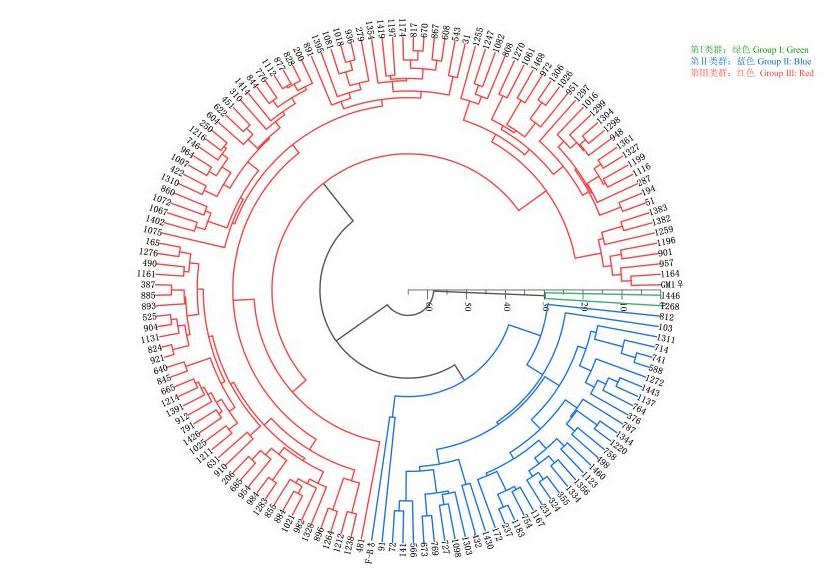
图1 基于表型性状的聚类分析图中GM1♀表示母本,F-B♂表示父本,其余数字表示采样编号,下同。In the figure, GM1♀ represents the female parent, F-B♂ represents the male parent, and the remaining numbers indicate the sample numbers. The same below.
Fig.1 Cluster analysis based on phenotypic traits
引物名称 Primer name | 扩增总条带数Total number of amplified bands | 多态性条带数Number of polymorphic bands | 多态条带比率Polymorphism band ratio (PPB, %) | 多态信息含量Polymorphism information content (PIC, %) |
|---|---|---|---|---|
| SSR4 | 13 | 6 | 46.15 | 36.07 |
| SSR9 | 10 | 8 | 80.00 | 44.63 |
| SSR23 | 9 | 5 | 55.56 | 30.47 |
| SSR40 | 21 | 15 | 71.43 | 41.48 |
| SSR55 | 7 | 1 | 14.29 | 29.93 |
| PaSSR-3 | 17 | 12 | 70.59 | 36.15 |
| PaSSR-9 | 17 | 6 | 35.29 | 38.89 |
| PaSSR-14 | 19 | 11 | 57.89 | 29.66 |
| PaSSR-23 | 9 | 3 | 33.33 | 29.59 |
| PaSSR-34 | 24 | 7 | 29.17 | 36.37 |
| C106112-g1 | 11 | 9 | 81.82 | 32.46 |
| WSSR31 | 14 | 9 | 64.29 | 36.92 |
| WSSR48 | 16 | 12 | 75.00 | 39.49 |
| HSSR4 | 32 | 14 | 43.75 | 33.52 |
| 总计Total | 219 | 118 | / | / |
| 平均Average | 15.64 | 8.43 | 54.18 | 35.40 |
表4 象草SSR条带的多样性
Table 4 Polymorphism of SSR bands in P. purpureum
引物名称 Primer name | 扩增总条带数Total number of amplified bands | 多态性条带数Number of polymorphic bands | 多态条带比率Polymorphism band ratio (PPB, %) | 多态信息含量Polymorphism information content (PIC, %) |
|---|---|---|---|---|
| SSR4 | 13 | 6 | 46.15 | 36.07 |
| SSR9 | 10 | 8 | 80.00 | 44.63 |
| SSR23 | 9 | 5 | 55.56 | 30.47 |
| SSR40 | 21 | 15 | 71.43 | 41.48 |
| SSR55 | 7 | 1 | 14.29 | 29.93 |
| PaSSR-3 | 17 | 12 | 70.59 | 36.15 |
| PaSSR-9 | 17 | 6 | 35.29 | 38.89 |
| PaSSR-14 | 19 | 11 | 57.89 | 29.66 |
| PaSSR-23 | 9 | 3 | 33.33 | 29.59 |
| PaSSR-34 | 24 | 7 | 29.17 | 36.37 |
| C106112-g1 | 11 | 9 | 81.82 | 32.46 |
| WSSR31 | 14 | 9 | 64.29 | 36.92 |
| WSSR48 | 16 | 12 | 75.00 | 39.49 |
| HSSR4 | 32 | 14 | 43.75 | 33.52 |
| 总计Total | 219 | 118 | / | / |
| 平均Average | 15.64 | 8.43 | 54.18 | 35.40 |
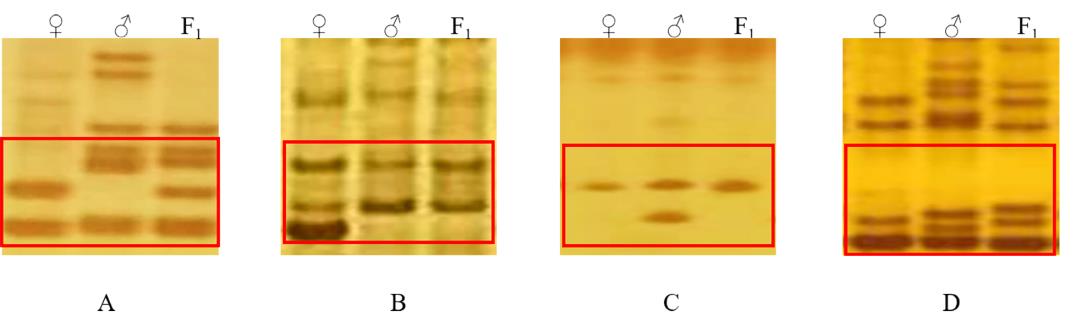
图2 引物的SSR图谱类型A: 双亲互补型Complementary pattern of both parents, C106112-g1; B: 父本型Male-specific pattern, HSSR4; C: 母本型Female-specific pattern, WSSR31; D: 其他型Other types, PaSSR-34. ♀: 母本Female parent; ♂: 父本Male parent; F1: 杂交子代Hybrid offspring.
Fig.2 SSR fingerprint pattern
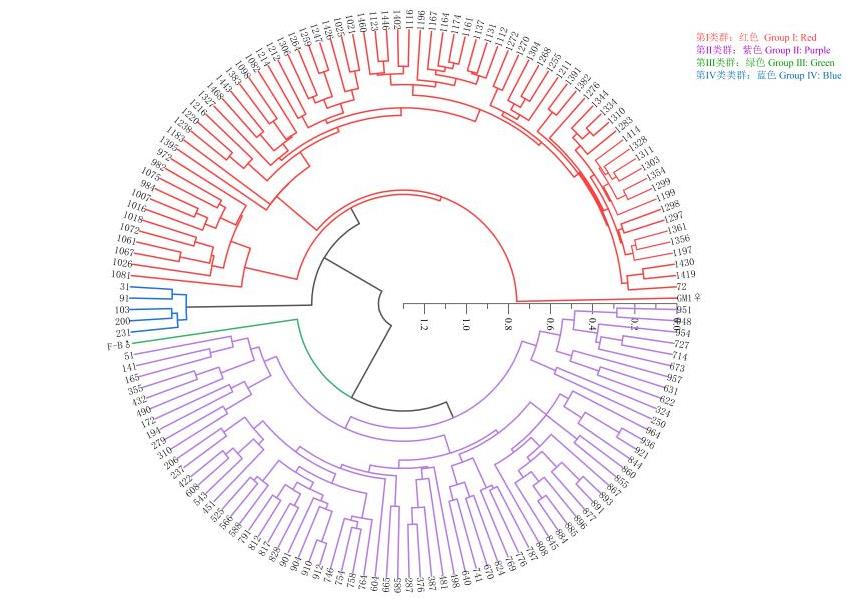
图3 基于SSR标记的聚类分析
Fig.3 Cluster analysis based on SSR markers

图4 引物WSSR31对部分杂交后代的扩增M: 2000 bp Marker; 箭头所指条带为父本特征带The strip pointed by the arrow is the male parent feature strip; “+”所标注的条带为真杂种Bands marked with ‘+’ are true hybrids. 下同The same below.
Fig.4 Amplification of some hybrid progeny by primer WSSR31

图5 引物C106112-g1对部分杂交后代的扩增
Fig.5 Amplification of some hybrid progeny by primer C106112-g1
| [1] | Lu L Y. Study on physiology and differential expression genes responding to Al of elephant grass roots and identification of MATE family. Lanzhou: Lanzhou University, 2023. |
| 卢丽燕. 象草根系响应铝的生理和差异表达基因研究及MATE家族鉴定. 兰州: 兰州大学, 2023. | |
| [2] | Chen X, Chen M X. Research progress on elephant grass silage processing and its application in animal production. Modern Animal Husbandry Science and Technology, 2024(5): 71-74. |
| 陈晓, 陈美秀. 象草青贮技术及其在动物应用中的研究进展. 现代畜牧科技, 2024(5): 71-74. | |
| [3] | Hou X C, Teng K, Guo Q, et al. Research advances in forage Pennisetum resource. Chinese Bulletin of Botany, 2022, 57(6): 814-825. |
| 侯新村, 滕珂, 郭强, 等. 狼尾草属牧草研究进展. 植物学报, 2022, 57(6): 814-825. | |
| [4] | Ministry of Agriculture and Rural Affairs of the People’s Republic of China. Publicity on grass varieties approved by the National Grass Variety Examination and Approval Committee in 2024. (2024-07-24)[2024-07-30]. http://www.moa.gov.cn/xw/zxfb/202407/t20240724_6459585.htm. |
| 中华人民共和国农业农村部. 关于2024年全国草品种审定委员会审定通过草品种的公示. (2024-07-24)[2024-07-30]. http://www.moa.gov.cn/xw/zxfb/202407/t20240724_6459585.htm. | |
| [5] | Li L. Garden plant genetics and breeding. Chongqing: Chongqing University Press, 2016. |
| 李凌. 园林植物遗传育种. 重庆: 重庆大学出版社, 2016. | |
| [6] | Jia K X, Zhang X L, Meng Y J, et al. SSR marker identification and character analysis of Perilla F1 hybrid. Molecular Plant Breeding, 2024, 22(17): 5701-5706. |
| 贾凯旋, 张笑玲, 孟义江, 等. 紫苏杂种F1的SSR标记鉴定及性状分析. 分子植物育种, 2024, 22(17): 5701-5706. | |
| [7] | Deng Y M, Jia X P, Liang L J. Identification methods of hybridity in ornamental plants distant hybridization. Journal of Nuclear Agricultural Sciences, 2016, 30(7): 1308-1315. |
| 邓衍明, 贾新平, 梁丽建. 观赏植物远缘杂交后代的鉴定方法. 核农学报, 2016, 30(7): 1308-1315. | |
| [8] | Wang L H, Li H B, Sun X B, et al. Principal component and cluster analysis on the phenotypic traits of Pennisetum alopecuroides. Journal of Hebei Agricultural University, 2019, 42(2): 91-94. |
| 王丽宏, 李会彬, 孙鑫博, 等. 狼尾草主要表型性状的主成分和聚类分析. 河北农业大学学报, 2019, 42(2): 91-94. | |
| [9] | Xia L, Yang M F, Liang X J, et al. Passiflora caerulea L. interspecific hybrid F1 progeny molecular identification and genetic diversity analysis. Chinese Journal of Tropical Agriculture, 2024, 44(5): 16-21. |
| 夏玲, 杨梦飞, 梁昕景, 等. 西番莲种间杂交F1后代分子鉴定及遗传多样性分析. 热带农业科学, 2024, 44(5): 16-21. | |
| [10] | Lu X F. The morphological diversity and SSR marker of Dactylis glomerata. Chengdu: Sichuan Agricultural University, 2010. |
| 路小帆. 鸭茅形态多样性和SSR标记分析. 成都: 四川农业大学, 2010. | |
| [11] | Xie W G, Zhang X Q, Chen Y X, et al. Identification and genetic variation analysis of orchardgrass hybrids(Dactylis glomerata) by SSR molecular markers. Acta Prataculturae Sinica, 2010, 19(2): 212-217. |
| 谢文刚, 张新全, 陈永霞, 等. 鸭茅杂种的SSR分子标记鉴定及其遗传变异分析. 草业学报, 2010, 19(2): 212-217. | |
| [12] | Zhao X X, Zhang X Q, Miao J M, et al. Identification by SSR molecular markers and comparative analysis in morphological characterization in Lolium multiflorum hybrid progenies. Journal of Agricultural Biotechnology, 2013, 21(7): 811-819. |
| 赵欣欣, 张新全, 苗佳敏, 等. 多花黑麦草杂交种SSR分子标记鉴定及表型比较分析. 农业生物技术学报, 2013, 21(7): 811-819. | |
| [13] | Wang Y, Yan S B, Zhang R, et al. Phenotypic identification and SSR analysis of Trifolium repens F1 hybrid progeny. Acta Agrestia Sinica, 2024, 32(6): 1657-1664. |
| 汪阳, 闫三博, 张睿, 等. 白三叶杂交F1代群体的表型鉴定及SSR分析. 草地学报, 2024, 32(6): 1657-1664. | |
| [14] | Ministry of Agriculture of the People’s Republic of China. Guidelines for the conduct of tests for distinctness, uniformity and stability-Pennisetum: NY/T 2356-2013. Beijing: China Agriculture Press, 2013. |
| 中华人民共和国农业部. 植物新品种特异性、一致性和稳定性测试指南-狼尾草属: NY/T 2356-2013. 北京: 中国农业出版社, 2013. | |
| [15] | Wu B C, Zhang H, Tong L, et al. Research on genetic and phenotypic differences of Pennisetum purpureum mutants generated by irradiation. Acta Prataculturae Sinica, 2018, 27(11): 77-86. |
| 武炳超, 张欢, 童磊, 等. 象草不同辐射剂量诱变系表型及遗传变异研究. 草业学报, 2018, 27(11): 77-86. | |
| [16] | Wang C R. Development and application of G-SSR markers based on genome survey sequencing of Napier grass (Pennisetum purpureum). Chengdu: Sichuan Agricultural University, 2019. |
| 王成然. 基于象草Survey测序的G-SSR分子标记开发与应用. 成都: 四川农业大学, 2019. | |
| [17] | Guo Y D, Liu L Y, Yue Y S, et al. Development of SSR markers based on transcriptome sequencing and verification of their conservation across species of ornamental Pennisetum Rich. (Poaceae). Agronomy, 2022, 12(7): 1683. |
| [18] | Niu X J, Wang X D, Wang J P, et al. Phenotypic diversity analysis and comprehensive evaluation of local sorghum germplasm resources. Journal of Plant Genetic Resources, 2024, 25(4): 922-935. |
| 牛雪婧, 王新栋, 王金萍, 等. 高粱地方种质资源表型多样性分析及综合评价. 植物遗传资源学报, 2024, 25(4): 922-935. | |
| [19] | Wang Y, Yi L M, Ban W T, et al. Identification of F1 hybrids of perennial ryegrass based on SSR molecular markers. Chinese Journal of Grassland, 2021, 43(11): 10-17. |
| 汪阳, 易莉美, 班晚婷, 等. 基于SSR分子标记的多年生黑麦草杂交F1代杂种鉴定. 中国草地学报, 2021, 43(11): 10-17. | |
| [20] | Liu Y R. Screening of SSR molecular marker primers in identification of blueberry hybrid authenticity. Changchun: Jilin Agricultural University, 2023. |
| 刘祎然. 蓝莓杂种真实性鉴定中SSR分子标记引物的筛选. 长春: 吉林农业大学, 2023. | |
| [21] | Xue H B, Wang F F, Wang L, et al. Identification of the hybrids and analysis of genetic variation of a pear progeny derived from crossing between ‘Mantianhong’ and ‘Hongxiangsu’ by Genic-SSR. Journal of Fruit Science, 2017, 34(8): 925-934. |
| 薛华柏, 王芳芳, 王磊, 等. ‘满天红’ב红香酥’ 杂种鉴定及遗传变异Genic-SSR分析. 果树学报, 2017, 34(8): 925-934. | |
| [22] | Wu Q, Cao G Y, Yin L, et al. Identification of peanut hybrid F1 with AhMITE markers. Journal of Peanut Science, 2017, 46(3): 48-53. |
| 吴琪, 曹广英, 尹亮, 等. 利用AhMITE转座子分子标记鉴定花生杂交F1代真假杂种. 花生学报, 2017, 46(3): 48-53. | |
| [23] | Zhu J C, Guo Y S, Liu Z D, et al. Identification of the F1 hybrids of grape using SSR molecular markers. Journal of Shenyang Agricultural University, 2016, 47(2): 148-152. |
| 朱骏驰, 郭印山, 刘镇东, 等. 利用SSR分子标记鉴定葡萄F1代杂种. 沈阳农业大学学报, 2016, 47(2): 148-152. | |
| [24] | Yang L J, Rao Q L, Li H Y, et al. Identification of perennial interspecific hybrids on genus Fagopyrum. Journal of Plant Genetic Resources, 2019, 20(2): 387-395. |
| 杨丽娟, 饶庆琳, 李洪有, 等. 荞麦属植物多年生种间杂种的鉴定. 植物遗传资源学报, 2019, 20(2): 387-395. | |
| [25] | Han G H, Xiang S Q, Wang W X, et al. Identification and genetic diversity of hybrid progenies from Shatianpummelo by SSR. Scientia Agricultura Sinica, 2010, 43(22): 4678-4686. |
| 韩国辉, 向素琼, 汪卫星, 等. 沙田柚杂交后代群体的SSR鉴定与遗传多样性分析. 中国农业科学, 2010, 43(22): 4678-4686. | |
| [26] | Yan F F, Zheng X J, Luo Z, et al. Genetic diversity analysis of hybrid progeny from Chinese jujube and wild jujube by SSR. Journal of Northwest Forestry University, 2018, 33(3): 91-97. |
| 闫芬芬, 郑兴娟, 罗智, 等. 枣和酸枣杂交后代遗传多样性的SSR分析. 西北林学院学报, 2018, 33(3): 91-97. | |
| [27] | Yao C X, Wang X H, He L L, et al. DNA fingerprint construction of different generations of Saccharum spp.×Erianthus fulvus using SSR marker. Molecular Plant Breeding, 2011, 9(3): 381-389. |
| 姚春雪, 王先宏, 何丽莲, 等. 甘蔗与蔗茅杂交不同世代的SSR指纹图谱构建. 分子植物育种, 2011, 9(3): 381-389. | |
| [28] | Gu Y P, Zhang Z R, Sun T, et al. Hybrid identification and genetic relationship analysis of F1 hybrid population of Sorbus pohuashanensis and Sorbus hupehensis var. paucijuga based on EST-SSR marker. Journal of Plant Resources and Environment, 2022, 31(4): 65-73. |
| 谷艳鹏, 张泽人, 孙涛, 等. 基于EST-SSR标记的花楸树和少叶花楸杂交F1代群体的杂种鉴定及遗传关系分析. 植物资源与环境学报, 2022, 31(4): 65-73. |
| [1] | 慕平, 柴继宽, 苏玮娟, 章海龙, 赵桂琴. 燕麦不同组合正、反交杂种后代的表型及遗传参数分析[J]. 草业学报, 2024, 33(4): 73-86. |
| [2] | 田甜, 李军乔, 马斌, 王鑫慈, 曲俊儒. 基于SSR分子标记的自然状态下蕨麻采样策略研究[J]. 草业学报, 2023, 32(9): 181-197. |
| [3] | 吉轶楠, 任雪锋, 苟甜甜, 臧国长, 郑轶琦. 基于SSR标记的河南省假俭草群体遗传多样性研究[J]. 草业学报, 2023, 32(9): 198-212. |
| [4] | 者玉琦, 武志娟, 王吉坤, 钟金城, 柴志欣, 信金伟. 基于mtDNA COX3基因对西藏特色牦牛群体遗传结构的分析[J]. 草业学报, 2023, 32(9): 231-240. |
| [5] | 董佳琦, 杨艳婷, 范文强, 王佳妮, 石凤翎. 扁蓿豆种内杂种鉴定及其F1和F2代主要农艺性状优势分析[J]. 草业学报, 2023, 32(7): 229-239. |
| [6] | 马士龙, 李小伟, 李响, 谢书琼, 刘益丽, 唐娇, 江明锋. 基于GBS简化基因组测序评估3个麦洼牦牛保种群的遗传结构研究[J]. 草业学报, 2022, 31(9): 183-194. |
| [7] | 田静, 尹祥, 樊杨, 李鑫琴, 张建国. 晾晒、添加物及不同温度对象草青贮发酵品质和微生物的影响[J]. 草业学报, 2022, 31(7): 76-84. |
| [8] | 高莉娟, 张正社, 文裕, 宗西方, 闫启, 卢丽燕, 易显凤, 张吉宇. 象草全基因组bHLH转录因子家族鉴定及表达分析[J]. 草业学报, 2022, 31(3): 47-59. |
| [9] | 任雪锋, 邓亚博, 臧国长, 郑轶琦. 基于SSR标记的河南省狗牙根遗传多样性及群体遗传结构分析[J]. 草业学报, 2022, 31(3): 60-70. |
| [10] | 潘静, 张俊超, 陈有军, 周青平. 基于SCoT标记的披碱草属种质遗传多样性分析及指纹图谱构建[J]. 草业学报, 2022, 31(11): 48-60. |
| [11] | 常利芳, 李欣, 郭慧娟, 乔麟轶, 张树伟, 陈芳, 畅志坚, 张晓军. 小偃麦衍生系表型遗传多样性分析及综合评价[J]. 草业学报, 2022, 31(11): 61-74. |
| [12] | 尹晓凡, 魏娜, 郑淑文, 刘文献. 全基因组水平蒺藜苜蓿反转录转座子IRAP分子标记开发及应用[J]. 草业学报, 2022, 31(1): 131-144. |
| [13] | 尹祥, 王咏琪, 李鑫琴, 田静, 王晓亚, 张建国. 不同水分吸附材料对象草青贮发酵品质及好氧稳定性的影响[J]. 草业学报, 2021, 30(7): 133-138. |
| [14] | 纪会, 官久强, 王会, 周建旭, 阿农呷, 何宗伟, 樊珍详, 邱龙康, 曹诗晓, 安添午, 柏琴, 钟金城, 罗晓林. 亚丁牦牛和拉日马牦牛遗传多样性及遗传结构分析[J]. 草业学报, 2021, 30(5): 134-145. |
| [15] | 杨正禹, 陆忠杰, 张茂, 董瑞. 利用数字图像分析132份胡枝子种子表型性状遗传多样性[J]. 草业学报, 2021, 30(11): 87-97. |
| 阅读次数 | ||||||
|
全文 |
|
|||||
|
摘要 |
|
|||||
