
ISSN 1004-5759 CN 62-1105/S
Acta Prataculturae Sinica ›› 2026, Vol. 35 ›› Issue (10): 48-60.DOI: 10.11686/cyxb2025425
Previous Articles Next Articles
Bing-sen ZHAO( ), Wen-juan KANG(), Shang-li SHI(), Jian GUAN, Bao-fu LU, Yi-lin HAN, Jing-jing WANG, Feng-jiao CHEN
Received:2025-10-18
Revised:2025-12-08
Online:2026-10-20
Published:2026-09-09
Contact:
Wen-juan KANG,Shang-li SHI
Bing-sen ZHAO, Wen-juan KANG, Shang-li SHI, Jian GUAN, Bao-fu LU, Yi-lin HAN, Jing-jing WANG, Feng-jiao CHEN. Effects of nitrogen addition on the productivity of the Medicago sativa ‘Gannong No.9’-LL2 Rhizobium symbiotic system[J]. Acta Prataculturae Sinica, 2026, 35(10): 48-60.
分级 Grade | 饲草分级指数 Forage grading index |
|---|---|
| 特级Special grade | >53.68 |
| 1级Grade 1 | 33.50~53.68 |
| 2级Grade 2 | 19.20~29.29 |
| 3级Grade 3 | 11.10~16.44 |
| 4级Grade 4 | 6.28~10.67 |
| 5级Grade 5 | <6.28 |
Table 1 Grade standard of roughage quality(MJ·d-1)
分级 Grade | 饲草分级指数 Forage grading index |
|---|---|
| 特级Special grade | >53.68 |
| 1级Grade 1 | 33.50~53.68 |
| 2级Grade 2 | 19.20~29.29 |
| 3级Grade 3 | 11.10~16.44 |
| 4级Grade 4 | 6.28~10.67 |
| 5级Grade 5 | <6.28 |
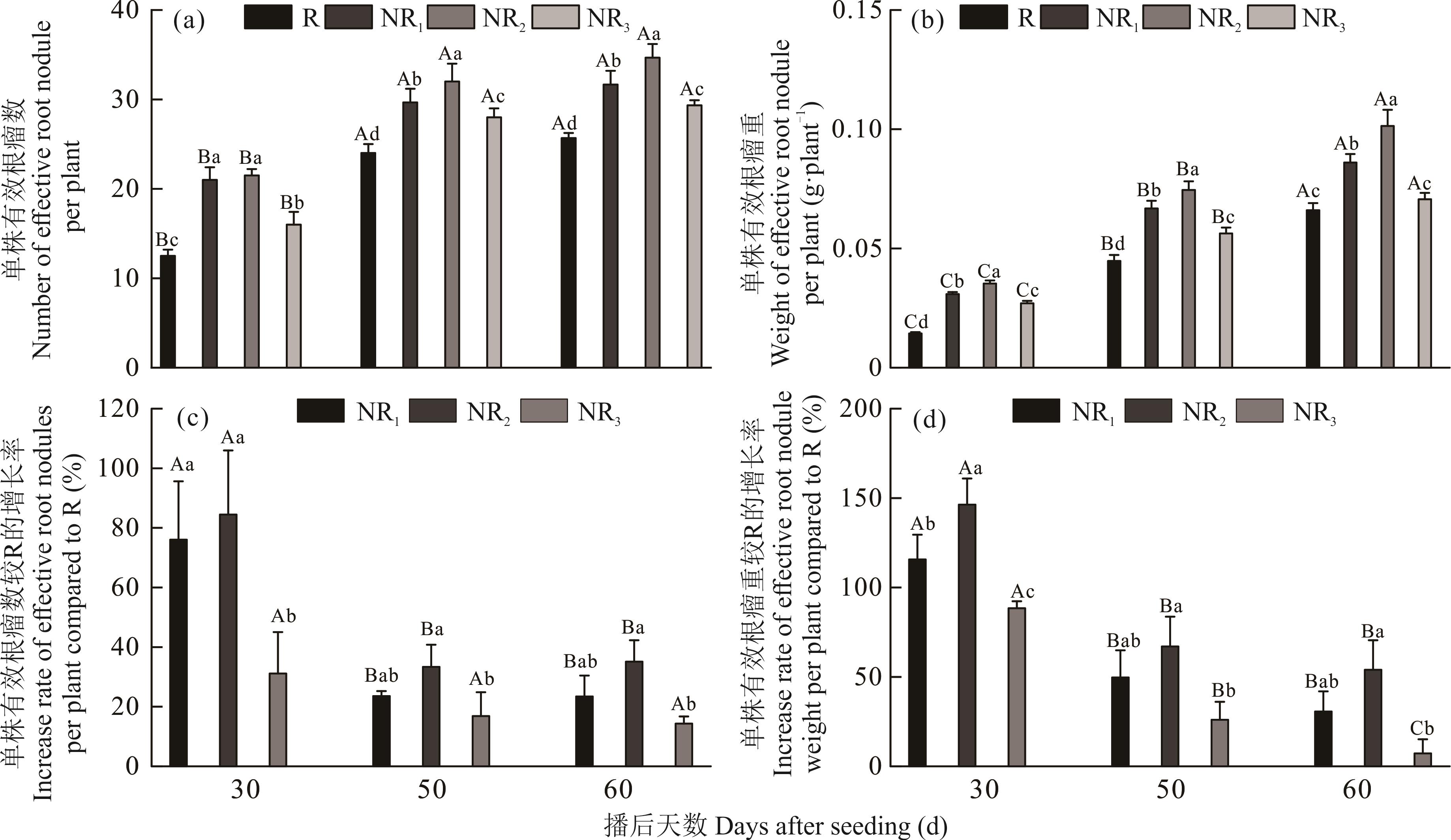
Fig.1 Nodulation difference of the Gannong No.9-LL2 symbiotic system under different nitrogen levels
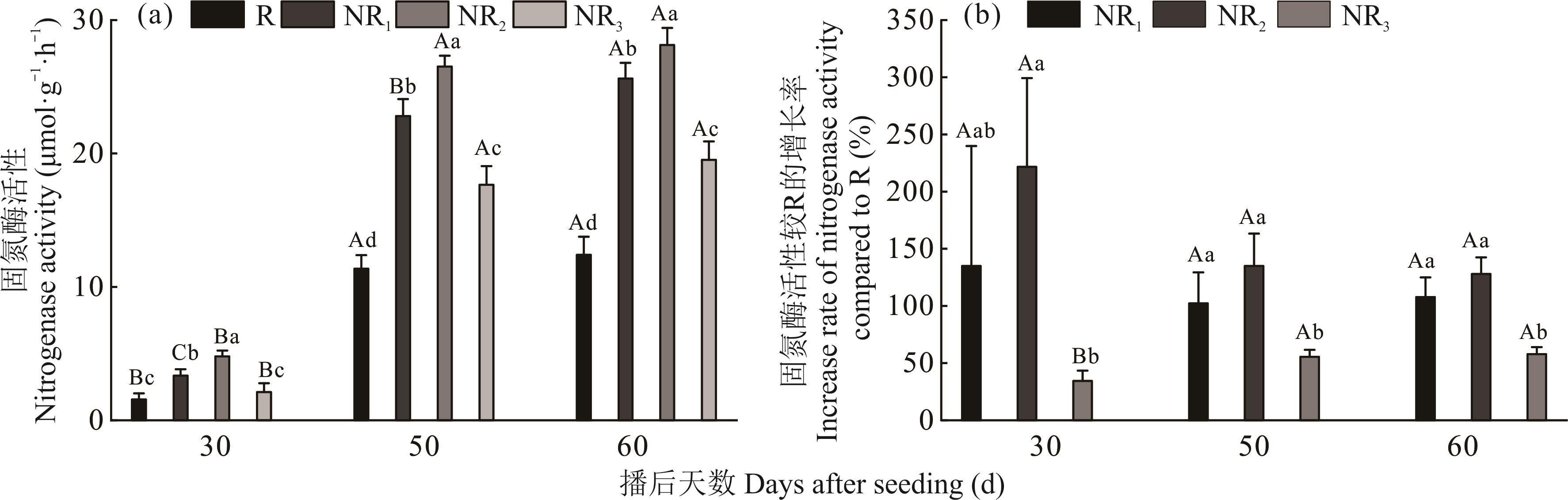
Fig.2 Differences in the nitrogen-fixing capacity of the Gannong No.9-LL2 symbiotic system under different nitrogen levels

Fig.3 Phenotypic changes of the Gannong No.9-LL2 symbiotic system under different nitrogen levels

Fig.4 Nutritional quality changes of the Gannong No.9-LL2 symbiotic system under different nitrogen levels
处理 Treatments | 饲草分级指数 Forage grading index (MJ·d-1) | 饲草分级指数级别 Forage grading index grade |
|---|---|---|
| CK1 | 42.67 | 1级Grade 1 |
| R | 45.80 | 1级Grade 1 |
| CK2 | 43.30 | 1级Grade 1 |
| CK3 | 42.21 | 1级Grade 1 |
| CK4 | 42.25 | 1级Grade 1 |
| NR1 | 51.12 | 1级Grade 1 |
| NR2 | 54.91 | 特级Special grade |
| NR3 | 47.46 | 1级Grade 1 |
Table 2 Forage grading index grades of 8 treatments
处理 Treatments | 饲草分级指数 Forage grading index (MJ·d-1) | 饲草分级指数级别 Forage grading index grade |
|---|---|---|
| CK1 | 42.67 | 1级Grade 1 |
| R | 45.80 | 1级Grade 1 |
| CK2 | 43.30 | 1级Grade 1 |
| CK3 | 42.21 | 1级Grade 1 |
| CK4 | 42.25 | 1级Grade 1 |
| NR1 | 51.12 | 1级Grade 1 |
| NR2 | 54.91 | 特级Special grade |
| NR3 | 47.46 | 1级Grade 1 |
| [1] | He L. Study on the symbiotic nitrogen-fixing effect of alfalfa cultivars and rhizobium strains.Lanzhou: Gansu Agricultural University, 2023. |
| 何龙. 紫花苜蓿品种-根瘤菌株共生固氮效应研究. 兰州: 甘肃农业大学, 2023. | |
| [2] | Yang Q Y, Jie X L, Hua D L, et al. Effect of B, Mn and Mo combined application on grass yield and mineral element absorption of alfalfa. Chinese Agricultural Science Bulletin, 2009, 25(5): 182-185. |
| 杨秋云, 介晓磊, 化党领, 等. 硼锰钼配施对紫花苜蓿草产量和矿物质元素吸收的影响. 中国农学通报, 2009, 25(5): 182-185. | |
| [3] | Zhang C M, Wang C Z, Hu X F, et al. Research progress on the nutritional value and applications of alfalfa. China Feed, 2005(1): 15-17. |
| 张春梅, 王成章, 胡喜峰, 等. 紫花苜蓿的营养价值及应用研究进展. 中国饲料, 2005(1): 15-17. | |
| [4] | Zhu T Q. Study on establishment of alfalfa phosphorus efficiency evaluation system and difference metabolism in nitrogen and phosphorus. Lanzhou: Gansu Agricultural University, 2018. |
| 朱天琦. 紫花苜蓿磷效率评价体系建立及其氮磷代谢差异研究. 兰州: 甘肃农业大学, 2018. | |
| [5] | Yan W. Screening of rhizobium strains matched with Medicago varia Martyn cv. Caoyuan No.3 in three pilot planting areas. Hohhot: Inner Mongolia Agricultural University, 2018. |
| 闫伟. 草原3号杂花苜蓿在3个试点区适宜根瘤菌株的筛选. 呼和浩特: 内蒙古农业大学, 2018. | |
| [6] | Pavlo A, Leonid O, Iryna Z, et al. Endophytic bacteria enhancing growth and disease resistance of potato (Solanum tuberosum L.). Biological Control, 2011, 56(1): 43-49. |
| [7] | Miliute I, Buzaite O, Baniulis D, et al. Bacterial endophytes in agricultural crops and their role in stress tolerance: A review. Zemdirbyste-Agriculture, 2015, 102(4): 465-478. |
| [8] | Liu R, Li C, Zhang Y J, et al. Enhanced biological nitrogen fixation and nodulation in alfalfa through the synergistic interactions between Sinorhizobium meliloti and Priestia aryabhattai. World Journal of Microbiology and Biotechnology, 2025, 41(6): 180. |
| [9] | Provorov N, Saimnazarov U, Tanriverdiev T, et al. The contributions of plant and bacteria genotypes in the growth and nitrogen accumulation of inoculated alfalfa. Plant and Soil, 1994, 164(2): 213-219. |
| [10] | Kassaw T K. Molecular genetics of nodule number regulation: Cloning, characterization and functional studies of the root determined nodulator1( RDN1) gene in Medicago truncatula. Clemson: Clemson University, 2012. |
| [11] | Shi M L, Deng B, Liu Z K, et al. Inoculation effects of five rhizobial stains to alfalfa. Pratacultural Science, 2015, 32(1): 101-106. |
| 石茂玲, 邓波, 刘忠宽, 等. 5株根瘤菌接种紫花苜蓿的效果. 草业科学, 2015, 32(1): 101-106. | |
| [12] | Qu X Y, Kang W J, Guan J, et al. Differences in leaf characteristics, photosynthetic characteristics and yield traits between different varieties of alfalfa and rhizobia strains under symbiotic conditions. Grassland and Turf, 1-30 [2025-09-10]. |
| 屈欣怡, 康文娟, 关键, 等. 不同品种紫花苜蓿与根瘤菌株共生状态下叶特征、光合特性与产量性状的差异. 草原与草坪, 1-30[2025-09-10]. | |
| [13] | Yao Y B, Zhang S Q, Chai Y S, et al. Study on nitrogen accumulation characteristics of soybean varieties in different growth periods. Soil and Fertilizer Sciences in China, 2021(5): 169-175. |
| 姚玉波, 张树权, 柴永山, 等. 不同生育期大豆品种氮素积累特性研究. 中国土壤与肥料, 2021(5): 169-175. | |
| [14] | Kamran M, Yan Z G, Chang S H, et al. Enhancing resource use efficiency of alfalfa with appropriate irrigation and fertilization strategy mitigate greenhouse gases emissions in the arid region of Northwest China. Field Crops Research, 2022, 289: 108715. |
| [15] | Wang Q, Ji S R, Shen Y X. Interactive effects of soil moisture and nitrogen application rate on seedling growth of alfalfa. Acta Prataculturae Sinica, 2017, 26(12): 48-55. |
| 王茜, 纪树仁, 沈益新. 土壤水分和施氮水平对紫花苜蓿苗期生长的互作效应分析. 草业学报, 2017, 26(12): 48-55. | |
| [16] | Lv Y R, Wang J H, Yin M H, et al. Effects of planting and nitrogen application patterns on alfalfa yield, quality, water-nitrogen use efficiency, and economic benefits in the yellow river Irrigation region of Gansu Province, China, Water, 2023, 15(2): 251. |
| [17] | Tong C C, Liu X J, Wu Y, et al. Regulation of endogenous isoflavones on alfalfa nodulation and nitrogen fixation and nitrogen use efficiency. Acta Prataculturae Sinica, 2022, 31(3): 124-135. |
| 童长春, 刘晓静, 吴勇, 等. 内源异黄酮对紫花苜蓿结瘤固氮及氮效率的调控研究. 草业学报, 2022, 31(3): 124-135. | |
| [18] | Gao L M, Su J, Tian Q, et al. Effects of nitrogen application on nitrogen accumulation and root nitrogenase activity in Medicago sativa at different soil water contents. Acta Prataculturae Sinica, 2020, 29(3): 130-136. |
| 高丽敏, 苏晶, 田倩, 等. 施氮对不同水分条件下紫花苜蓿氮素吸收及根系固氮酶活性的影响. 草业学报, 2020, 29(3): 130-136. | |
| [19] | Ma X, Wang L L, Li W J, et al. Effects of different nitrogen levels on nitrogen fixation and seed production of alfalfa inoculated with rhizobia. Acta Prataculturae Sinica, 2013, 22(1): 95-102. |
| 马霞, 王丽丽, 李卫军, 等. 不同施氮水平下接种根瘤菌对苜蓿固氮效能及种子生产的影响. 草业学报, 2013, 22(1): 95-102. | |
| [20] | Neumann U. Soil factors exhibit greater influence than bacterial inoculation on alfalfa growth and nitrogen fixation. FEMS Microbiology Ecology, 2011, 77(3): 590-599. |
| [21] | Kang W J. Biotype classification of Medicago sativa rhizobia and its transcriptome analysis. Lanzhou: Gansu Agricultural University, 2019. |
| 康文娟. 紫花苜蓿根瘤菌生物型划分及其转录组学分析. 兰州: 甘肃农业大学, 2019. | |
| [22] | Ma C, Liu C Y, Yu Y Y, et al. GmTNRP1, associated with rhizobial type-Ⅲ effector NopT, regulates nitrogenase activity in the nodules of soybean (Glycine max). Food and Energy Security, 2023, 12(4): e466. |
| [23] | Zhang L Y. Feed analyses and quality test (the second edition). Beijing: China Agricultural University Press, 2006: 1615-1622. |
| 张丽英. 饲料分析及饲料质量检测技术(第2版). 北京: 中国农业大学出版社, 2006: 1615-1622. | |
| [24] | Zhang J K, Lu D X, Liu J X, et al. The present research situation and progress of crude fodder quality evaluation index. Pratacultural Science, 2004, 21(9): 55-61. |
| 张吉鹍, 卢德勋, 刘建新, 等. 粗饲料品质评定指数的研究现状及其进展. 草业科学, 2004, 21(9): 55-61. | |
| [25] | Li J, Cui J J, Yu L L, et al. Research the quality on whole-plant corn silage in Jidong area. China Feed, 2021(7): 131-134. |
| 李娟, 崔婧婧, 于玲玲, 等. 冀东地区全株玉米青贮饲料品质研究. 中国饲料, 2021(7): 131-134. | |
| [26] | Bushby H V A.Colonization of rhizospheres by Bradyrhizobium sp. in relation to strain persistence and nodulation of some pasture legumes. Soil Biology and Biochemistry, 1993, 25(5): 597-605. |
| [27] | Liu L, Zhou J C, Chen H K. The effect of different compound nitrogen concentration on the nodulation and nitrogen fixation in soybean. Scientia Agricultura Sinica, 1998, 31(4): 87-89. |
| 刘莉, 周俊初, 陈华葵. 不同化合态氮浓度对大豆根瘤菌结瘤和固氮作用的影响. 中国农业科学, 1998, 31(4): 87-89. | |
| [28] | Liu X J, Ye F, Zhang X L. Effects of exogenous nitrogen forms on root characteristics of alfalfa at different growth stages. Acta Prataculturae Sinica, 2015, 24(6): 53-63. |
| 刘晓静, 叶芳, 张晓玲. 外源氮素形态对紫花苜蓿不同生育期根系特性的影响. 草业学报, 2015, 24(6): 53-63. | |
| [29] | Ci E, Gao M. Research advances in the effects of environmental factors on the symbiotic nitrogen fixation of legumes. Acta Botanica Boreali-Occidentalia Sinica, 2005, 25(6): 1269-1274. |
| 慈恩, 高明. 环境因子对豆科共生固氮影响的研究进展. 西北植物学报, 2005, 25(6): 1269-1274. | |
| [30] | Yan Y H, Yang W Y, Zhang X Q, et al. Effects of different nitrogen levels on photosynthetic characteristics, dry matter accumulation and yield of relay strip intercropping Glycine max after blooming. Acta Prataculturae Sinica, 2011, 20(3): 233-238. |
| 闫艳红, 杨文钰, 张新全, 等. 施氮量对套作大豆花后光合特性、干物质积累及产量的影响. 草业学报, 2011, 20(3): 233-238. | |
| [31] | Liu Y H, Chen Y, Li H G, et al. Regulation of nitrogen application rate on nodulation, nitrogen fixation, yield, and crude protein content of different alfalfa varieties. Soil and Fertilizer Sciences in China, 2024(6): 186-198. |
| 刘雨涵, 陈杨, 李海港, 等. 施氮量对不同品种苜蓿结瘤固氮和产量及粗蛋白含量的调控. 中国土壤与肥料, 2024(6): 186-198. | |
| [32] | Wang Q, Li S S, Li J R, et al. The utilization and roles of nitrogen in plants. Forests, 2024, 15(7): 1191. |
| [33] | Kou J T, Shi S L, Cai Z S. Effects of ridge and furrow rainfall harvesting on growth characteristics and quality of Medicago sativa in dryland. Scientia Agricultura Sinica, 2010, 43(24): 5028-5036. |
| 寇江涛, 师尚礼, 蔡卓山. 垄沟集雨种植对旱作紫花苜蓿生长特性及品质的影响. 中国农业科学, 2010, 43(24): 5028-5036. | |
| [34] | Ma H X, Jiang P, Zhang X J, et al. Effects of nitrogen fertilization combined with subsurface irrigation on alfalfa yield, water and nitrogen use efficiency, quality, and economic benefits. Frontiers in Plant Science, 2024, 15: 1339417. |
| [35] | Lamb J F S, Sheaffer C C, Samac D A. Population density and harvest maturity effects on leaf and stem yield in alfalfa. Agronomy Journal, 2003, 95(3): 635-641. |
| [36] | Silvente S, Blanco L, Camas A, et al. Rhizobium etli mutant modulates carbon and nitrogen metabolism in Phaseolus vulgaris nodules. Molecular Plant-Microbe Interaction, 2002, 15(7): 728-733. |
| [37] | Kozyreva M Y, Basieva L Z, Nagham A N, et al. Growth and development of alfalfa depending on the type of nitrogen nutrition. BIO Web of Conferences, 2020, 23: 03007. |
| [38] | Hakl J, Kunzov E, Tocauerov S, et al. Impact of long-term manure and mineral fertilization on yield and nutritive value of lucerne (Medicago sativa) in relation to changes in canopy structure. European Journal Agronomy, 2021, 123: 126219. |
| [39] | Liu X J, Zhang J X, Li W Q, et al. Effects of fertilization and mowing on alfalfa yield and quality in arid regions. Journal of Desert Research, 2014, 34(6): 1516-1526. |
| 刘晓静, 张进霞, 李文卿, 等. 施肥及刈割对干旱地区紫花苜蓿产量和品质的影响. 中国沙漠, 2014, 34(6): 1516-1526. | |
| [40] | Zhan J S, Liu M M, Zhao G Q. Effects of flavonoids and their application in ruminants. China Feed, 2014(23), 13-15. |
| 占今舜, 刘明美, 赵国琦. 黄酮的作用及其在反刍动物上的应用. 中国饲料, 2014(23): 13-15. | |
| [41] | Herridge D F, Peoples M B, Boddey R M. Global inputs of biological nitrogen fixation in agricultural systems. Plant and Soil, 2008, 311(1/2): 1-18. |
| [1] | Jia-bao ZHANG. Harnessing soil biotic potential to enrich soil carbon and ecological functionality of cultivated soil [J]. Acta Prataculturae Sinica, 2026, 35(9): 1-7. |
| [2] | Dong-wen YU, Xiao-tong WANG, Yong-long MA, Xuan WU, Jin-hui YANG, Yu-hua TONG, Shu-xia LI. Effects of 2,4-epibrassinolide on the physiological characteristics of alfalfa under drought stress [J]. Acta Prataculturae Sinica, 2026, 35(9): 63-74. |
| [3] | Jin-hui YANG, Xiao-tong WANG, Yong-long MA, Dong-wen YU, Yu-hua TONG, Shu-xia LI. Effect of CeO2 NPs on the salt tolerance of alfalfa seedlings [J]. Acta Prataculturae Sinica, 2026, 35(8): 45-54. |
| [4] | Zhao-peng HUANG, Rong HE, Li-li NAN, Jia-le LIU, Wen-ke YANG. Effects of exogenous melatonin on endogenous hormones and organic acids in alfalfa seedlings under low-phosphorus stress [J]. Acta Prataculturae Sinica, 2026, 35(8): 55-64. |
| [5] | Xia WANG, Meng-yu YAN, Qian-xi WANG, Zhen-wu WEI, Jia WEI, Zheng-feng CAO, Yan-yan LV, Chuan-jie ZHANG, Xue-yang MIN. A comparative study of the yield of alfalfa (Medicago sativa) varieties with different fall dormancy in the Yangtze-Huaihe region [J]. Acta Prataculturae Sinica, 2026, 35(8): 65-83. |
| [6] | Jing SUN, Yan-liang SUN, Dong-jie XIA, Kong-qin WEI, Kai-xin YANG, Xiao-qing SUI, Qian-bing ZHANG. Effects of nitrogen-phosphorus and water coupling on soil nutrients and the photosynthetic characteristics and production performance of Bromus inermis [J]. Acta Prataculturae Sinica, 2026, 35(7): 105-116. |
| [7] | Fen-qi CHEN, Jin-qing ZHANG, Yi-jian YU, Zhen-yu LI. Identification, bioinformatics analysis of AP2 subfamily genes and MsBBM gene cloning in alfalfa [J]. Acta Prataculturae Sinica, 2026, 35(7): 117-134. |
| [8] | Hao-zhen LIU, Jia-lu CHAO, Shi-qin ZHAO, Cheng WANG, Jing-hong ZHANG, Shou-jiang SUN. Genome-wide identification of BBR-BPC genes in Medicago sativa and their transcript profiles in response to seed aging [J]. Acta Prataculturae Sinica, 2026, 35(7): 135-150. |
| [9] | Wu LI, Jia-jing LI, Jie-bing LI, Zhen-zhou LI, Ming GUO, Yan NIU, Hao SUN, De-feng LI, Ying-hua SHI, Zhen-tian LI, Bo-shuai LIU, Ya-lei CUI, Zhi-chang WANG, Yong-tao LI, Xiao-yan ZHU. Optimization of fermentation and ultrasound-assisted extraction parameters for alfalfa saponins [J]. Acta Prataculturae Sinica, 2026, 35(7): 201-216. |
| [10] | Yong-quan ZHAI, Yao MA, Li-hua SONG, Bing CAO. Effects of ryegrass intercropping density on the productivity, net benefits, and sustainability of a jujube-grass intercropping system [J]. Acta Prataculturae Sinica, 2026, 35(7): 68-79. |
| [11] | Jiang-ping MA, Li-juan CAO, Wen-wen ZHANG, Meng-yu ZHAO, Teng-fei WANG, Yi-yin ZHANG, Bin WANG, Jia-wang LI, Xiao-bing WANG, Jian LAN. Effects of reseeding and phosphorus application on productivity and soil in improvement of degraded alfalfa stands [J]. Acta Prataculturae Sinica, 2026, 35(7): 92-104. |
| [12] | Jiang-bo XU, Chang-wei MEI, Dong CHEN, Run-yao JIANG, Song-chang GUO, Xiu-hong WU, Ju-ying LUO, Hai-yuan HUANG, Fang LIU. The effect of alfalfa meal on the average daily gain, slaughter performance, meat quality, and serum biochemical indicators of two different hybrid lines of Liangsan pigs [J]. Acta Prataculturae Sinica, 2026, 35(6): 202-215. |
| [13] | Meng-yu REN, Li-qun WANG, Li-li NAN, Jia-yu GUO. Responses of new alfalfa lines to salt stress [J]. Acta Prataculturae Sinica, 2026, 35(6): 24-34. |
| [14] | Meng YAN, Ying-zhi GAO. Progress in research on the impact of grazing on symbiotic nitrogen fixation of plant root nodules [J]. Acta Prataculturae Sinica, 2026, 35(5): 212-224. |
| [15] | Tong LIU, Surilige, Na JIANG, Bo PANG, Wurilige, Tao-yang YANG, Hai-fang ZHANG, Jian-ning ZHAO, Dian-lin YANG. Impacts of Euphorbia fischeriana invasion on plant community succession and soil physicochemical properties in Hulunbuir grassland [J]. Acta Prataculturae Sinica, 2026, 35(5): 72-84. |
| Viewed | ||||||
|
Full text |
|
|||||
|
Abstract |
|
|||||
