
ISSN 1004-5759 CN 62-1105/S
Acta Prataculturae Sinica ›› 2025, Vol. 34 ›› Issue (11): 53-65.DOI: 10.11686/cyxb2024497
Previous Articles Next Articles
Chun-yan LI1,2( ), Qian-jin WANG1,2, Xin-he ZHOU1, Wen-jing CAO1, Meng-li ZHAO1,2, Fang-bo YU1,2()
Received:2024-12-19
Revised:2025-02-17
Online:2025-11-20
Published:2025-10-09
Contact:
Fang-bo YU
Chun-yan LI, Qian-jin WANG, Xin-he ZHOU, Wen-jing CAO, Meng-li ZHAO, Fang-bo YU. Effects of Burkholderia sp. SX9 inoculants on Trifolium repens growth and soil improvement[J]. Acta Prataculturae Sinica, 2025, 34(11): 53-65.
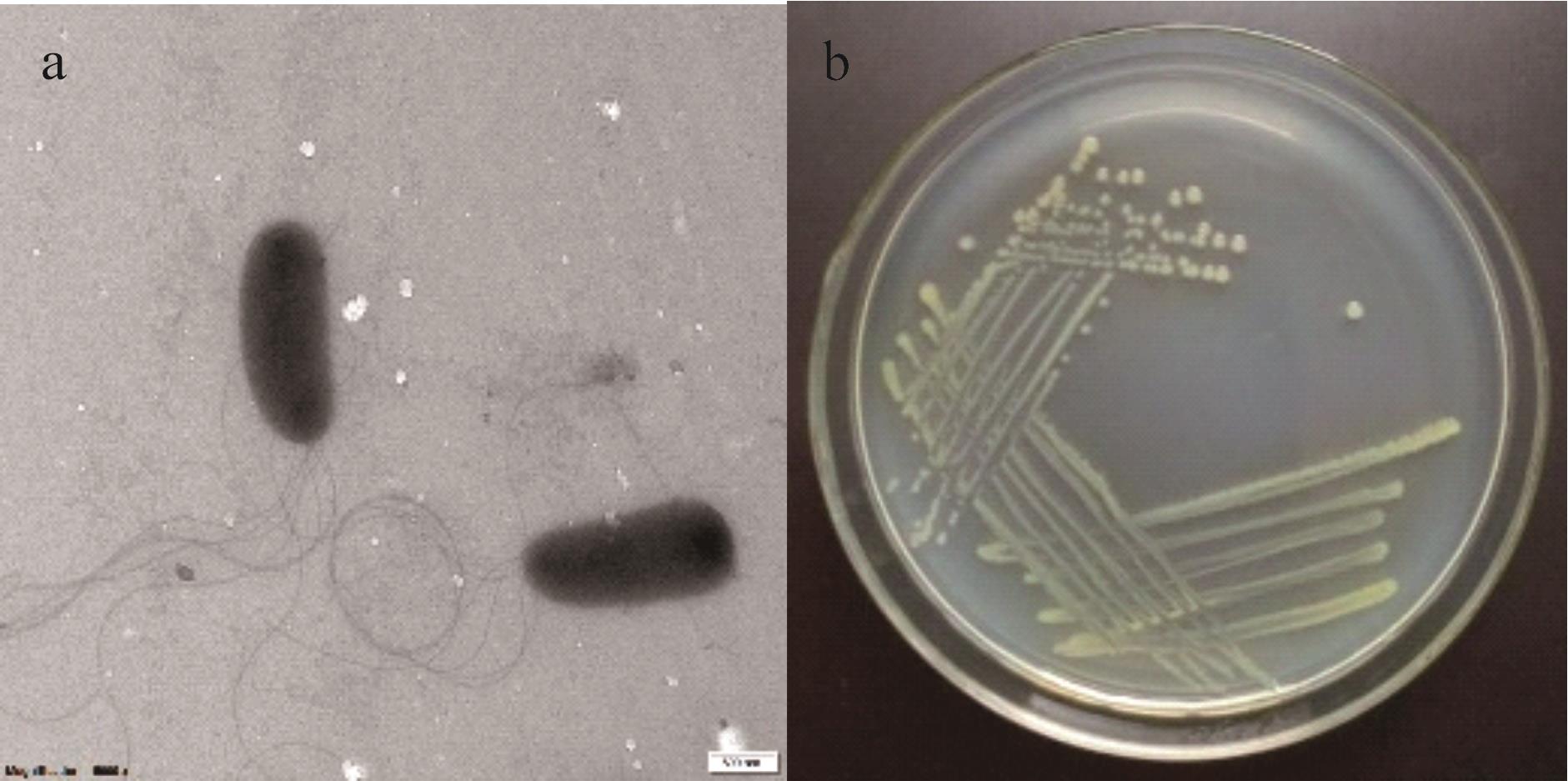
Fig.1 Micrograph of Burkholderia sp. SX9 under transmission electron microscope (a) and photograph of the strain on LB plate (b)
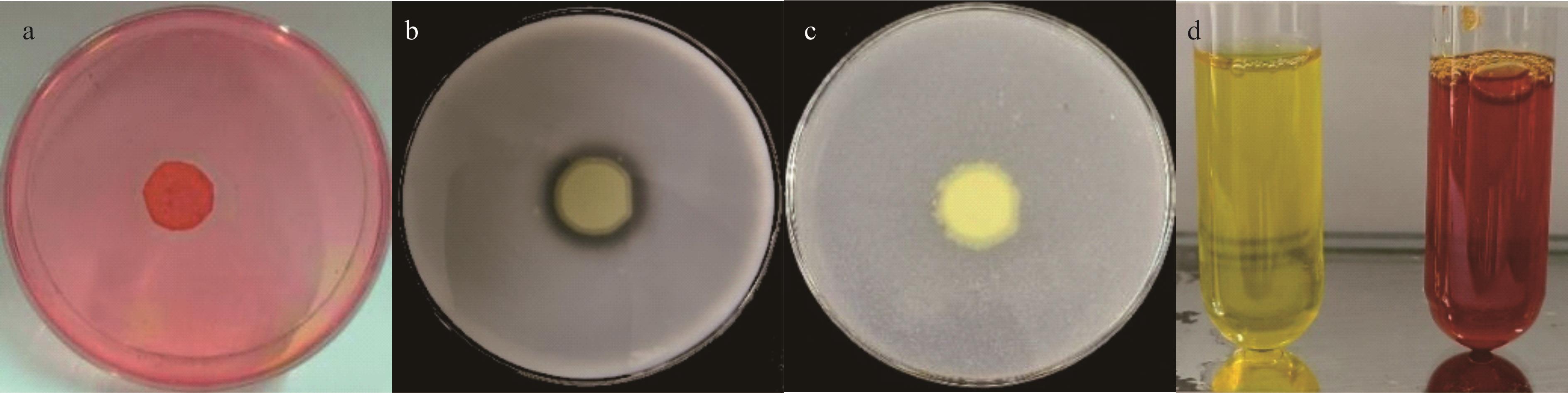
Fig.2 Analysis of growth-promoting characteristics of Burkholderia sp. SX9
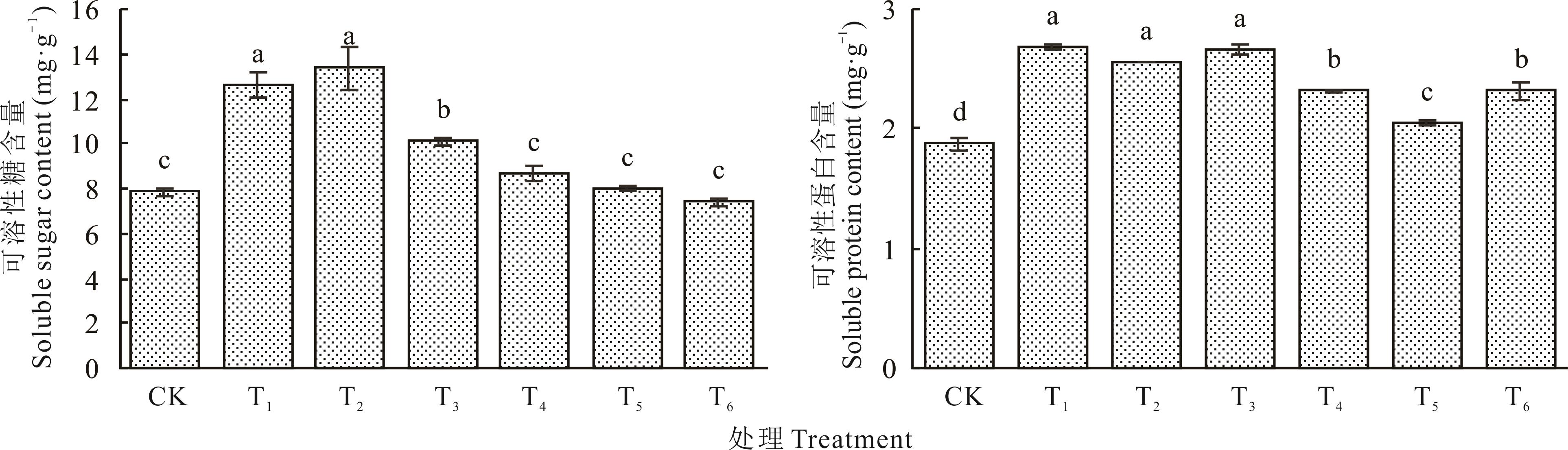
Fig.3 Effects of different treatments on soluble sugar and soluble protein content in aboveground parts of T. repens
处理 Treatment | 根长 Root length (cm) | 株高 Plant height (cm) | 地上部生物量Aboveground biomass (g·plant-1) | |
|---|---|---|---|---|
| 鲜重Fresh weight | 干重Dry weight | |||
| CK | 19.20±0.59c | 22.43±0.42b | 3.71±0.13cd | 0.52±0.07d |
| T1 | 23.10±0.87a | 26.17±1.34a | 7.52±0.19b | 1.36±0.03b |
| T2 | 20.80±0.89abc | 23.77±0.23ab | 4.34±0.37c | 0.92±0.11c |
| T3 | 20.27±0.09bc | 23.13±1.19b | 3.79±0.42cd | 0.63±0.02d |
| T4 | 21.90±0.75ab | 24.97±0.38ab | 9.23±0.27a | 1.99±0.12a |
| T5 | 20.23±0.52bc | 23.67±0.22ab | 3.72±0.36cd | 0.62±0.13d |
| T6 | 19.77±0.98bc | 22.40±0.96b | 2.86±0.32d | 0.45±0.07d |
Table 1 Effects of different treatments on various growth indicators of T. repens
处理 Treatment | 根长 Root length (cm) | 株高 Plant height (cm) | 地上部生物量Aboveground biomass (g·plant-1) | |
|---|---|---|---|---|
| 鲜重Fresh weight | 干重Dry weight | |||
| CK | 19.20±0.59c | 22.43±0.42b | 3.71±0.13cd | 0.52±0.07d |
| T1 | 23.10±0.87a | 26.17±1.34a | 7.52±0.19b | 1.36±0.03b |
| T2 | 20.80±0.89abc | 23.77±0.23ab | 4.34±0.37c | 0.92±0.11c |
| T3 | 20.27±0.09bc | 23.13±1.19b | 3.79±0.42cd | 0.63±0.02d |
| T4 | 21.90±0.75ab | 24.97±0.38ab | 9.23±0.27a | 1.99±0.12a |
| T5 | 20.23±0.52bc | 23.67±0.22ab | 3.72±0.36cd | 0.62±0.13d |
| T6 | 19.77±0.98bc | 22.40±0.96b | 2.86±0.32d | 0.45±0.07d |
处理 Treatment | pH | 电导率 EC (μS·cm-1) | 有效磷 Available P (mg·kg-1) | 速效钾 Available K (mg·kg-1) | 碱解氮 Available N (mg·kg-1) | 有机质 Organic matter (g·kg-1) |
|---|---|---|---|---|---|---|
| S | 4.79±0.01e | 44.87±0.24bc | 0.13±0.03c | 37.37±0.89e | 79.06±1.55a | 36.57±0.13b |
| CK | 4.97±0.02c | 31.83±9.37c | 0.24±0.05c | 44.38±0.13d | 66.14±3.20b | 36.05±0.22bc |
| T1 | 5.01±0.03bc | 132.07±0.52a | 4.30±0.17a | 289.44±4.84a | 68.01±5.15ab | 35.33±0.08d |
| T2 | 5.06±0.01a | 48.63±2.52b | 0.24±0.06c | 56.09±0.36c | 78.91±1.37a | 35.51±0.03d |
| T3 | 5.04±0.00ab | 44.00±1.01bc | 0.35±0.03c | 54.97±0.85c | 60.89±3.15b | 35.84±0.06cd |
| T4 | 4.77±0.00e | 126.53±8.43a | 3.38±0.09b | 264.89±2.63b | 71.42±2.37ab | 37.28±0.23a |
| T5 | 4.93±0.01d | 45.27±0.27bc | 0.32±0.05c | 50.01±0.86cd | 77.77±1.30a | 36.26±0.29bc |
| T6 | 5.02±0.02bc | 39.10±0.17bc | 0.28±0.08c | 47.30±0.26d | 66.69±5.94b | 35.81±0.10cd |
Table 2 Analysis of physicochemical properties of T. repens rhizosphere soil under different treatments
处理 Treatment | pH | 电导率 EC (μS·cm-1) | 有效磷 Available P (mg·kg-1) | 速效钾 Available K (mg·kg-1) | 碱解氮 Available N (mg·kg-1) | 有机质 Organic matter (g·kg-1) |
|---|---|---|---|---|---|---|
| S | 4.79±0.01e | 44.87±0.24bc | 0.13±0.03c | 37.37±0.89e | 79.06±1.55a | 36.57±0.13b |
| CK | 4.97±0.02c | 31.83±9.37c | 0.24±0.05c | 44.38±0.13d | 66.14±3.20b | 36.05±0.22bc |
| T1 | 5.01±0.03bc | 132.07±0.52a | 4.30±0.17a | 289.44±4.84a | 68.01±5.15ab | 35.33±0.08d |
| T2 | 5.06±0.01a | 48.63±2.52b | 0.24±0.06c | 56.09±0.36c | 78.91±1.37a | 35.51±0.03d |
| T3 | 5.04±0.00ab | 44.00±1.01bc | 0.35±0.03c | 54.97±0.85c | 60.89±3.15b | 35.84±0.06cd |
| T4 | 4.77±0.00e | 126.53±8.43a | 3.38±0.09b | 264.89±2.63b | 71.42±2.37ab | 37.28±0.23a |
| T5 | 4.93±0.01d | 45.27±0.27bc | 0.32±0.05c | 50.01±0.86cd | 77.77±1.30a | 36.26±0.29bc |
| T6 | 5.02±0.02bc | 39.10±0.17bc | 0.28±0.08c | 47.30±0.26d | 66.69±5.94b | 35.81±0.10cd |
处理 Treatment | 真菌Fungus | 细菌Bacterium | ||||
|---|---|---|---|---|---|---|
Chao1指数 Chao1 index | Shannon指数 Shannon index | Simpson指数 Simpson index | Chao1指数 Chao1 index | Shannon指数 Shannon index | Simpson指数 Simpson index | |
| S | 483.31±36.73a | 6.14±0.007a | 0.9659±0.0019a | 4115.56±87.27de | 10.92±0.03a | 0.9989±0.0000a |
| 45 d | ||||||
| CK | 453.67±5.95ab | 5.38±0.006cd | 0.9329±0.0046cde | 4725.57±45.97bc | 10.54±0.04b | 0.9965±0.0001b |
| T1 | 371.52±15.59de | 4.38±0.115g | 0.8338±0.0195g | 3815.45±133.84ef | 9.46±0.10f | 0.9761±0.0030f |
| T2 | 391.15±6.62cd | 5.19±0.001de | 0.9255±0.0010e | 5235.02±207.02a | 10.64±0.09b | 0.9962±0.0005b |
| T3 | 415.22±16.26bc | 5.00±0.110ef | 0.9022±0.0066f | 5028.46±91.21ab | 10.72±0.10b | 0.9971±0.0005b |
| T4 | 438.26±19.20b | 4.86±0.112f | 0.8928±0.0075f | 4165.87±91.16d | 10.01±0.03d | 0.9925±0.0003d |
| T5 | 438.04±3.23b | 5.26±0.007cd | 0.9284±0.0041de | 4517.85±81.49c | 10.63±0.10b | 0.9973±0.0006b |
| T6 | 432.84±12.54bc | 5.44±0.005c | 0.9455±0.0025bcd | 4802.64±146.65bc | 10.66±0.06b | 0.9974±0.0003b |
| 90 d | ||||||
| CK | 422.79±1.87bc | 5.82±0.003b | 0.9497±0.0010abc | 3682.22±92.50f | 10.16±0.09cd | 0.9958±0.0005cd |
| T1 | 331.68±0.85ef | 5.43±0.002c | 0.9367±0.0009cde | 3335.01±122.81g | 9.73±0.09e | 0.9932±0.0006e |
| T2 | 270.76±6.71g | 5.74±0.005b | 0.9593±0.0019ab | 3127.09±107.29gh | 10.20±0.06cd | 0.9972±0.0002cd |
| T3 | 310.53±2.31fg | 5.70±0.003b | 0.9479±0.0014abc | 2995.65±34.85h | 10.16±0.02cd | 0.9972±0.0001cd |
| T4 | 303.74±3.61fg | 5.18±0.003de | 0.9235±0.0019e | 3134.88±47.67gh | 9.50±0.05f | 0.9900±0.0005f |
| T5 | 268.95±18.25g | 5.66±0.005b | 0.9494±0.0008abc | 3794.99±88.12f | 10.32±0.03c | 0.9972±0.0001c |
| T6 | 364.52±4.47de | 6.03±0.001a | 0.9635±0.0003ab | 3670.78±34.53f | 10.30±0.03c | 0.9969±0.0001c |
Table 3 Alpha diversity of fungi and bacteria in rhizosphere soil of T. repens
处理 Treatment | 真菌Fungus | 细菌Bacterium | ||||
|---|---|---|---|---|---|---|
Chao1指数 Chao1 index | Shannon指数 Shannon index | Simpson指数 Simpson index | Chao1指数 Chao1 index | Shannon指数 Shannon index | Simpson指数 Simpson index | |
| S | 483.31±36.73a | 6.14±0.007a | 0.9659±0.0019a | 4115.56±87.27de | 10.92±0.03a | 0.9989±0.0000a |
| 45 d | ||||||
| CK | 453.67±5.95ab | 5.38±0.006cd | 0.9329±0.0046cde | 4725.57±45.97bc | 10.54±0.04b | 0.9965±0.0001b |
| T1 | 371.52±15.59de | 4.38±0.115g | 0.8338±0.0195g | 3815.45±133.84ef | 9.46±0.10f | 0.9761±0.0030f |
| T2 | 391.15±6.62cd | 5.19±0.001de | 0.9255±0.0010e | 5235.02±207.02a | 10.64±0.09b | 0.9962±0.0005b |
| T3 | 415.22±16.26bc | 5.00±0.110ef | 0.9022±0.0066f | 5028.46±91.21ab | 10.72±0.10b | 0.9971±0.0005b |
| T4 | 438.26±19.20b | 4.86±0.112f | 0.8928±0.0075f | 4165.87±91.16d | 10.01±0.03d | 0.9925±0.0003d |
| T5 | 438.04±3.23b | 5.26±0.007cd | 0.9284±0.0041de | 4517.85±81.49c | 10.63±0.10b | 0.9973±0.0006b |
| T6 | 432.84±12.54bc | 5.44±0.005c | 0.9455±0.0025bcd | 4802.64±146.65bc | 10.66±0.06b | 0.9974±0.0003b |
| 90 d | ||||||
| CK | 422.79±1.87bc | 5.82±0.003b | 0.9497±0.0010abc | 3682.22±92.50f | 10.16±0.09cd | 0.9958±0.0005cd |
| T1 | 331.68±0.85ef | 5.43±0.002c | 0.9367±0.0009cde | 3335.01±122.81g | 9.73±0.09e | 0.9932±0.0006e |
| T2 | 270.76±6.71g | 5.74±0.005b | 0.9593±0.0019ab | 3127.09±107.29gh | 10.20±0.06cd | 0.9972±0.0002cd |
| T3 | 310.53±2.31fg | 5.70±0.003b | 0.9479±0.0014abc | 2995.65±34.85h | 10.16±0.02cd | 0.9972±0.0001cd |
| T4 | 303.74±3.61fg | 5.18±0.003de | 0.9235±0.0019e | 3134.88±47.67gh | 9.50±0.05f | 0.9900±0.0005f |
| T5 | 268.95±18.25g | 5.66±0.005b | 0.9494±0.0008abc | 3794.99±88.12f | 10.32±0.03c | 0.9972±0.0001c |
| T6 | 364.52±4.47de | 6.03±0.001a | 0.9635±0.0003ab | 3670.78±34.53f | 10.30±0.03c | 0.9969±0.0001c |
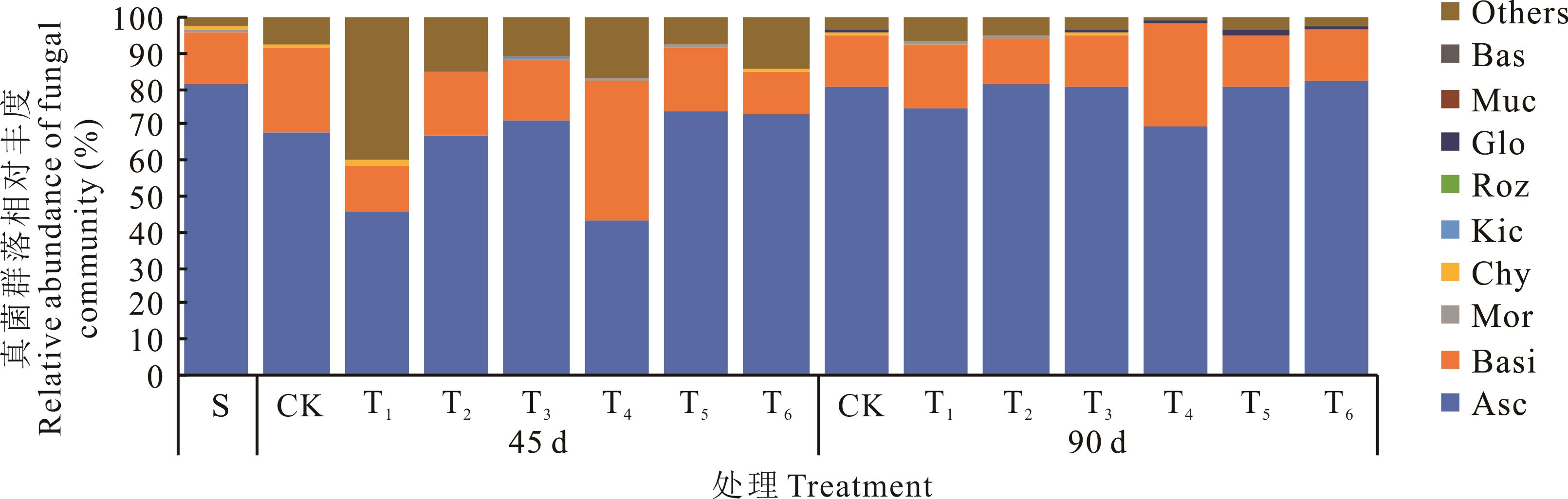
Fig.4 Relative abundance analysis of fungal community at phylum level
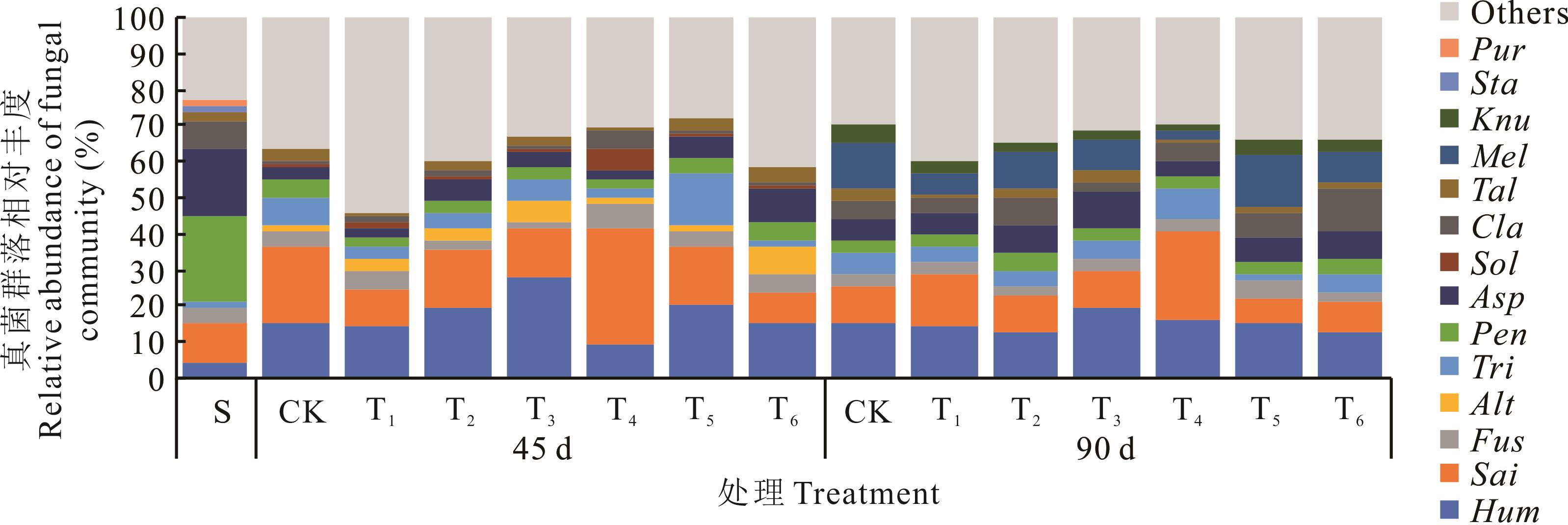
Fig.5 Relative abundance analysis of fungal community at genus level
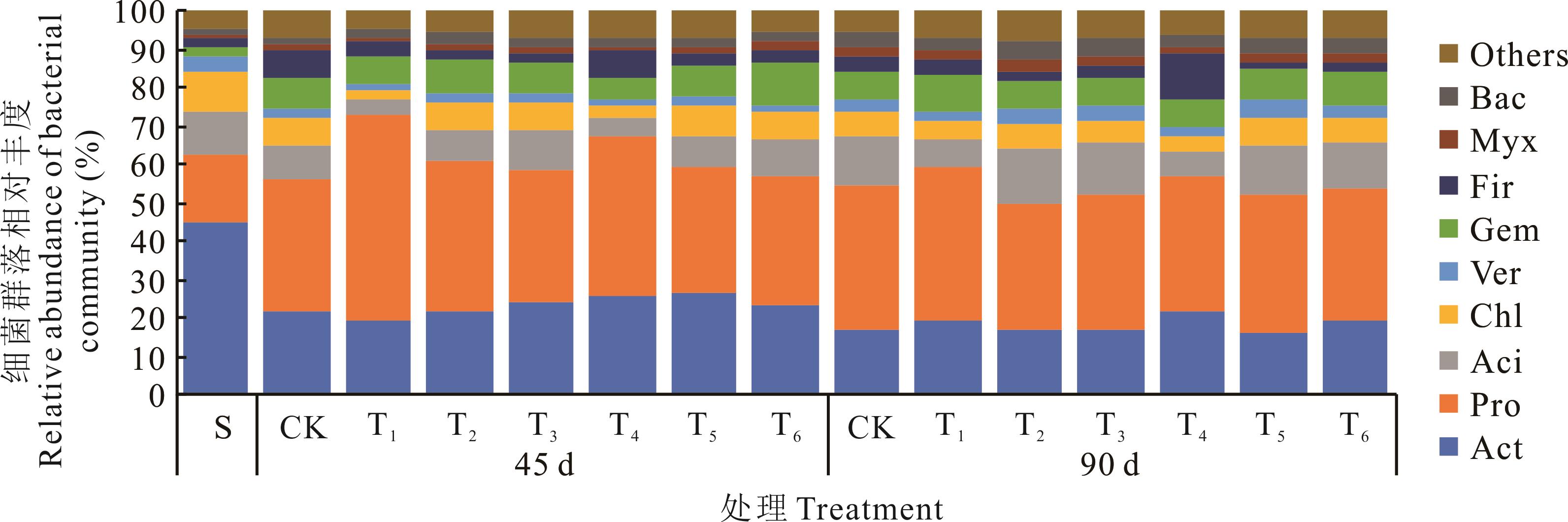
Fig.6 Relative abundance analysis of bacterial community at phylum level
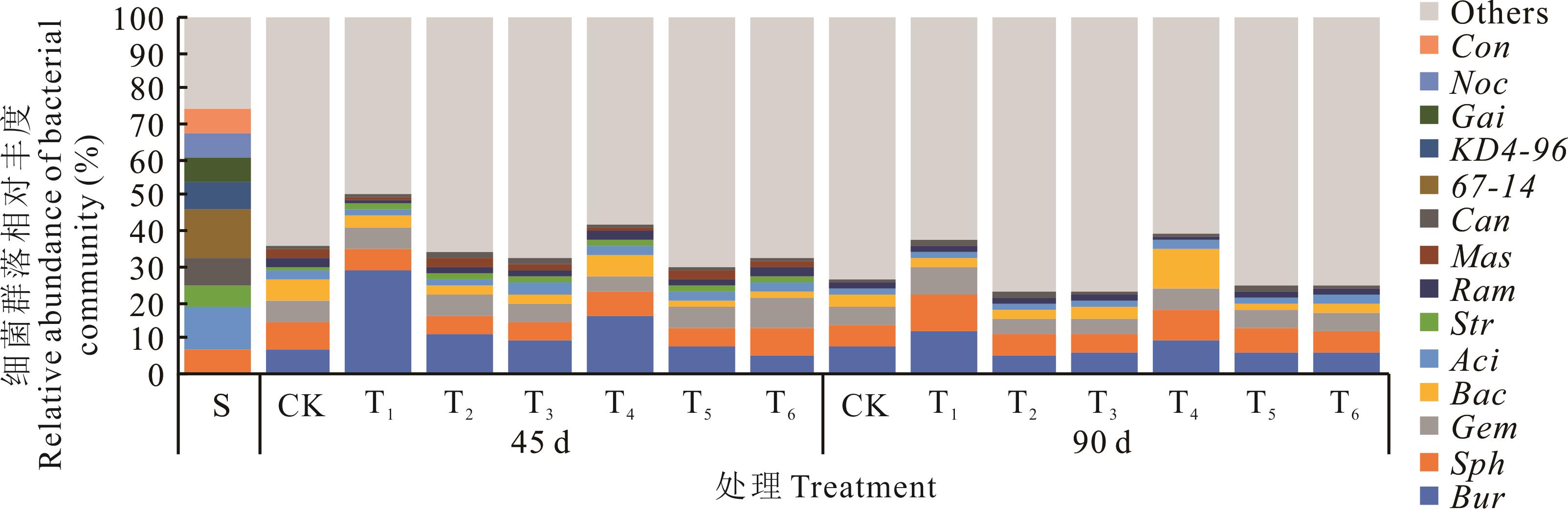
Fig.7 Relative abundance analysis of bacterial community at genus classification level
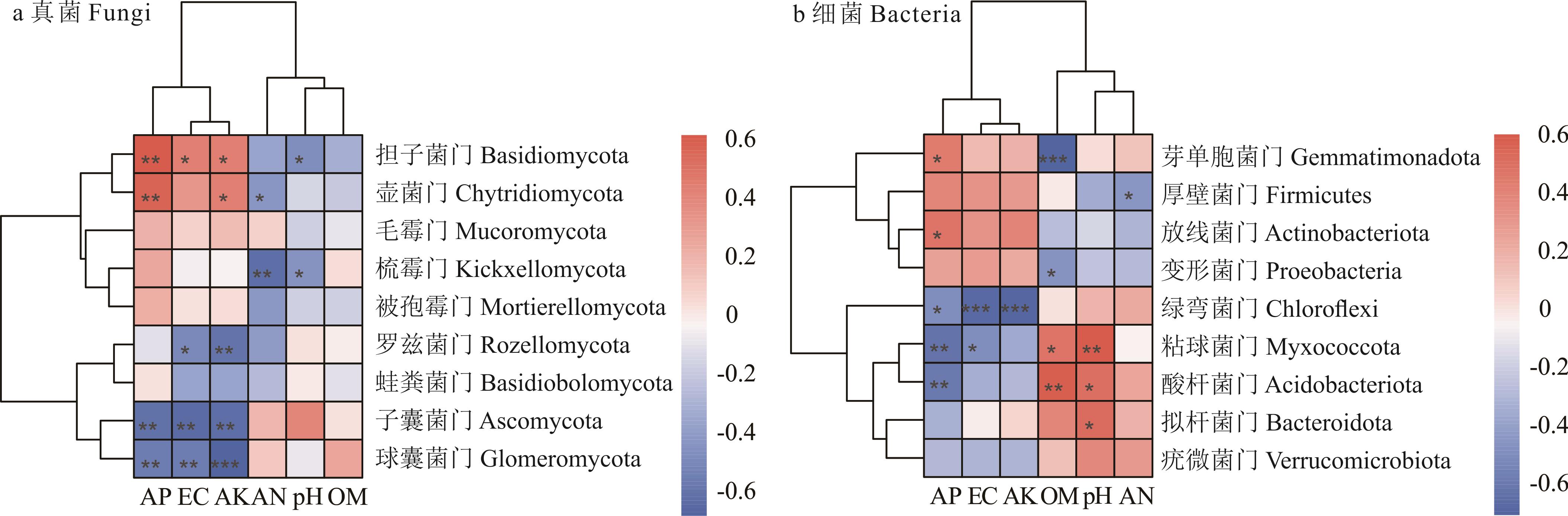
Fig.8 Correlation analysis of relative abundance of rhizosphere soil microbial communities and soil physicochemical factors at 90 d
| [1] | Ministry of Agriculture and Rural Affairs. Announcement of national arable land quality grading in 2019. Gazette of the Ministry of Agriculture and Affairs of the People’s Republic of China, 2020(4): 113-121. |
| 农业农村部. 2019年全国耕地质量等级情况公报. 中华人民共和国农业农村部公报, 2020(4): 113-121. | |
| [2] | Kong X B, Chen W G, Dang Y X. Current situation, challenges and transformation of cultivated land protection in China. Journal of Social Science of Hunan Normal University, 2023, 52(5): 31-41. |
| 孔祥斌, 陈文广, 党昱譞. 中国耕地保护现状、挑战与转型. 湖南师范大学社会科学学报, 2023, 52(5): 31-41. | |
| [3] | Tang Z G. The application and research progress of earthworms in ecological agriculture in China. Modern Rural Science and Technology, 2023(6): 95-96. |
| 汤宗光. 蚯蚓在我国生态农业中的应用及研究进展. 现代农村科技, 2023(6): 95-96. | |
| [4] | He S R, Liu X J, Zhao Y J, et al. Effects of alfalfa/sweet sorghum intercropping on rhizosphere soil characteristics and microbial community characteristics. Acta Prataculturae Sinica, 2024, 33(5): 92-105. |
| 何升然, 刘晓静, 赵雅姣, 等. 紫花苜蓿/甜高粱间作对根际土壤特性及微生物群落特征的影响. 草业学报, 2024, 33(5): 92-105. | |
| [5] | Wu Q C, Chen Y, Dou X H, et al. Microbial fertilizers improve soil quality and crop yield in coastal saline soils by regulating soil bacterial and fungal community structure. The Science of the Total Environment, 2024, 949: 175127. |
| [6] | Xiang C Y, Luo D Y, Guo L, et al. Advances in plant-microbial combined remediation of chemically-degraded soils. Chinese Journal of Soil Science, 2024, 55(1): 288-300. |
| 向春雨, 罗栋源, 郭莉, 等. 植物-微生物联合修复化学退化土壤研究进展. 土壤通报, 2024, 55(1): 288-300. | |
| [7] | Wei Y L, Yang H, Hu J D, et al. Trichoderma harzianum inoculation promotes sweet sorghum growth in the saline soil by modulating rhizosphere available nutrients and bacterial community. Frontiers in Plant Science, 2023, 14: 1258131. |
| [8] | El-Amriti F A, Ouf S A, Abu-Elghait M, et al. Alleviation of salt stress on Zea mays L. plant by PGPR isolates as an effective sustainable strategy. Biocatalysis and Agricultural Biotechnology, 2024, 61: 103346. |
| [9] | Ma B G, Wei X H, Meng X J, et al. Advancements in study on Burkholderia for plant disease biocontrol. Agricultural Research and Application, 2023, 36(3): 1-8. |
| 马白鸽, 魏喜红, 孟祥佳, 等. 伯克霍尔德氏菌在植物病害生物防治中的研究进展. 农业研究与应用, 2023, 36(3): 1-8. | |
| [10] | Naveed M, Mitter B, Reichenauer G T, et al. Increased drought stress resilience of maize through endophytic colonization by Burkholderia phytofirmans PsJN and Enterobacter sp. FD17. Environmental and Experimental Botany, 2014, 97: 30-39. |
| [11] | Sun Z X, Meng X J, Long X Y, et al. Control effect and growth-promoting effect of Burkholderia YZU-S230 on watermelon fusarium wilt. Journal of Yangtze University (Natural Science Edition), 2021, 18(2): 82-88. |
| 孙正祥, 孟祥佳, 龙欣钰, 等. 伯克霍尔德氏菌YZU-S230对西瓜枯萎病的防效及其促生作用. 长江大学学报(自然科学版), 2021, 18(2): 82-88. | |
| [12] | Wang Y J, Liu L, Hu Y, et al. The spatio-temporal change in soil P and P-solubilizing bacteria under clover mulching in apple orchards of Loess Plateau. Chemosphere, 2022, 304: 135334. |
| [13] | Wang Y J, Huang W, Li Y Q, et al. Isolation, characterization, and evaluation of a high-siderophore-yielding bacterium from heavy metal contaminated soil. Environmental Science and Pollution Research International, 2021, 29(3): 3888-3899. |
| [14] | Xie H P, Lin Y T, Wu X Y, et al. Screening and identification of biocontrol bacteria of cowpea Fusarium wilt and preliminary exploration of disease resistance mechanism. Chinese Journal of Tropical Crops, 2023, 44(6): 1224-1236. |
| 谢海鹏, 林樱桃, 吴小燕, 等. 豇豆枯萎病生防细菌的筛选鉴定及抗病机理初探. 热带作物学报, 2023, 44(6): 1224-1236. | |
| [15] | Bao S D. Soil agricultural analysis. Beijing: China Agriculture Press, 2000. |
| 鲍士旦. 土壤农化分析. 北京: 中国农业出版社, 2000. | |
| [16] | Cui G W. Effect of low temperature stress on soluble sugar and starch of alfalfa at germination period. Journal of Northeast Agricultural University, 2009, 40(1): 72-76. |
| 崔国文. 低温胁迫对紫花苜蓿种子萌发期可溶性糖和淀粉的影响. 东北农业大学学报, 2009, 40(1): 72-76. | |
| [17] | Chen Y Q, Liu J Y, Liu W K, et al. Effects of LED red and blue light intensity on the growth, yield and quality of Medicago sativa. Chinese Journal of Grassland, 2023, 45(8): 23-30. |
| 陈艳琦, 刘家源, 刘文科, 等. LED红蓝光光强对紫花苜蓿生长产量与品质的影响. 中国草地学报, 2023, 45(8): 23-30. | |
| [18] | Ge J Z, Fu W H, Zhang L, et al. Degradation of carbendazim in orchard white clover silage and its effect on the microbial fermentative community. Acta Prataculturae Sinica, 2022, 31(7): 64-75. |
| 戈建珍, 傅文慧, 张露, 等. 多菌灵在果园白三叶青贮中的降解及其对微生物群落的影响. 草业学报, 2022, 31(7): 64-75. | |
| [19] | Liu X G, Li N, Ji T, et al. Effects of microbial agents and corn protein ferment on physiological characteristics in leaves and yield of tomato. Chinese Journal of Applied Ecology, 2023, 34(11): 3039-3044. |
| 刘希港, 李楠, 季托, 等. 微生物菌剂和玉米蛋白酵素对番茄叶片生理特性和产量的影响. 应用生态学报, 2023, 34(11): 3039-3044. | |
| [20] | Li Z Q, Liu P Y, Zhang Y, et al. Effects of inoculant application at different stages on tomato growth, quality and expression of related enzyme gene. Northern Horticulture, 2023(4): 1-8. |
| 李正青, 刘朋宇, 张颖, 等. 不同时期施用菌剂对番茄生长、品质及相关酶基因表达. 北方园艺, 2023(4): 1-8. | |
| [21] | Gao Z L, Zhu J J, Juan J X, et al. Effects of compound fertilizer combined with microbial agent on growth of Cerasus campanulata ‘Feihan’ seedlings. Acta Agriculturae Shanghai, 2021, 37(5): 116-120. |
| 高照亮, 朱建军, 隽加香, 等. 复合肥配施微生物菌剂对‘飞寒樱’苗木生长影响效果研究. 上海农业学报, 2021, 37(5): 116-120. | |
| [22] | Lyu L Y, Duan G Z, Su C F, et al. Effects of microbial agents on growth and soil properties of Lycium barbarum L. Journal of Shenyang Agricultural University, 2022, 53(4): 476-482. |
| 吕亮雨, 段国珍, 苏彩风, 等. 木霉菌微生物菌剂对枸杞生长及土壤性状的影响. 沈阳农业大学学报, 2022, 53(4): 476-482. | |
| [23] | Li J H, Gao K X, Wan L, et al. Effects of microbial agent on the growth of Catalpa bungei seedlings and the diversity of bacterial community in rhizosphere soil. Acta Ecologica Sinica, 2020, 40(21): 7588-7601. |
| 李金花, 高克祥, 万利, 等. 微生物菌剂对楸树幼苗生长及根际土细菌群落结构的影响. 生态学报, 2020, 40(21): 7588-7601. | |
| [24] | Ling N, Wang T T, Yakov K. Rhizosphere bacteriome structure and functions. Nature Communications, 2022, 13(1): 836. |
| [25] | Wang Y Q, Yuan C X, Yue K, et al. Meta-analysis of plant restoration impacts on soil microbial community structure in mining areas. Chinese Journal of Applied Ecology, 2024, 35(4): 1141-1149. |
| 王译庆, 袁朝祥, 岳楷, 等. 植被恢复对矿区土壤微生物群落结构影响的整合分析. 应用生态学报, 2024, 35(4): 1141-1149. | |
| [26] | Wang Z F, Li Y, Zhang Q Y, et al. Effect of microbicides on main diseases and soil microbial communities of tomatoes in facilities. Journal of Agricultural Science and Technology, 2024, 26(6): 102-112. |
| 王子凡, 李燕, 张庆银, 等. 微生物菌剂对设施番茄主要病害及土壤微生物群落的影响. 中国农业科技导报, 2024, 26(6): 102-112. | |
| [27] | Xian K H, Su J, Fu C M, et al. Effects of different bacterial fertilizers on microbial diversity, physical and chemical properties of rhizosphere soil of Paris polyphylla var. chinensis. Guangxi Sciences, 2021, 28(6): 616-625. |
| 冼康华, 苏江, 付传明, 等. 不同菌肥对华重楼根际土壤微生物多样性及理化性质的影响. 广西科学, 2021, 28(6): 616-625. | |
| [28] | Wen S F, Jiang R H, Zhu C Q, et al. Effects of phosphate-solubilizing bacteria on the rhizosphere soil properties and microbial community structure of maize in lead-contaminated soil. Biotechnology Bulletin, 2024, 40(9): 225-237. |
| 温绍福, 江润海, 朱城强, 等. 铅污染土壤中解磷菌对玉米根际土壤性质和微生物群落结构的影响. 生物技术通报, 2024, 40(9): 225-237. | |
| [29] | Wang D, Li X Y, Lu H, et al. Effects of facility vegetable cultivation on soil microbial community structure and microbial interactions. South-Central Agricultural Science and Technology, 2024, 45(11): 13-22. |
| 王丹, 李心怡, 卢涵, 等. 设施蔬菜栽培对土壤微生物群落结构及微生物互作的影响. 中南农业科技, 2024, 45(11): 13-22. | |
| [30] | Egidi E, Delgado-Baquerizo M, Plett J M, et al. A few Ascomycota taxa dominate soil fungal communities worldwide. Nature Communications, 2019, 10(1): 1-9. |
| [31] | Wan W J, Tan J D, Wang Y, et al. Responses of the rhizosphere bacterial community in acidic crop soil to pH: Changes in diversity, composition, interaction, and function. Science of the Total Environment, 2020, 700: 134418. |
| [32] | Li X F, Deng S P, Raun W R, et al. Bacterial community in soils following century-long application of organic or inorganic fertilizers under continuous winter wheat cultivation. Agronomy, 2020, 10(10): 1497. |
| [33] | Justin F, Khalil W, Maxime H, et al. Native bacterial communities and Listeria monocytogenes survival in soils collected from the lower mainland of British Columbia, Canada. Canadian Journal of Microbiology, 2018, 64(10): 695-705. |
| [34] | Gao F, Wen S Z, Wei S X, et al. Effect of vegetation restoration models on soil physiochemical properties, enzymes activities and fungal diversity in rocky desertification area of northwest Guangxi, China. Acta Agriculturae Zhejiangensis, 2023, 35(10): 2425-2435. |
| 高风, 文仕知, 韦铄星, 等. 桂西北石漠化区不同植被恢复类型对土壤理化性质、酶活与真菌群落多样性的影响. 浙江农业报, 2023, 35(10): 2425-2435. | |
| [35] | Zheng X W, Dai X, Zhu Y X, et al. (Meta) Genomic analysis reveals diverse energy conservation strategies employed by globally distributed Gemmatimonadota. mSystems, 2022, 7(4): e0022822. |
| [1] | Xu LUO, Hui MA, Cui HAN, Ya-xin ZHAO, Ying ZHAO, Ying-zhong XIE, Jian-ping LI. Response of aboveground net primary productivity to plant species richness and identification of the factors of influence [J]. Acta Prataculturae Sinica, 2025, 34(9): 26-37. |
| [2] | Hong-yu MA, Xiao-guo ZHOU, Bao WANG, Yu-chuan SONG, Aikeremu·Abulatijiang, Shao-li JIANG, Jiu-zhou MIN, Hong-mei ZHAO, Jun-hui CHENG. Differences in soil microbial functional gene abundance between rhizosphere soils of Haloxylon ammodendron and Tamarix chinensis in the Junggar Desert [J]. Acta Prataculturae Sinica, 2025, 34(8): 109-122. |
| [3] | Shan-shan TANG, Min HU. Differences in enzyme activity and bacterial community structure in rhizosphere soil of four grass species [J]. Acta Prataculturae Sinica, 2025, 34(8): 99-108. |
| [4] | Ying WANG, Ming-yuan LI, Mairiyangu·Yasheng, Ji-lian WANG. Comparative study of rhizosphere soil fungal community structure among different plants in Tomur Peak, Xinjiang [J]. Acta Prataculturae Sinica, 2025, 34(7): 83-94. |
| [5] | Wen-hui DENG, Ke-chen SONG, Hao ZHANG, Si-yu GUAN, Jia-yi YONG, Hai-ying HU. Structure and diversity characteristics of the rhizosphere microbial community of dominant plants on the desert steppe under changing precipitation [J]. Acta Prataculturae Sinica, 2025, 34(5): 12-26. |
| [6] | Xiao-dong TU, Jun-fang CUI, Fu-hong KUANG, Chun-pei LI, Jiu-zhen DU, Hong-lan WANG, Xiang-yu TANG. Effects of conversion of alpine meadow to cultivated land on the soil microbial community in northwest Sichuan [J]. Acta Prataculturae Sinica, 2025, 34(2): 54-66. |
| [7] | Zheng-yan LI, Zhi-ming XU, Yan LI, Yang LI. Effects of short-term continuous cropping of alfalfa on the growth and soil microenvironment of subsequent sorghum-sudan grass hybrid crops in the Jianghuai area [J]. Acta Prataculturae Sinica, 2024, 33(9): 155-168. |
| [8] | Sheng-ran HE, Xiao-jing LIU, Ya-jiao ZHAO, Xue WANG, Jing WANG. Effects of alfalfa/sweet sorghum intercropping on rhizosphere soil characteristics and microbial community characteristics [J]. Acta Prataculturae Sinica, 2024, 33(5): 92-105. |
| [9] | Yuan MA, Xiao-li WANG, Yu-shou MA, De-gang ZHANG. Effects of the degree of alpine meadow degradation on the rhizosphere soil fungal community and the ecological network of dominant species [J]. Acta Prataculturae Sinica, 2024, 33(2): 125-137. |
| [10] | Jing XING, Wen-qiang FAN, Jia-ni WANG, Feng-ling SHI. Rhizosphere bacterial diversity and the effects of soil sterilization on the growth of two varieties of Medicago ruthenica under drought stress [J]. Acta Prataculturae Sinica, 2024, 33(12): 147-159. |
| [11] | Xu-ke ZHANG, Hong-fei XIA, Guo-li CHEN, De-zhou LI, Xiao-wei ZHANG, Ke-mei LI, Li-li WANG. Identification and biological characterisation of Fusarium root rot pathogens of white clover [J]. Acta Prataculturae Sinica, 2024, 33(12): 175-187. |
| [12] | Jie ZHAO, Xue-jing YIN, Si-ran WANG, Zhi-hao DONG, Jun-feng LI, Yu-shan JIA, Tao SHAO. Effects of storage time on the fermentation quality, bacterial community composition, and functional profile of sweet sorghum silage [J]. Acta Prataculturae Sinica, 2023, 32(8): 164-175. |
| [13] | Yan-lan ZHAO, Xin-yi ZENG, Jin-chao GONG, Xiang-jun LI, Xu-xu LI, Shan LIU, Xin-quan ZHANG, Ji-qiong ZHOU. Effect of arbuscular mycorrhizal fungi on the salt tolerance of Trifolium repens [J]. Acta Prataculturae Sinica, 2023, 32(3): 179-188. |
| [14] | Dai-xiang XU, Jian-feng YANG, Hang SU, Jian-rong ZHAI, Cai QI, Long-gang ZHAO, Yan-jun GUO. Effect of the metabolites in rhizosphere soil on microbial communities of crop intercropping system [J]. Acta Prataculturae Sinica, 2023, 32(11): 65-80. |
| [15] | Yuan-yuan LI, Ting-ting XU, Zhe AI, Zhao-na ZHOU, Fei MA. Relationship between plant functional traits and rhizosphere bacterial community structure of two Caragana species [J]. Acta Prataculturae Sinica, 2022, 31(7): 38-49. |
| Viewed | ||||||
|
Full text |
|
|||||
|
Abstract |
|
|||||
